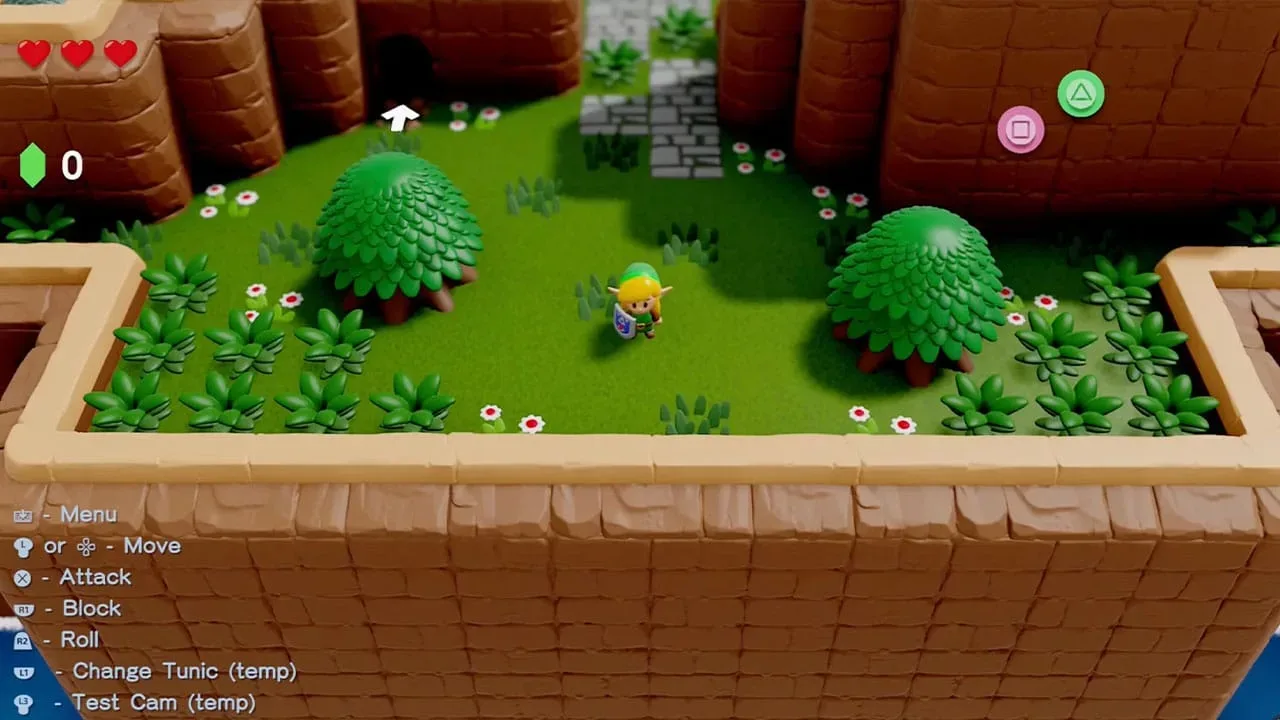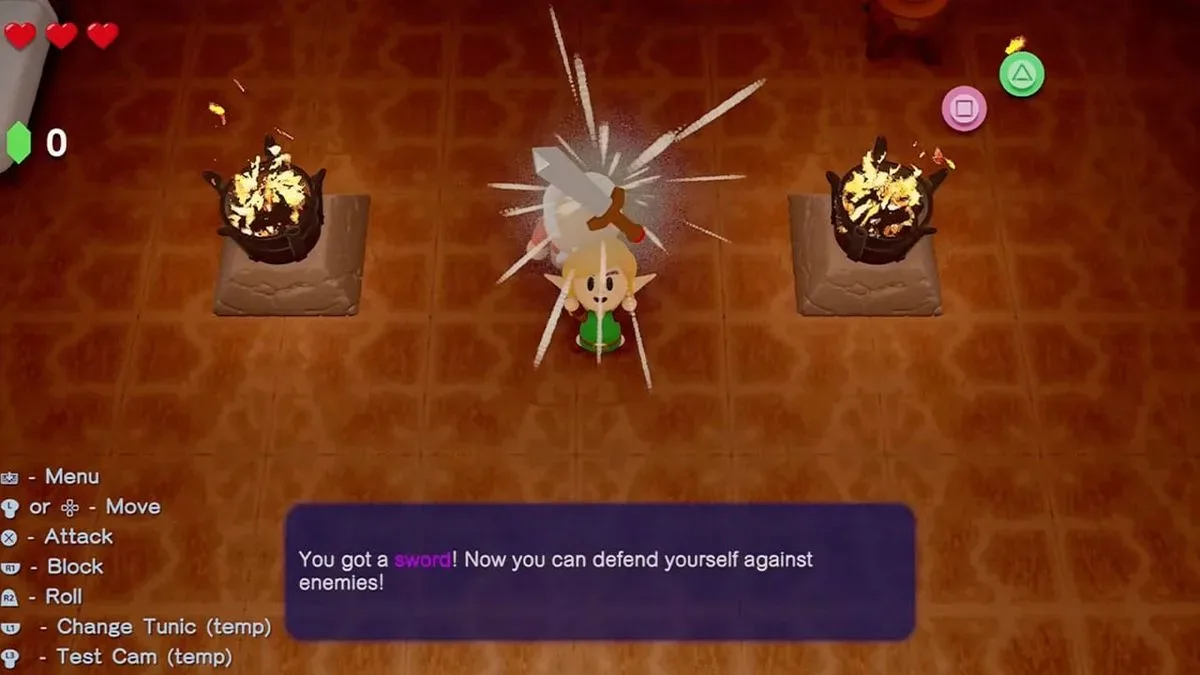
The original The Legend of Zelda has been given an unexpected new home: a fan-made recreation built inside Dreams for PlayStation. Created by a user known as Relevant-ish, the project revisits the first NES quest with a significantly different visual presentation while retaining the same central story.
It is the kind of crossover that initially sounds like it was generated by shaking a box containing three unrelated console generations. Nintendo’s foundational fantasy adventure, a PlayStation creation platform, and an aesthetic compared with the modern Switch-era look of Link’s Awakening all meet in one project. Yet the footage and details shared so far point to a sincere attempt to reinterpret the original journey rather than simply place old sprites in a new engine-shaped container.
Relevant-ish’s recreation is playable on PS4 and PS5 through Dreams. The underlying adventure remains the first Legend of Zelda: the same narrative framework is present, but its environments, movement and presentation have been rebuilt with a new sheen. That distinction matters. This is not being presented as an official Nintendo release or a replacement for the NES game; it is fan work using Dreams’ toolkit to look at a hugely familiar map from another angle.
A classic quest through a different lens
The reported visual comparison is to the glossy, toy-like 3D character of The Legend of Zelda: Link’s Awakening on Switch, with a little of the readability and charm players may also associate with Echoes of Wisdom. That does not mean the Dreams project is a direct copy of either game’s specific design language. The useful takeaway is that it appears to translate an 8-bit top-down world into a more dimensional, colorful PlayStation experience while still making the overworld immediately recognizable.
That is an appealing approach for a game whose identity is rooted so deeply in navigation. The original adventure’s spaces are not just backdrops between objectives; they are the puzzle. Every screen, cave opening, passage and dungeon entrance contributes to the feeling that the player is slowly developing a mental map of an unfamiliar land. A remake-style project can easily lose that clarity if added visual detail obscures the routes players need to read. The promising part of this work is that it aims for a major stylistic change without abandoning the broad shape of the journey.
The dungeons are a particular highlight in the material described so far. Their textures have been reworked to give these underground spaces more visual presence than the stark, grid-based rooms of the NES original could offer. The project also includes side-on dungeon sequences, providing a playful nod to the moments when Zelda games have shifted perspective for traversal or danger. They are a reminder that a fan remake does not need to treat an old game as a museum piece sealed behind glass. It can preserve the route and the story while using a new presentation to make individual spaces feel surprising again.
Dreams remains a remarkable remix machine
For anyone who has only encountered the name in passing, Dreams is a PlayStation platform that lets people create and publish games and other interactive projects for others to play. It is less a single game than a creation space: players can build their own works, share them, and explore what other members of the community have made.
That setup is exactly why a project such as this Zelda recreation can exist. A lone creator or small group does not need to construct a new distribution system before showing a game to an audience. Instead, the work can live among other community-made projects inside Dreams. The result is a strange and wonderful digital arcade where original concepts, technical experiments, homages and ambitious fan interpretations can sit side by side.
Related coverage includes The Original Legend of Zelda Gets a Fan-Made Dreams Remake on PlayStation.
Dreams is also available through PlayStation Plus, giving subscribers a route to download the platform and explore its catalog. That accessibility is important for a project based on a decades-old Nintendo game: the novelty is not merely watching familiar locations receive a makeover in a video. Players on PS4 and PS5 can seek out Dreams itself and look for the creation there.
There is a fitting contrast in seeing the original Zelda remade this way. The NES game is synonymous with a time when a complete world had to be communicated with a very limited collection of tiles, colors and sounds. Dreams, meanwhile, is explicitly built around enabling users to create and share. One is a landmark finished game; the other is a place designed to let people respond to games, ideas and memories. Putting Zelda inside that second framework turns the old quest into a creative prompt all over again.
Movement, combat and the importance of feel
A visual overhaul is only half the challenge. Zelda’s original top-down combat and exploration rhythm rely on immediate response: Link moves, encounters danger, swings a weapon and searches for a way forward. The early look at Relevant-ish’s project suggests that Link’s movement and battles have been given appropriate attention, rather than leaving the remake as a scenic tour of recognizable locations.
That is especially significant because fan recreations are often judged on their feel as much as their fidelity. It is possible to make a beautiful version of a remembered place while missing the pace that made players want to keep going. A satisfying remake-style interpretation has to strike a balance between reverence and adaptation. It must make sense for the player to recognize a landmark, but it also needs to justify why the landmark was rebuilt instead of merely replayed elsewhere.
The available showcase only covers selected portions of the game, so it should not be treated as a full accounting of every area, system or encounter. Still, those glimpses are enough to establish the project’s central proposition: this is Zelda’s original story and world viewed through a distinctly different technical and visual frame. For longtime fans, that may be the main attraction. Familiarity supplies the map in their head; the redesign supplies the reason to look twice.
A fan project with obvious rights questions
There is also an unavoidable caveat. The Legend of Zelda is Nintendo property, and fan-made recreations based on major commercial games can raise intellectual-property questions. Nothing in the available information establishes any official Nintendo involvement, endorsement or approval for this Dreams project. Its status could change, and anyone interested should keep that uncertainty in mind rather than assuming an unofficial creation will remain accessible indefinitely.
That uncertainty is part of the odd tension surrounding fan creativity. Projects like this one demonstrate affection, craft and an impressive willingness to rebuild familiar material in a new form. At the same time, the characters, story and source game belong to their rights holder. It is possible to appreciate the work’s apparent technical and artistic ambition while being clear that it is not an official product.
The project is also a small reminder that PlayStation’s creative communities can preserve conversations around games that originated elsewhere. Those conversations increasingly overlap with broader concerns about access, aging hardware and the ways players keep game libraries usable; for a related PlayStation example, see the discussion around direct PS3 disc playback on PC. The circumstances are different, but both illustrate how strongly players care about keeping games and their histories within reach.
How to look for it
Players interested in Relevant-ish’s Zelda recreation can search for Dreams on the PlayStation Store, then use the platform’s community discovery tools to locate the project. It is intended for PlayStation 4 and PlayStation 5 through Dreams, not Nintendo Switch. Anyone going in should expect an unofficial, fan-created reinterpretation rather than a newly released Nintendo remake.
For fans of the NES original, that is precisely what makes the project intriguing. It does not ask players to forget the old game’s 8-bit identity. Instead, it asks a more playful question: what might that same legendary adventure look like if it stepped through a PlayStation creation portal, picked up new textures, and decided a few dungeon rooms deserved a dramatic side-view detour?