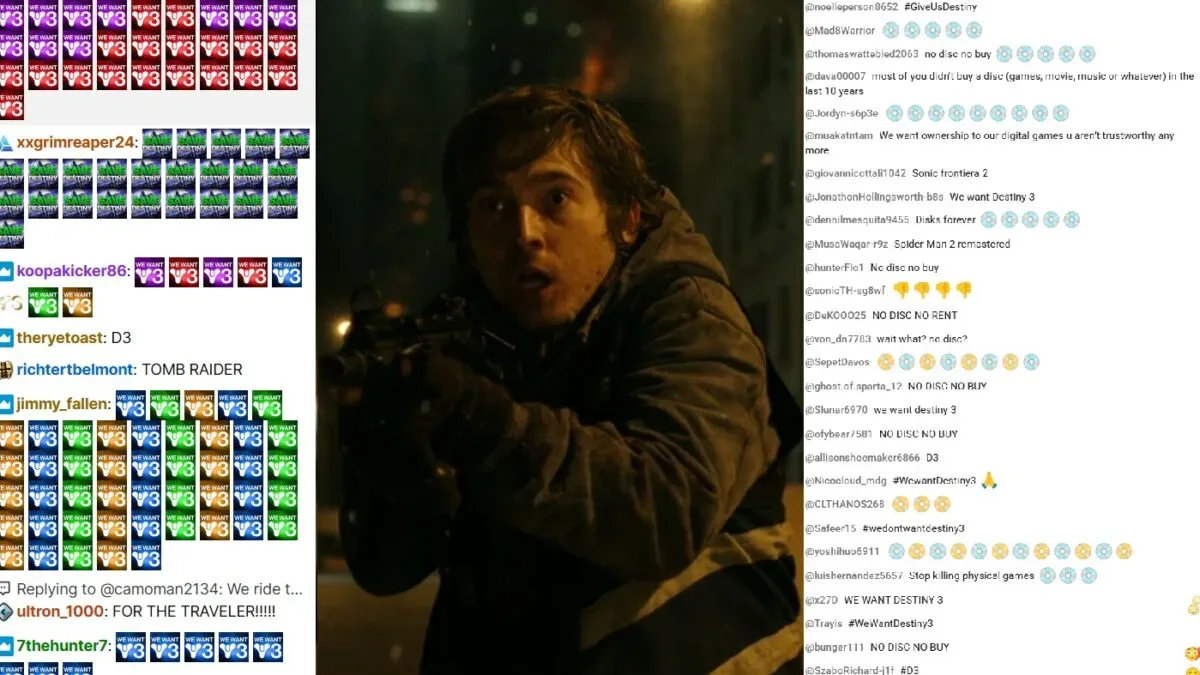
For years, the argument around physical games has been framed as a simple matter of consumer behavior: more people buy digitally, therefore discs naturally fade away. New estimates tied to several major PlayStation releases complicate that tidy explanation. Even for a business that clearly values the higher margins and direct relationship offered by digital storefronts, boxed games may still represent a substantial piece of the revenue pie.
Rhys Elliott of Alinea Analytics estimates that Marvel’s Spider-Man 2 generated $1.2 billion in gross revenue, with physical sales accounting for 35% of that total. Those figures are estimates rather than company-confirmed results, but the implication is difficult to ignore: a format can be declining in relative share without being financially trivial. Thirty-five percent is not loose change found between the sofa cushions of a PlayStation-branded sectional.
The broader question is not whether digital distribution is important. It plainly is. The real question is what gets lost when a platform holder treats the remaining physical audience as an acceptable sacrifice in exchange for better margins and tighter control over where, how, and whether games are bought and resold.
The estimates point to meaningful physical spending
The Alinea Analytics estimates cover a group of big-budget, single-player-focused releases whose audiences may be especially receptive to physical editions. The estimated breakdown is as follows:
- Marvel’s Spider-Man 2: $1.2 billion in gross revenue, with 35% attributed to physical sales.
- Ghost of Yotei: $400 million in gross revenue, with 37.6% attributed to physical sales.
- Astro Bot: $275 million in gross revenue, with 46.8% attributed to physical sales.
- Death Stranding 2: $129 million in gross revenue, with 41.8% attributed to physical sales.
That Astro Bot percentage is particularly notable. If the estimate is directionally right, nearly half of the game’s gross revenue came through physical purchases. The figures for Ghost of Yotei and Death Stranding 2 also suggest that discs remain a major commercial lane for certain premium releases, rather than merely a ceremonial plastic rectangle included so collectors have something to admire on a shelf.
These numbers should not be read as a universal prediction for every genre. A service-driven multiplayer title, a smaller digital-first game, or a deeply discounted catalog release can have a dramatically different sales mix. The point is narrower, and arguably more useful: prestige single-player games can still draw significant physical spending.
Revenue share is not the same as unit share
Comparisons with earlier sales discussions can become confusing because they often measure different things. Unit sales tell us how many copies moved. Revenue estimates describe the money produced by those sales. Neither metric is inherently wrong, but they answer different questions.
A physical copy can also carry a different average selling price than a digital purchase due to promotions, retailer practices, regional differences, special editions, and the timing of purchases. So a physical revenue share should not be casually converted into a physical unit share. Likewise, it should not be treated as a direct substitute for official sell-through figures.
Related coverage includes Spider-Man 2 Disc Sales May Account for 35% of Its $1.2 Billion Revenue Estimate.
There is another essential distinction: gross revenue is not the same thing as the money retained by the platform holder or publisher. A boxed game must pass through manufacturing, shipping, retail distribution, and retailer cuts. A digital transaction has its own operating costs, of course, but it generally gives the storefront owner a much larger slice of the sale. That is the accounting reality sitting beneath the otherwise emotional disc-versus-download debate.
Put simply, a digital dollar and a disc dollar may look identical in a player’s bank app, but they do not look identical on a corporate spreadsheet. This is why a company could see robust physical revenue and still want the format to shrink. The company may prefer a smaller number of transactions from which it keeps more money and gains more control.
Margins and control are separate, but related, incentives
The margin case for digital is straightforward. Direct sales reduce dependence on retail partners and avoid the manufacturing and distribution involved in producing physical copies. But the control case may matter just as much over the long term.
A digital-only ecosystem centralizes purchasing inside a platform’s store. It can shape visibility, pricing, discounts, bundles, subscriptions, refunds, licensing terms, and the entire storefront experience. Players have fewer alternative places to shop, and publishers have fewer traditional retail channels through which to reach them. That does not automatically make digital distribution bad; convenience is real, patches are routine, and many players strongly prefer an all-digital library. It does mean that the commercial incentives go beyond responding to preference surveys.
Physical media introduces friction for the platform holder, but it also creates competition and flexibility for the buyer. Retailers can run their own promotions. A shopper can lend a game, trade it in, purchase used, or keep it without needing access to a specific account or store listing. A sealed copy can become a collectible; an opened one can become a gift. None of those options makes a publisher’s margins prettier, which is precisely why they matter in a market increasingly built around controlled digital access.
That tension is especially relevant to collecting. A physical game is not a magic preservation shield—many modern releases still depend on downloads, updates, online services, and platform infrastructure—but it is a tangible object that can circulate independently of a storefront checkout page. For players who value ownership in the ordinary, practical sense, that distinction remains meaningful.
The secondhand market is part of the equation
Used-game sales have long been unpopular with companies that receive no direct payment when a disc changes hands. From the player perspective, though, resale is one of physical gaming’s biggest advantages. It lowers the effective cost of expensive new releases, lets people recover money after finishing a game, and gives newcomers a cheaper path into a library months or years later.
The result is a familiar trade-off. A used copy is not newly generated revenue for the publisher. Yet the availability of resale can make a $70 purchase less intimidating in the first place. Someone may buy at launch because they know the disc has residual value; someone else may discover a game later because pre-owned pricing puts it within reach. The exact balance differs from title to title, but erasing resale removes a consumer tool, not merely a retail inconvenience.
Digital licenses do not provide an equivalent general-purpose resale market. Players can sometimes benefit from sales, subscription catalogs, or account-based sharing features where permitted, but those are not replacements for owning a disc that can be handed to another person. They are different arrangements with different limits.
That distinction should remain central when discussing any movement toward a fully digital console future. The issue is not nostalgia for blowing dust off cartridges, though everyone is entitled to a little ritualized hardware maintenance. It is the set of choices that disappear when the only authorized route to a game is a single platform-controlled store.
What the Spider-Man 2 estimate does—and does not—prove
The estimated $1.2 billion total and 35% physical share for Marvel’s Spider-Man 2 do not prove that physical sales are growing, that every PlayStation release should have a disc edition forever, or that digital demand is somehow fake. They do, however, challenge the casual claim that physical releases no longer matter economically.
They also underscore why blanket explanations based solely on “consumer preference” deserve scrutiny. Consumer preference is one factor, but business incentives include margins, data, storefront control, and the reduction of secondhand circulation. Those incentives can point in the same direction as digital adoption, while still being distinct from it.
If PlayStation ultimately moves further toward an all-digital future, players should evaluate that shift with clear eyes. The question is not simply whether downloads are convenient. It is whether the industry should preserve multiple ways to buy, own, share, collect, and resell games when a substantial physical audience appears willing to spend real money on discs.
The numbers cited here are estimates, and estimates deserve caution. Still, the pattern is notable: on several prominent single-player games, physical revenue appears far too large to dismiss as the last flicker of an obsolete format. Digital may be the direction of travel, but that does not make the remaining road behind it empty—or unimportant. For another look at how game-world claims can collide with reality, see GTA 6’s Odd Pier Backflip Just Got a Real-World Reality Check.