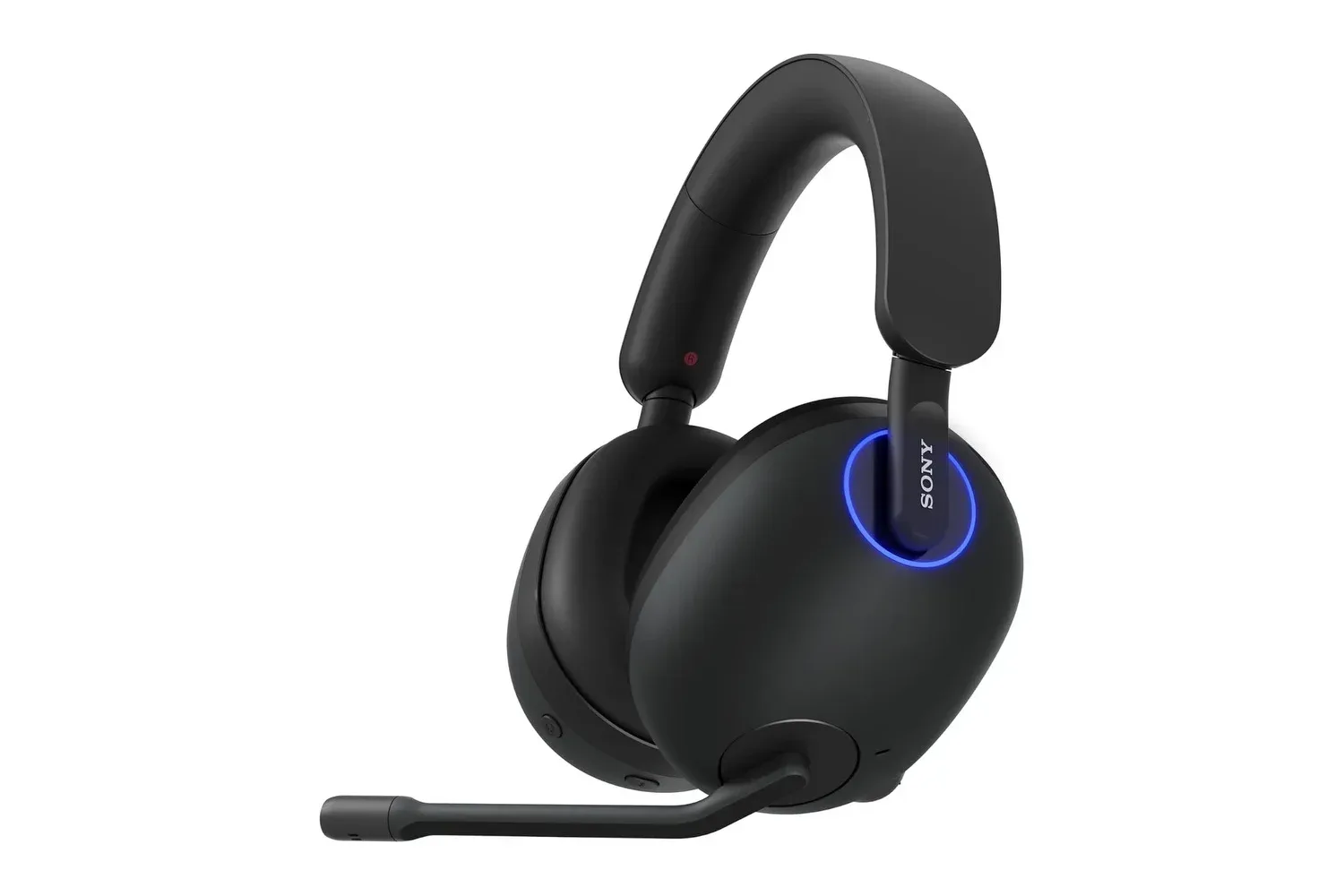
Sony’s INZONE H9 wireless gaming headset is listed on Amazon for $168, down from a regular price of $330. That is a $162 reduction, or roughly 49% off the stated regular price.
The INZONE H9 is positioned as Sony’s flagship wireless headset for PC and PlayStation 5. Its key proposition is not simply being wireless: it combines Dual Noise Sensor noise cancellation, 360 Spatial Sound for Gaming, a 2.4GHz USB-C wireless transceiver, Bluetooth support, a flip-up microphone and a claimed battery life of up to 32 hours.
For players weighing the deal, the most useful question is whether those individual features match the way they play. Noise cancellation can matter more in a noisy shared room than in a quiet office. Simultaneous wireless and Bluetooth is more meaningful for someone who needs phone access while at a PC or PS5. And PC users have access to the INZONE Hub software for audio adjustments that are not described as PS5 options.
What the $168 price gets
The H9 is an over-ear headset with soft-fit leather earpads and a lightweight headband intended to spread pressure across the head. Comfort is a practical part of a gaming-headset purchase, especially for longer sessions, because a feature-rich headset is of limited use if its fit becomes distracting. The earpads also contribute to reducing outside noise before any electronic cancellation is applied.
The stated $168 price is for the Sony INZONE H9 Wireless Over-Ear Noise Canceling Gaming Headset. The reduction is substantial against the provided $330 regular price, but shoppers should still verify the live retailer listing, its seller and the exact product configuration before completing a purchase, since product listings and sale pricing can change.
At its core, this is a headset designed around PC and PS5 use rather than a general pair of Bluetooth headphones that happens to include a microphone. Its low-latency 2.4GHz connection is aimed at game audio, while its platform-specific functions include on-screen headset status on PS5 and the INZONE Hub application on PC.
Noise cancellation and Ambient Sound explained
The H9 uses what Sony calls Dual Noise Sensor technology. Microphones in each earcup listen for environmental sound, allowing the headset’s noise-cancellation system to reduce distractions. A loud fan, voices elsewhere in a home or conversation in an adjacent room are examples of the kinds of sounds the feature is intended to address.
In straightforward terms, noise cancellation is a listening feature for the wearer, not a promise that the headset microphone will erase every background sound for teammates. That distinction matters in multiplayer: the source material identifies the earcup sensors as part of the cancellation system, while the flip-up boom microphone is the part used for voice chat.
Related coverage includes Sony INZONE H9 Gaming Headset Drops to $168 With Noise Cancellation and Dual Wireless Support.
The H9 also includes Ambient Sound mode. Rather than fully isolating the wearer, this mode is intended to let outside sound through without requiring the headset to be removed. That can be useful when a player wants to remain aware of activity around them while keeping their game session running.
These two modes point in opposite directions by design. Noise cancellation prioritizes reducing external distractions; Ambient Sound prioritizes awareness of them. The preferable setting will depend on the room and the moment, not on a universal “best” setting. Someone trying to follow subtle game audio in a busy space may favor cancellation, while someone waiting for a person nearby to speak may prefer Ambient Sound.
Spatial audio is about direction and distance
360 Spatial Sound for Gaming is the H9’s positional-audio feature. Sony describes it as providing direction and proximity cues, which can help a player judge where sounds such as footsteps, gunfire and enemy activity are coming from.
“Direction” means the apparent location of a sound around the listener: left, right, ahead or behind are the most immediately useful examples. “Proximity” refers to the perceived nearness of that sound. In a competitive match, those cues can be more actionable than sheer volume. Hearing that an effect is close and to one side can influence where a player looks or moves next; in a single-player game, the same cues can add a stronger sense of place.
PC players can customize the spatial-sound experience through INZONE Hub based on their personal hearing. The application also provides EQ and other adjustments. EQ, short for equalization, is an audio control that changes the balance of frequency ranges. It is a personalization tool, not a replacement for good source audio, but it gives PC users a way to tune the presentation to their preference.
There is a broader peripheral consideration here as well. Gaming setups can involve multiple pieces of configuration software, so a buyer who uses PC should account for the H9’s INZONE Hub controls alongside the software already required by their keyboard, mouse or other devices. Our look at the Corsair Vanguard Air 99 and its software question offers a related example of why management tools can be part of a hardware decision.
Why the H9 has both 2.4GHz wireless and Bluetooth
The INZONE H9 supports two wireless paths: a low-latency 2.4GHz connection through a USB-C transceiver and Bluetooth. Low latency means minimizing the delay between an audio event and when the listener hears it. That is particularly relevant to games because delayed sound can undermine the usefulness of timing and positional information.
Bluetooth has a different role in the H9’s feature set. It can keep the headset linked to a phone while a player is gaming. Sony says the headset supports simultaneous 2.4GHz and Bluetooth connectivity, enabling phone calls or communication through phone-based chat apps without exiting a gaming session.
This division of roles is one of the more practical parts of the feature list. The 2.4GHz transceiver is intended to keep game audio responsive, while Bluetooth keeps a second device connected. Players who never need phone connectivity may not place much value on it. For those coordinating with people through a phone while playing, however, it reduces the need to swap devices or remove the headset.
Mic controls, battery claim and platform considerations
The headset’s boom microphone flips up to mute. That is a simple physical control with an immediately visible state: raising the microphone takes the player out of the voice conversation without having to search for a separate mute button. It is especially relevant to teams using in-game voice chat.
Sony rates the H9 for up to 32 hours of playback. Battery estimates are most helpful as an upper-bound claim rather than a guarantee for every use pattern, so shoppers should read “up to” as important wording. The supplied information does not provide separate endurance figures for particular mixes of noise cancellation, Bluetooth or microphone use.
On PlayStation 5, the headset can show current status information on-screen, including battery life and the noise-cancelling mode. That platform integration gives PS5 players a direct way to check a couple of essential headset settings while playing. PC users, meanwhile, can use INZONE Hub to adjust EQ, spatial sound based on personal hearing and other settings.
Who should consider this sale
At $168, the INZONE H9’s appeal is clearest for a PC or PS5 player who values a combination of active noise control, positional audio and two-device wireless connectivity. The package also places emphasis on long-session wear through its lightweight headband and soft-fit earpads, and on uncomplicated voice-chat muting through the flip-up boom mic.
Potential buyers should focus on the parts that solve an actual problem in their setup. A player in a busy household may benefit most from the earcup noise cancellation. A multiplayer regular may prioritize the boom mic and low-latency wireless connection. A PC player who likes to alter sound profiles has the additional INZONE Hub controls to consider. And someone who regularly keeps a phone active during games may find simultaneous Bluetooth unusually useful.
Conversely, the available details do not establish performance claims beyond Sony’s stated feature set, nor do they provide battery figures for every operating mode. The most grounded purchasing case is therefore the straightforward one: this is a PC- and PS5-oriented Sony wireless headset with a listed sale price of $168, down $162 from $330, and its strongest differentiators are noise cancellation, spatial sound, dual wireless support and platform-specific controls.
Shop the products
Check current price, model and availability at the retailer.