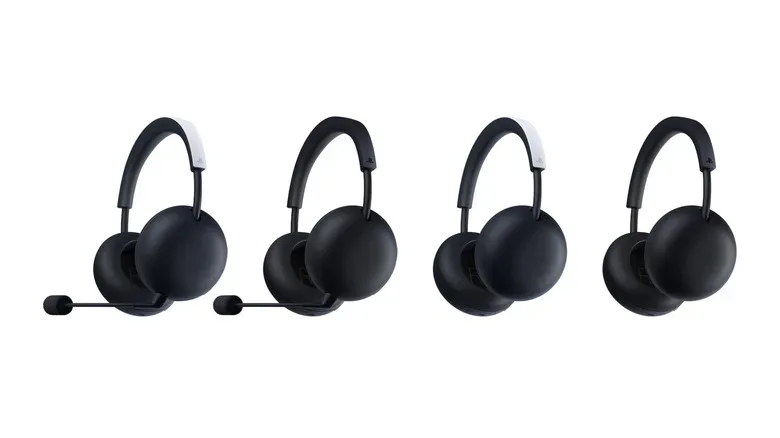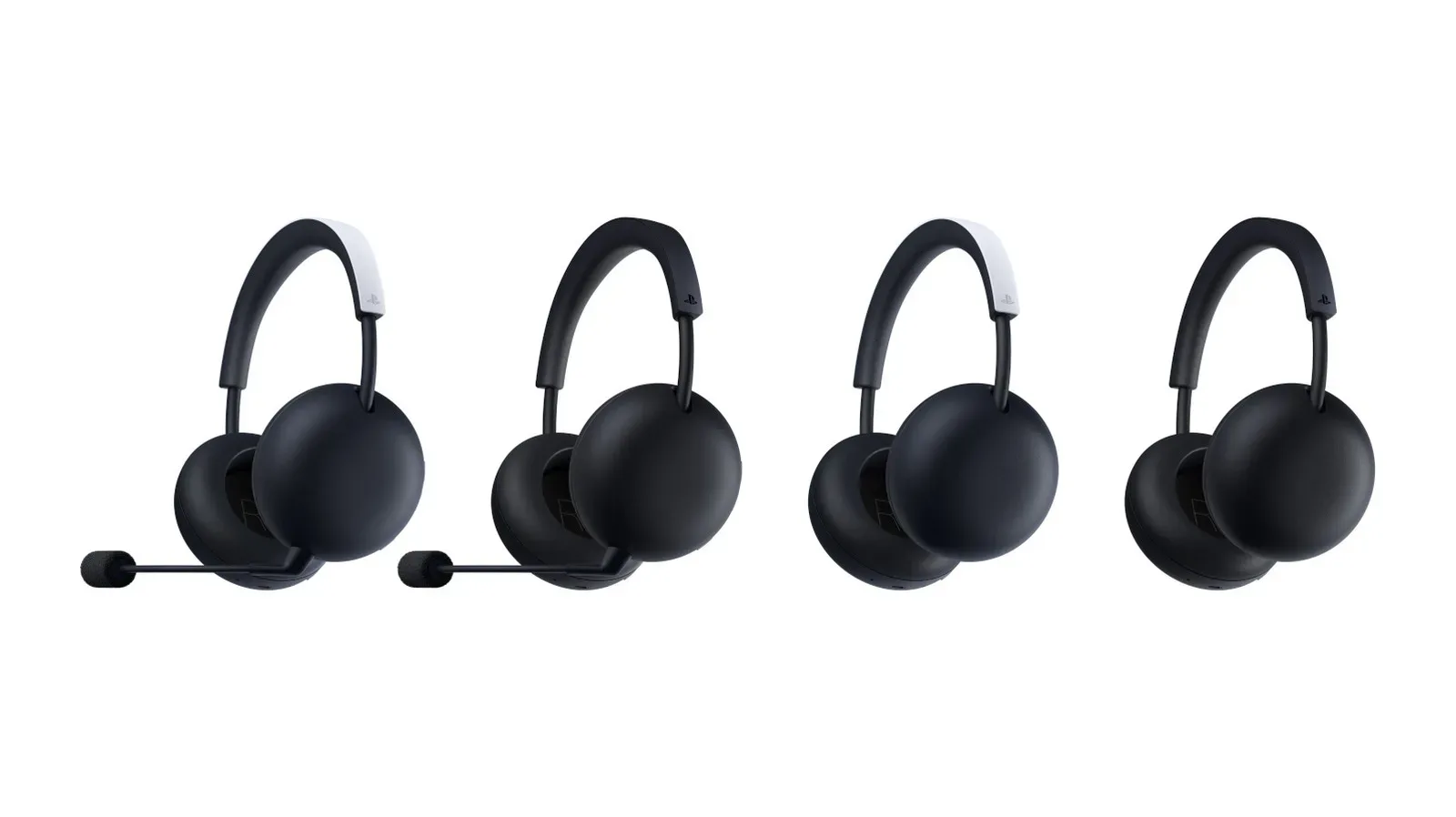
Sony is expanding its PlayStation audio lineup with new Pulse and Pulse Edge wireless headsets, bringing planar magnetic drivers and PlayStation Link support to both models. They are not yet available to buy, and Sony has not provided final pricing in the information available so far. Still, the split between the two products is already clear: Pulse is the more straightforward entry, while Pulse Edge adds hardware and communication features intended to justify a higher tier.
The headline technology is planar magnetic audio. It is not a magical stat boost that makes every game sound perfect, but it is a meaningful driver design choice—and one Sony has increasingly associated with its gaming headset plans following its acquisition of premium headphone maker Audeze. Sony’s earlier Pulse Elite, released in 2024, was its first planar magnetic gaming headset.
What planar magnetic drivers actually mean
A headphone driver is the component that turns an electrical audio signal into the air movement our ears interpret as sound. In a planar magnetic design, a thin, flat diaphragm sits between magnets. Sony says this approach can deliver cleaner bass and lower distortion than other kinds of headphone drivers.
Distortion, in simple terms, is unwanted alteration of the intended sound. Lower distortion is generally desirable because it can help a recording, game effect or voice retain its intended detail when the headset is working hard. For games, the practical appeal is not merely “more bass.” It is the potential for busy scenes to remain more legible: effects, ambience, dialogue and positional signals all compete for attention at once.
That does not establish that one headset will be best for every listener or every game. Fit, volume, game mixing, chat settings and personal hearing preferences still matter. But Sony is making planar magnetic sound a shared foundation of both new models rather than leaving it as an Elite-only proposition.
Directional audio is the gaming pitch
Sony says the new Pulse and Pulse Edge are designed to make directional audio cues easier to identify. Its clearest example is footsteps in a first-person shooter: the listener should be better able to judge where a sound is coming from.
This is often called positional audio. It refers to how a game’s sound mix conveys a noise’s apparent location—left or right, nearby or distant, ahead or behind. A headset does not create information that a game has not mixed into its audio, but accurate, clear playback can make existing cues easier to pick out.
That could matter beyond competitive shooters. Directional cues can help players follow a teammate in a hectic co-op game, react to an off-screen enemy, or simply appreciate a game’s environmental sound design. Sony’s claim should be read as an intended benefit rather than a promise of universal competitive advantage. The quality of each game’s audio implementation remains part of the equation.
Related coverage includes PlayStation Reveals New Pulse and Pulse Edge Wireless Headsets With Planar Magnetic Audio.
PS Link and Bluetooth cover different jobs
Both headsets support PlayStation Link as well as Bluetooth. PS Link is Sony’s connection system for compatible devices, including PS5, PlayStation Portal, PC and Mac. Sony says it provides ultra-low-latency audio and enables users to move between supported devices smoothly.
Latency is the delay between an event and the sound reaching the listener. In gaming, the target is for that delay to be small enough that an action, animation or incoming cue feels properly synchronized with its audio. Sony’s emphasis on low latency makes PS Link the performance-focused connection in this setup.
Bluetooth, meanwhile, gives the headsets a route to other compatible devices. That flexibility is important for a peripheral that may spend part of its life away from a console, whether the task is listening on a phone or connecting to hardware outside the PlayStation ecosystem. The supplied details do not specify how every device-switching scenario will work, so prospective buyers should wait for Sony’s final compatibility guidance rather than assume every feature will function identically across PS Link and Bluetooth.
For PlayStation players considering a broader setup, the relevant takeaway is that Sony is presenting the products as accessories for PS5 and PlayStation Portal but not as devices locked solely to those machines. PC and Mac support through PlayStation Link broadens their purpose considerably.
Voice chat features separate the Pulse Edge
Each model includes integrated microphones with AI-enhanced noise rejection, which Sony says filters background noise. That description is deliberately broader than a guarantee that every unwanted sound disappears. Its practical goal is familiar: reduce the distraction of environmental noise so teammates can hear the speaker more clearly.
The Pulse Edge moves further into communication-focused territory. It has a detachable boom microphone for clearer voice chat, whereas the standard Pulse relies on its integrated microphones. A boom mic is a microphone mounted on an arm that can be placed closer to the speaker’s mouth. In principle, that placement can give voice capture a clearer, more direct signal than a mic built into the headset body.
Pulse Edge also includes active noise cancellation, commonly shortened to ANC. ANC uses microphones and electronic processing to counter some external sound heard by the wearer. It is distinct from AI-enhanced mic noise rejection: ANC concerns what the listener hears, while microphone noise rejection concerns what other people hear in a voice chat. The two can complement each other, but they solve different problems.
Why the Edge is positioned as the premium option
The most concrete hardware difference is in the magnets. Sony says Pulse Edge has twice as many magnets as Pulse, allowing it to produce deeper bass. Combined with ANC and the removable boom mic, that makes the Edge the clear feature leader before price is even discussed.
That feature set also explains why it appears likely to cost more. There is no confirmed price for either newly revealed headset, so comparisons should remain only a guide rather than a forecast. Sony’s existing Pulse Elite is currently listed at $149 on Amazon, while the PlayStation version of Audeze’s Maxwell 2, introduced at CES 2026, costs $329.
Those figures mark out a wide range, not a confirmed landing spot for Pulse or Pulse Edge. Shoppers should be especially cautious about treating the Pulse Elite price as proof that the standard Pulse will cost less, or the Maxwell 2 price as proof of a particular Edge price. Sony has not yet supplied the information needed to make either conclusion.
What players should watch for before release
The reveal gives buyers a useful early decision framework. The standard Pulse has the essentials Sony is emphasizing: planar magnetic drivers, PS Link, Bluetooth and integrated microphones with AI-enhanced background-noise filtering. It may suit players primarily looking for PlayStation Link connectivity and Sony’s planar magnetic approach without paying for extra isolation and a dedicated boom mic.
The Pulse Edge is the model to watch for people who put more weight on voice chat, active noise cancellation and deeper bass. Its additional magnets, ANC and detachable microphone are tangible differentiators, rather than a mere naming upgrade.
Important open questions remain. Final pricing, release timing, regional availability and fuller specifications have not been provided here. Comfort, battery performance and real-world microphone quality are also purchase-critical details that cannot be settled from the announcement alone. Until those details arrive, the meaningful news is Sony’s direction: planar magnetic audio is becoming a core part of the PlayStation Pulse family, while PS Link and Bluetooth aim to make that hardware useful across console, handheld, computer and other compatible devices.
For a wider perspective on games that deserve to be considered on their own terms, see our take on looking beyond easy comparison points.
Shop the products
Check current price, model and availability at the retailer.