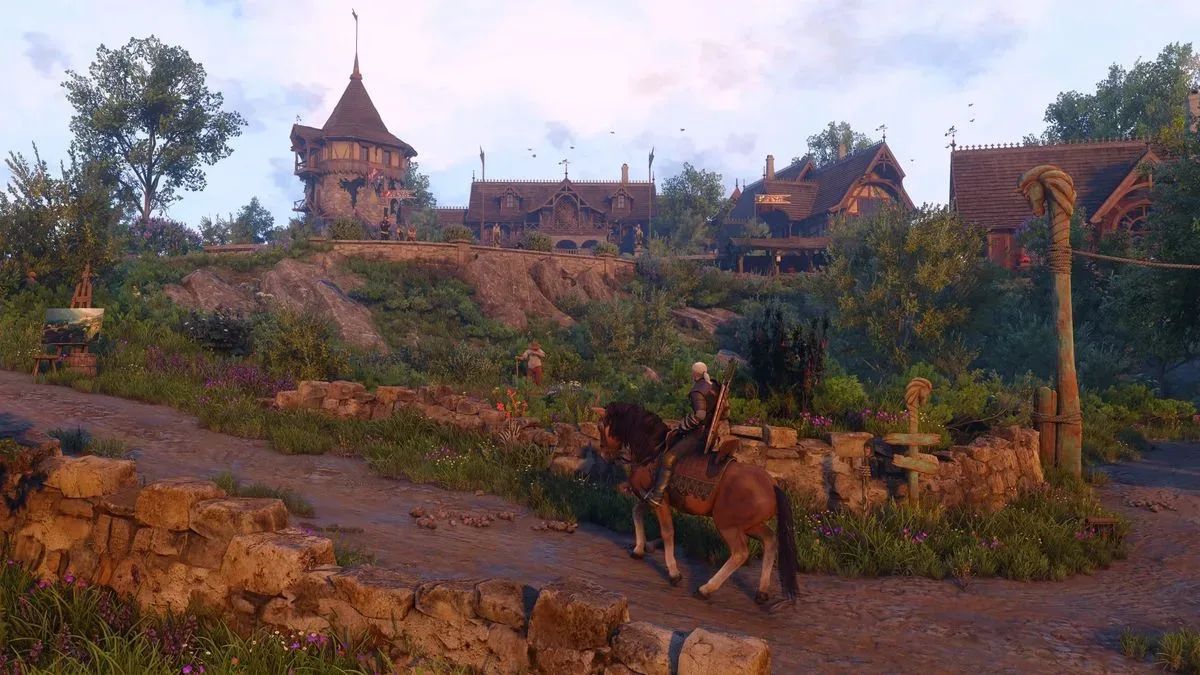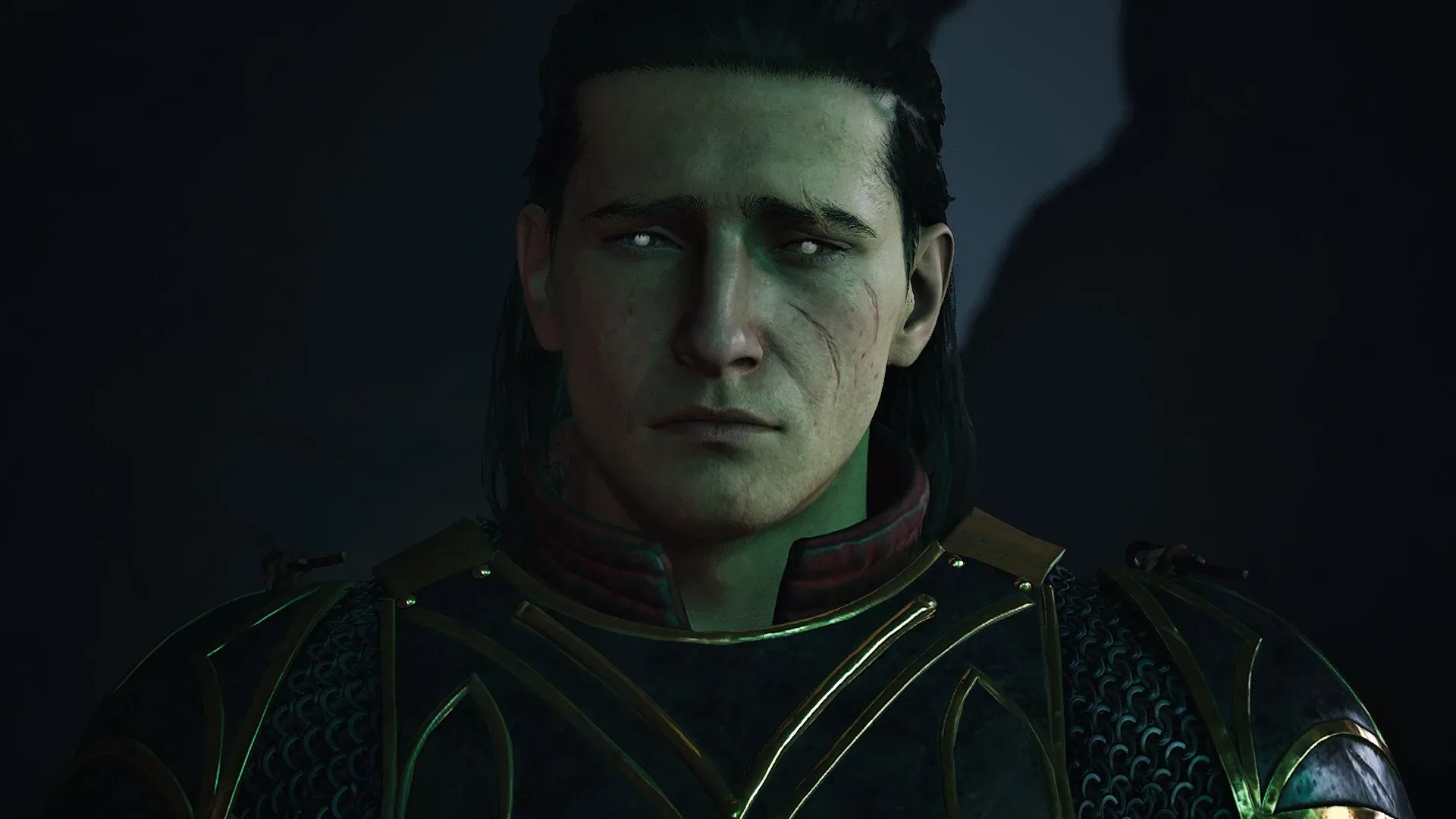
For more than a year, The Blood of Dawnwalker has carried an exceptionally convenient label: a fantasy RPG from former The Witcher 3 developers. It is a useful shorthand, but it has become a potentially misleading one now that Rebel Wolves’ game is in players’ hands.
The connection is real. Both games place a central protagonist in a medieval high-fantasy setting, and both use player dialogue choices to help determine the story that unfolds. For someone trying to place a new RPG before seeing much of it, that overlap is meaningful. Former developers’ credits are meaningful too. But a creative pedigree is not a mechanical blueprint, and it is certainly not a promise that a new world will offer the same emotional texture, scale or rhythm as a long-running series.
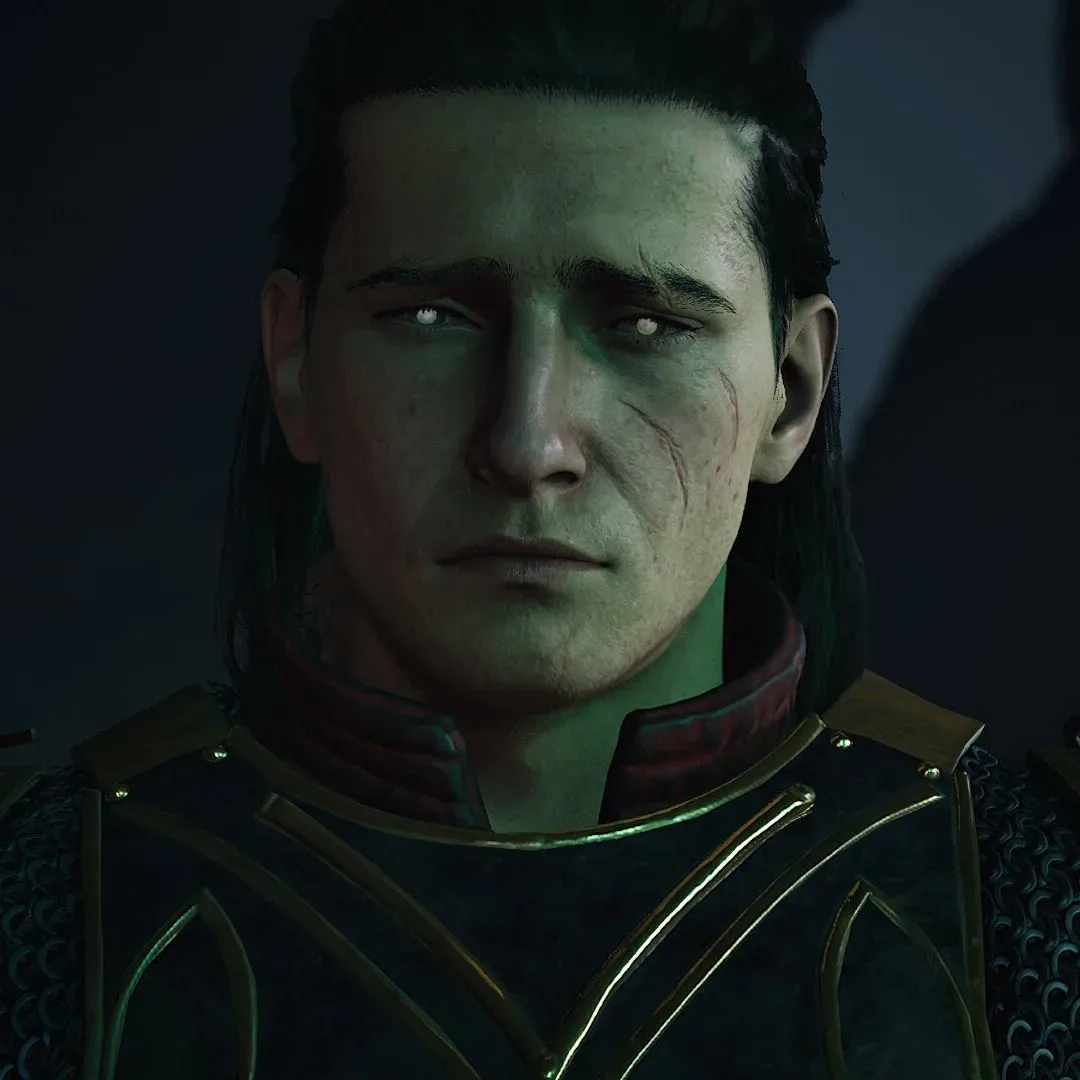
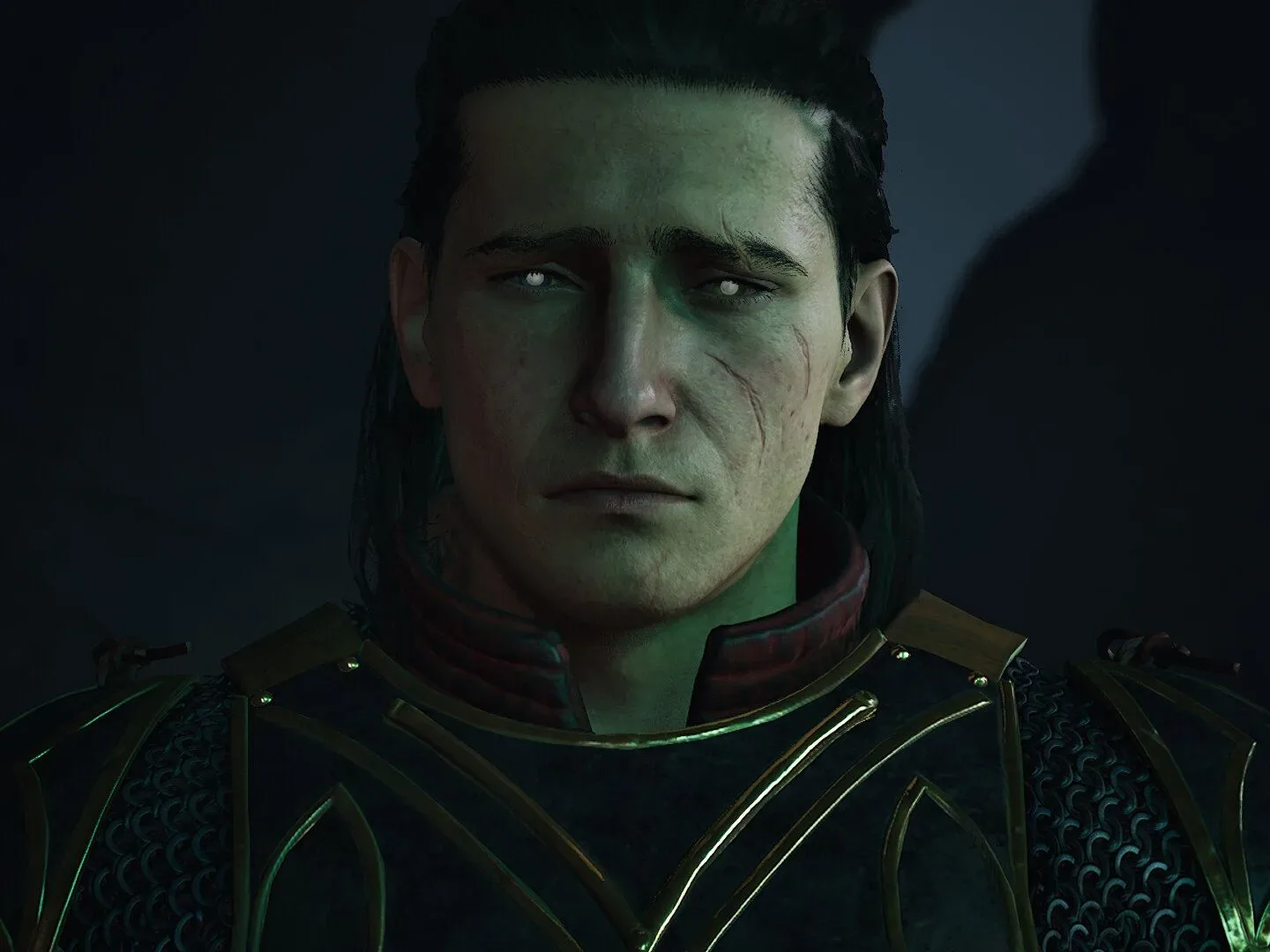
The more useful way to approach The Blood of Dawnwalker is as its own first step: an RPG about Coen of Laslea, vampire power, pressure and difficult choices in Vale Sangora. The game may share broad genre DNA with Geralt’s adventures, but its systems and mood appear designed to make the player feel a very different kind of tension.
The easy comparison hides the important differences
Comparisons to The Witcher 3 started almost immediately after The Blood of Dawnwalker was revealed in January 2025. That is unsurprising. The games have visible common ground, and the developers’ background supplied an instant point of reference for an unfamiliar property. The problem begins when that point of reference turns into an expectation that the games should behave alike.
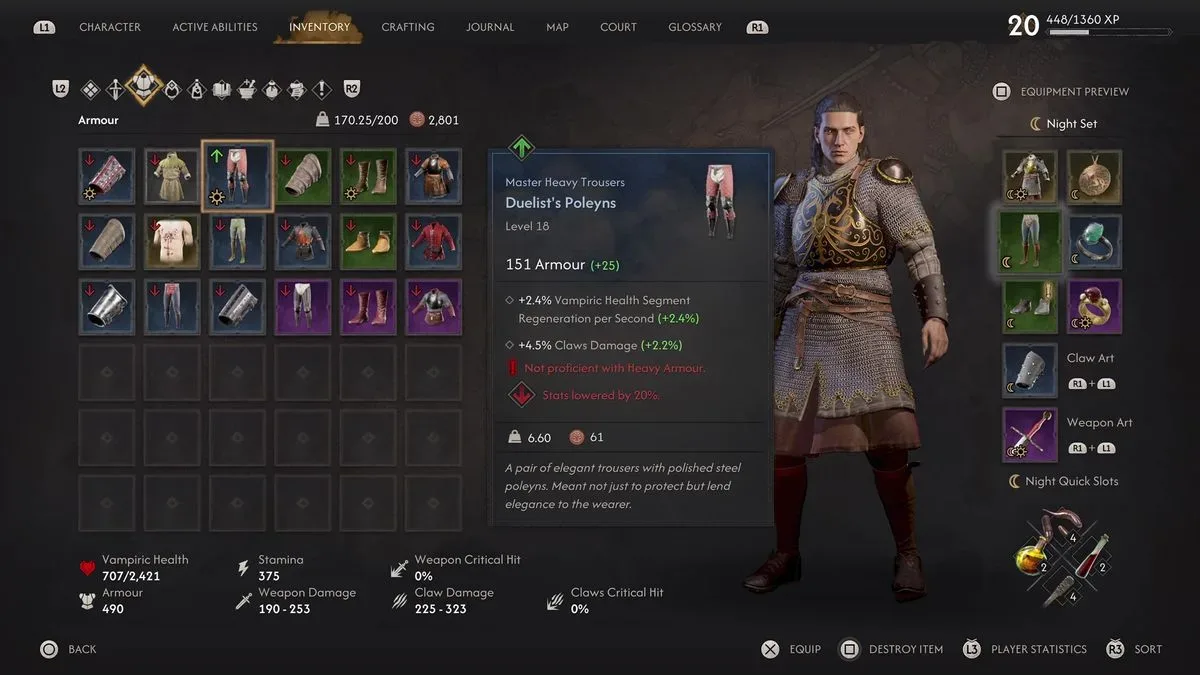
Mechanically, Coen is not simply another version of Geralt. When he is without witchcraft or vampire abilities, Coen fights at close range. His combat calls for directional blocks and directional dodges, rather than allowing players to rely on repeated dodge rolls and aggressive button inputs. Directional defense means the player must respond with the correct defensive movement in relation to an incoming attack, making positioning and reaction timing central to survival. That is a notably different combat demand from expecting an established monster hunter equipped with a broad, familiar toolkit.
Geralt’s combat identity is built around versatility. He carries steel and silver swords, with those weapons serving humans and monsters respectively, and the upcoming The Witcher 3: Songs of the Past expansion will add a silver hook on a chain for ranged attacks in place of the crossbow. Due in 2027, the weapon is described as a nod to the books and further reinforces Geralt’s status as a seasoned specialist with options ready at hand.
Coen’s situation is more constrained. That is not automatically a shortcoming; it is a design choice with practical consequences. Players who arrive seeking the same immediate flexibility may find the early combat demanding or awkward, especially where camera angles are already a concern. Conversely, players interested in deliberate melee exchanges may see the requirement to block and dodge directionally as a defining part of the game’s identity rather than an obstacle to be sanded away.
There is also an important distinction between a game having a shared genre and having shared combat language. “Open-world fantasy RPG” can describe an enormous range of design philosophies. It says little about whether combat prioritizes preparation, reflexes, resource use, stealth, positioning, or a protagonist’s particular supernatural talents. It says still less about what kind of story the player is being asked to inhabit.
Related coverage includes The Blood of Dawnwalker Steps Out of The Witcher 3's Shadow.
Coen’s clock changes the shape of the open world
The sharpest divide may be the game’s 30-day time constraint. A timer in an RPG can sound restrictive on paper, because the genre is often associated with clearing every map marker at leisure. Yet the reported experience in Vale Sangora is that the world can still unfold at the player’s own pace, and that the 30-day limit is less punishing than it initially appears.
That does not make the timer irrelevant. It changes the meaning of choice. A time constraint asks players to weigh priorities rather than assume every opportunity can be pursued in the same way. The point is not merely how many hours or days are available; it is that choosing one route can make another route less certain, less convenient or unavailable. In an RPG about resisting vampire lord Brencis, that pressure can support the fiction as well as the structure.
Vale Sangora also uses edicts that punish Coen’s actions in the open world and raise the pressure around his campaign. In this context, edicts are consequences imposed by the game’s world-level systems, not just an isolated dialogue result. Their presence means open-world activity is tied to escalating stakes. The player is not only deciding where to go; they are managing how their actions affect the conditions under which the wider struggle continues.
That is a fundamentally different proposition from judging the game on whether it provides the density of Geralt’s Continent. The comparison treats “more map” as an automatic virtue while overlooking the role a more concentrated setting can play. Vale Sangora is not presented as the equivalent of a literal country, and it does not have the same enemy or mission variety. But the two games do not enter the contest from equal positions. The Witcher 3 drew on an existing book series and two earlier games, while The Blood of Dawnwalker is the opening entry in what could become a saga.
For players, that distinction should influence the buying and playing decision more than the former-developer tagline. Someone hoping for an immense accumulation of regions, enemies and stories may need to recalibrate. Someone who values consequence-driven routes, a sustained sense of urgency and a world built around a specific conflict may find the smaller frame more purposeful.
Tone is not cosmetic in an RPG
The two games also diverge in atmosphere. Geralt’s world can become bleak and morally difficult, but it has room for warmth, absurdity and a knowingly fairy-tale-like quality. The forthcoming Songs of the Past material illustrates that balance: Geralt’s search for the missing Dandelion begins amid a countryside mystery involving Dandelion’s sister, but the setting also accommodates a brawl over a lute, a mansion visit in borrowed finery and a mission in which Geralt becomes intoxicated enough to converse with his horse.
That tonal elasticity is a major part of what many people mean when they praise The Witcher 3, even when they do not name it directly. It is not simply quest quality or monster hunting. It is the confidence to swing between danger, romance, tragedy and comedy without losing its broader identity.
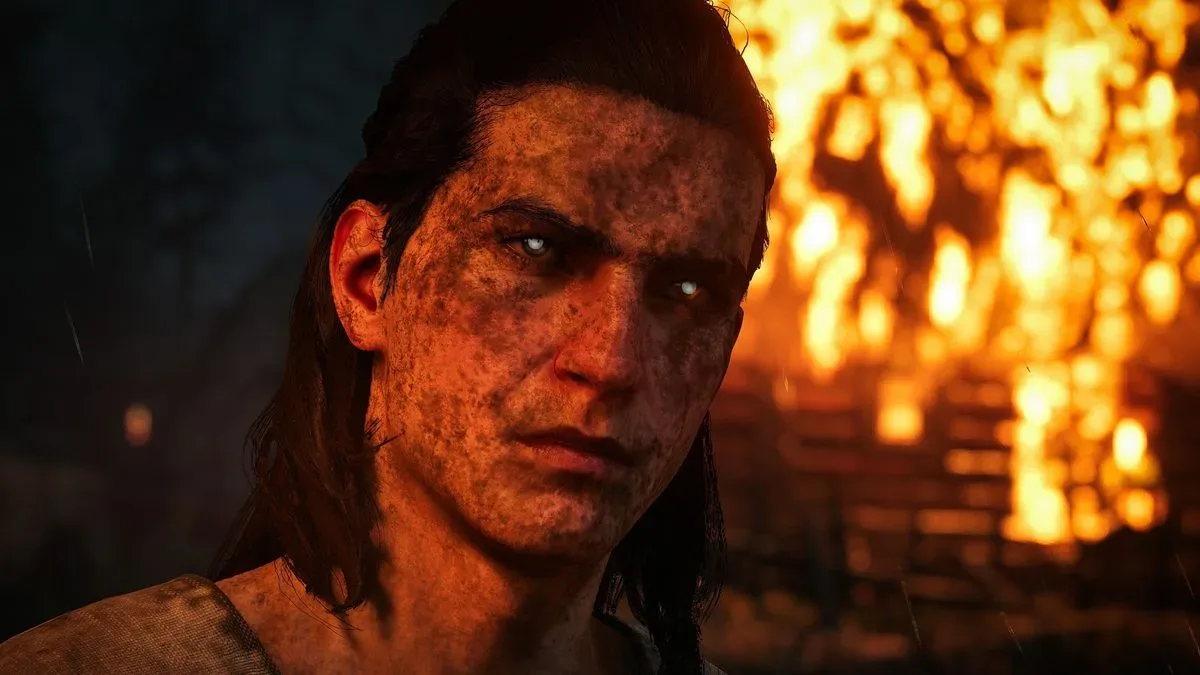
The Blood of Dawnwalker begins from a far darker register: a Black Plague fever-dream atmosphere and a protagonist who is not afforded the same visibly carefree moments. Coen’s story does not promise a comfortable retreat into familiar tavern-adventure energy. Its central vampire conflict, timer and edicts instead reinforce a mood of mounting strain.
Neither approach is inherently better. A lighter beat can make a dark story more human; relentless dread can make a world feel unusually committed to its premise. What matters is recognizing that tone affects expectations just as much as mechanics. A player seeking Geralt’s blend of gallows humor, folklore and occasional outright silliness may not get it from Coen’s journey. A player after a grimmer, more pressurized fantasy premise may regard that separation as the appeal.
Where criticism belongs
Moving past the Witcher comparison does not mean declaring every issue beyond criticism. Reports of awkward combat camera angles are specific usability concerns, and the lack of what some players would consider proper stealth is a clear preference issue for anyone expecting that approach to be supported. A new studio’s first release can be ambitious and still have rough edges. Both statements can be true without turning every imperfection into evidence that the game failed to replicate someone else’s favorite RPG.
That is a healthier framework for evaluation: identify what the game is attempting, then ask how well its actual systems serve that intention. Does the camera support the precision demanded by directional defenses? Does the 30-day structure produce meaningful choices without becoming oppressive? Do edicts make open-world decisions compelling? Does the darker atmosphere sustain itself? Those questions get closer to the real experience than a checklist of Witcher-like features.
It is also worth separating studio scale from player expectation. Rebel Wolves is not framed as a triple-A studio, and The Blood of Dawnwalker is its first game. That does not excuse frustrating design, but it helps explain why treating the project as a direct match for a mature, soon-to-be four-part game series is an uneven standard. A familiar creative lineage can open the door; it cannot supply years of accumulated world-building by itself.
The wider industry is continually finding new ways to expand production pipelines and visual workflows, as seen in this look at AI-assisted 3D production and conversion. But tools and studio history do not remove the need for a new series to establish its own foundations, systems and tone on its own terms.
A better way to decide whether Dawnwalker is for you
The simplest recommendation is to ignore the question of whether liking The Witcher 3 guarantees enjoyment of The Blood of Dawnwalker. It does not. The overlap may make the game worth investigating, but the decision should rest on its distinct qualities.
- Try it for choice under pressure if the idea of a 30-day structure and consequences through edicts sounds more engaging than relaxing.
- Expect deliberate melee combat if playing without supernatural abilities, including directional blocks and dodges, rather than Geralt-style versatility.
- Go in ready for a darker tone if a plague-shadowed vampire story sounds preferable to a fantasy adventure that regularly makes room for levity.
- Set scale expectations appropriately if comparing a new setting, Vale Sangora, with a world supported by books and multiple earlier games.
- Keep the caveats in view if camera behavior and the absence of robust stealth are likely to be deciding factors.
Geralt and Coen can share a shelf in the fantasy-RPG conversation without being made to share the same job description. The former-developer connection remains interesting context, not a contract. The Blood of Dawnwalker stands or falls on the effectiveness of its own combat, consequences, world and mood—and those elements make it look less like a substitute for The Witcher 3 than a separate, more pressured kind of vampire RPG.