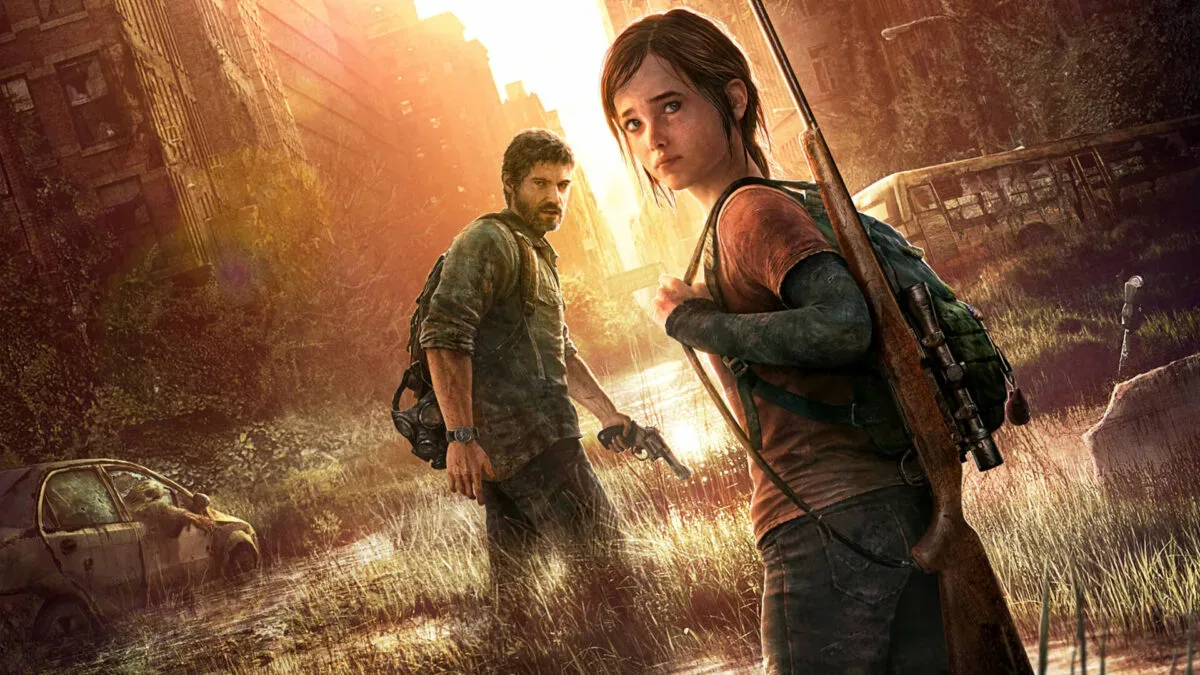
Naughty Dog has confirmed that it is developing two projects set in the world of The Last of Us, with both described as being in “very early stages.” The crucial detail is not simply that more work may be coming from the franchise: studio head Neil Druckmann says each project will expand the canon beyond The Last of Us Part I and The Last of Us Part II.
That wording gives fans one substantial point of certainty and several major unknowns. The projects are real enough to be publicly acknowledged. They are intended to tell canonical stories rather than merely revisit existing events. But Naughty Dog has not identified their formats, whether either is a game, which characters or period they involve, what platforms may be relevant, or when either could be revealed.
For a series frequently discussed in terms of a possible Part III, the announcement is meaningful without being an answer to that particular question. Neither project has been called The Last of Us Part III. Equally, neither has been ruled out as a game. At this stage, “projects” is deliberately broader than “games,” and that distinction is the center of the story.
What Naughty Dog has actually confirmed
Druckmann said the studio had been considering further stories in the setting since the 2024 behind-the-scenes documentary Grounded II. He characterized the two works as exciting but too early for substantial details, while stressing that the studio would return to the universe only if it had something meaningful to say.
“We have a couple of very exciting new projects in very early stages – so we can’t say much about them at this point. I will tell you that both projects will expand the canon of The Last of Us beyond Part I and Part II.”
In franchise terms, canon means material treated as part of the official continuity of that fictional world. It is more specific than an adaptation, a remix, or a promotional side story. The statement therefore suggests new story material that exists alongside the events and setting established by the first two main games.
That does not reveal where the stories sit on the timeline. “Beyond” can describe a narrative that moves forward from established events, but it can also mean a story that broadens the known universe through another setting, group, or perspective. Nothing announced so far confirms a sequel set after Part II, a prequel, a direct continuation for any particular character, or a story about entirely new people.
Projects are not automatically games
Fans should resist treating the plural “projects” as shorthand for two new console releases. Naughty Dog has chosen a term that accommodates games, screen productions, publishing, or other storytelling formats. That flexibility matters because The Last of Us already exists across more than one medium, and its world can support narratives that do not require a traditional full-scale game.
Related coverage includes Naughty Dog Says Two The Last of Us Projects Are in Very Early Development.
A transmedia project is a story or franchise activity that crosses media formats. In practical terms, that could mean a story made for television, film, comics, or another format rather than a game. The existing HBO adaptation demonstrates that The Last of Us can reach audiences outside PlayStation, although the newly confirmed projects have not been identified as television productions, films, comics, or anything else.
The possible formats can be separated into what is confirmed and what is speculation:
- Confirmed: There are two projects, they are early in development, and both are intended to add to the canon beyond Part I and Part II.
- Not confirmed: That either project is a game.
- Not confirmed: That either project is Part III.
- Not confirmed: Any returning characters, gameplay structure, release window, platform, screen format, or publishing plan.
This may sound cautious, but it is the useful way to read an early-development statement. Early stages can encompass concept work, story development, internal planning, and other foundational steps long before a project is ready to be formally unveiled. A public confirmation of intent is not a release timetable.
Why the wording matters after The Last of Us Online
The new acknowledgment lands after a major change in Naughty Dog’s plans for the series. The studio had been working on The Last of Us Online, a multiplayer project that was eventually canceled. The concern was that supporting it after launch could consume too much of Naughty Dog’s future development capacity.
That history makes the present announcement notable for what it does not promise. There is no stated commitment to a long-running online service, no gameplay pitch, and no indication that either newly mentioned project resembles the canceled multiplayer game. There is only a commitment to meaningful stories in the world of The Last of Us.
Post-launch support refers to the continuing work a game may demand after it ships: maintaining the experience, responding to technical and balance issues, producing ongoing updates, and keeping teams assigned over time. For a studio, the trade-off is straightforward even when the decisions are difficult. Resources assigned to sustaining one live product are resources unavailable for new projects. The cancellation of The Last of Us Online was tied to exactly that concern.
It would be a leap to infer that the new projects are smaller, single-player, or non-game works solely because of that cancellation. Still, the studio’s stated focus on avoiding a support burden provides important context for why an early announcement framed around story and canon carries a different tone from an online-service pitch.
Part III remains unannounced
The obvious question is whether one of the projects is the long-discussed next numbered game. At present, there is no official basis to label either project The Last of Us Part III. The announcement leaves that possibility open, but it does not establish it.
The distinction is more than semantics. A numbered sequel usually communicates a particular relationship to earlier entries: a major continuation expected to stand beside them. “Two projects that expand canon” has a wider meaning. It could include stories that deepen the setting without becoming the next core installment. It could also include a game that eventually becomes Part III. The current information cannot choose between those outcomes.
That measured approach to sequels also fits a broader creative principle voiced elsewhere in game development: a follow-up needs a compelling creative reason, not merely the commercial logic that a previous entry succeeded. A recent discussion of sequel-making and creative excitement illustrates why that distinction can matter. In Naughty Dog’s case, the stated threshold is whether there is a meaningful story worth telling.
What “expanding the canon” could mean for audiences
The Last of Us is a setting with established events and emotional stakes, so a canonical expansion creates expectations that a standalone adaptation does not necessarily carry. New stories may change how players interpret known moments, establish additional history, or introduce people and places that become relevant to the world’s larger continuity.
For players, the practical implication is that future official discussion may require more precision than the catch-all question, “Is this Part III?” The better questions are:
- Is the project a game or another medium?
- Where does it fit in the established timeline?
- Does it follow a known character, a new cast, or multiple perspectives?
- How directly does it connect to the events of Part I and Part II?
- Is it being positioned as a new mainline entry or as another kind of canonical story?
None of those answers has been provided. Yet the announcement does establish that the franchise’s next steps are being considered as additions to its official story, rather than as a simple reissue or a repeat of familiar events.
Timing is likely to remain unclear for a while
Naughty Dog is also focused on Intergalactic: The Heretic Prophet. With two The Last of Us projects still in very early development and another studio project in view, there is no announced indication that a reveal is imminent.
That is especially important for fans trying to turn the news into a near-term release prediction. Nothing in the statement provides a launch year, teaser date, development milestone, or order in which the two projects will emerge. The only responsible expectation is patience: the studio has confirmed a direction, not a schedule.
For now, the most accurate reading is also the most restrained. Naughty Dog has two early The Last of Us projects underway. Both are intended to grow the official story beyond the first two games. They may be games, but they have not been identified as games; they may relate to a future Part III, but neither has been named as Part III. The clarity lies in the commitment to more canon. The mystery lies in almost everything else.