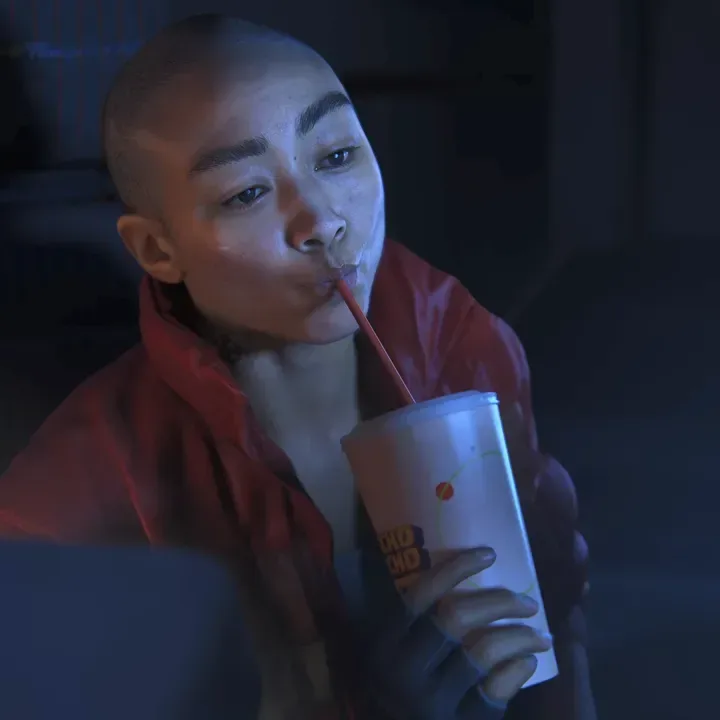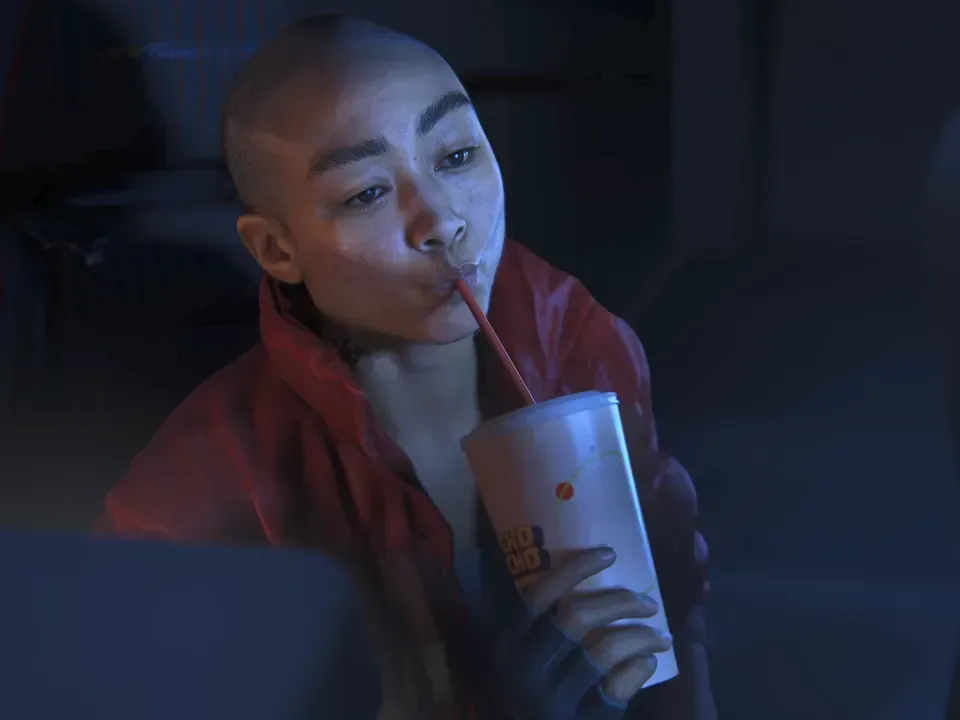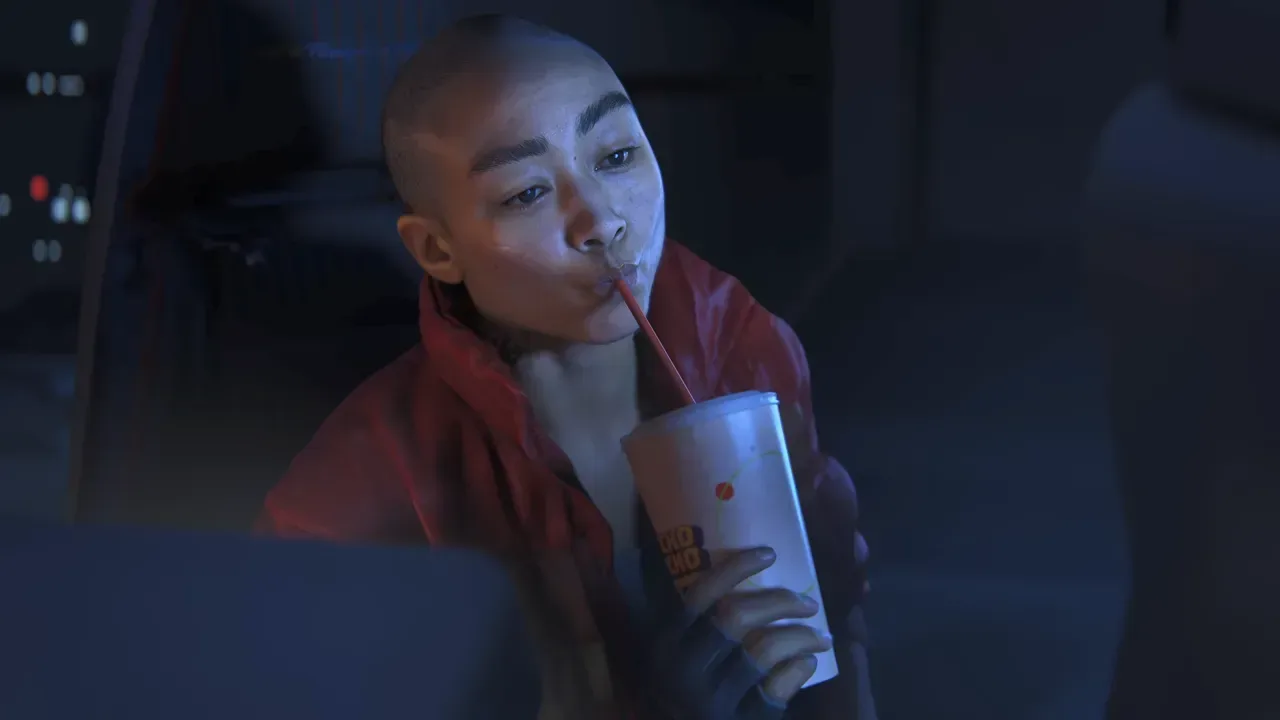
Troy Baker has offered an enthusiastic, if necessarily vague, update on Intergalactic: The Heretic Prophet, Naughty Dog’s forthcoming science-fiction game. Speaking at Ottawa Comiccon earlier this month, Baker said the project is “testing the bounds” of what the studio can accomplish and repeatedly suggested that audiences are unprepared for what is being made.
The remarks are notable because concrete information about Intergalactic remains limited. Naughty Dog revealed the new intellectual property at The Game Awards in 2024, and its initial trailer remains the only substantial public look at the game. There is no official launch date, no confirmed release window, and no fuller explanation yet of its gameplay systems or story.
Baker, who also appears in the game, focused much of his praise on lead actor Tati Gabrielle, who plays protagonist Jordan A. Mun. He compared the feeling of Gabrielle’s casting to the studio finding Ashley Johnson for Ellie in The Last of Us, calling Gabrielle a “spiritual successor” in that respect.
“There is so much about Jordan and that game of Intergalactic that feels like… man, I feel all of it. I feel Uncharted, I feel The Last of Us, I feel something new.”
That is an evocative description rather than a confirmation of any particular mechanic, setting detail, or narrative connection. Still, it outlines the expectations surrounding the project: a game that may draw on Naughty Dog’s recognizable strengths in performance-driven storytelling while trying to establish a distinct identity in a new genre and universe.
What Baker’s comments do—and do not—tell us
Baker’s comments are first and foremost a cast member’s assessment of work he has seen. They should not be read as a substitute for a product breakdown or a release announcement. His praise tells fans that the team has high internal confidence and that Gabrielle’s performance has made a strong impression, but it does not establish precisely how the game plays, how large it is, which systems it includes, or when players will get it.
It does reinforce several previously established points. Neil Druckmann has characterized Intergalactic as the studio’s most ambitious game to date. Druckmann has also stepped back from HBO’s The Last of Us adaptation in order to focus on development. Combined with Baker’s comments, that signals a major creative priority for the studio rather than a smaller side project.
The wording around “ambition” is worth treating carefully. In game development, ambition can refer to many things: a more complex production, new technical demands, a larger scope, more intricate performance work, or a departure from a developer’s familiar formula. Nothing publicly available establishes which of those meanings applies most strongly to Intergalactic. For now, Baker’s remarks support the broad idea that Naughty Dog sees the game as a meaningful step beyond its previous work, not a precise list of promised features.
Related coverage includes Troy Baker Says Intergalactic Is Pushing Naughty Dog Beyond Its Usual Limits.
Performance capture has wrapped, marking a development milestone
One tangible piece of progress is that Naughty Dog has finished shooting performance capture for Intergalactic. Performance capture is the recording process in which actors’ physical movements—and often facial work and spoken performances—are captured for use in a game. It is central to the cinematic character work associated with Naughty Dog’s modern games, but completing a performance-capture shoot does not mean a game is finished.
After such a shoot wraps, developers can still face extensive work. Teams may need to refine animation, integrate performances into playable sequences, revise scenes, build and tune levels, address technical issues, balance systems, localize text and voice work, and conduct broad testing. Games can also return to additional recording when changes require it. In short, this is meaningful forward movement, but it is not a dependable public countdown to launch.
There is a reason fans have compared the milestone with The Last of Us Part II, whose performance-capture work concluded in 2019 before the game released in 2020. That comparison offers a familiar point of reference, but it cannot confirm an identical schedule for Intergalactic. Different projects have different scopes, production needs, approval processes, and plans for marketing. A past timetable can suggest possibility; it is not a promise.
Why a 2027 release remains speculation
Intergalactic is known to be missing 2026, while reports have pointed to a possible 2027 target. However, Naughty Dog has not announced that year itself. The distinction matters. A rumored target can move, and a developer may choose to reveal a release plan only when it is confident in the timing.
That restraint is particularly understandable for a project with no firm date in public view. A release window is a commitment, while enthusiasm from a performer is not. Baker’s confidence can give fans reason to be curious about the game’s next showing, but it does not alter the official status: no launch schedule has been confirmed.
The studio’s recent quiet period has naturally intensified attention around each update. It has been seven years since Naughty Dog’s last new-game release, and Intergalactic has not appeared at recent State of Play presentations. That absence does not itself explain when the game will be shown next. It does mean that a relatively small production milestone, such as the end of performance capture, becomes more significant to a community waiting for its first substantial post-reveal look.
A new lead in a new universe
Gabrielle’s role as Jordan A. Mun sits at the center of Baker’s remarks. That matters because Intergalactic is a new IP, meaning it is not built on an existing Naughty Dog series such as Uncharted or The Last of Us. New properties have to introduce their world, central conflict, visual language, and lead character without the benefit of years of audience familiarity.
Baker’s comparison to Ellie does not establish that Jordan is similar to Ellie as a character. It instead emphasizes the perceived importance of casting: a lead actor can become the emotional anchor through which players first encounter an unfamiliar universe. Gabrielle was already shown as Jordan in the reveal material, but Baker’s comments suggest her performance is a core part of what has excited collaborators working on the project.
His reference to Uncharted, The Last of Us, and “something new” should similarly be viewed as an emotional and creative shorthand. It signals continuity with Naughty Dog’s history while stressing that Intergalactic is not being framed as a simple repeat of either series. Until Naughty Dog presents more gameplay and story detail, that is the most responsible interpretation available.
The wider industry is wrestling with comparable questions about how major teams evolve established design sensibilities into their next projects; for another angle on that broader development conversation, see Chris Wilson’s comments on balancing familiar influence with a modern ARPG approach.
What to watch for next
The next useful update on Intergalactic would be one that converts the project’s broad promises into specifics: a new trailer, a clearer view of Jordan’s setting and objectives, an explanation of the game’s core play loop, platform details, or an official release window. None of those has been confirmed at present.
For now, Baker’s comments provide an encouraging creative signal rather than a timetable. They highlight Gabrielle’s central performance, affirm that performance-capture filming has concluded, and suggest a team attempting something more expansive than its earlier work. They also leave the essential questions intact. Naughty Dog has a new sci-fi game with substantial expectations attached to it; players still need to wait for the studio to show what that ambition looks like in practice.