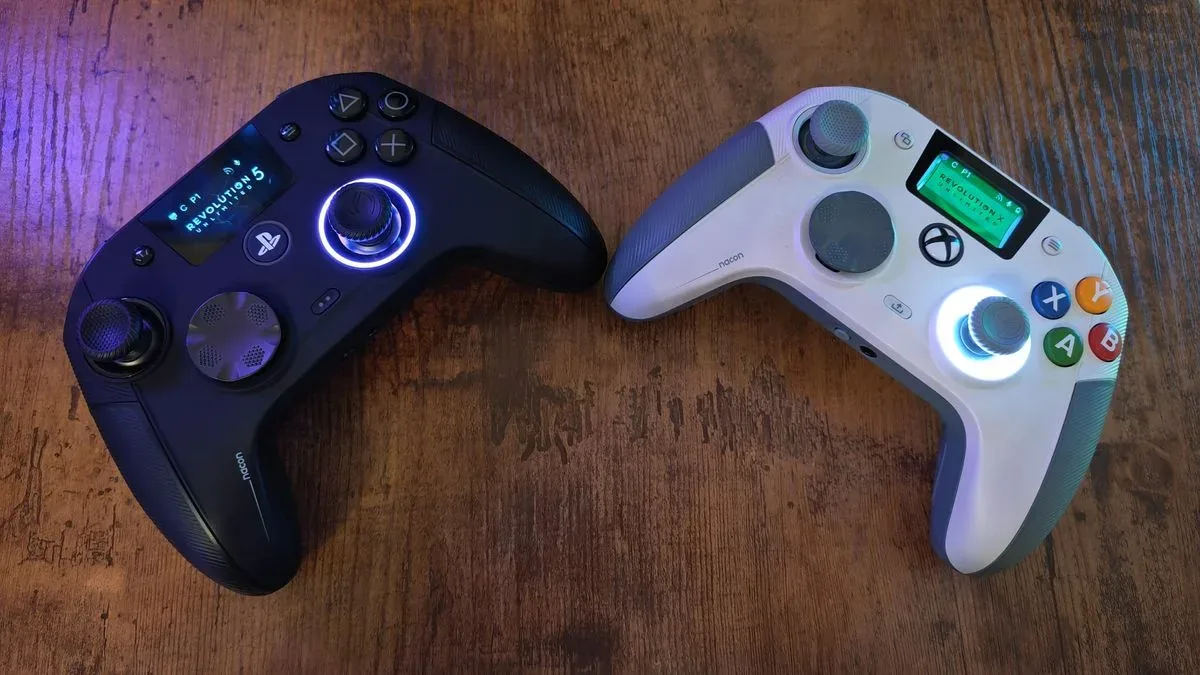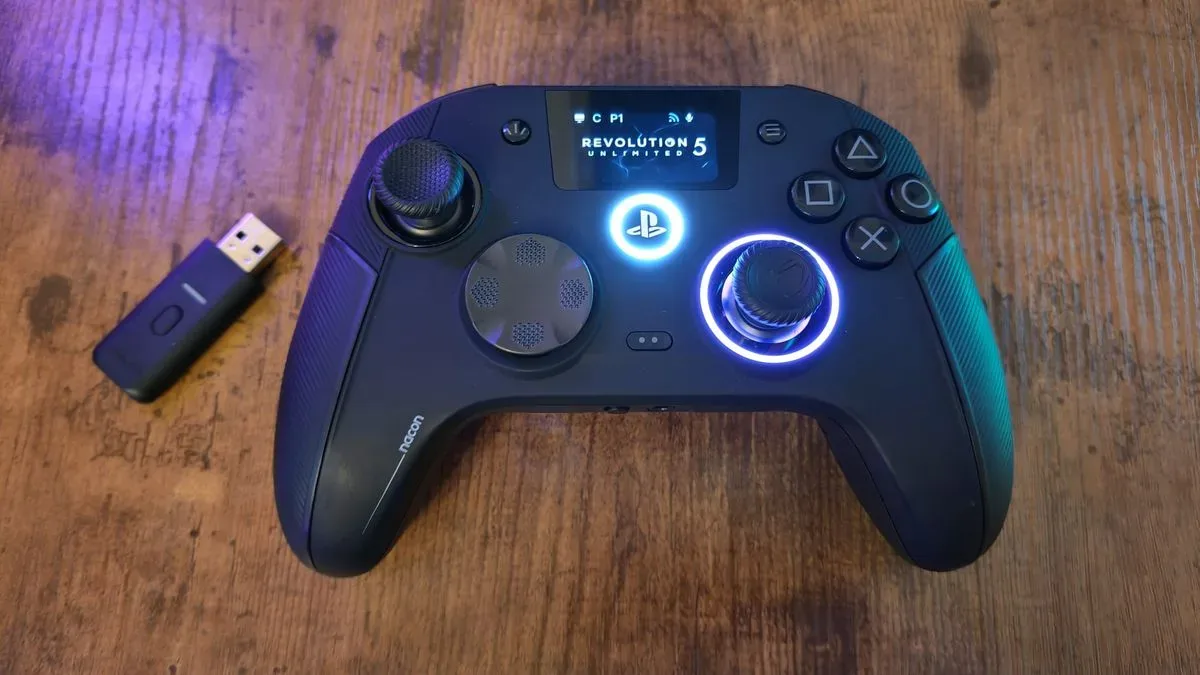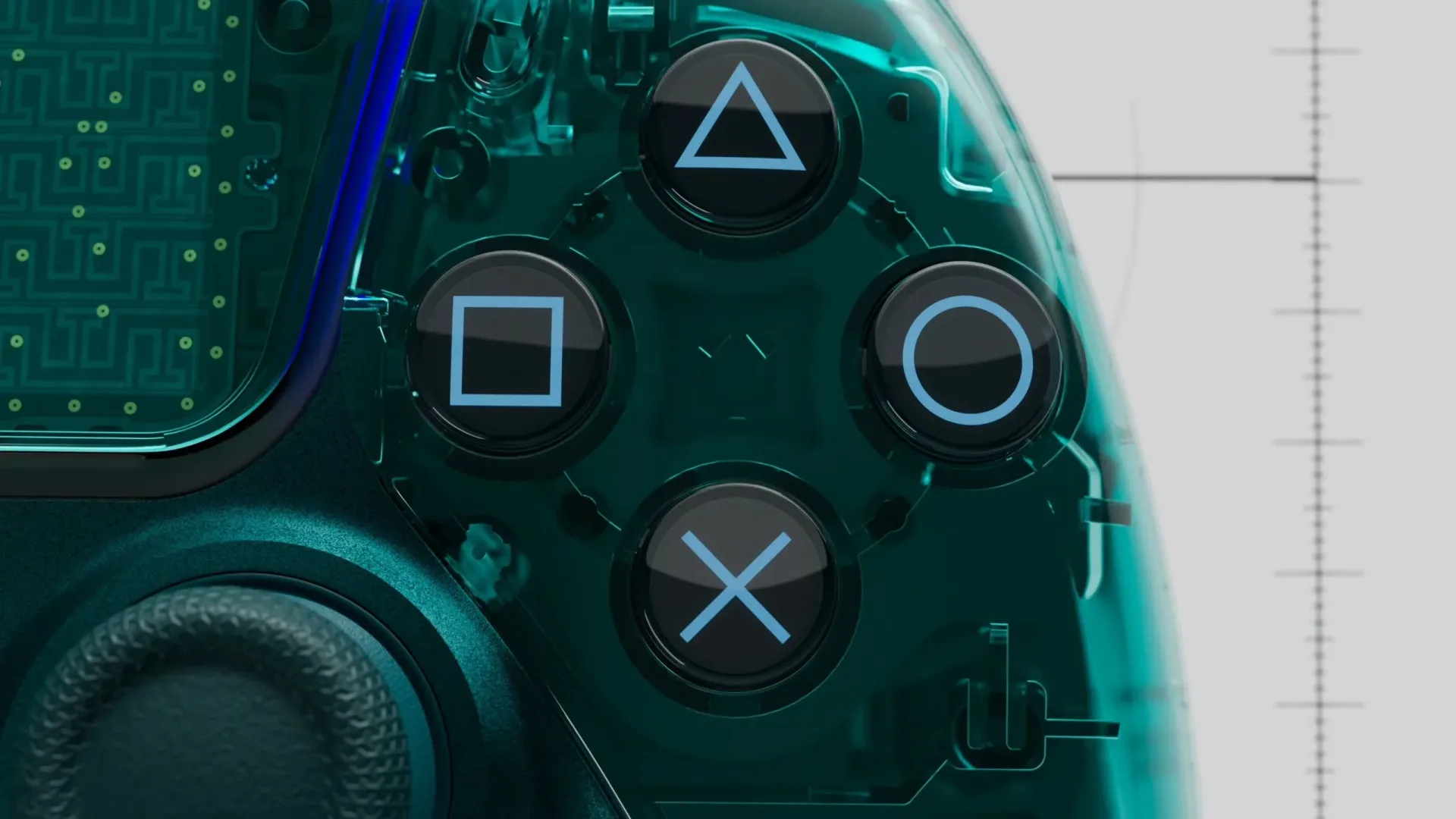
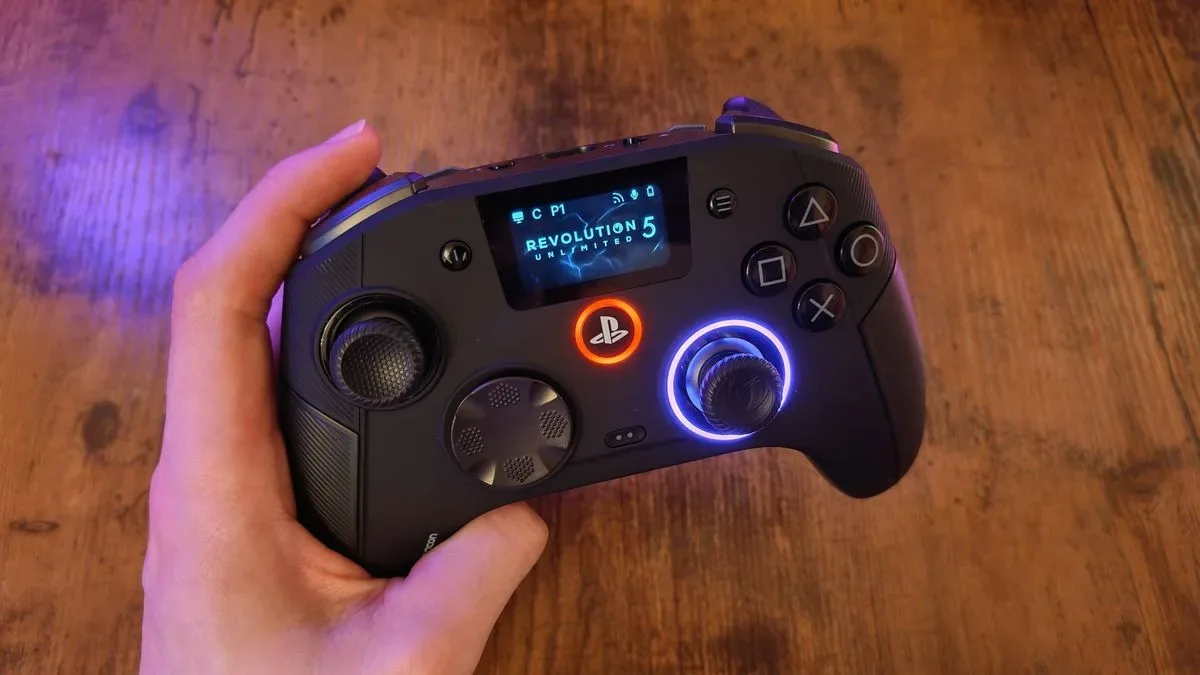
The premium-controller arms race has reached a particularly handsome and slightly ridiculous milestone: the Nacon Revolution 5 Unlimited puts an onboard display into a PlayStation-friendly gamepad. It also arrives with TMR thumbsticks, six additional inputs, a charging stand, adjustable grip weights, swappable stick parts, Bluetooth audio controls and a £179.99 / $229 price point that asks buyers to take a very deep breath before pressing Start.
On paper, the Revolution 5 Unlimited—often shortened to R5U—sounds like Nacon taking the strongest ideas from its Revolution X Unlimited Xbox and PC controller, dressing them for PlayStation, and continuing to fiddle with the small details that determine whether an expensive pad feels deluxe or merely expensive. The strongest case for it is not that it unveils one impossible feature nobody else has considered. Rather, the appeal is in how many familiar enthusiast-controller ideas it combines: responsive microswitches, a highly configurable layout, premium materials and meaningful onboard adjustment tools.
There are catches, and they are important ones. The controller does not offer Sony’s haptic feedback on PS5, its vibration functionality is limited to PC mode, and it cannot wake a PS5. It also replaces a conventional touchpad with a mapping workaround. Those limitations may be a deal-breaker for players who consider the DualSense experience inseparable from PlayStation games. For players prioritising physical control feel, extra buttons and configuration, however, the R5U shapes up as a formidable alternative.
A separate assessment of the Revolution 5 Unlimited’s precision-focused design similarly underscores how much of Nacon’s pitch rests on its premium control hardware rather than gimmickry alone.
For more context, explore Save Mass Effect Campaign Sends a Billboard Truck Around EA HQ Before N7 Day.
A PlayStation pad built around six extra inputs
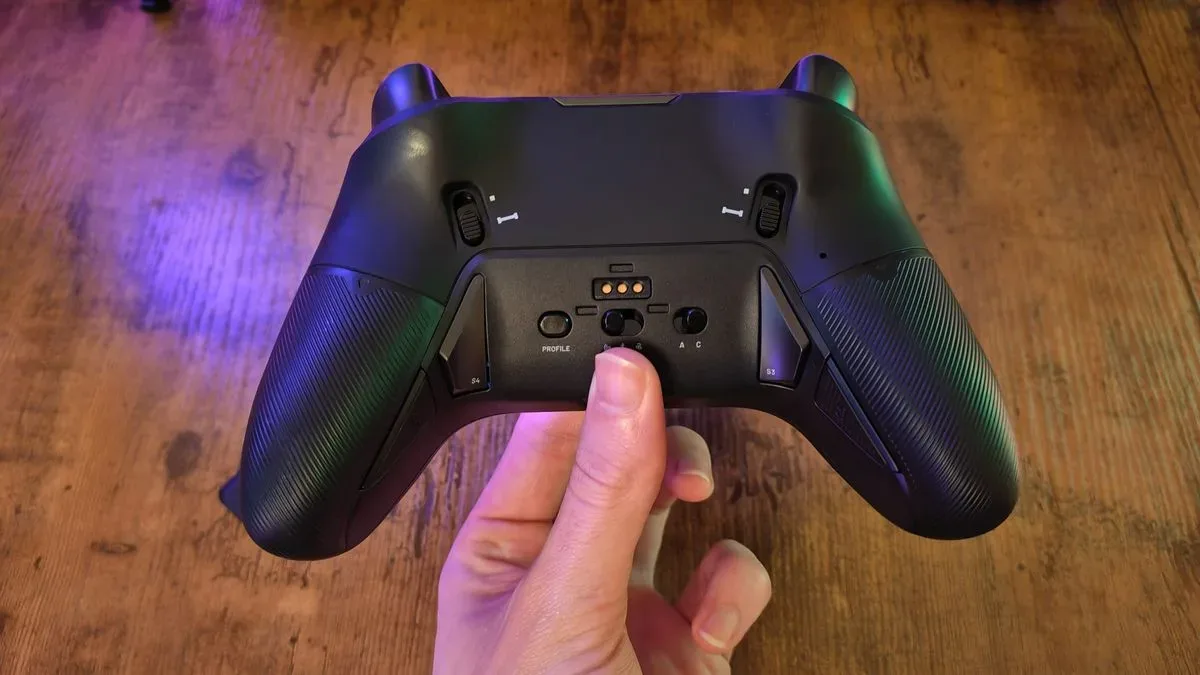
The R5U works with PS5 and PC, retaining the normal controls expected of a PlayStation-compatible pad while adding six remappable buttons. Four sit along the rear grips and two are placed around the shoulders. That is a generous allotment compared with standard console pads, and it can make a practical difference in games where a player wants to keep their thumbs on the sticks while jumping, reloading, changing equipment or activating abilities.
Nacon uses microswitches for most of these controls. In simple terms, a microswitch is a clicky mechanism designed to activate with a short movement and a distinct tactile response. The shoulder buttons and triggers are exceptions, but the main face and additional controls are designed for a quick, light press. The underlying benefit is not magic extra skill—it is a physical layout that can reduce the need to move a thumb between stick and face button, while giving each press a sharp, definite sensation.
The reported design emphasis is unusually specific. The buttons are said to have shorter travel and lower actuation force than many comparable clicky controllers. Actuation force means the pressure required to register an input; lower force can make repeated presses less demanding, although some users may prefer firmer resistance or need time to avoid accidental inputs. Nacon lets owners map the additional buttons to no action if a particular paddle or shoulder control becomes more nuisance than useful.
Comfort, as always, will be personal. The controller uses asymmetrical stick placement, putting it closer to an Xbox-style arrangement than the symmetric analog-stick layout many PlayStation users know best. That is an intentional ergonomic preference, not a universal upgrade. Anyone committed to PlayStation’s symmetrical arrangement should recognize that the R5U does not imitate a DualSense or DualSense Edge in this respect.
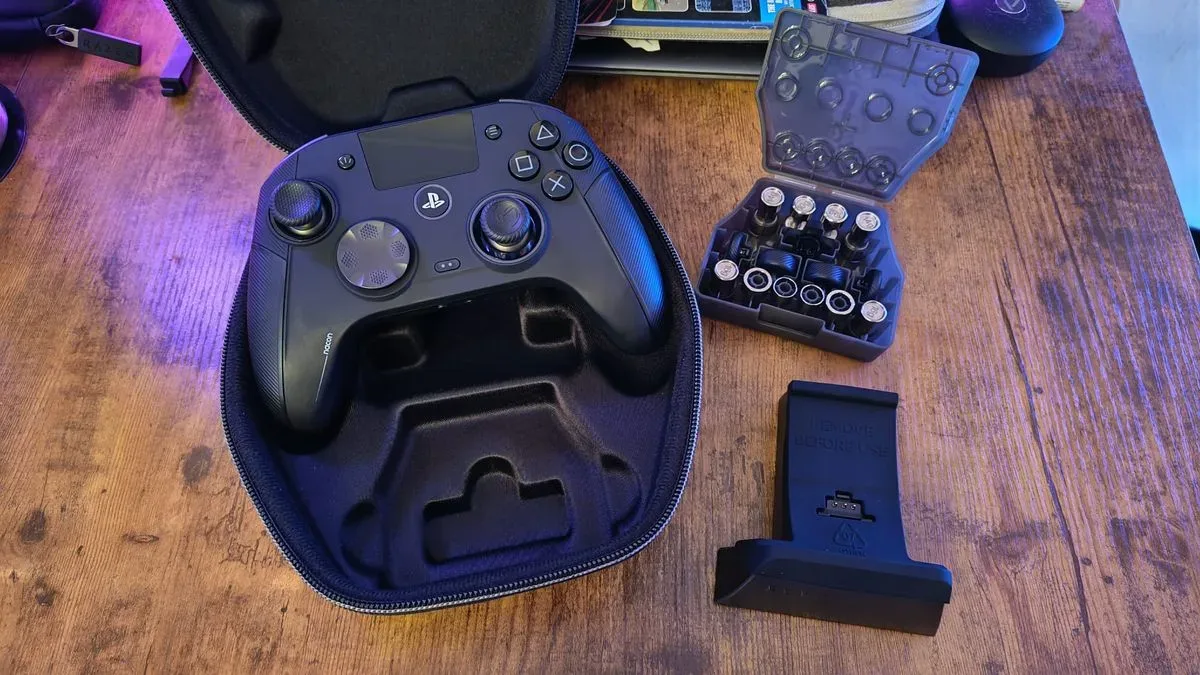
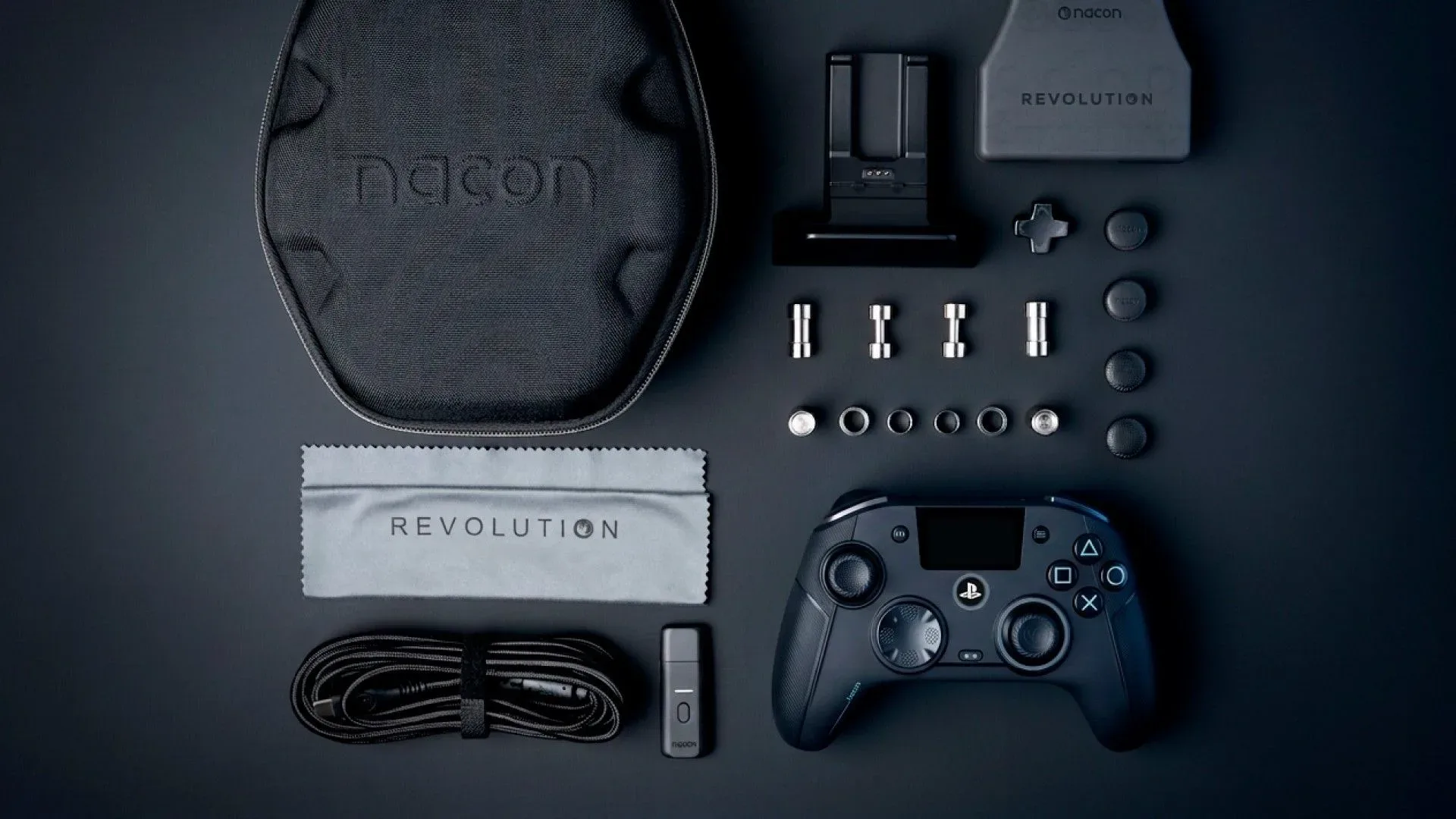
Its materials aim squarely at the luxury end. The grips have a rubberized finish, while matte plastic makes up other sections. There are also adjustable weights that fit into the grips, allowing players to alter the controller’s heft. Included swappable thumbstick tops and stick-width options add another tier of tuning, even if this is not the most modular design in the category. The Victrix Pro BFG, for example, is described as offering more extensive interchangeable parts.
The built-in display is the unusual headline feature
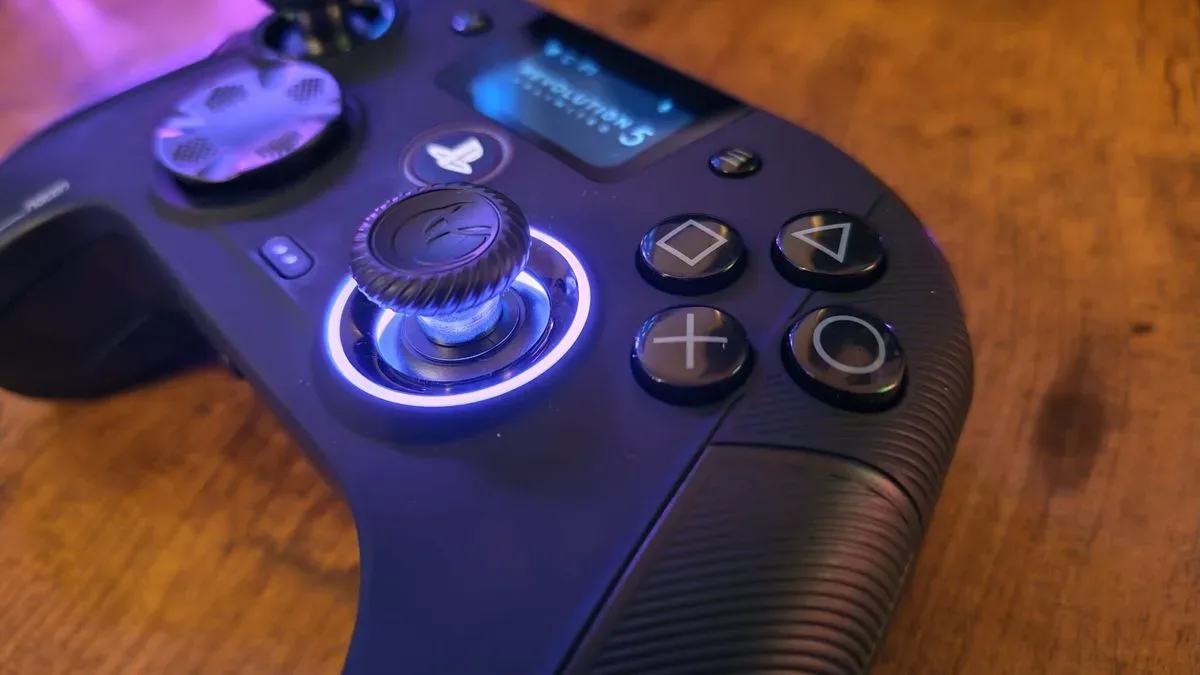
The R5U is positioned as the first PS5 controller with its own screen and onboard menu system. A small display is not unprecedented among PC and Xbox controllers, but it matters more in the PlayStation context because it gives owners a way to tune important settings without first opening companion software.
Its menu covers audio, joystick controls, button mapping and general settings. The audio section includes Bluetooth-related controls and microphone gain. The controller can pair as a separate Bluetooth device for audio routed through the pad, making those controls more than a decorative submenu.
Joystick settings include dead zones, input curves, inversion, gyro settings and special shooter and sensitivity options. A dead zone is the small area around a stick’s resting center in which movement is intentionally ignored. Increasing it can stop unwanted movement from a stick that is not perfectly centered, but too large a dead zone can make aiming or gentle movement feel less immediate. An input curve changes how stick movement translates into in-game input; it can make initial movements more gradual or make the response accelerate more aggressively toward the edge of the stick’s range.
Those tools are familiar to competitive-controller users, but putting them directly on the device is valuable. It means an owner can adjust settings closer to the moment they identify a problem, instead of treating a PC app as mandatory equipment. The R5U does have a mobile companion app for deeper profile, response-curve, custom-mode and RGB-lighting adjustments. It does not have a new dedicated PC companion app, though, which is an odd omission for a controller that supports PC.
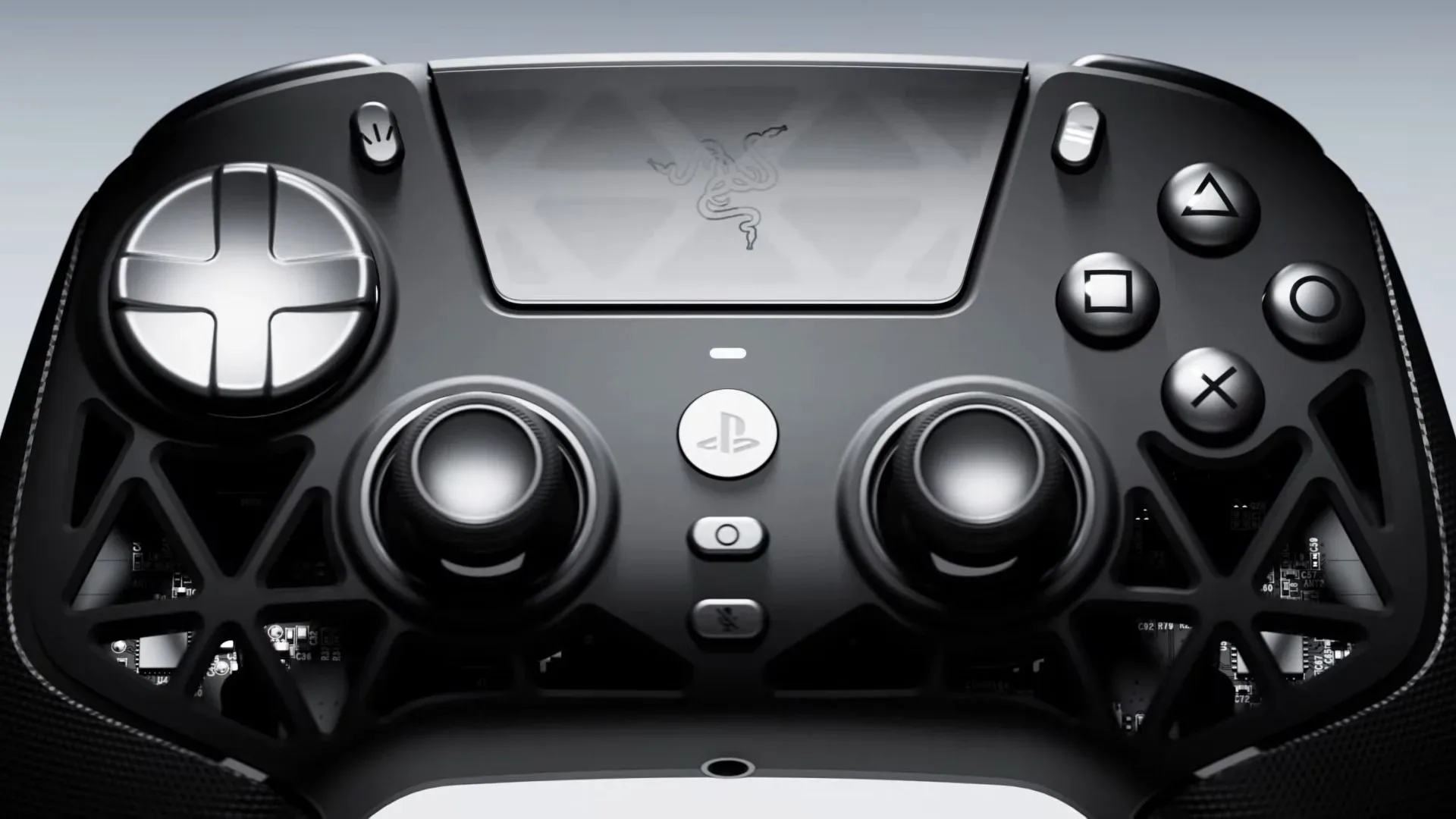
The onboard screen also reveals the most conspicuous compromise in Nacon’s PlayStation implementation. There is no physical touchpad. Instead, a touchpad function can be assigned to one of the extra buttons. This preserves access to games that require a touchpad input, but it is not equivalent to having the surface immediately available. It asks players to decide which existing function they can most comfortably sacrifice or relocate. Mapping the touchpad action to the Share button is one proposed solution for people who do not need that button in a given game, but the best layout will vary from game to game.
TMR sticks, explained without summoning a physics exam
The most substantial technical change from the Revolution X Unlimited is the R5U’s shift to TMR thumbsticks. TMR stands for tunneling magnetoresistance. It is a magnetic sensing technology used to detect stick movement. It belongs to the same general conversation as Hall effect sticks: both aim to avoid the traditional physical contact associated with conventional potentiometer designs and their potential for wear-related stick drift.
That does not make any stick system immortal, nor does it automatically make every player more accurate. The practical promise is a precise magnetic sensor design with an eye toward longevity and responsive control. Combined with the R5U’s stick settings and extra controls, it makes the pad especially interesting for players who spend a lot of time in shooters or games demanding small camera corrections.
Polling rate is another useful term here. It describes how often the controller reports its input to a connected device. The R5U tops out at 1,000Hz on PC and is limited to 250Hz on PS5, as the Revolution X Unlimited is on its respective console. A 1,000Hz rate means input reporting can occur up to 1,000 times per second in the supported PC context. Numbers alone do not settle controller quality: game support, wireless behavior, stick tuning, ergonomics and the player’s own habits all matter. Still, the specification places the R5U in serious territory for people who care about responsive PC play.
Its console limitation is worth keeping in view. Paying for TMR technology and a premium feature set does not mean a PS5 owner receives the same headline polling-rate figure available on PC. Buyers choosing the pad principally for its console use should judge it for the actual PS5 experience, not the most flattering number on a specification sheet.
What PlayStation licensing still leaves out
Third-party PS5 controllers operate within boundaries that first-party hardware does not face. The Revolution 5 Unlimited has vibration motors, but they function only in PC mode. On PS5, it therefore cannot deliver the standard rumble experience buyers may reasonably expect from a controller at this price. It also lacks Sony’s nuanced haptic feedback, where games can use detailed vibration sensations rather than a simple on/off response.
That distinction matters in titles designed around DualSense features. The R5U may offer a superior-feeling button press for some hands, but it is not a replacement for the texture and subtle feedback of Sony’s first-party haptics. It also cannot wake the PS5, a small convenience that becomes noticeable in everyday use.
None of this makes the R5U a bad controller. It does clarify what sort of premium it is. This is a controller chiefly selling mechanical response, physical comfort, configurable inputs and tuning flexibility—not a controller trying to reproduce every first-party PlayStation sensation.
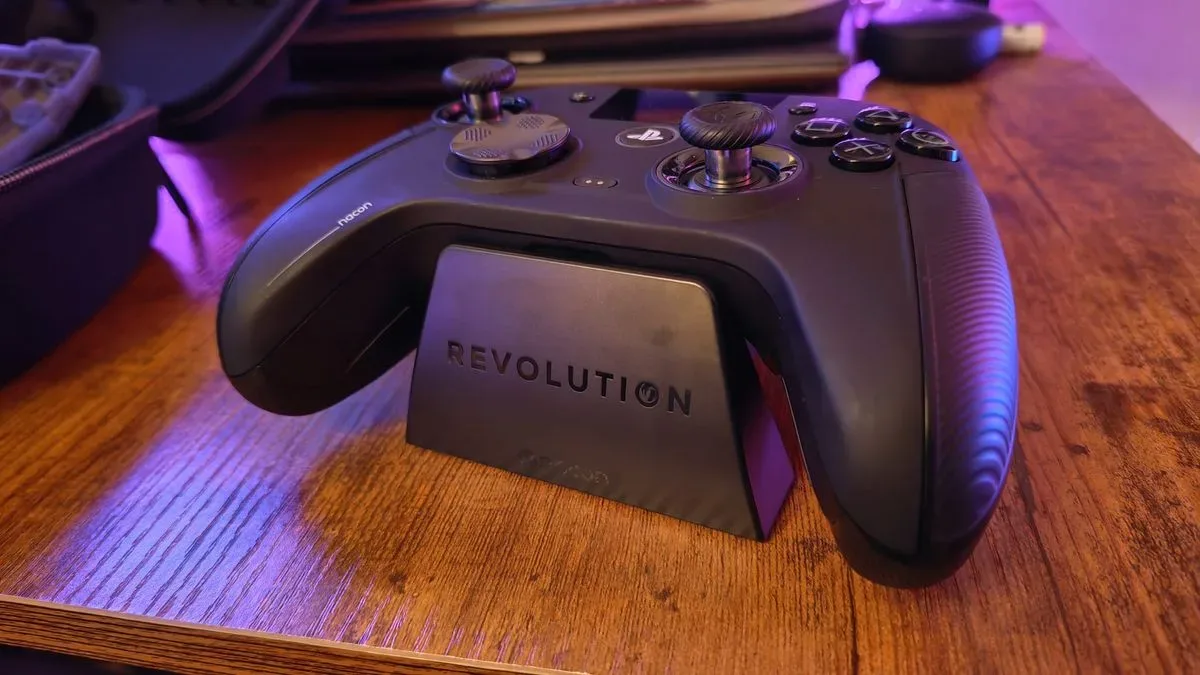
The package includes a charging stand and carrying case, two accessories that help the high price feel less like a tax for being interested in hardware. Battery performance has also been described as strong over several weeks of use, although no formal battery-life figure is provided. Prospective buyers should avoid converting that observation into a guaranteed hour count, since wireless settings, lighting and individual use patterns can affect results.
Who should consider it—and who should pause
The R5U makes the most sense for a player with a healthy controller budget who wants one adjustable pad for PS5 and PC, values a clicky low-force feel, and genuinely expects to use rear or shoulder buttons. The display is particularly useful for someone who dislikes depending on a companion app just to alter dead zones, mappings or audio settings. Players who gravitate toward shooters may find the combination of TMR sticks, sensitivity options and six auxiliary controls especially attractive.
It could also suit people who find stiff buttons tiring during long sessions. That comfort claim is inherently subjective, but the controller’s lighter actuation and broad, flatter buttons are clearly part of its design philosophy. Conversely, people with a tendency to brush rear buttons accidentally may prefer a more restrained layout—or should plan to disable unused inputs.
Potential buyers should pause if haptics and PS5 rumble are non-negotiable. The DualSense Edge remains the more natural route for those who want Sony’s native feedback technologies, even though the R5U provides more additional buttons and a different configuration approach. People who only need a reliable, capable controller should pause as well: the $229 / £179.99 cost is firmly specialist-hardware territory. A less expensive controller can cover the basics without demanding a philosophical debate with a bank account.
The R5U’s reported early wireless-dongle quirk also deserves a measured mention. One early unit apparently sometimes failed to reconnect to a PC until its USB dongle was removed and reinserted. That behavior was not experienced with tested Revolution X Unlimited units and may have been specific to early hardware or firmware, so it should not be treated as a confirmed retail-wide defect. Still, it is the sort of detail worth monitoring in user reports and firmware updates rather than waving away.
A refined answer to an awkward premium-controller question
Nacon’s Revolution 5 Unlimited makes a persuasive case that premium controllers are about implementation as much as feature counts. Plenty of competitors provide rear buttons, swappable parts, magnetic sticks or charging cradles. The R5U’s claimed advantage is that it assembles those ingredients into a light, tactile, configurable controller with unusually accessible onboard control.
Its price remains a steep barrier, and PS5-specific omissions prevent it from being a universally better DualSense replacement. But for the player who wants a high-end PlayStation and PC controller where button feel, customization and aim tuning outrank native haptics, Nacon’s newest Revolution looks like a serious contender rather than a fancy screen with handles attached.