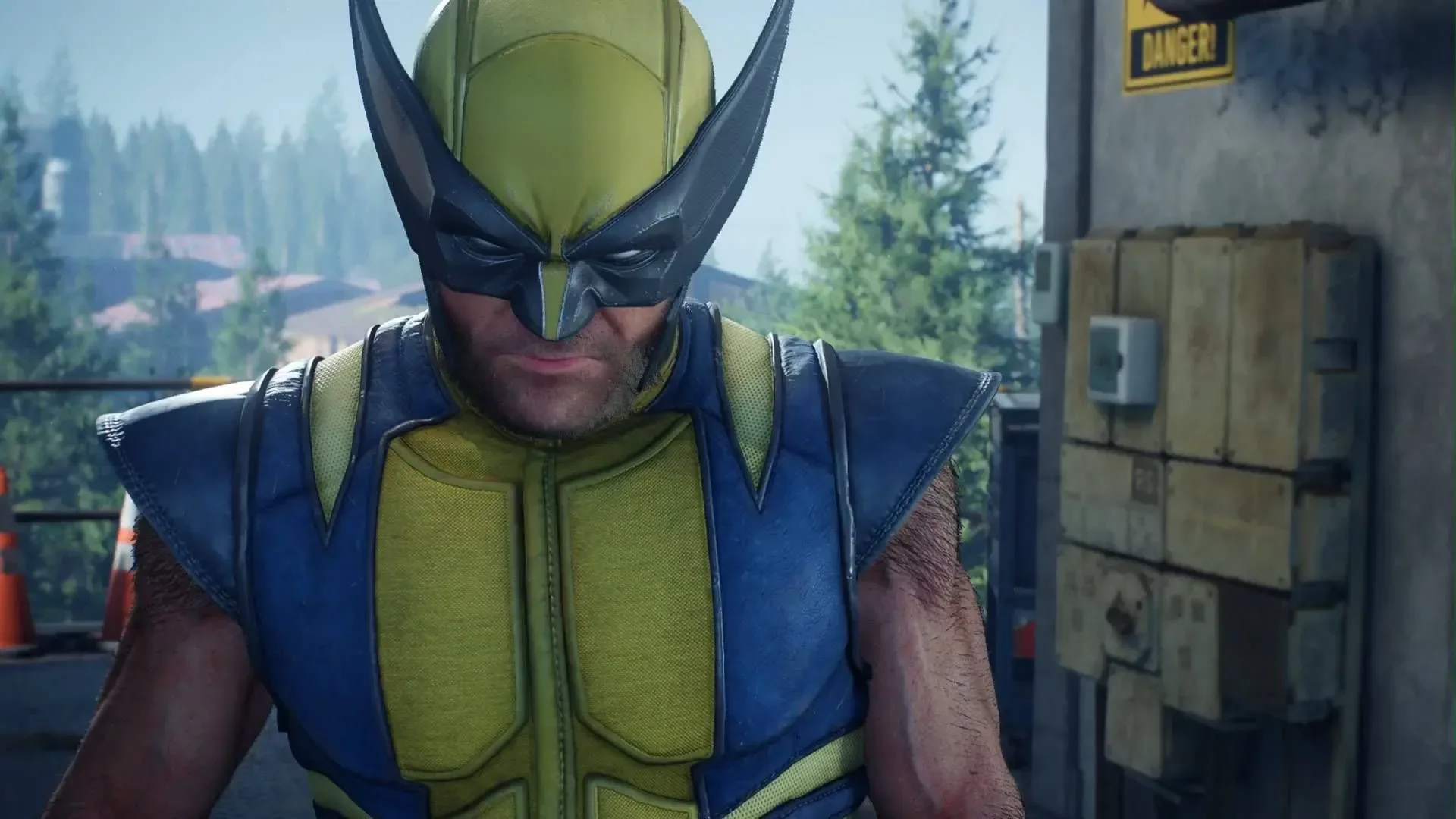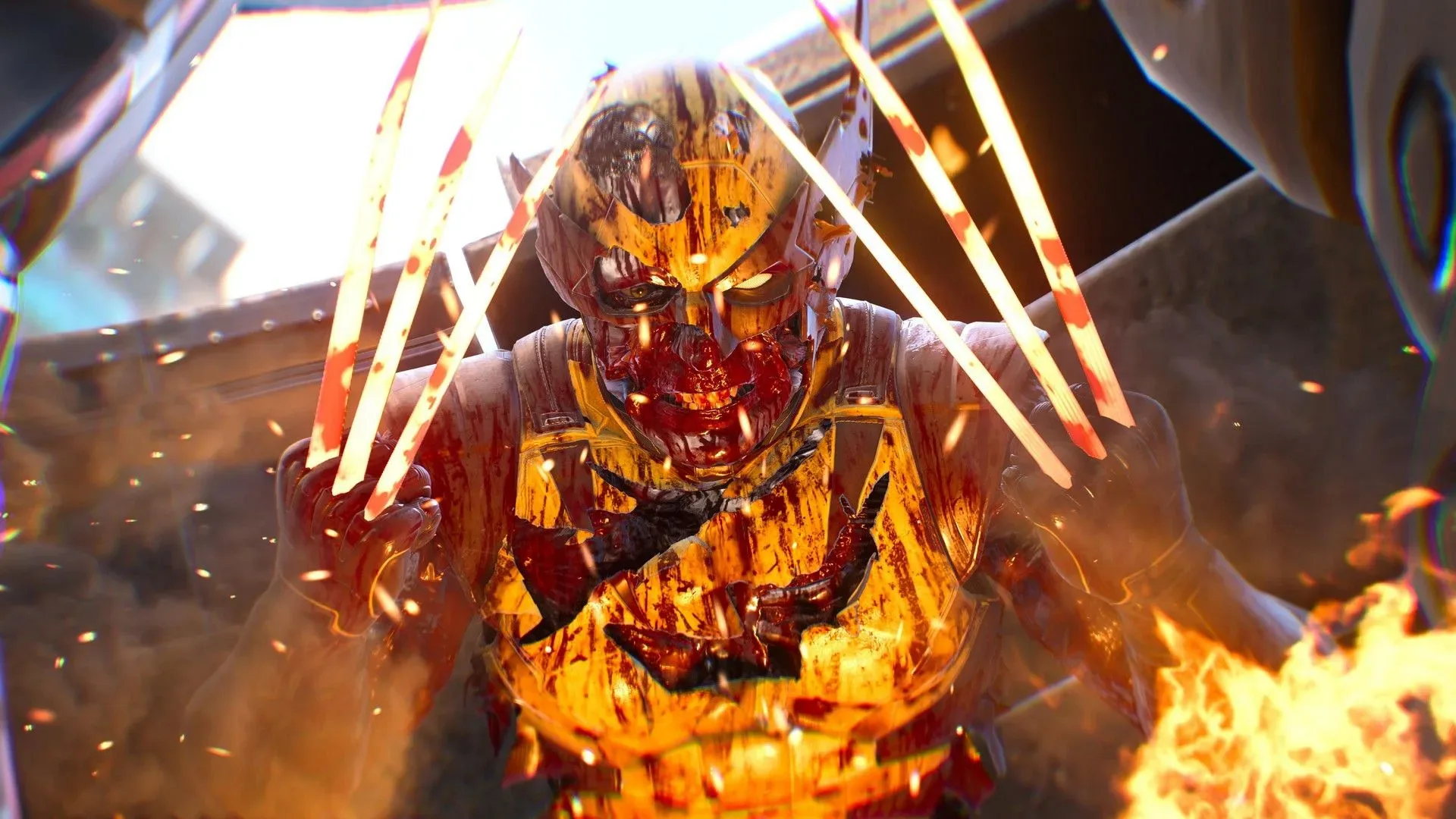
Marvel’s Wolverine is estimated to have reached 1.9 million copies sold on PlayStation 5 in its first three days, generating roughly $130 million in PS5 revenue. If those market estimates hold, Insomniac’s superhero action game has already edged past the reported PS5 lifetime totals of Death Stranding 2, estimated at 1.8 million copies and $129 million after more than a year on the platform.
The early result is a striking commercial start for a game whose reception has been much more conflicted than its sales pace. Marvel’s Wolverine has a 77 aggregate critic score, while more than 3,500 user reviews have produced a 6.4 user score. By comparison, Death Stranding 2 stands at an 89 critic score and an 8.7 user score. Those figures do not make either game’s sales outcome inevitable, but they do underline a familiar reality: review averages, online sentiment and launch-week purchasing can move in very different directions.
What the reported figures actually say
There are two related but distinct measurements in the estimate: unit sales and revenue. Unit sales refer to copies purchased; revenue refers to the money those PS5 sales are estimated to have generated. Wolverine’s reported lead over Death Stranding 2 is narrow on both counts—100,000 copies and $1 million—but the timing is the important part. One game accumulated its total over a long period, while the other is alleged to have reached it in just three days.
That is a measure of launch velocity: how quickly a release converts attention into sales at the start. It is not the same as a prediction of lifetime performance. A rapid debut can give a game an enormous opening advantage, but its longer-term result will depend on how demand persists after the initial rush. The available estimate supports the claim that Wolverine’s opening has been strong; it does not establish where its eventual ceiling will be.
The figures should also be read as market estimates, not as a publisher-issued sales announcement. Estimates can be valuable indicators of scale and relative performance, but they are not identical to audited company reporting. That distinction matters most when comparing slim gaps such as $130 million versus $129 million. The broader takeaway is sturdier than the precise one-million-dollar difference: Wolverine appears to have had a very large PS5 launch.
A top-six grossing PS5 game after only days
Wolverine is estimated to be the No. 6 top-grossing PS5 game of the year despite having only recently launched. It is reportedly closing in on Assassin’s Creed Black Flag Resynced, which has generated an estimated $133 million on PS5 since July, and Crimson Desert, estimated at $160 million on PS5 since March.
Those comparisons provide useful context, with an important caveat. They are comparisons of reported PS5 revenue, not an all-platform leaderboard and not a verdict on which game is “better.” What they show is that Wolverine’s opening sales rate is unusually fast relative to games that have had substantially more time to accrue PS5 revenue.
It is also estimated to be PlayStation Studios’ best-performing new PS5 game of the year, selling more than twice as many copies as both Marvel Tokon and the science-fiction shooter Saros. That is meaningful within the narrow frame of new PlayStation Studios releases on PS5 this year. It should not be stretched into a claim that the game has outperformed every PlayStation release or every game in the wider market.
Related coverage includes Marvel's Wolverine Reportedly Reaches 1.9 Million PS5 Sales in Three Days.
Spider-Man 2 remains the obvious benchmark—and the exception
Even a launch this large has a clear upper comparison point inside Insomniac’s own Marvel catalogue. Marvel’s Spider-Man 2 reportedly generated $250 million in three days, nearly double Wolverine’s estimated $130 million over the same period. That makes it the notable recent PS5 release Wolverine has not matched in early revenue.
The comparison is useful precisely because it prevents the usual binary reading of a sales story. Wolverine can be a major commercial success in its first few days and still trail a prior studio blockbuster by a considerable margin. Both statements can be true. Sales reporting is often treated as a scoreboard with only “hit” and “flop” columns, when the more helpful question is where a game sits against comparable releases, its platform and its publisher’s expectations—expectations that have not been publicly detailed here.
For players, the practical implication is simpler. Strong initial commercial performance means the conversation around Wolverine is unlikely to be settled by a noisy first wave of criticism. Plenty of people have bought it, and a large audience gives a game time to develop its own post-launch reputation separate from its first-week arguments.
Why the discourse and the sales do not line up neatly
Much of the negative player discussion has focused on particular design choices rather than an assertion that Wolverine is unplayable. Complaints have included quick-time events that cannot be failed and bright scent-trail guidance, a tracking aid some players have mockingly nicknamed “fart gas.” These are examples of accessibility and navigation design: systems intended to keep players oriented or make progression less punishing. They can be helpful to some players and immersion-breaking to others.
A quick-time event, often shortened to QTE, asks the player to press a prompted button during a cinematic or scripted action sequence. A non-failable QTE still asks for input, but it does not impose the standard failure state if that input is missed. Critics of this approach may see it as reducing interactivity or stakes. Supporters may appreciate its pacing and the absence of repeated retries. The fact that a mechanic becomes a prominent complaint says something about player preference, but not necessarily about the whole game.
Likewise, a colored scent trail is a visual route-finding tool. It tells the player where an investigation or objective is likely to continue. Such guidance can reduce the time spent lost in a space, though detractors often prefer environmental clues or fewer overt indicators. Neither side of that argument can be resolved by a unit-sales total. A game can sell briskly to people who value a recognizable hero, polished action or straightforward momentum while still frustrating players who wanted a subtler style of guidance.
The criticism does, however, matter. Insomniac has said it has been listening to negative feedback and working hard in response. No specific changes, timing or post-launch plans were detailed alongside that statement, so it would be premature to infer an update roadmap from it. Still, public acknowledgement establishes that the feedback is not being ignored.
Critical scores are signals, not purchasing instructions
The difference between Wolverine’s sales and its review profile is not proof that criticism is irrelevant. Aggregate critic scores reflect a collection of reviews; user scores reflect voluntary ratings from people who choose to submit them. Neither is a direct census of every purchaser, and neither captures every reason someone may buy a game at launch.
In Wolverine’s case, the source-supported picture is one of uneven reception rather than universal rejection. Its 77 critic aggregate places it far below Death Stranding 2’s 89, and its 6.4 user score similarly trails the latter’s 8.7. Yet it has sold more quickly on PS5 under the available estimates. The sensible reading is not that scores do not matter. It is that a well-known Marvel character, the visibility of an Insomniac release, and the appeal of a new PS5-exclusive action game may all drive a powerful initial buying decision even when commentary is divided.
That gap also highlights the difference between sentiment and market reach. Online discussion amplifies the people motivated to post, argue, clip awkward moments or dissect individual systems. Sales include quieter customers who may never assign a score, publish a reaction or participate in the debate at all. Viral dissatisfaction can be real without representing the entire player base, just as a big launch cannot tell us whether buyers will all be satisfied.
What to watch next
The first three days have given Wolverine a formidable starting position, but the next meaningful question is whether it has legs. In games-industry terms, “legs” means the ability to keep selling beyond the launch window. The available numbers do not yet answer that question.
- Does the revenue ranking rise? Wolverine is estimated to be close to Assassin’s Creed Black Flag Resynced and is chasing Crimson Desert on PS5 revenue.
- Does player sentiment shift? Insomniac’s acknowledgement of feedback may become more significant if it is followed by clearly identified changes, though none have been specified.
- Does the Spider-Man 2 gap narrow or widen? Wolverine began far behind that earlier Insomniac Marvel release’s $250 million three-day benchmark. Future performance will determine whether the gap stays proportionally large.
- Will estimated data be supplemented by official reporting? Publisher confirmation, if it arrives, could provide a firmer view of the game’s performance.
For now, the central point is not that Wolverine has somehow defeated criticism, or that stronger-reviewed games cannot sell differently. It is that the reported commercial outcome has immediately complicated the popular narrative surrounding it. A 1.9 million-copy, $130 million PS5 opening estimate is substantial by any reasonable reading, even as the game’s mechanics and broader reception remain points of contention. For more on the early comparison with Insomniac’s prior Marvel hit, see our look at Wolverine’s sales pace and Spider-Man’s staying power.