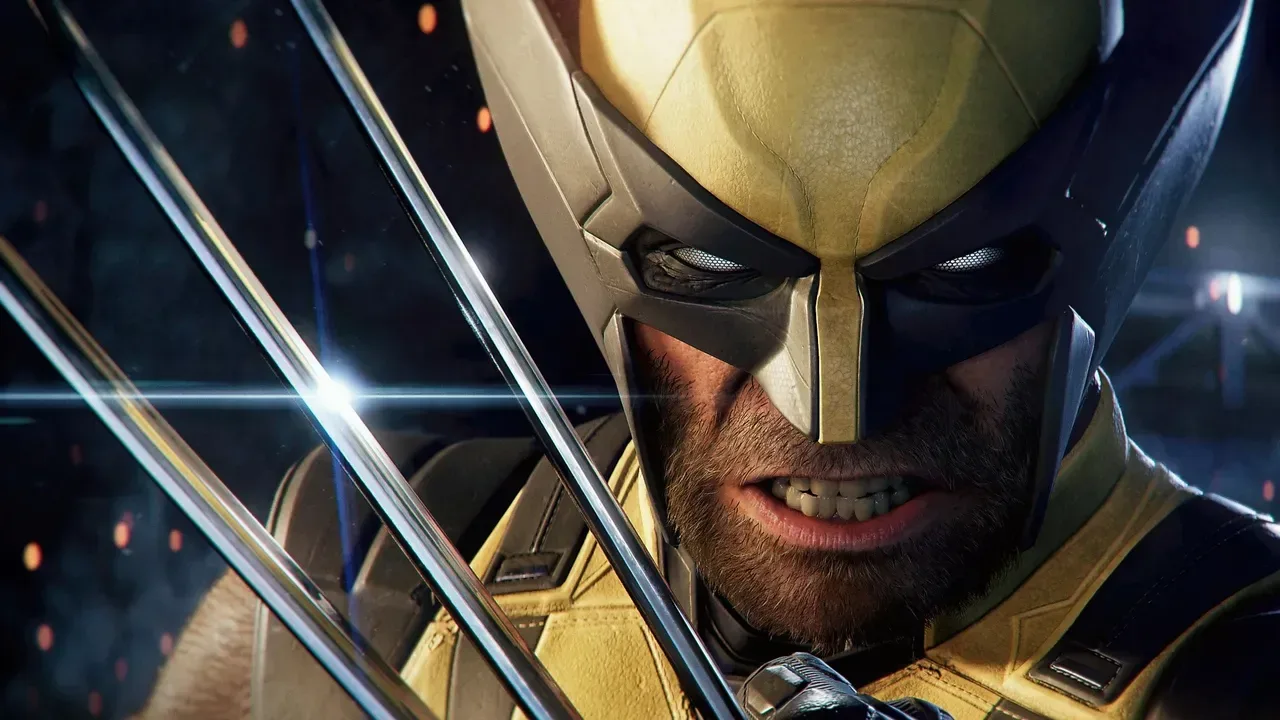
Marvel’s Wolverine appears to have delivered a sizable reminder that physical PlayStation games remain a meaningful part of the market. Retail estimates put the PS5 superhero release at 2.16 million units sold during September, after going on sale September 15. Of those sales, 35% were physical discs. That is not a majority, but it is a substantial share for a premium console launch—and one arriving while Sony’s reported plan to phase out PlayStation disc production by 2028 remains a major point of contention.
The figures also show why a single worldwide percentage can obscure important regional differences. Across Europe, boxed copies represented 51% of Wolverine sales. France leaned especially heavily toward retail, with more than two-thirds of sales said to be physical. The UK moved in the opposite direction, where roughly two-thirds were digital.
In other words, digital may be the larger global format for Wolverine, but the box is far from a ceremonial extra. Millions of prospective sales cannot be treated as if every territory, retailer, household, or buyer has already made the same switch.
What the 35% split actually tells us
A physical-sales share measures the portion of copies sold as discs rather than downloads; it does not say that physical buyers are a separate kind of player, nor does it establish why any one person chose a disc. Some buyers may prefer having an item on a shelf, while others may value retail availability, giftability, lending, resale, or simply a purchasing habit built around boxed games. The data does not break those motivations down.
It does, however, provide a concrete scale for the demand still served by physical distribution. Applied to the 2.16 million September estimate, a 35% share works out to roughly 756,000 disc copies. That calculation is an approximation based on rounded public figures, not a newly reported total, but it illustrates the point: a minority share can still represent a very large audience.
Europe’s 51% boxed split makes that point more sharply. A platform strategy designed around a digital-first average can produce very different consequences by country. The French result suggests retail remains particularly important there, while the UK result indicates a more download-led market. Neither finding cancels the other out. Together, they show that format preference is not uniform even within one broad region.
That nuance matters when the conversation turns from present-day sales to whether discs should remain available at all. “Digital is larger” and “physical still matters” are compatible statements. Wolverine’s launch data supports both at once.
Why the numbers land in a bigger preservation debate
The sales split comes after Sony said it intends to phase out physical-disc production for PlayStation by 2028. The plan drew a vocal backlash, including calls to reconsider it from advocates of physical media. Sony had previously acknowledged strong community views on the subject but indicated it would not reverse course.
Related coverage includes Marvel's Wolverine Disc Sales Accounted for 35% of September Launches, Retail Data Indicates.
The objection is not solely about nostalgia for plastic cases. Physical media is often part of a wider argument about access, ownership expectations, and preservation. A disc is not automatically a complete, permanent archive of a modern game; updates, online functions, and other dependencies can still matter. But a retail release can remain a tangible item that is not dependent on a storefront listing at the moment of purchase.
The Video Game History Foundation has argued that if platform holders eliminate physical formats and older digital storefronts, industry groups should pursue meaningful ways for archives and museums to legally preserve digital-only works and make them available for research. That is a distinct issue from whether players prefer downloading new games. It concerns what happens after commercial availability changes, a store closes, or a title becomes difficult to obtain through ordinary channels.
“If platform owners are deciding to eliminate physical media and older digital storefronts, then we'd also like to see trade groups like the Entertainment Software Association offer meaningful solutions for archives and museums to legally preserve digital-only content and make it accessible for research,” the Video Game History Foundation said.
Former PlayStation executive Shawn Layden has similarly framed non-digital buyers as a smaller but important group. His estimate was illustrative rather than a verified measurement of Wolverine’s audience: even if downloads account for the large majority of purchases, the buyers outside that majority can include especially committed customers, including collectors who purchase more than one copy.
Wolverine’s 35% result does not prove a universal ratio for every PlayStation release. Its European variation alone argues against that kind of shortcut. What it does demonstrate is that, for a high-profile PS5 game, disc demand remains measurable enough to influence how the transition away from physical media is discussed.
Digital-only releases make the contrast starker
The situation is further complicated by releases that bypass discs entirely. GTA 6, described as the year’s biggest game, reportedly has no disc edition planned. Even its special edition is said to use a code packaged inside an otherwise empty box. That distinction is worth keeping clear: a boxed product is not necessarily a physical game release if the box contains only a download entitlement.
For players watching how major launches are structured, the format question will likely remain relevant as more details emerge around GTA 6’s mission design and story limits. A premium box can still have value as merchandise or a collector’s package, but it does not offer the same thing as a playable disc.
This is also why debates about “physical” need precise language. A boxed disc, a code-in-a-box edition, a digital download, and an old disc that requires patches are all different products with different practical benefits and limitations. Treating them as interchangeable makes it harder to discuss consumer choice or preservation in useful terms.
Wolverine was a major PS5 seller, but September was crowded
Marvel’s Wolverine ranked second among PS5 games in September, behind EA Sports FC 27. EA’s football game reportedly sold close to 5 million copies on PS5 and 1.65 million on Xbox, a gap linked to the difference in console install bases.
Wolverine’s estimated 2.16 million sales are still a strong start within that context, particularly given that sales began partway through the month. Yet cross-platform comparisons change the picture. How to Fish and Wardogs both surpassed Wolverine when PC was included. Wardogs approached 3 million sales, with its combat sandbox reportedly boosted by positive word of mouth and widely shared social-media clips. Only EA Sports FC 27 on PS5 sold more than Wardogs in September.
Other new releases started more slowly on PS5. Control: Resonant was estimated at 305,000 PS5 sales, while Silent Hill: Townfall reached 291,000 on the same platform. The Blood of Dawnwalker, the first RPG from Rebel Wolves, reached 1.8 million across all platforms.
These comparisons should not be over-read. Platform coverage differs, as do release timing, genre, audience, and availability. A PS5-exclusive sales total and an all-platform total are not like-for-like measures. Still, the figures underline that Wolverine entered a competitive month and nevertheless placed near the top of the PS5 chart.
What buyers and the industry can take from the split
For players who want discs, Wolverine’s figures are evidence that they are not an invisible edge case, especially in specific European markets. For publishers and platform holders, the same data suggests that global digital momentum does not remove the need to understand retail territory by territory.
For everyone following Sony’s 2028 direction, the key detail is not that Wolverine somehow overturned the digital trend. It did not: digital accounted for the larger worldwide share. The key detail is the scale and geography of the remaining disc audience. At 35% globally and 51% across Europe, physical sales were a meaningful component of a major PS5 launch, not a negligible rounding error.
Whether that changes corporate policy remains uncertain. There is currently no indication that Sony plans to abandon its stated phaseout. But Wolverine’s launch makes the trade-off easier to see: a move away from discs would not merely modernize a format mix that has already vanished. It would remove an option that hundreds of thousands of buyers still selected for one of September’s biggest PlayStation releases.