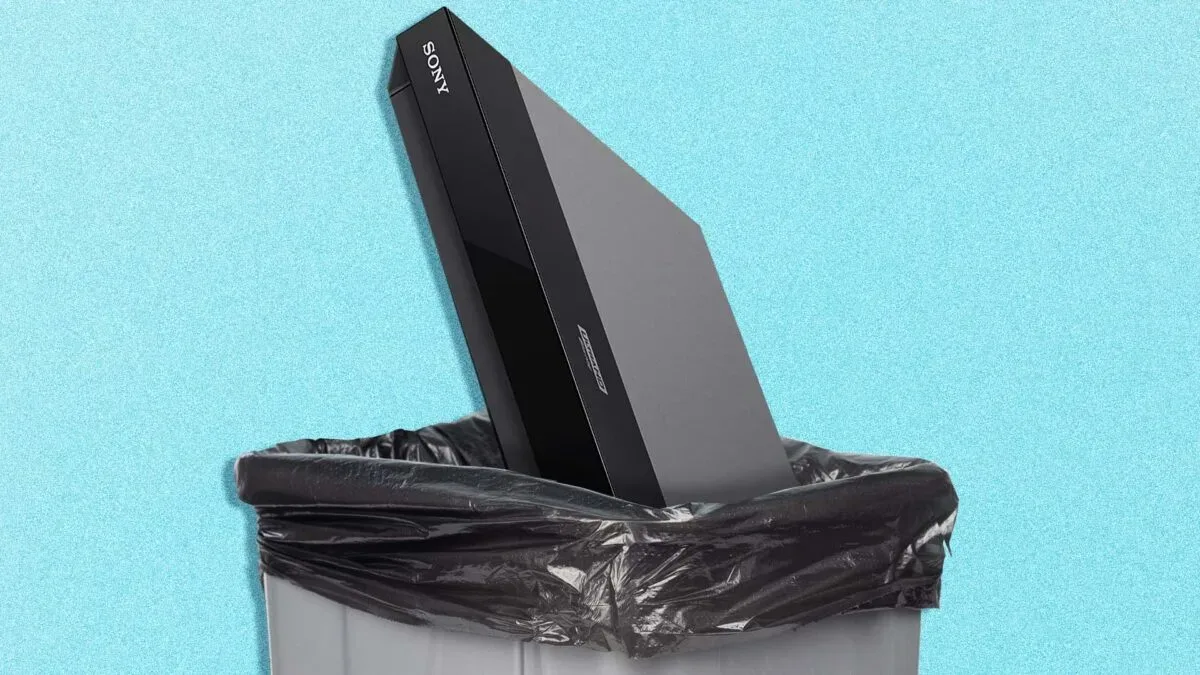
Sony appears to be stepping further away from dedicated 4K UHD Blu-ray hardware. Sales of the UBP-X700/K, described as the company’s last remaining UHD player made and sold in Japan, are reportedly ending on October 22. Sony’s Japanese product listing now marks the player as out of stock and says it will not be restocked.
That combination does not yet establish a worldwide end to production for the UBP-X700/K. There is no confirmed global discontinuation in the available information. But it does mean that Sony’s dedicated UHD-player lineup in Japan is effectively at its endpoint, and it adds weight to concerns that the company’s consumer media hardware is narrowing around fewer products.
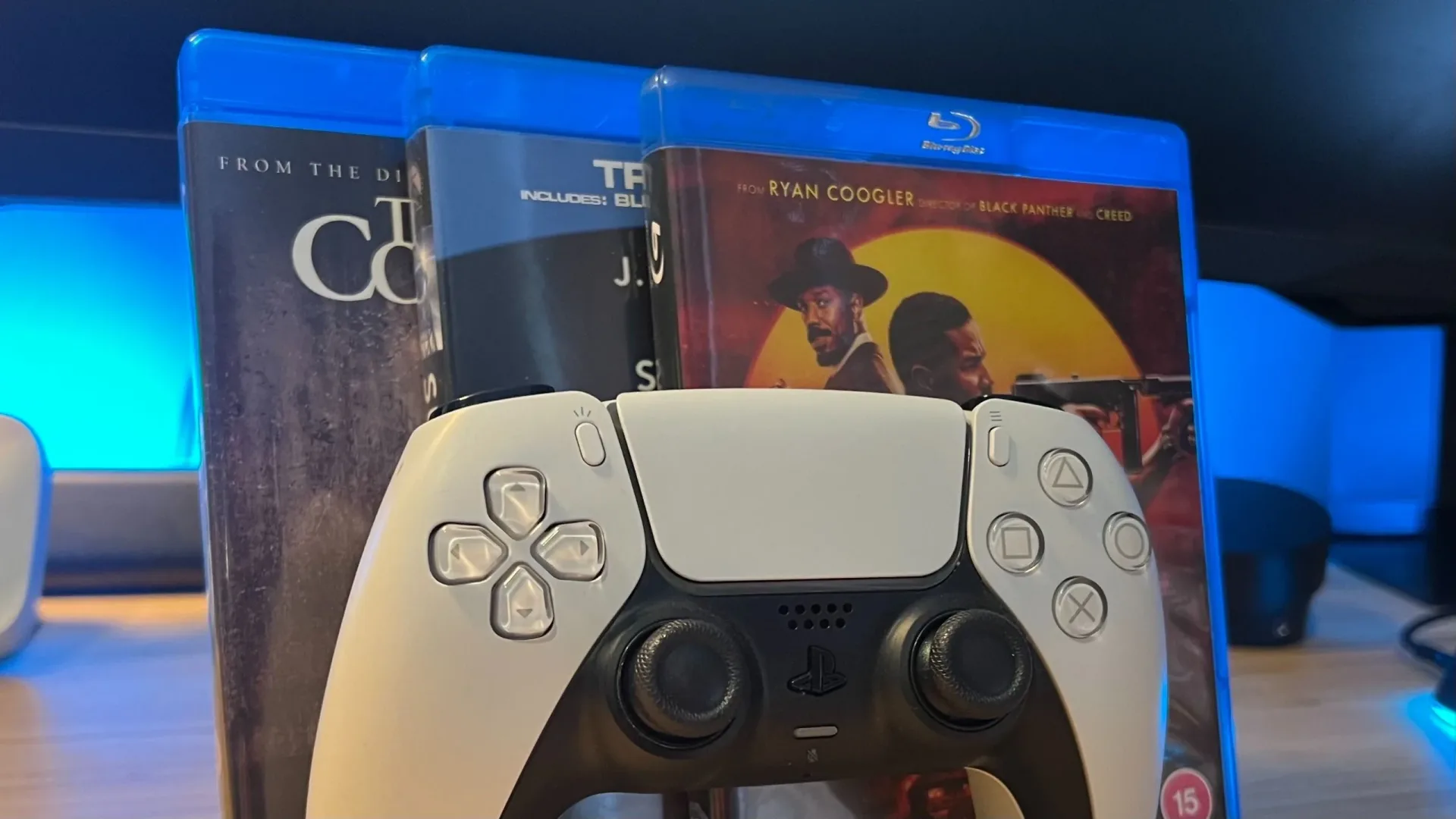
For game players, the immediate practical point is striking: in Japan, the PlayStation 5 is set to be Sony’s only newly available device that can play UHD discs. The console is not merely a game machine in that context; it becomes the company’s remaining new Sony-made route into 4K disc playback. That is a meaningful distinction for anyone who uses a console as the center of a home media setup, or who still values optical discs alongside digital libraries.
What is ending, and what is not confirmed
The product at the center of the report is the UBP-X700/K, a dedicated 4K UHD Blu-ray player. “Dedicated” matters here: unlike a PlayStation 5, it is purpose-built for disc playback rather than games, apps and a broader console ecosystem.
UHD Blu-ray is the physical-disc format associated with 4K video. A UHD player reads those discs, while a standard Blu-ray player and a DVD player are different categories of device. Sony is still making one DVD player model and one Blu-ray player model for now, so this is not evidence that every Sony optical-disc product is ending immediately. It is specifically a major retreat from Sony’s dedicated 4K UHD player category in Japan.
There is also a difference between a regional sales end and a global manufacturing decision. The reported October 22 end date concerns Japan. Sony’s Japanese site supports the immediate availability picture by labeling the unit out of stock and stating that it will not return to stock. However, the supplied information does not confirm when, or whether, other territories will receive the same treatment.
Still, the likelihood of a broader change is difficult to ignore. Sony’s Japanese moves have historically been a useful indication of its wider direction, and the UBP-X700/K reportedly stood as the final dedicated UHD player in Sony’s Japanese range. Panasonic is identified as the remaining major electronics company still making UHD players.
Why the PlayStation 5 is suddenly central to the conversation
The PS5’s place in this story is bigger than a technical footnote. A disc-capable PlayStation 5 can serve two different physical-media roles: it plays supported physical PS5 and PS4 games, and it can play UHD Blu-ray discs. If Sony no longer sells a standalone UHD player in Japan, its current console becomes the brand’s principal new consumer device for that kind of 4K disc playback there.
Related coverage includes Sony’s UBP-X700/K Reportedly Reaches the End of Sales in Japan.
That does not make every PS5 interchangeable with a dedicated player. The key practical issue is whether a buyer is choosing a disc-capable console rather than a digital-only model. Anyone who expects to use discs for games or movies needs to make that choice deliberately, rather than assuming that “PS5” automatically means access to a disc drive.
It also changes how the console may be viewed by physical-media households. A PS5 can now represent several forms of access at once: a game platform, a way to install and play compatible game discs, and a possible 4K movie-disc player. For players who still maintain shelves of games and films, that flexibility is valuable precisely because Sony’s standalone options appear to be shrinking.
The broader lesson is not that a PS5 is disappearing or that physical PS5 games have suddenly stopped working. Neither claim is supported here. Instead, the issue is choice. When a company reduces the number of newly sold devices that read a format, replacing a broken player or expanding a disc-based setup can become more dependent on a smaller group of products.
A pattern of reduced hardware involvement
The UBP-X700/K development arrives alongside other reported changes in Sony’s hardware business. Earlier this year, Sony sold much of its TV and hardware-production factories and facilities to TCL under a broader deal in which TCL took a controlling stake in the Bravia TV business. That move, paired with the reported UHD-player withdrawal, suggests a company placing less emphasis on directly producing some categories of consumer electronics.
There is a separate but closely related concern for gaming: Sony has also announced plans to end PlayStation disc production in 2028. Physical disc production is not the same thing as making a disc-playing console or a dedicated UHD player, and the two developments should not be treated as one identical decision. But together they point in the same direction: Sony’s relationship with physical media is changing across both entertainment hardware and PlayStation.
This is why the news matters beyond home-cinema enthusiasts. Physical games depend on a chain of practical conditions: discs need to be manufactured, sold, preserved and played on hardware that still includes or supports a drive. Any individual link can remain available for a time, but a contraction at multiple points makes physical ownership feel less certain over the long term.
Physical ownership versus digital access
“All-digital” is often used as a shortcut, but it covers several different experiences. With a physical game disc, a player has a tangible copy and a device that can read it. With a digital game, access is tied to an account and a platform’s digital systems. Both can be convenient; the difference is in how the game is delivered and how dependent its future use may be on services, store access and supported hardware.
The same basic divide applies to movie collections. A 4K UHD disc is a physical item that requires compatible playback equipment. Digital movie access is usually managed through an app, account or storefront. The report does not claim that digital access is inherently unreliable, nor does it say every physical collection is automatically future-proof. It does, however, underline a practical reality: a disc library is only as useful as the hardware available to read it.
That is why enthusiasts react strongly to discontinued players even when used hardware and other brands may remain options. A dedicated player leaving the new market can influence future purchasing decisions, repairs, replacements and the general confidence that a format will have broad support. Fewer newly made options can make existing equipment more important to owners.
The industry’s continuing shift toward delivered software is visible in other corners of gaming too. For example, a key-based indie subscription service illustrates another model built around digital access rather than boxed discs. That does not make the service equivalent to Sony’s hardware plans, but it shows how games can increasingly reach players through codes, accounts and online distribution.
What PS5 owners and disc collectors can take from this
The immediate response does not need to be panic buying. The report offers no confirmation of a worldwide cutoff for the UBP-X700/K, and Sony continues to make a DVD player and a Blu-ray player model for now. But it is sensible for people who depend on optical media to understand their setup while compatible hardware is still easy to identify.
- Check the console model: A household that uses game or movie discs should know whether its PS5 has disc playback capability.
- Separate current facts from forecasts: The Japanese sales end and the no-restock product listing are concrete signals; a worldwide UBP-X700/K end has not been confirmed in the available information.
- Consider format needs: DVD, standard Blu-ray and UHD Blu-ray are distinct formats and may require different expectations from a player.
- Keep existing hardware in mind: For a disc collection, the player is part of the collection’s long-term usefulness, not an afterthought.
- Watch the 2028 disc-production plan: That announced PlayStation timeline is the more direct future marker for physical game media, even though the details of its eventual effects are not established here.
Analysis: less redundancy is the real concern
The biggest implication is not simply that one model may be gone. It is that redundancy is disappearing. A market with multiple dedicated players, multiple manufacturers and several actively supported disc formats gives consumers alternatives. A market where a console is the last new Sony-made UHD option in Japan is more concentrated.
For Sony, a move away from standalone players may fit a strategy that places less weight on consumer-electronics manufacturing and more weight on digital services, software ecosystems and fewer hardware lines. For consumers, though, the result is more conditional. A console can fill the role of a disc player, but it is also a large, multipurpose system whose product lifecycle is governed by gaming priorities. A dedicated player has one core job; a console happens to cover that job alongside many others.
That tension is at the heart of the reaction. The UBP-X700/K’s reported end in Japan is not proof that physical media disappears tomorrow. It is a clear signal that one prominent company’s new dedicated 4K-disc hardware is becoming harder to find, while its PlayStation business has a stated plan to end disc production in 2028. For people who buy physical games and films, that makes compatible hardware worth treating as an active part of owning the collection—not merely a replaceable accessory.