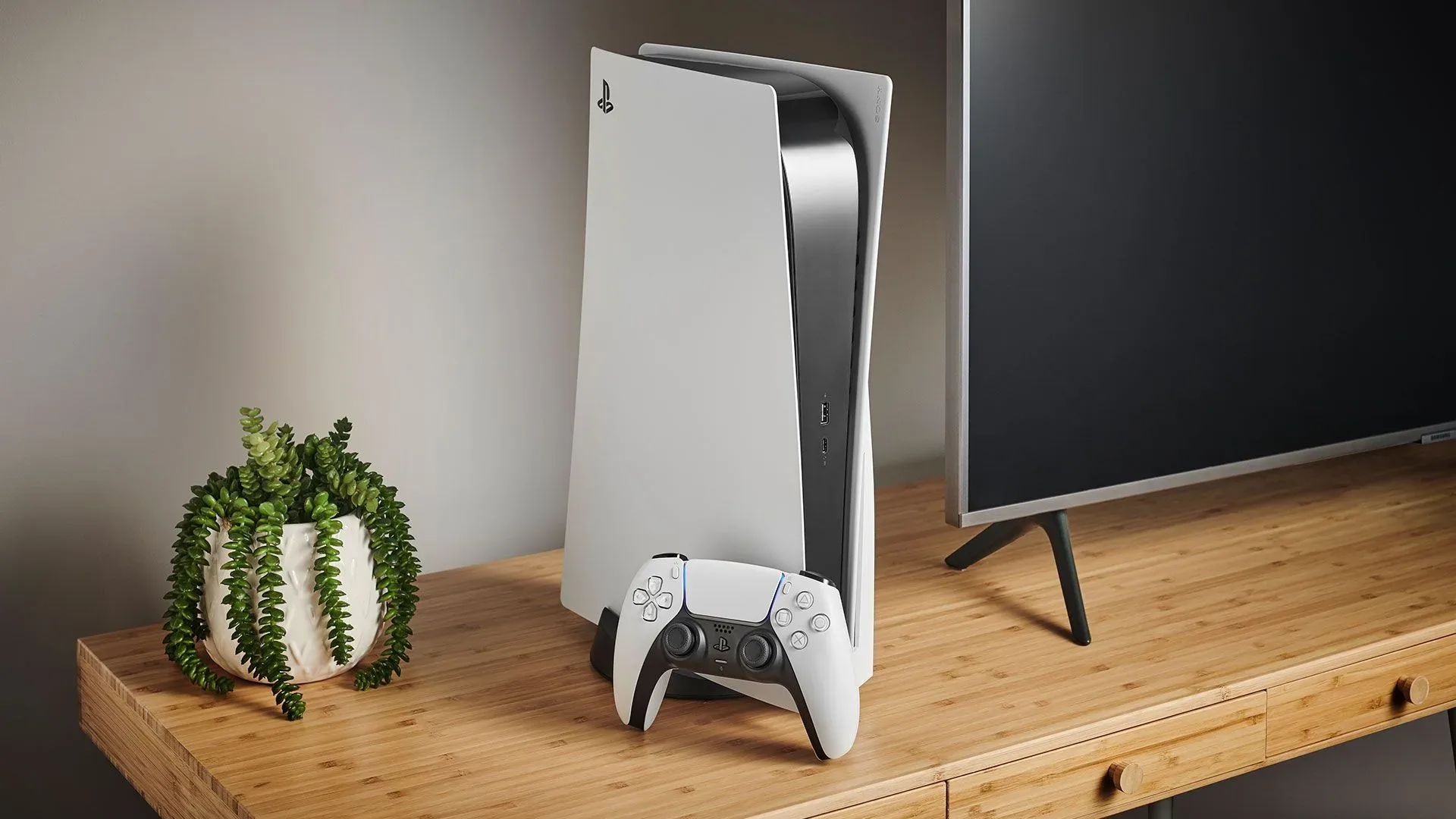
The prospect of a PlayStation future without physical game discs has prompted a familiar kind of gamer panic: part preservation worry, part collector grief, and part practical question about what exactly happens when the shelf at the local shop becomes an empty monument to download codes.
Former Sony Interactive Entertainment Worldwide Studios chairman Shawn Layden has put the feeling plainly, calling a disc-free PlayStation future “depressing, but solvable.” The important half of that statement is the second part. A move away from discs would not necessarily mean physical PlayStation releases are impossible forever. It would mean that the business and manufacturing arrangements behind those releases would need to change.
That distinction matters, especially after confusion over the scale of Sony’s reported reduction in physical-disc production. An earlier interpretation of comments from Austria suggested output would fall to only 10 percent of its existing level. A Sony DADC spokesperson later clarified that the anticipated change was an overall decline of 10 percent, rather than a collapse to 10 percent. That is still a meaningful reduction in volume, but it is very different from a report that appeared to describe physical production as almost entirely switched off.
For now, this is a story about uncertainty, supply-chain control, and a medium whose cultural value goes well beyond whether a plastic case looks nice next to a console. Disc collecting is not just a decorative habit. For many players, it is a way to retain access, trade games, lend them, browse a library without scrolling through a storefront, and preserve an object that exists independently of a publisher’s current priorities.
The bottleneck is manufacturing, not enthusiasm
Layden’s central point is that physical media could remain viable if Sony chose to make disc production available to outside specialists through licensing. The obstacle is not a lack of potential buyers. It is that Sony currently controls the PlayStation disc-pressing process. If that production stops without another authorized route, developers and publishers cannot simply wander into a random replication plant, point at a PlayStation logo, and request several thousand copies of a new release.
“I believe that physical media is crucial and important,” Layden said, connecting it to the collecting instinct that has long been part of gaming culture.
That instinct is easy to dismiss until it is gone. A digital library may be convenient, often dramatically so, but it does not offer the same experience as pulling a specific game from a shelf, looking over its cover art, or passing it to a friend. Nor does it provide the same feeling of a collection built gradually through birthdays, bargain bins, launch days, and questionable late-night purchases that somehow became treasured favorites.
The case is particularly strong for the players Layden described as devoted fans. Limited editions, standard boxed copies, steelbooks, regional variants, manuals, inserts, and even the humble case spine all contribute to how people remember an era of games. A physical collection can be organized, displayed, resold, inherited, and rediscovered in a way that an account-bound catalogue cannot fully replicate.
Collectors already understand that the object alone is not the entire preservation solution. Modern disc releases can require patches, online authentication, or large downloads before a game is fully usable. But an imperfect physical edition is not equivalent to no physical edition at all. A disc can still establish a base version, provide a resale and lending mechanism, and remain a tangible record that a release existed in a particular form.
Anyone maintaining an older library should treat condition and organization as part of the hobby rather than an afterthought. Our guide on how to store retro games so a collection stays playable and findable covers the practical side of looking after games that deserve more than a precarious stack next to the radiator.
There is a possible template on Xbox
A workable model already exists elsewhere in the console business. Microsoft licenses Xbox disc manufacturing to external facilities that it certifies as authorized replicators. That approach does not make physical distribution effortless; discs still need approval, manufacturing capacity, logistics, retail participation, and a publisher willing to take the financial risk. It does demonstrate that a platform holder does not necessarily need to operate every part of the replication process itself for retail discs to exist.
For PlayStation, a comparable licensing structure could potentially allow selected manufacturers to produce approved discs after Sony’s own role changes. The word “could” is doing real work here. There is no confirmed public plan laying out such a program, its terms, which companies would qualify, or whether it would cover all publishers. Layden’s comments describe a path rather than an announced policy.
Still, it is a useful path to identify. Without authorized manufacturers, physical editions face an obvious dead end. With them, the market could become more selective rather than vanish outright. Large releases might receive broad boxed distribution; smaller titles could use lower-volume specialty production; collector editions could continue through publishers that see sufficient demand. That would not be the old retail world, but it would be a physical ecosystem.
CD Projekt Red joint-CEO Michał Nowakowski has said that The Witcher 4 will receive a physical release even if a conventional disc is not possible. That promise highlights both the demand for a boxed version and the ambiguity surrounding what “physical” may mean in a changing market. A box with a code, a disc with only part of a game, and a complete playable release are all materially different propositions. Fans will reasonably want clarity about which one they are buying.
Why “physical” needs to remain a precise word
The industry often treats packaging, discs, download vouchers, and collector goods as though they occupy the same category. They do not. A physical case may have collector appeal, but it does not automatically give players local access to software. A disc may contain data, but it may still depend on online services. A fully installable offline release offers a stronger form of ownership and preservation than either.
That does not mean every buyer has identical priorities. Some collectors want a handsome boxed artifact. Some want the ability to lend and resell. Some care most about being able to install a version years later. Others mainly want to avoid losing access if a store delists a title or an account changes. The crucial thing is not to flatten those needs into one vague promise of “physical.”
Publishers that continue to offer boxed PlayStation products would do players a favor by stating, prominently and specifically, what is in the package:
- whether it includes a game disc or a download code;
- whether the disc contains the full game or only a portion of it;
- whether internet access is required for installation or play;
- whether additional content is supplied through a time-limited redemption code; and
- whether major functionality depends on services that may not operate indefinitely.
Such labeling will not solve every concern, but it would let people decide which kind of product they are supporting. It also respects that buyers can be both collectors and players, rather than assuming a box on a shelf answers every question.
The market has not stopped asking for discs
Layden’s argument is not that physical media will automatically remain dominant. Digital purchases are deeply embedded in the modern business, and the convenience of downloading a game at midnight without changing out of slippers is difficult to dispute. His point is narrower and more forceful: a continuing audience still wants physical games. If production is removed, it is not because that audience suddenly ceased to exist; it is because the companies in control decided it was no longer a business they wanted to run directly.
That is why the corrected production figure matters. A projected 10 percent decline in overall product volume suggests contraction. It does not, on its own, confirm the immediate disappearance of PlayStation discs. Nor does it answer the long-term question of how Sony may handle manufacturing, licensing, or third-party physical releases. Fans should avoid treating the earlier “down to 10 percent” interpretation as established fact.
The larger concern remains justified. Once a platform shifts decisively away from physical production, reversing course can be difficult. Retail space shrinks, manufacturing relationships fade, and publishers recalibrate their expectations. The response from collectors and players, then, is not merely to mourn disc cases in advance. It is to be specific about what they value and to support releases that meet those standards.
There is also a social dimension to a game collection that download libraries do not quite replace. The shelf is a prompt for conversation, a small personal archive, and sometimes an invitation to play together. For a reminder of why games in the room can matter as much as games in the cloud, see the unwritten rules of couch multiplayer.
At the same time, players should be realistic about the legal and commercial framework of digital purchases. Sony’s legal position has argued that consumers do not literally acquire unrestricted ownership of a digital game in the way they own a unique physical object; the familiar example is that ownership in that absolute sense would imply only one person could buy a game such as Grand Theft Auto 6. Digital transactions generally involve licenses, and the exact rights can be shaped by platform terms and service availability.
That reality does not make digital libraries worthless. It does make the distinction between a license, a disc, a complete install, and a collectible package worth understanding. Layden’s “solvable” framing is valuable because it focuses on the concrete lever that could preserve options: authorized production. If PlayStation disc manufacturing changes, a licensed network of specialist replicators could give publishers a route to keep physical editions alive. Whether Sony chooses that route is the unanswered question—and one collectors have every reason to keep asking.