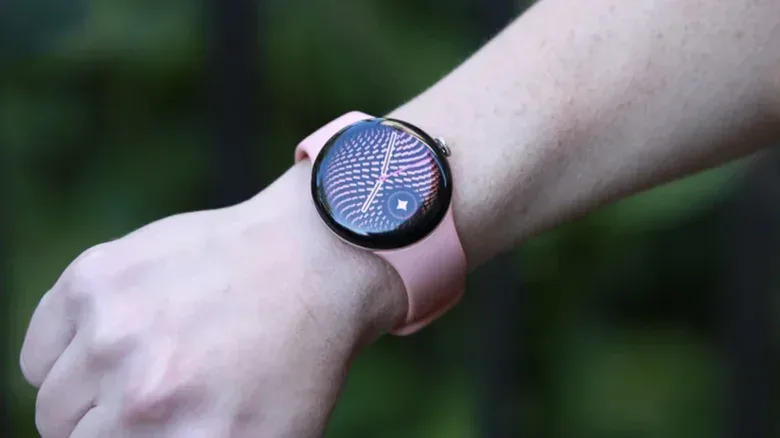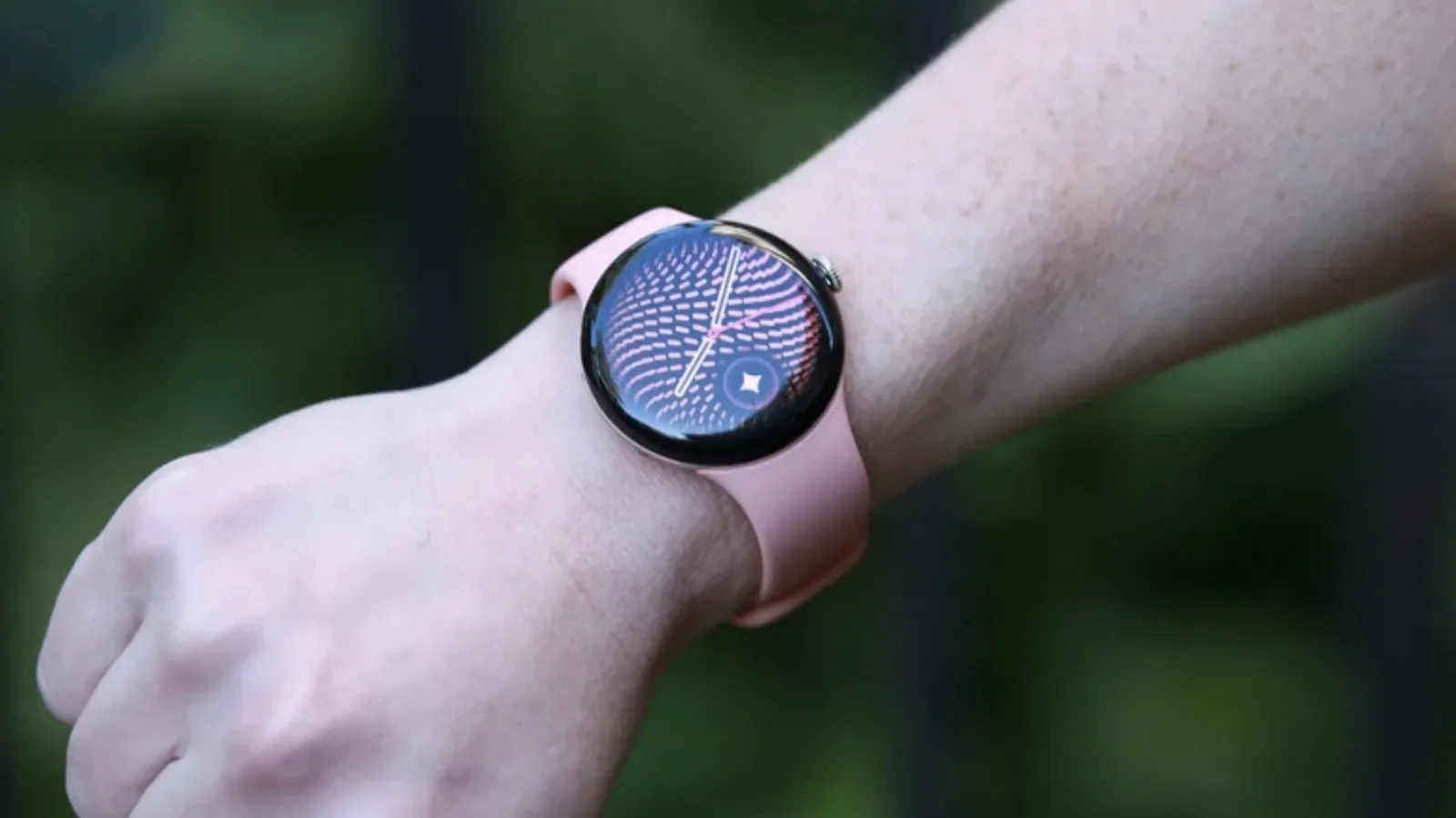
The Pixel Watch is preparing to trade a few more rings and buzzes for a much more serious assignment. Google Health is starting to roll out its Health Guardian tools this week, opening tracking for blood-pressure trends, insulin-resistance trends and sleep-breathing quality metrics on the Pixel Watch 3, Pixel Watch 4 and Pixel Watch 5.
The important timing detail is that the tools begin collecting data now, while the first trend reports are expected in early October. In other words, the watch is not promising an instant dashboard full of answers the moment an update lands. It needs time to assemble a pattern—because even the most confident wrist computer cannot turn one afternoon into a meaningful trend without looking a little silly.
What is arriving on Pixel Watches
Health Guardian is the name attached to this group of health-focused features in the Google Health app. The rollout covers three distinct areas:
- Blood-pressure trends
- Insulin-resistance trends
- Sleep-breathing quality metrics
All three are described as trends or quality metrics, which is an important distinction. A trend is a pattern gathered over time, rather than a single measurement presented as a final verdict. That framing is especially relevant for wearers waiting for the first reports: tracking begins this week, but the reporting layer follows in early October.
Google had presented Health Guardian alongside the latest Pixel smartwatch, but the tools were not available at launch. Their arrival now expands the feature set for the Pixel Watch 5 while also bringing the tracking to earlier Pixel Watch 3 and 4 hardware. For existing owners, that backward compatibility is the practical headline: the new tools are not confined to the newest model.
The difference between tracking and a report
It is easy to read “rolling out this week” as “every insight appears this week.” The stated schedule is more measured. Users can begin tracking when the Health Guardian lineup reaches the Google Health app, while the first trend reports are slated for early October.
That two-stage approach makes the feature’s stated purpose clearer. The watch first needs a body of data, then it can surface a trend report based on that information. Anyone checking immediately after setup should therefore expect the system to be in its collection phase rather than assume an empty report means that something has gone wrong.
There is also a useful terminology lesson hidden in the product language. Blood-pressure trends and insulin-resistance trends are explicitly not described here as on-demand diagnostic results. Likewise, sleep-breathing quality metrics are metrics about observed sleep breathing quality. The available information does not say that Health Guardian replaces clinical testing, makes diagnoses, or delivers treatment guidance, so users should not project those claims onto a consumer wearable feature.
Who can use the new tools
Owners of the Pixel Watch 3, Pixel Watch 4 and Pixel Watch 5 are included in the rollout for the three trend and sleep metrics. Pixel smartwatch owners receive these health features for free.
That matters because the product split is not simply “new watch gets new function.” The Pixel Watch 3 remains part of the eligibility list, and access for Pixel smartwatch owners is not tied here to a subscription. It also makes the rollout a potentially meaningful software addition for people who bought into the platform before Health Guardian was ready at launch.
The same story carries a reminder that connected health features live partly in an app ecosystem, not just on the watch face. The Health Guardian lineup is coming to the Google Health app. A supported watch is central to the experience, but the reports and feature rollout are also tied to the accompanying software environment.
Europe gets a separate breathing emergency feature
There is an additional capability for Pixel Watch 4 and Pixel Watch 5 owners in European countries: Breathing Emergency Detection. If the device observes a severe drop in blood oxygen, the feature can automatically contact emergency services.
This should not be confused with the broader sleep-breathing quality tracking available to Pixel Watch 3, 4 and 5 owners. They are related in the broad sense that both concern breathing and oxygen-related monitoring, but their roles are different. Sleep-breathing quality is a metric included with the Health Guardian lineup; Breathing Emergency Detection is an emergency-response feature triggered by an observed severe blood-oxygen drop.
The eligibility difference is just as significant as the functional difference. The emergency tool is identified for fourth- and fifth-generation Pixel Watch wearers in European countries, not for Pixel Watch 3 owners in the information available here. Regional availability matters with this kind of feature, particularly when the stated action is contacting emergency services. A Pixel Watch owner should check their specific device generation and country rather than presume that every Health Guardian-related function arrives everywhere under the same conditions.
What Fitbit Air subscribers should expect
Fitbit Air owners are on a different timetable. Those with a Google Health Premium subscription will receive access to the insulin-resistance and blood-pressure trend features later this year. No specific release date has been provided.
There are two boundaries worth keeping straight. First, the stated Fitbit Air access applies to subscribers with Google Health Premium, while Pixel smartwatch owners get the new health features for free. Second, the Fitbit Air detail names insulin-resistance and blood-pressure trends; it does not promise the full set of Pixel Watch Health Guardian functions described above.
That means Fitbit Air users have an upcoming addition to watch for, but not a calendar date to plan around. “Later this year” is the entire announced window. Until a more precise schedule appears, it would be premature to treat the Pixel Watch rollout this week as proof of immediate Fitbit Air availability.
Why the rollout is more consequential than a new watch face
Wearable updates often add convenience features: another display option, a more colorful summary, a tidier way to glance at routine information. Health Guardian is different because it is built around longitudinal information—data gathered across time. That makes the initial waiting period a feature of the system’s design rather than an awkward delay between downloading software and finding the button.
For Pixel Watch 3, 4 and 5 owners, the immediate practical step is simply to look for the Google Health app update and allow time for tracking before expecting reports. The first reports are expected in early October, so patience is part of the installation process, however unglamorous that may be.
For anyone comparing compatible devices, the rollout also creates a clearer divide between hardware eligibility, regional eligibility and subscription eligibility. Pixel Watch 3, 4 and 5 owners get the core trend and sleep-breathing tracking. Pixel Watch 4 and 5 owners in European countries have the additional emergency-detection feature. Fitbit Air owners with Google Health Premium are promised two of the trend features later in the year, without a set date.
That is a more nuanced map than a simple “supported” label, but it is a useful one. Health features are not all arriving at the same speed, on the same devices, in the same regions, or under the same payment terms. The sensible approach is to read each capability separately rather than assume that one green update button unlocks every tool in the same way.
The broader Pixel ecosystem is also continuing to add tools that deal with personal information, including a Google Photos feature designed to pixelate sensitive details. Health Guardian operates in a far more sensitive category than image editing, but the shared practical point is straightforward: when software handles information people may consider private, it is worth understanding exactly what the feature does before relying on it.
A careful read of the promise
The rollout gives supported Pixel Watch owners new health data categories at no extra charge, and it does so across three watch generations. That is a substantial expansion of the platform’s stated capabilities. But the available timeline also advises restraint: reports arrive after data collection begins, Fitbit Air access has not received a precise date, and the emergency feature has specific generation and European-country limits.
For now, the headline is not that a wristwatch has become an all-knowing medical oracle. It is that Google Health is adding a set of trend-oriented tools to compatible Pixel Watches, with the first reports due shortly after tracking begins. The watch may be getting more observant. Whether those observations prove useful will depend on how clearly the reports present their patterns once they begin appearing in October.