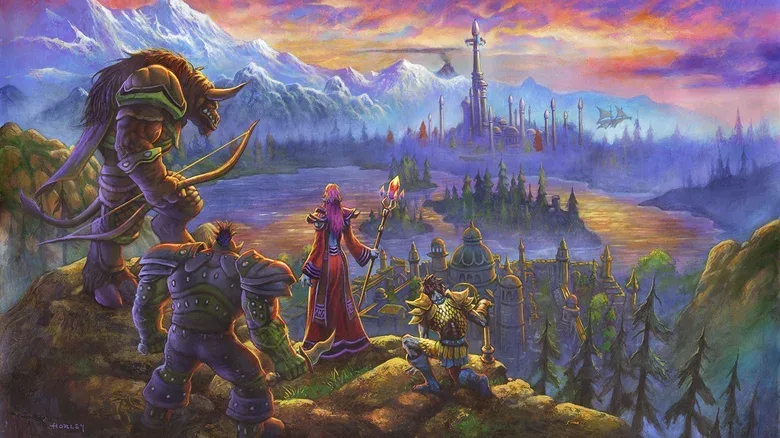
World of Warcraft: Forever is not simply returning players to old Azeroth. It is trying to answer one of the longest-running what-if questions surrounding the MMO: what might have happened if Blizzard had kept expanding the original world rather than moving outward to new continents and worlds?
That premise gives Forever an unusually demanding design brief. It needs to offer material substantial enough to feel like a real continuation—more than 1,000 new quests, additional Azeroth zones, dungeons, raids, class and item rebalancing, and a new lighting system are all part of the plan—without becoming so recognizably “modern” that it breaks the appeal of the Classic framework it is built upon.
For the encounter team, that means more than reproducing old art direction or reviving a familiar map. It means revisiting the assumptions behind how Classic dungeons and raids asked players to prepare, navigate, cooperate and learn. Lead encounter designer Michael Nuthals has described that work as a process of unlearning habits shaped by years of modern World of Warcraft development. That is a revealing way to frame Forever: nostalgia alone is not the target. The target is a particular style of MMO play.
A continuation of Azeroth, not a replacement for Classic
Forever takes place in Azeroth, the setting of 2004’s original World of Warcraft, and imagines an alternate route for the game’s future. Instead of following the path laid out by The Burning Crusade and subsequent expansions, its new stories remain tied to the original world.
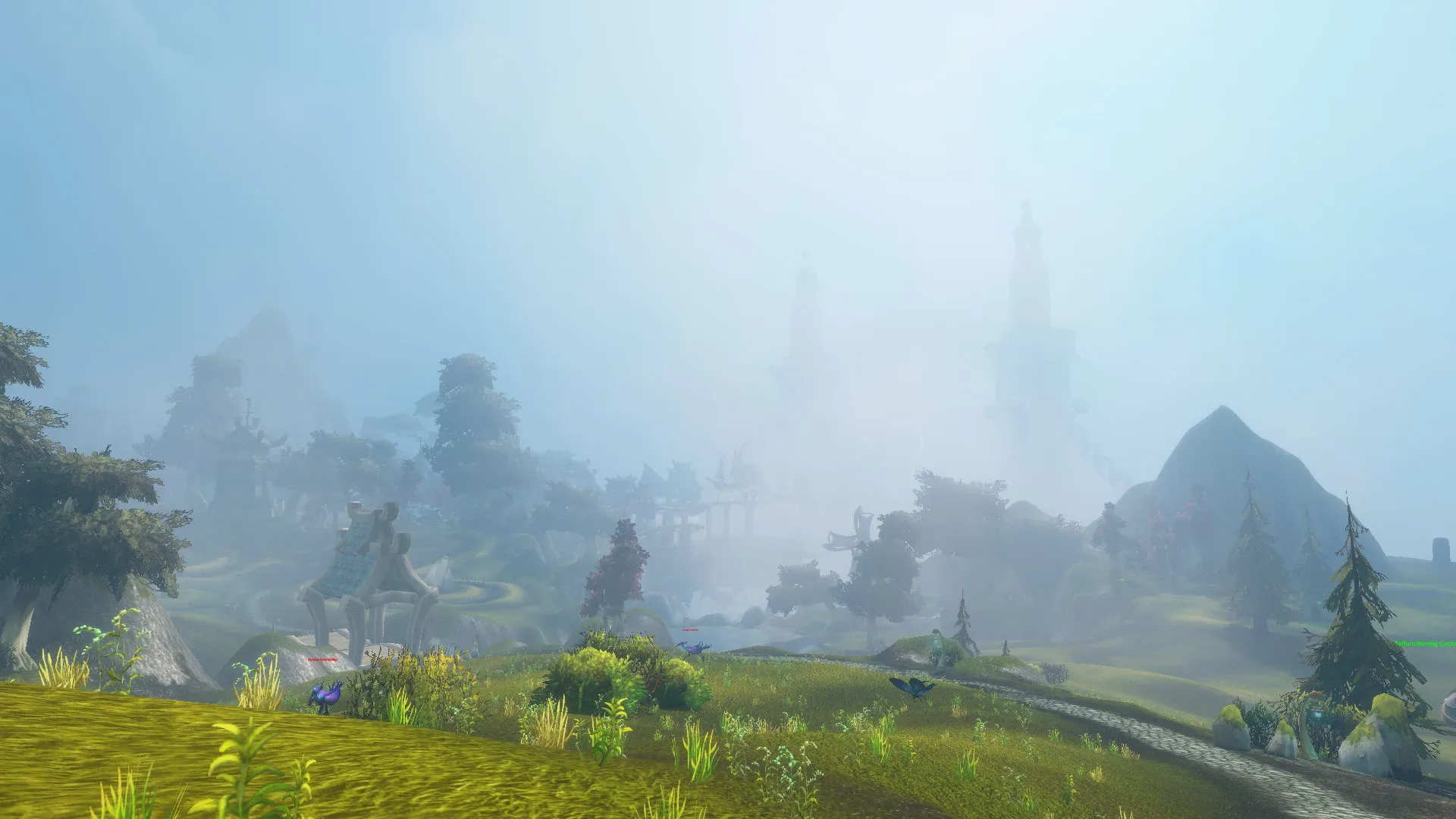
Some of its quests will continue threads that the original game left unresolved. New explorable areas include Mount Hyjal, a location associated with a pivotal conflict in Warcraft III. New dungeons and raids are planned as well, including the Ruins of Lordaeron dungeon cited by Nuthals. Blizzard has also reworked classes and items, while an all-new global-illumination lighting pipeline is intended to make the world more atmospheric.
Global illumination is a lighting approach that models how light bounces around an environment instead of treating every object as lit in isolation. In practical terms, the goal here is a more convincing sense of mood and place. That technical upgrade may be among Forever’s clearest signs that this is not a preservation project. The team is making additions and changes; it is simply attempting to make those changes belong.
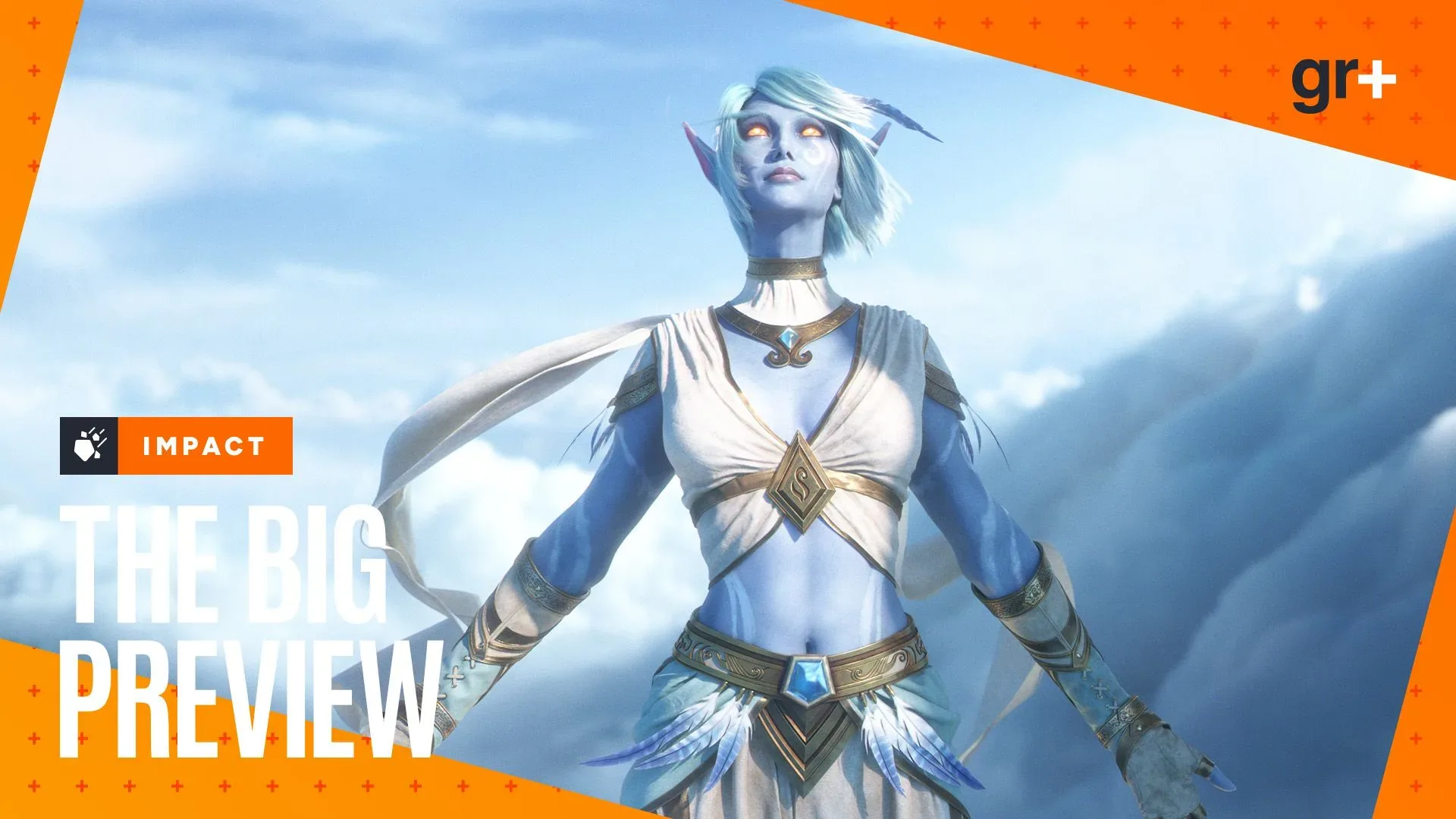
That balancing act is especially evident in the Skyborne Elves, a new playable race that did not exist in the original release. Their inclusion is likely to be divisive precisely because it makes the project’s central tension visible. A new race can broaden the game’s possibilities, but it also raises the question that will follow every Forever feature: does this feel like a natural road not taken for Classic, or does it feel like a later-era system placed in an older game?
Why “Classic+” expectations are hard to satisfy
Players have asked for a Classic-era expansion path since the original World of Warcraft was rereleased in 2019. “Classic+” has become convenient shorthand for that wish, but it has never represented a single agreed-upon feature list.
Related coverage includes World of Warcraft: Forever Sets Class Identity Above Perfect Balance.
For one group, it can mean untouched foundational class design plus fresh questing. For another, it means a more ambitious reimagining of unfinished plot threads and locations. Others may accept quality-of-life adjustments but oppose systems associated with the live, current version of World of Warcraft—often called retail WoW—because they believe those systems change the pace and social texture of the game.
Forever cannot solve that disagreement by finding a mathematically perfect middle. Its task is to establish a coherent philosophy and apply it consistently. The team’s reported practice of replaying an existing Classic dungeon, such as The Deadmines, before examining a new Forever dungeon shows an attempt to do exactly that. The comparison was not merely whether both instances were enjoyable; it was whether they seemed as though they could sit side by side without a jarring change in design language.
That is an appropriately strict test. Players entering a new dungeon will bring their memories and expectations with them, but they will also notice subtler things: the rhythm of pulls, the importance of preparation, the readability of hazards, and whether a victory seems to come from coordinated planning rather than from a highly standardized routine. None of that guarantees universal approval. It does, however, give the project a meaningful standard beyond surface nostalgia.
The discussion around Forever also arrives after Season of Discovery, an earlier Classic offshoot that experimented with class abilities, progression systems and dungeons while staying inside the original game’s broad confines. Nuthals distinguishes that experimentation from Forever’s purpose. Where Season of Discovery explored how far Classic encounters could be pushed, Forever’s encounters are being designed to recapture the feel of original Classic content.
That distinction matters. Experimentation can reveal interesting new options, but a long-term alternate continuation has a different responsibility: it must decide which changes will remain part of the world’s identity.
The three-part encounter model: strength, dexterity and intelligence
Nuthals has outlined a useful framework for how the team is thinking about encounters: strength, dexterity and intelligence. It is not a character-stat checklist. It is a way to describe the kinds of demands a dungeon boss or raid encounter can place on a group.
- Strength encounters reward accumulated equipment and proficiency with a chosen class.
- Dexterity encounters test positioning, movement and avoiding environmental hazards.
- Intelligence encounters reward understanding mechanics and entering the fight with a plan.
Every multiplayer encounter can contain pieces of all three, but where a game places emphasis changes the mood of progression. A design built heavily around dexterity can make split-second movement the dominant test. A greater focus on strength and intelligence creates more room for preparation: assembling useful gear, choosing an approach, learning the encounter, and returning with a better plan.
Forever is said to be leaning toward gearing and planning because those are central to the Classic experience it wants to evoke. The fantasy is not only that a group reacts brilliantly in the moment. It is that players put in the work beforehand, show up equipped for the problem, and then see that preparation pay off.
That is a meaningful promise for players deciding what they want from the game. The intended payoff is not just another higher item level, but the satisfaction of recognizing a challenge, acquiring something relevant, and later discovering that the earlier detour mattered. It also suggests that exploration, professions, side activities and less-obvious rewards could have a role beyond filling a collection window.
Horizontal progression is the key—and the difficult part
The structure meant to support that approach is horizontal progression. Blizzard plans to retain Forever’s level cap at 60, rather than raising it for major new releases and creating enormous jumps in player power.
Vertical progression is the more familiar expansion pattern: levels rise, the power ceiling rises, and old equipment is rapidly replaced by stronger gear. Horizontal progression does not mean power stops mattering. Instead, it aims to make different tools, rewards and choices remain useful alongside one another. A piece of gear may be valuable because of a particular effect or because it fits a later encounter, not only because it carries the largest raw number.
In Forever, the team says it plans to seed the world with new items worth pursuing and to consider those items when building future raids and bosses. The ideal result is a delayed payoff: something obtained while exploring or completing an earlier activity can become helpful later. Players who investigated the world, kept the right item, or prepared carefully can feel clever rather than simply overleveled.
It is a compelling fit for a version of World of Warcraft rooted in a fixed level cap. It could help preserve the relevance of a broad range of content and rewards, and it could make an expanding Azeroth feel interconnected rather than segmented into successive gear resets.
But it is also the part of Forever that will require discipline over time. If future additions make earlier rewards irrelevant too quickly, the horizontal model loses its point. If too many required niche items become difficult to identify, players may see planning not as satisfying discovery but as unnecessary friction. The reported design intent is clear; the harder work is maintaining that intent across future dungeons, raids, zones and itemization.
Not every addition is planned for level 60
Forever’s prospective future content is not limited to endgame players. Blizzard hopes to add new zones and dungeons over time, and Nuthals has said that not all of those additions would be at maximum level.
That is important because a Classic-style world is not defined solely by its raid scene. Lower- and mid-level adventures can make Azeroth feel like a place with ongoing stories rather than a corridor leading to the cap. They also offer a way to develop ideas that previously existed only as passing references: a quest name, a note, or another small piece of in-world suggestion can become the basis for a larger tale.
The approach aligns with Forever’s alternate-history premise. Instead of treating Classic as a frozen museum piece, it treats Azeroth as a setting whose loose ends can be developed in new directions. Whether individual players welcome those directions will depend on execution, particularly when new story material or playable options intersect with established memories of the original game.
What the beta feedback can and cannot establish
Blizzard has concluded what it calls the largest beta in World of Warcraft history for Forever. Access required the purchase of a premium bundle, with bundles beginning at $60, and the team says it received extensive feedback.
That feedback matters because Forever is attempting to serve an audience with unusually detailed opinions about combat pacing, class identity, dungeon flow and the meaning of “authentic.” A beta can surface problems in balance, reward structures and encounter clarity. It can also reveal whether the new material feels disconnected from the Classic foundations it is meant to extend.
Still, beta participation alone cannot settle the biggest question around a persistent MMO: whether its progression model stays rewarding after players reach the cap and establish their routines. Forever’s stated approach rejects the expectation of huge power leaps with every major release, but a game with a fixed level ceiling must provide enduring reasons to explore, organize groups and return without relying on those jumps.
That is the real test for its horizontal design. Players will need to feel that the world keeps offering worthwhile goals, while also feeling free to pursue them at their own pace. The difference is significant. A game can have many activities and still make them feel mandatory; it can also have a smaller set of interlocking goals that make time spent in Azeroth feel deliberate rather than pressured.
Forever arrives November 4. Its list of additions is ambitious, but the defining story is less about the number of quests or the new locations than about design restraint. Blizzard is attempting to build a future for Classic World of Warcraft by studying what made its earlier structure distinct—and by resisting the instinct to make every new feature behave like one from the modern game.
For more on how ideas from elsewhere in Blizzard’s catalog have influenced WoW’s enemies, see the story of the Diablo 3 system that found a home in World of Warcraft’s Anubisath Sentinels.