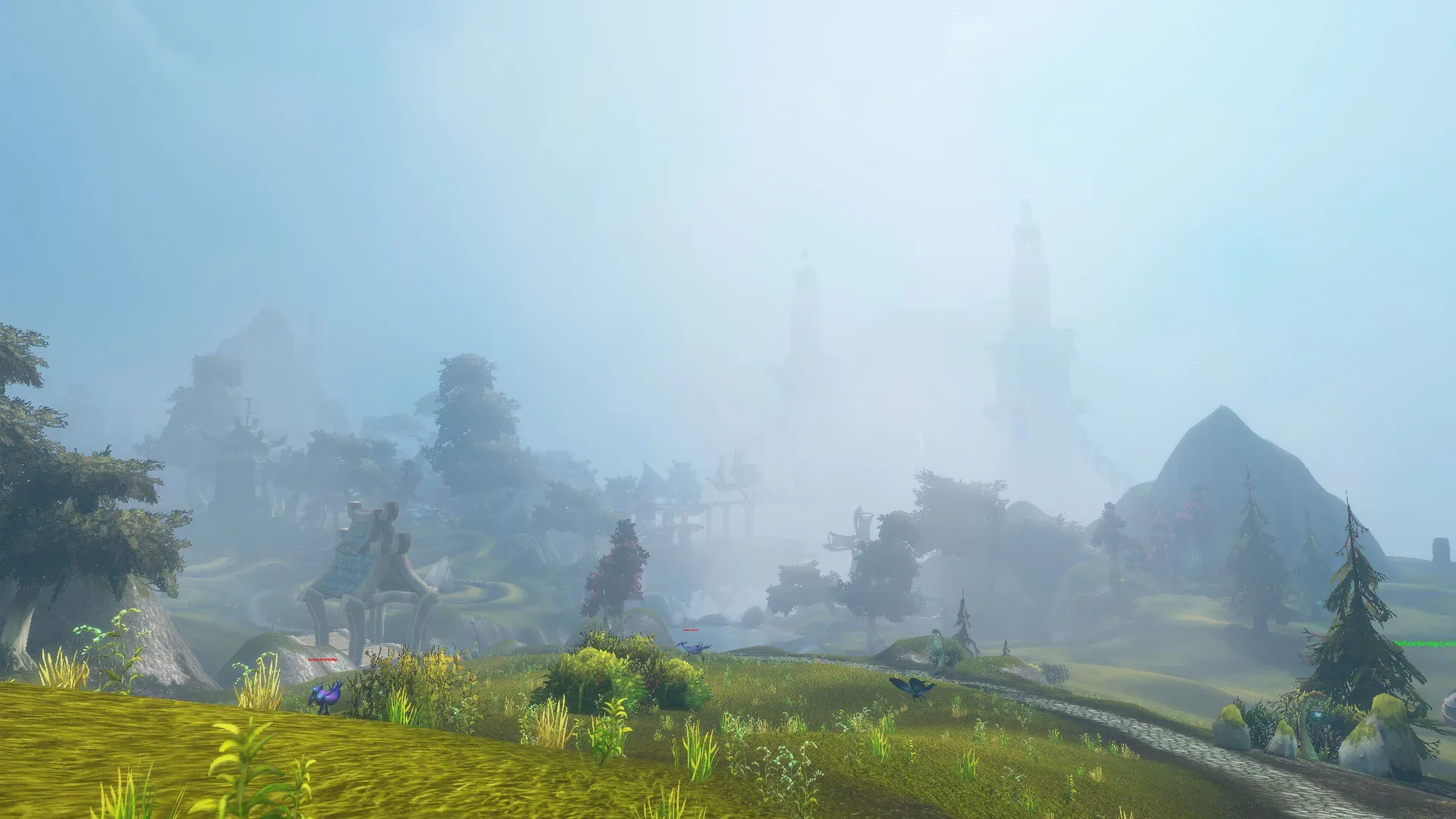
World of Warcraft: Forever is preparing to increase weather effects in certain beta zones, and the response makes one thing unusually clear: Azeroth players have been waiting a long time for rain to matter again.
The official World of Warcraft development account shared the compact update through the WoW subreddit, saying that stronger weather effects would begin appearing soon in select areas of the ongoing Forever beta. No list of zones, timetable, or full specification of the systems involved accompanied that message. Yet even that small confirmation has prompted a much larger conversation about what people hope the world will become.
Requests include thunderstorms, snowstorms, drifting fog, blowing leaves and dust storms. Those ideas are wishes rather than confirmed features, and it is important not to confuse them with the developer’s actual statement. What is confirmed is narrower: some Forever beta zones are getting increased weather effects. Still, the enthusiasm reflects why this seemingly visual adjustment has such a large appeal in a massively multiplayer world.
Weather is scenery, but it is also a world-building system
In game-development terms, dynamic weather means conditions can change over time instead of each location permanently presenting one fixed visual state. A zone might be sunny during one visit and rainy during another. Paired with a day-and-night cycle, that variation changes the lighting, color, sound and atmosphere of an area without requiring the game to add a new landmass, quest chain, or progression tier.
That distinction goes to the heart of the reaction. Weather does not need to hand out items, raise character power, or unlock a dungeon to alter how a familiar route feels. It can make the same road, shoreline, forest, or open plain look different simply because the player encountered it under different conditions. In a game built around returning to places repeatedly, that repeatable variation has clear value.
The original World of Warcraft featured more forceful weather effects in certain zones after an early patch, including blizzards in Dun Morogh and monsoon-like rain in Stranglethorn Vale. These were not presented as unchanging regional backdrops. The conditions could come and go, which meant players did not necessarily see Azeroth in precisely the same state every time they logged in.
That randomness is a large part of the appeal. A fixed rainy zone can establish a mood, but it eventually becomes the zone’s normal appearance. Intermittent rain is more noticeable because it interrupts normality. The change creates an occasion: a familiar place suddenly has a softer horizon, a darker sky, different ambient sound, and perhaps less visual distance. In practical terms, it gives players an excuse to pause and look at an environment they otherwise might rush through.
Why Forever is a natural fit for stronger conditions
Forever is already using improved visual effects to add character to older spaces. Forests can appear misty, sunrise and sunset lighting is more pronounced, and water has more shimmer. Increased rain, snow, or other conditions could build on that foundation, because weather is not isolated from the rest of a zone’s presentation. It interacts with the visual language already doing the work: a dark forest can become more mysterious under mist; an open field can feel quieter under rainfall; a wintry settlement gains a different kind of presence if snow is actively falling rather than merely implied by its terrain.
Related coverage includes WoW: Forever Beta Is Getting Stronger Weather Effects, and Azeroth Fans Are Ready for the Storm.
The limited glimpse of rain in Elwynn Forest is the immediate focal point. The effect includes light mist close to the ground as rain falls. It also appears to use different indoor sounds depending on the roof surface above the player. That detail is small, but it is exactly the kind of environmental touch that makes weather feel less like a transparent screen effect and more like something happening around the character.
Audio deserves particular attention here. A visual rainfall effect establishes the obvious first impression, but sound can sell the illusion when a player is standing still, entering a building, or traveling through a familiar settlement. Distinct rain sounds under different roofing suggest attention to the relationship between environment and ambience. It is not confirmation of a larger audio overhaul, but it illustrates why the early footage has made an impact.
There is also a thematic fit with the stated ambition to develop Azeroth more horizontally than vertically. In this context, horizontal development refers to expanding the breadth, texture, and lived-in quality of the world rather than focusing only on the upward ladder of stronger character progression. Dynamic weather is an especially direct example of that approach. It does not inherently make a character more powerful. It makes the space around that character feel less static.
That is why a weather update can be meaningful without being mechanically transformative. The benefit is experiential: an established zone has more states, so its identity is not reduced to a single screenshot or memorized travel path.
What players are asking for—and what remains unknown
Players have spent years calling for older dynamic effects to return more broadly, particularly as weather became more selective in the retail game and was removed from many old-world areas. Some zones still have weather; brief downpours in Zul’dazar are one recent example. But the broader perception is that old Azeroth no longer receives the frequent, intense weather variation many players remember.
The Forever announcement has reignited that request, especially because the beta’s presentation changes make a stronger environmental system easier to imagine. Community discussion has singled out several possibilities:
- Thunderstorms, which would imply more dramatic rain and potentially more pronounced lighting and sound.
- Snowstorms, a natural complement to regions such as Dun Morogh.
- Fog that rolls in and out, rather than remaining a permanent visual quality of a location.
- Seasonal-looking effects, such as falling leaves.
- Dust storms, which could give dry areas their own weather identity rather than simply borrowing rain or snow.
None of those requests establishes what will ship. The current announcement does not confirm all-weather coverage, new weather types, a particular set of zones, or a permanent feature scope after beta. It also does not explain whether conditions will be purely cosmetic, how frequently they will occur, whether players will receive settings to control intensity, or whether the rollout will happen all at once.
Those missing details matter. “Increased weather effects” could describe a carefully constrained enhancement to several places, or it could be the first step in a wider effort. At this stage, the only responsible reading is that select beta zones will see a stronger implementation, while the extent of the system remains open.
Analysis: the case for variety over spectacle
The most promising interpretation of this change is not necessarily that every zone needs nonstop dramatic storms. Constant extreme weather could become just as visually routine as permanent sunshine. The central appeal of dynamic weather is contrast: a clear day makes the sudden rain more memorable, while a rainy stretch makes a bright dawn feel newly welcome.
That is also why regional specificity could be more valuable than simply applying identical rainfall everywhere. The old examples people recall most strongly are suited to their places: a Dun Morogh blizzard reads differently from Stranglethorn Vale’s monsoon conditions. The world feels coherent when its weather amplifies geography and mood, rather than treating every territory as a stage for the same particle effect.
For players, the practical consequence is mostly one of atmosphere rather than efficiency. There is no announced reward track, gameplay advantage, or requirement tied to the intensified conditions. A player looking for power progression should not assume that weather changes will alter their route through Forever. A player who enjoys exploration, role-playing, screenshots, quiet travel, or revisiting classic zones has more obvious reason to pay attention.
It also has implications for the social texture of a persistent online game. Shared weather is a lightweight shared event. Players can be in the same place for entirely different reasons—questing, traveling, waiting, socializing—and still notice that the world has changed around them. No special queue or structured activity is needed. The event is simply a rainstorm, but everyone under it is briefly experiencing the same Azeroth.
That kind of shared atmosphere is difficult to quantify, and it is easy to dismiss next to headline features. Yet it is often what gives a long-running virtual world its sense of place. It makes the world feel less like a collection of efficient destinations and more like an environment that continues to exist when the player is not actively pursuing an objective.
Azeroth as more than a backdrop
The stated goal of making Azeroth “the main character” depends on more than new content appearing on the map. It requires the map to have presence. Weather, lighting, mist, moving water, and ambient sound are all tools that can make a known zone feel active even when its quest text and geography have not changed.
The beta update is therefore small in stated scope but large in symbolic importance. It signals that environmental atmosphere is receiving attention alongside Forever’s upgraded look. Whether that attention eventually extends to the community’s full wish list is unknown. For now, the update offers a concrete reason to revisit affected areas and see how much a little more rain, snow, or haze changes the feeling of a journey through old Azeroth.
The interest in responsive worlds is hardly limited to one MMO; even an interaction-focused feature can make a game’s spaces feel consequential, as seen in this look at a missed conversation in The Blood of Dawnwalker. Forever’s weather works on a different scale: not a branching decision, but a changing environment that can reshape a moment of ordinary travel.
For the moment, the forecast is deliberately vague. Certain Forever beta zones will receive increased weather effects soon. The community’s hopes are much broader. If the Elwynn Forest rain preview is representative, however, even a restrained rollout may be enough to make players slow down, seek shelter, and remember that the road through Azeroth does not always have to look the same.