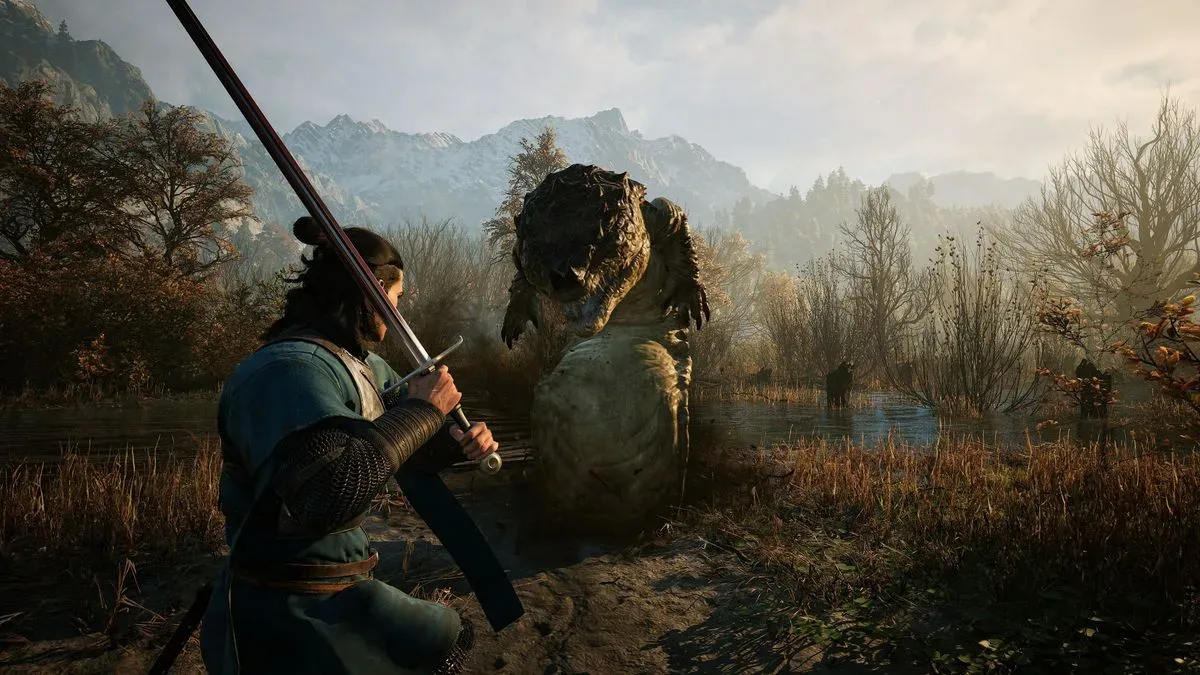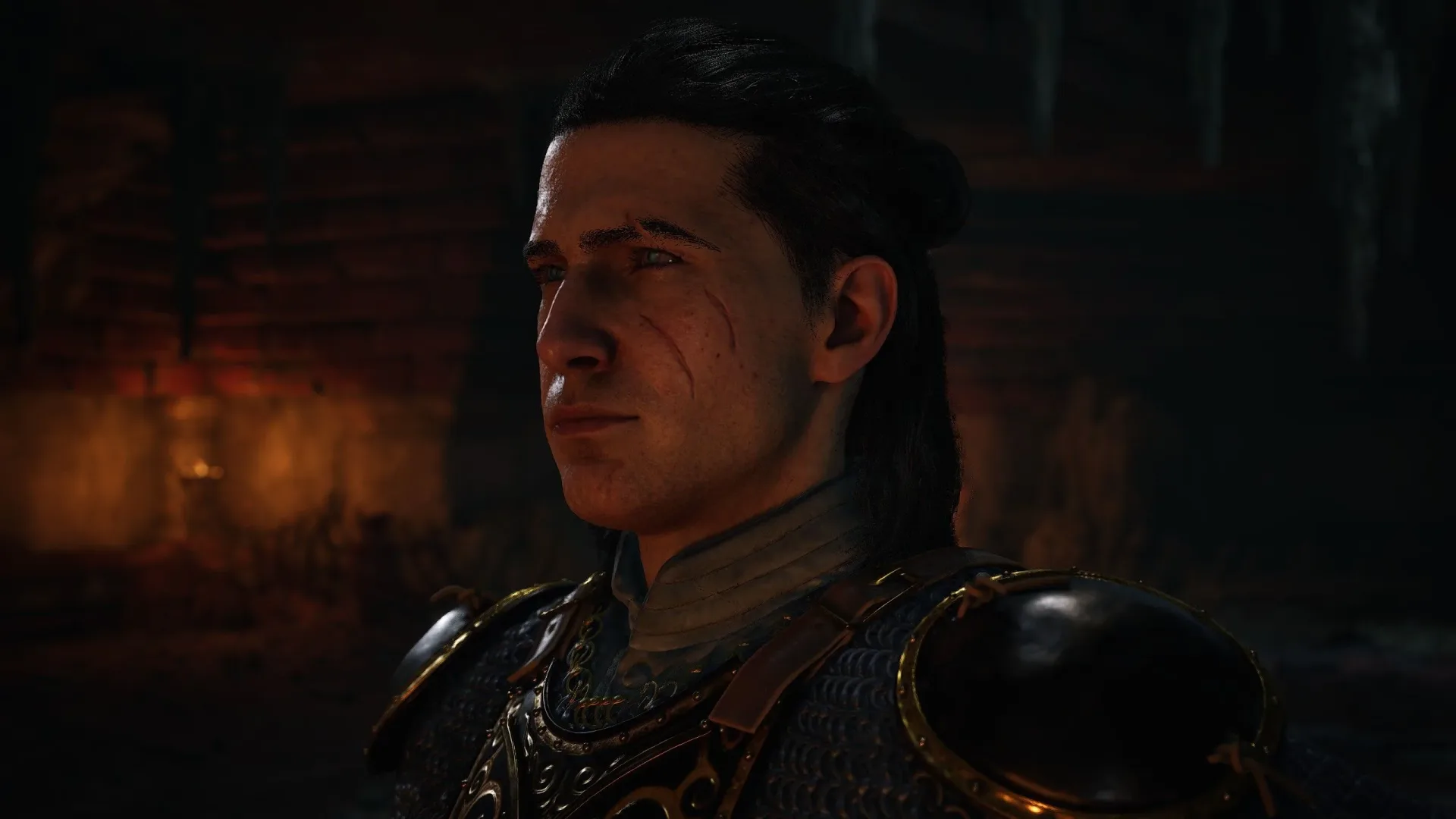
Warning: This article contains major story and boss spoilers for The Blood of Dawnwalker, including events involving Isbrand, Bakir, Xanthe and the approach to Brencis.
There is a particular kind of role-playing game disaster that does not arrive with a dramatic game-over screen. It arrives as an ordinary conversation choice. In this Blood of Dawnwalker run, Coen’s attempt to help the rebels collapses not because of an unwinnable battle or a deliberately cruel ultimatum, but because a stealth assignment goes wrong and a follow-up response misjudges what rebel leader Crake wants. The practical result is stark: the rebels can no longer be counted on for the looming fight against Brencis.
That consequence lands harder because the run has a self-imposed rule: no reloading a save to erase bad outcomes. Coen has 30 days to save his family, is being played on Duelist difficulty, and has taken every available chance to develop his vampiric side. Those conditions turn an otherwise recoverable misstep into part of the story. There is no clean version of this campaign waiting a few menu clicks away.
It also makes this stretch of the adventure an unusually useful illustration of how RPGs create pressure. The major objective is unchanged: build enough leverage to confront Brencis before time runs out. But the route toward that confrontation has become messier. One potential ally is alienated, an old vampire’s soul is abandoned to an unknown fate, and Coen is forced to take on two members of Brencis’ court in very different circumstances.
A campaign built around consequences, not perfect outcomes
The run’s guiding approach is almost aggressively committed to risk. Duelist is the selected higher combat setting, vampiric upgrades are always taken when available, and unintended outcomes must stand. That last constraint changes the meaning of ordinary quests. A failed stealth sequence is no longer a small interruption before retrying the ideal route; it can reshape the support available for an endgame battle.
That is worth separating from a claim that every player will see precisely the same result. The events here show what happened in this particular no-reload path, not a complete map of the game’s branching logic. Still, the lesson for players who want a more controlled run is straightforward: do not treat relationship scenes after a failed objective as administrative dialogue. The failure itself may be only the first part of the consequence. How Coen responds, and whether he pursues a chance to repair the situation, can matter just as much.
For readers trying to think through RPG progression more generally, quest sequencing can be as important as raw character power. Our look at quest order after reaching the Watchtower in Control Resonant explores that same broad principle in another RPG context: doing the right task at the right time can preserve options that brute force alone cannot replace.
Isbrand’s memories deepen Brencis’ past, then create another uncomfortable choice
The immediate objective is to follow up with Lacra, now an ally. Brencis’ sire, Isbrand, has been rescued, but after two years of kobolds consuming his flesh, he cannot contribute much in physical terms. Instead, the group enters his memories.
Related coverage includes The Blood of Dawnwalker Run Takes a Brutal Turn as Coen Loses a Rebel Ally.
Those fragments show Brencis before he ruled a vampire court: a Roman soldier who was turned by Isbrand in Teutoburg Forest. They also establish a personal wound at the center of Brencis’ history. Soon after becoming undead, Brencis attempts to reunite with his wife despite Isbrand’s warning. She chooses to set herself on fire rather than become undead herself.
The memory sequence does more than add background. It places Brencis within a pattern of vampirism as corruption, desperation and personal loss rather than presenting him solely as a final obstacle. That framing matters in a campaign where Coen is simultaneously becoming more vampiric by design. Earlier, Coen agreed to contain a fragment of Ambrus’ soul to protect it from an evil force beyond the world. The exact nature of that force remains unclear, but it appears to feed on those who engage with its power, including vampires and witches. Coen, who is both tied to vampirism and able to use witchcraft, is plainly not a neutral observer of that threat.
The price of learning more about Brencis is a combat-heavy spectral detour. The account describes the fights as repetitive, with familiar ghostly enemies making the directional combat feel overly routine. Directional combat generally means attacks and defenses are tied to a chosen direction rather than simply being automatic exchanges. That system can make duels deliberate when enemies demand different responses, but repetition can flatten the tension when the same answers work repeatedly.
There is at least one grisly power fantasy in the middle of that repetition: a newer ability lets Coen destroy creatures by bursting them from within through their blood, apparently working on ghosts as well. It is a reminder that building deeply into vampirism produces tangible combat advantages. It also keeps the narrative question alive: does accepting every vampiric gain eventually create a cost that muscle and blood magic cannot solve?
At the end of the memory sequence, Isbrand’s spirit appears in crimson haze, much as Ambrus’ did before. Lacra refuses to take the soul in because of her bitter history with Isbrand. Coen can offer himself, but chooses neither intervention nor rescue. Lacra moves on, and the silence effectively leaves Isbrand consigned to the otherworldly evil that has been haunting the campaign.
It is a small moment on paper, but it clarifies the danger of passive decision-making in choice-driven quests. Not choosing can still be a choice. In a no-reload run, the discomfort is not theoretical: Isbrand is gone, and the party’s moral ledger has another unresolved mark on it.
Useful errands become a strategic campaign against the court
After Isbrand, Coen turns to unfinished business tied to St. Mihai, the Dawnwalker defeated earlier. St. Mihai left behind a broken sword hilt. A smith can handle the reconstruction, but the remaining pieces are scattered across kobold nests in Vale Sangora. Gathering them doubles as an opportunity to aggravate the remaining court members, Bakir and Xanthe, by wrecking distilleries and interfering with recruitment efforts.
That is an effective example of overlapping objectives. The search is not merely a scavenger hunt for a weapon component; it also applies pressure to enemy infrastructure. It gives the broader war against Brencis a sense that Coen is actively undermining the court rather than waiting for the final castle assault.
Another lead concerns the gruesome golems encountered earlier. With rebel assistance, Coen tracks down a tome connected to the construction of Brencis’ creatures at a tower in southern Vale Sangora. The tower ultimately becomes a psychological ordeal. Coen is caught in a repeating vision of a day with his family and can only escape by confronting the trauma surrounding the death of his youngest brother.
Its function is distinct from the sword reconstruction and court sabotage. Where those tasks provide material or strategic leverage, the tower forces a closer examination of the protagonist’s emotional stakes. Coen’s family is not just an abstract timer attached to a quest log; memories of home and family loss are central to why the deadline matters.
The rebel break becomes the run’s biggest strategic setback
The cursed tome should have been a valuable delivery to the rebels. Before returning it, however, Coen takes a detour to a rural village. Crake asks him to spy on a target without being detected. The stealth attempt fails, exposing Coen.
Back in Svatrau, Crake is furious and leaves before the tome can be handed over. His second-in-command offers information about where he has gone, but Coen interprets the exchange as a request to give Crake space. That reading is wrong. The message is unambiguous: when the time comes to confront Brencis, Coen should not expect the rebels’ support.
The cursed book also remains in Coen’s inventory, an unresolved practical problem alongside the relationship damage. Whether that item has a future use is not established here, so it should not be assumed that the quest line is permanently closed or that every benefit is lost. What is clear is that the immediate military advantage of rebel aid is no longer secure.
For a cautious player, this sequence suggests a practical priority: treat stealth missions tied to faction leaders as high-stakes content, particularly if a failed attempt will be allowed to stand. The source material does not establish a universal method for preserving Crake’s alliance, so it would be irresponsible to present one. But the outcome demonstrates why a player may want to complete faction-sensitive work before taking optional detours, and why dialogue after failure deserves full attention rather than a quick attempt to exit an awkward scene.
Bakir’s arena removes the build Coen has been cultivating
Coen responds to losing the rebels in the most gothic way available: he finishes reforging St. Mihai’s sword and anoints it using an orb of floating blood. The victory is brief. One of Bakir’s lackeys offers a route into Bakir’s nocturnal games, where outside weapons and gear are prohibited. The new blade has to stay behind.
Bakir’s contest is a masked run through moonlit ruins. Contestants fight hellhounds, undead enemies and one another while trying to reach a silver coin at the center. Coen must maintain his disguise, which also means withholding vampiric powers so Bakir does not identify him.
This is a sharp inversion of the run’s broader build philosophy. Coen has spent the campaign feeding his vampire toolkit, but the arena asks him to survive without showing it. The issue is not that the powers cease to exist; it is that using them carries a social and tactical cost: exposure before the plan is ready.
The disguise does not last. After even complying with a demand to cut the silver coin from a living contestant’s stomach, Coen removes his mask when Bakir requests it. Bakir recognizes him at once, leading to a two-stage boss encounter.
A two-stage boss fight is a battle divided into sequential phases, often requiring players to defeat an initial group or form before facing the central opponent. Here, there is no checkpoint between Bakir’s allies and Bakir himself. A death against the vampire means repeating the earlier fight. That structure magnifies the threat of Bakir’s one-hit attack: a one-shot is an attack capable of defeating a character in a single successful hit, regardless of how long the attempt has lasted.
Bakir mixes strong blood magic with physical attacks, and his instant-kill move repeatedly cuts attempts short. Nevertheless, Coen eventually wins. Bakir falls to Coen’s claws, but unlike Ambrus, his spirit willingly goes into the beyond. The comparison reinforces that the soul-related choices around the court are not mechanically or emotionally identical. Ambrus was protected by being housed in Coen; Isbrand was left behind after indecision; Bakir embraces his own exit.
Xanthe is defeated, but not destroyed
Xanthe is the final court member between Coen and Brencis. Two of Brencis’ soldiers approach Coen not to attack, but to request help investigating disappearances in Xanthe’s territory. They provide a lantern that grants access to her mansion in return for finding the missing women.
The discovery inside is horrific: dismembered remains and a hellhound kennel make clear what happened to the victims. Yet the fight with Xanthe is much shorter than the fights against Ambrus or Bakir. She is a caster rather than a brawler, and Coen keeps close using shadow-step before chaining claw attacks with vampire abilities.
Shadow-step, in this context, is a mobility tool that lets Coen rapidly close distance. That is especially valuable against a ranged-oriented enemy, because it limits the space a caster can use to set up attacks. The encounter shows how a power-focused build can be less about one universal solution and more about matching a tool to an opponent’s weakness.
When Xanthe asks for a parlay, Coen chooses an alliance over execution. She promises to side with him against Brencis on the condition that her killings stop. It is a pragmatic reversal after the rebel failure: Coen loses one prospective ally through a bungled mission, then gains another by sparing a defeated enemy. Whether Xanthe proves trustworthy is unresolved, but the tactical logic is clear. With Brencis still ahead, another vampire on the field may be more useful than another soul sent away.
What Coen has left for Brencis
The final approach is now taking shape. Lacra has one more lead that may provide an edge over Brencis. A mysterious letter from beyond Vale Sangora offers powerful armor if Coen can obtain the required rare materials. Greifberg Castle is the stated destination after those preparations.
The ledger is mixed. Coen has St. Mihai’s rebuilt sword, extensive vampiric development, Lacra, Xanthe and the lingering presence of Ambrus’ soul. He has also lost confidence in rebel support, sent Isbrand into an unknown spiritual fate through inaction, and carries an unresolved cursed tome. Bakir is dead, and Xanthe has been spared under a condition that will test whether the alliance has any substance.
That is the compelling messiness of this kind of RPG run. Coen has not produced a pristine checklist of completed objectives or a universally happy set of outcomes. Instead, the campaign has assembled a final assault from compromises, missed signals, hard-fought victories and powers that may carry their own hidden bill. With only Brencis left in the court, the question is no longer whether Coen is strong enough to reach the castle. It is whether the allies and decisions he still has will be enough once he gets there.