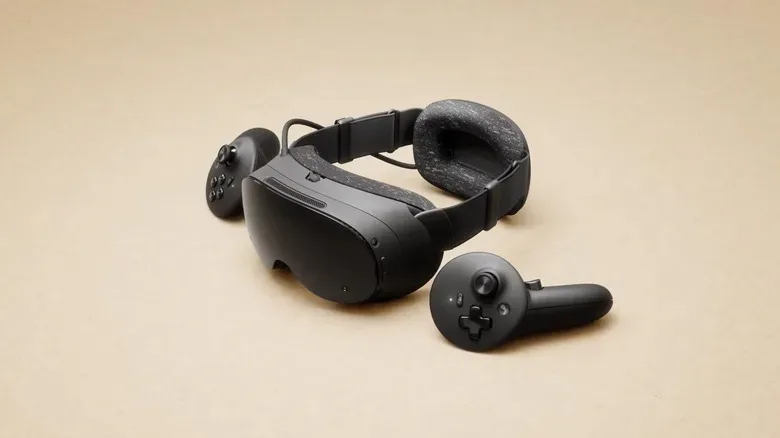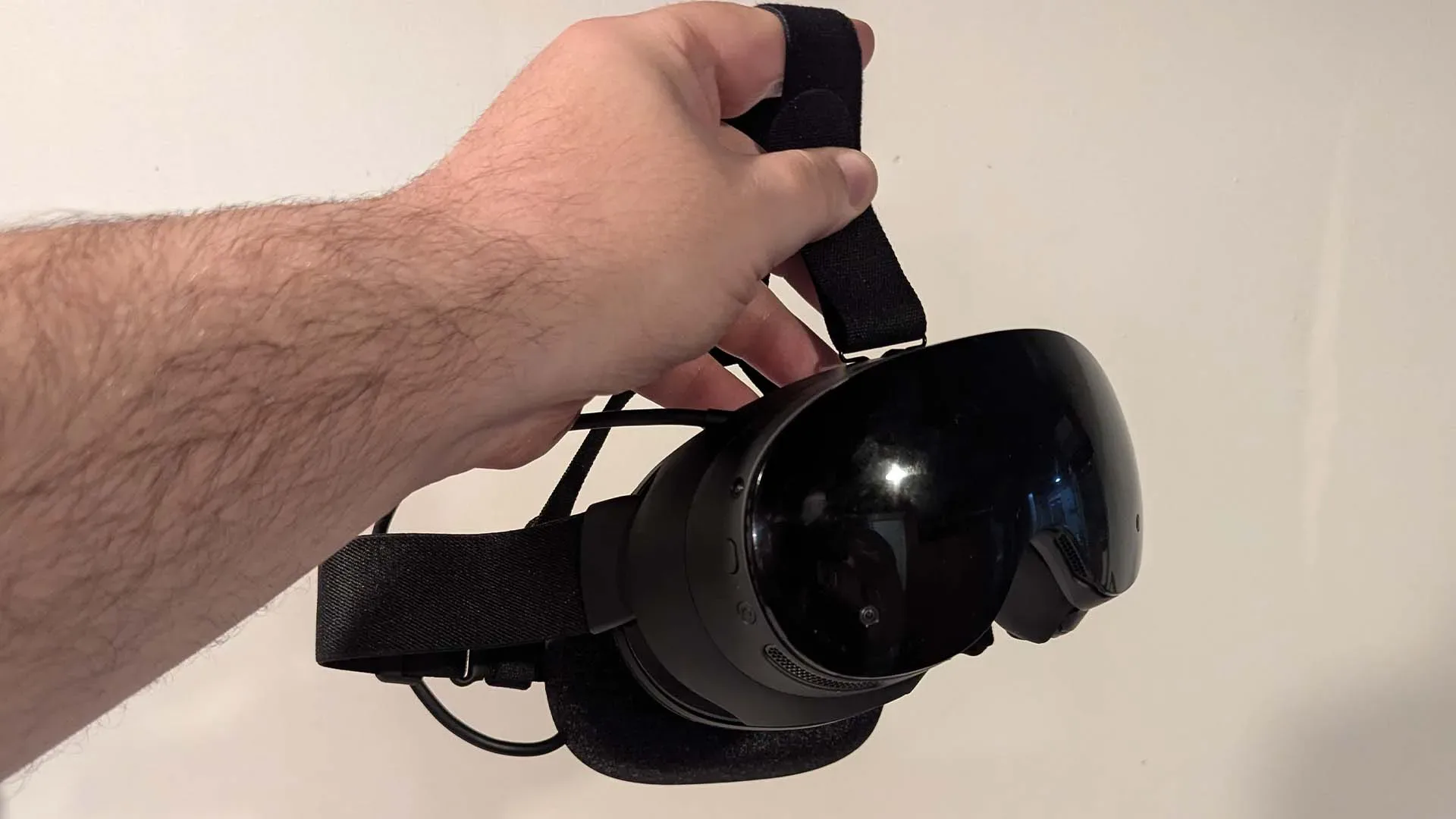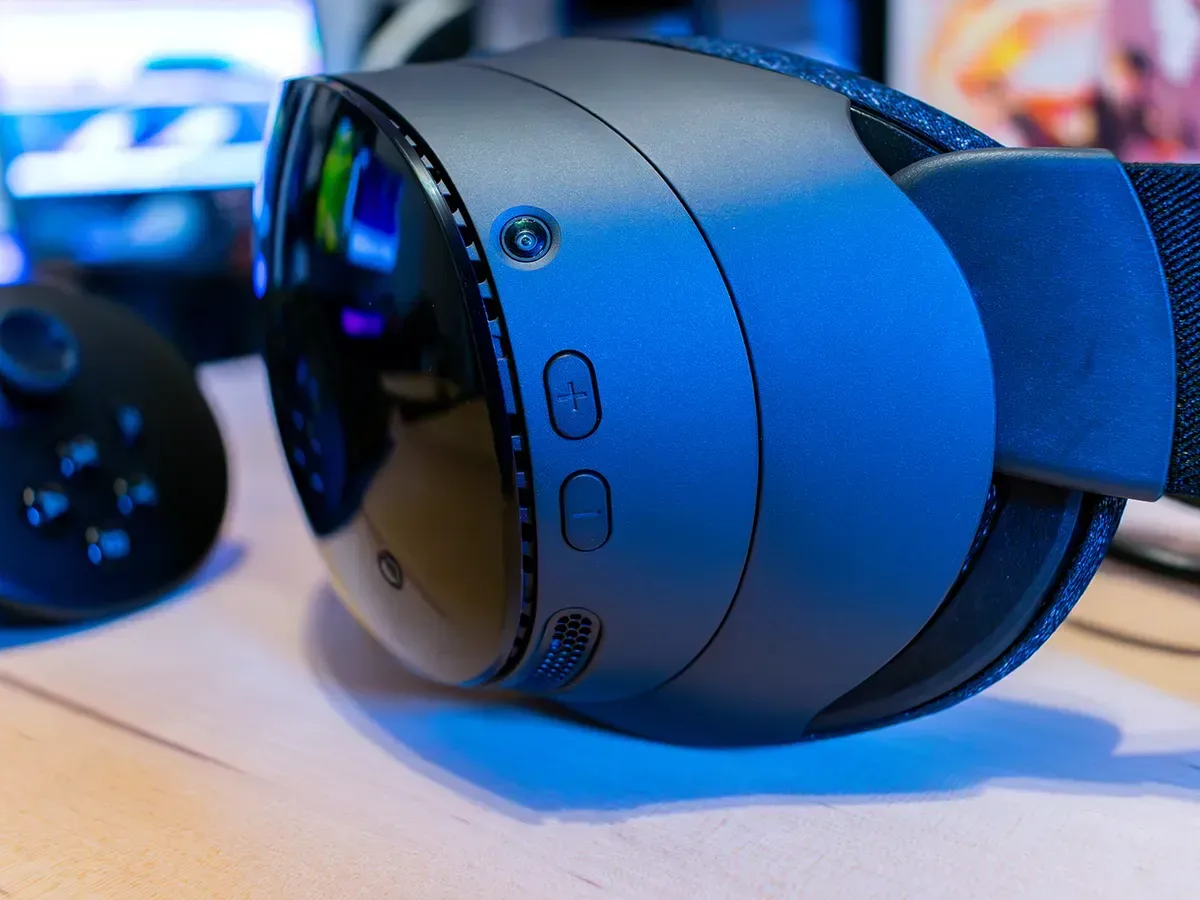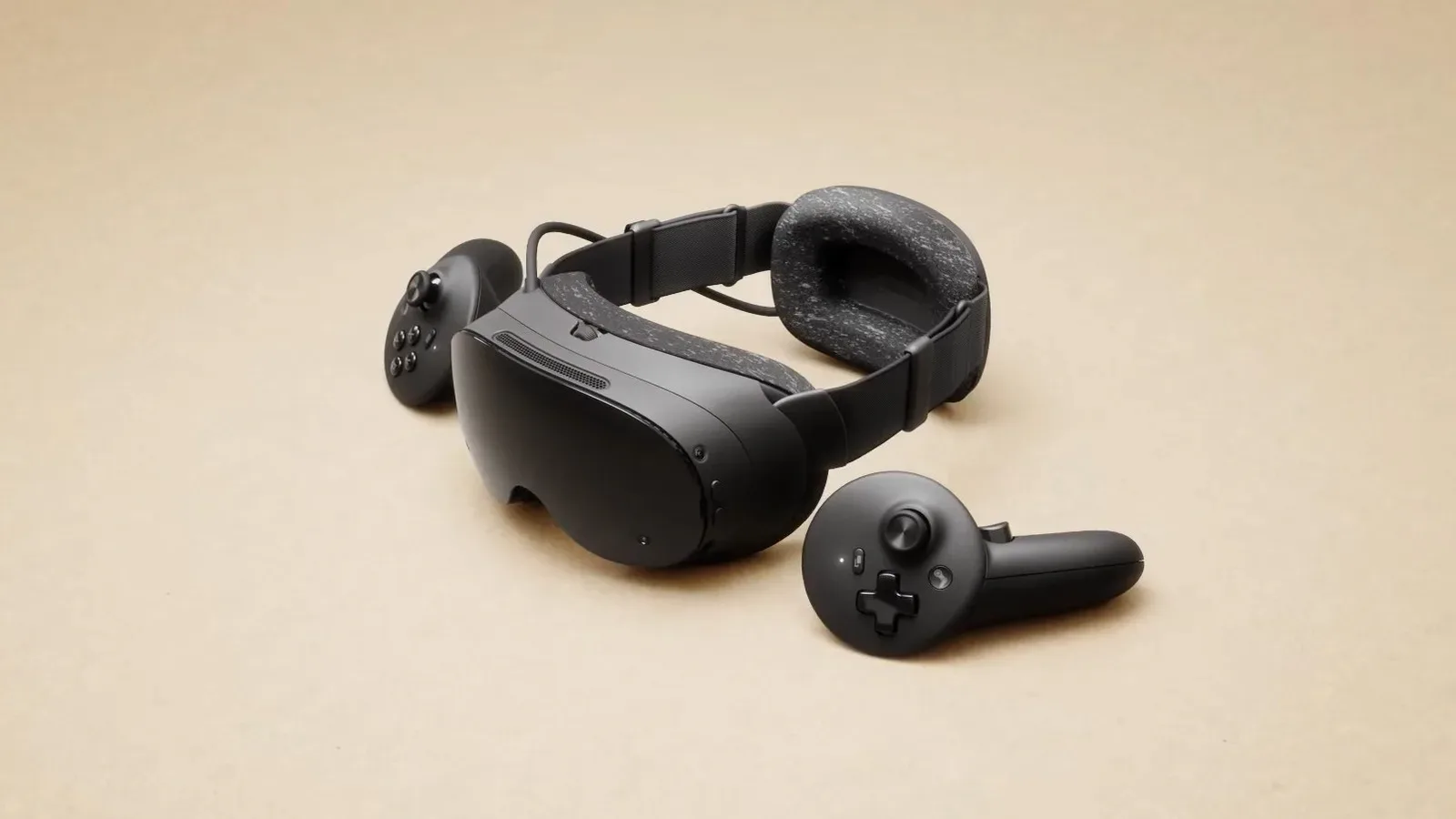
Valve has put a price and a purchasing process around Steam Frame, its new virtual-reality headset. The 256GB version will start at $1,059, while the 1TB model will cost $1,299. Both configurations include controllers, and both come with access to a rebuilt edition of Half-Life: Alyx designed to run entirely on the headset.
That makes Steam Frame an unapologetically premium proposition. The entry price is not a casual upgrade for someone merely curious about VR, and storage is the only stated difference between the two listed models. The inclusion of controllers matters, as does the bundled Valve VR game, but the number still puts a clear spotlight on what buyers receive beyond the core hardware: a standalone software experience, broader SteamVR work behind the scenes, and a gradually growing library of verified titles.
Steam Frame’s launch pricing also lands near the figure already attached to the headset in our look at its $1,060 starting-price challenge. The exact official starting price is $1,059, and that one-dollar distinction does not change the larger reality: Valve is asking prospective owners to make a significant commitment before optional comfort, replacement, vision, or camera accessories enter the picture.
Two storage tiers, controllers included, and Alyx on the headset
The base Steam Frame carries 256GB of storage. Buyers who want 1TB will pay $240 more, bringing the package to $1,299. Each model includes the controllers, so there is no separate controller price to add when comparing the two official packages.
Valve is also including a voucher for its rebuilt version of Half-Life: Alyx, the PC VR game first released in 2020. To claim it, an owner must log into Steam Frame and visit the settings area. The important distinction is that this revised version is intended to run on Steam Frame itself rather than requiring the game to be run from a PC.
That gives the hardware an immediately recognizable flagship title, although buyers should be precise about what is being promised. This is not merely the original release placed unchanged in a new box. Valve has rebuilt the game for standalone use and says it preserved the assets and gameplay experience while making the technical shift possible.
Eye tracking and foveated rendering are central to the port
Valve had initially doubted whether Half-Life: Alyx could be adapted for Steam Frame without major compromise. Its eventual route depended on eye tracking and foveated rendering. In broad terms, foveated rendering concentrates rendering effort where a player is looking, while reducing the detail required outside that focal area. Eye tracking lets the system identify that point of focus.
Valve describes those technologies as the crucial answer to the problem, allowing it to avoid reducing asset quality or altering the gameplay. The company also says the work required more than a year of additional software development within Vulkan drivers and SteamVR. That underlying effort is intended to help other games operating on Steam Frame as well, not only Alyx.
The promise is notable because a single bundled game rarely answers every question around a hardware platform. Still, the work on the graphics and VR software stack may be as meaningful as the bundle itself if it enables stronger standalone versions of more SteamVR software over time.
Standalone library and dashboard additions
Valve says Steam Frame now has 130 standalone verified titles. Verification is a useful marker for shoppers weighing the headset’s native software catalog, though it is not a substitute for looking at whether the specific games someone wants to play are among that total.
The headset will also initially support Gamepad mode for 2D games through its unified dashboard. That matters because VR hardware is not used solely for motion-controlled virtual-reality experiences. A dashboard-level route for conventional, gamepad-driven titles broadens the ways a headset can fit into a PC gaming library, even when a game was never built around tracked hands or room-scale play.
Other stated refinements include improvements to multi-link streaming, input focus, depth projection, and visual sharpness. These are technical categories, but each relates directly to the less glamorous part of a VR setup: getting games, controls, displays, and streaming behavior to work predictably. Valve has confirmed the improvements, but it has not attached a detailed measurement or a title-by-title performance breakdown to those claims here.
Accessories add further choices after the headset purchase
Steam Frame’s built-in battery is rated at 21.6Wh. Valve will sell a compatible PSU for $29 to charge it, but says purchasers do not need to buy that item if they already own a high-power USB-C charger. That caveat is worth noting for budgeting: the PSU is optional, not an automatic extra charge, provided an existing charger meets the requirement.
A $49 Accessory Replacement Kit is also planned for launch. It contains:
- One face gasket
- One head cushion
- One light blocker
For users seeking a different fit or more security around the controllers, Valve will offer a $59 Ergonomic Accessories Kit. Its contents are:
- Two controller hand straps
- Two controller hand-strap battery doors
- One headset top strap
- One extended light blocker
Neither kit is described as part of the standard headset package. That distinction will matter to potential buyers who expect a particular comfort arrangement from day one. The listed bundles make the add-ons easy to account for, but they also reinforce that the final cost can climb beyond the $1,059 starting point depending on individual needs.
Valve also says prescription lenses from Zenni Optical will be available eventually. Arcturus likewise plans an RGB camera for the platform. Prices have not been disclosed for either of those upcoming products, so there is no reliable total yet for players who will need prescription inserts or who are interested in the camera.
Reservations close September 17, then Valve randomizes the order
Steam Frame is not using a simple first-come, first-served checkout at the outset. Prospective buyers need to sign up for the configuration they want by September 17 at 10 AM PT. After that cutoff, Valve will conduct a one-time randomization that determines the order of the reservations.
Emails scheduled for September 17 will tell registrants whether they have secured a place on the reservation list or landed on the waitlist. Anyone who signs up after the deadline will join at the back of the waitlist.
Valve expects the first wave of purchase emails to go out on September 18, then continue as units are available. Being waitlisted means there were not enough Steam Frame units to cover every reservation; those customers are meant to receive notice if and when more hardware becomes available.
The arrangement creates a few practical realities. Signing up before the cutoff is essential for anyone hoping to be included in the initial random selection, but signing up early within that window is not presented as a way to improve the randomized position. It also means that price, model choice, and accessories can be considered before a buyer receives the chance to complete a purchase, rather than treating the registration itself as an immediate order.
A costly standalone VR bet with a substantial software hook
Steam Frame’s official package is now easier to assess in concrete terms. For $1,059, the 256GB unit includes controllers and a standalone-capable rebuilt Half-Life: Alyx. For $1,299, the same package gains 1TB of storage. The headset has 130 standalone verified titles at this stage, Gamepad mode for 2D games in the unified dashboard, and several specified platform refinements.
The purchase decision remains complicated by the price, the reservation lottery, and potential extras. A charger may be unnecessary for people with a suitable high-power USB-C option, while replacement and ergonomic kits are clearly optional. Prescription lenses and an RGB camera remain future possibilities without announced prices. For now, anyone aiming for the early allocation needs to select a model and register before September 17 at 10 AM PT, then watch for Valve’s reservation-status email.