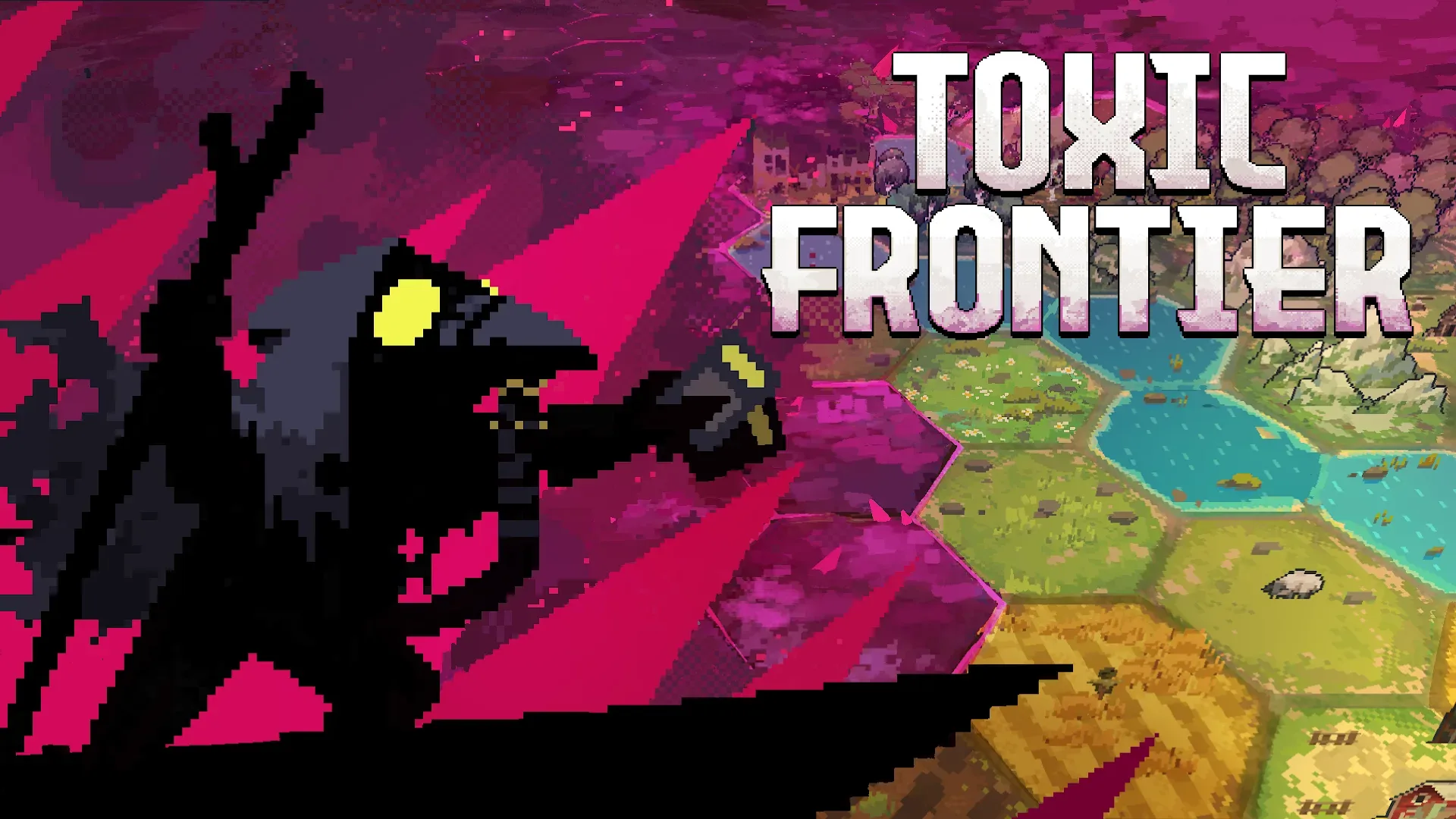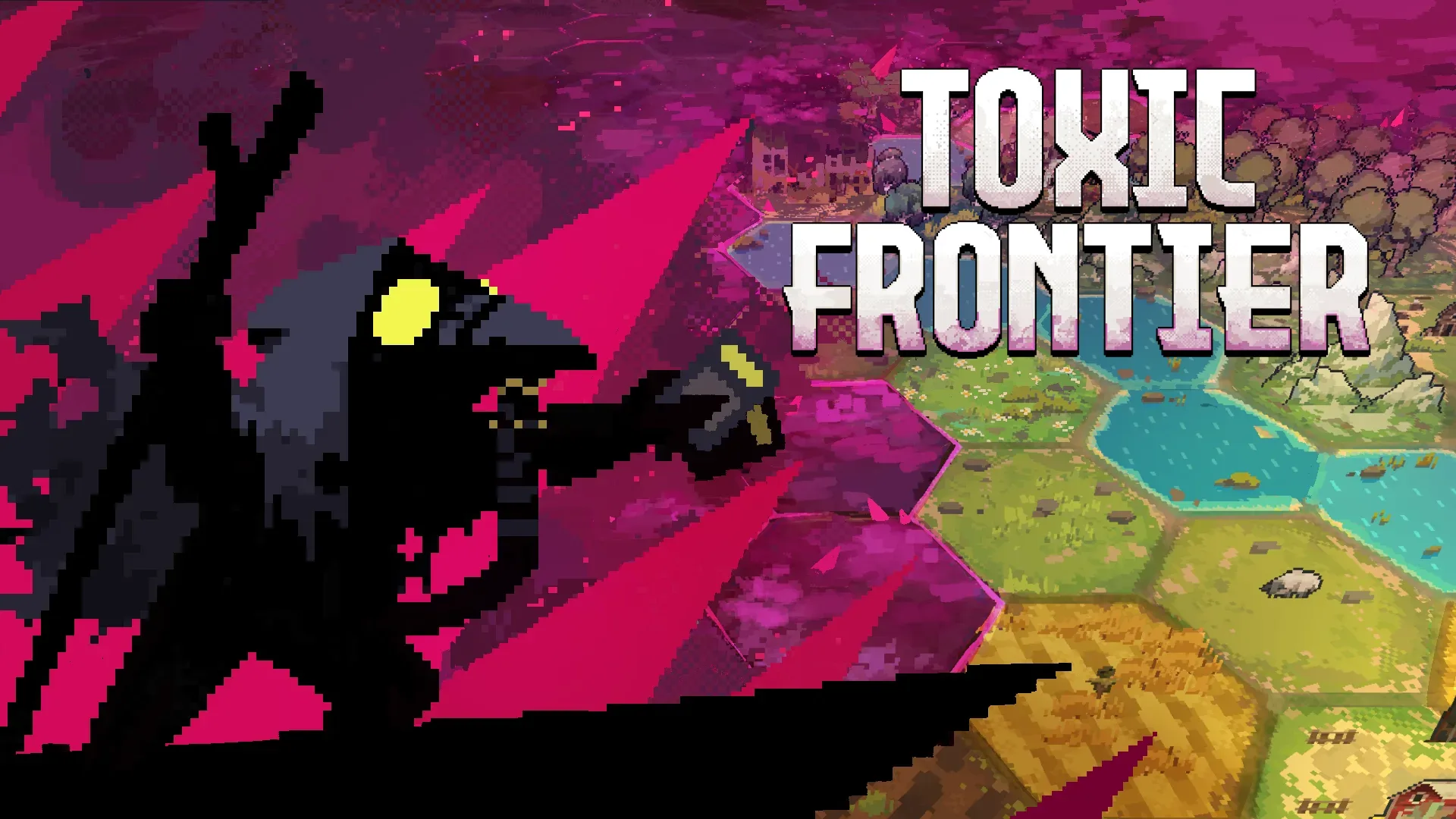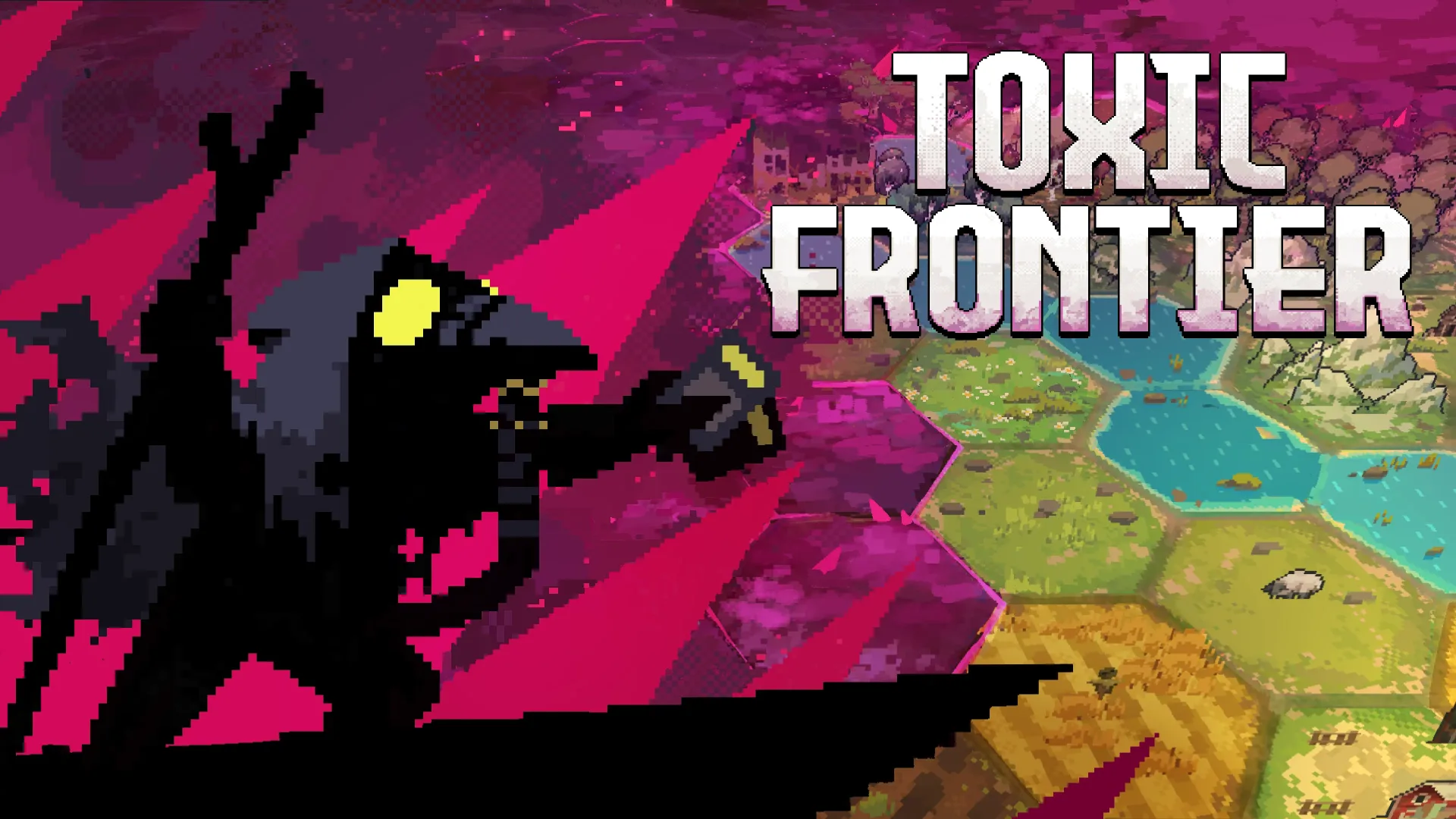
Meteorbyte Studios and Mint Gate Games have revealed Toxic Frontier, a card-based survival strategy game that combines hex-grid city building with roguelike card systems in a vividly grim post-nuclear pixel-art world. It is planned for Steam, where it can now be wishlisted; no release date was included with the reveal.
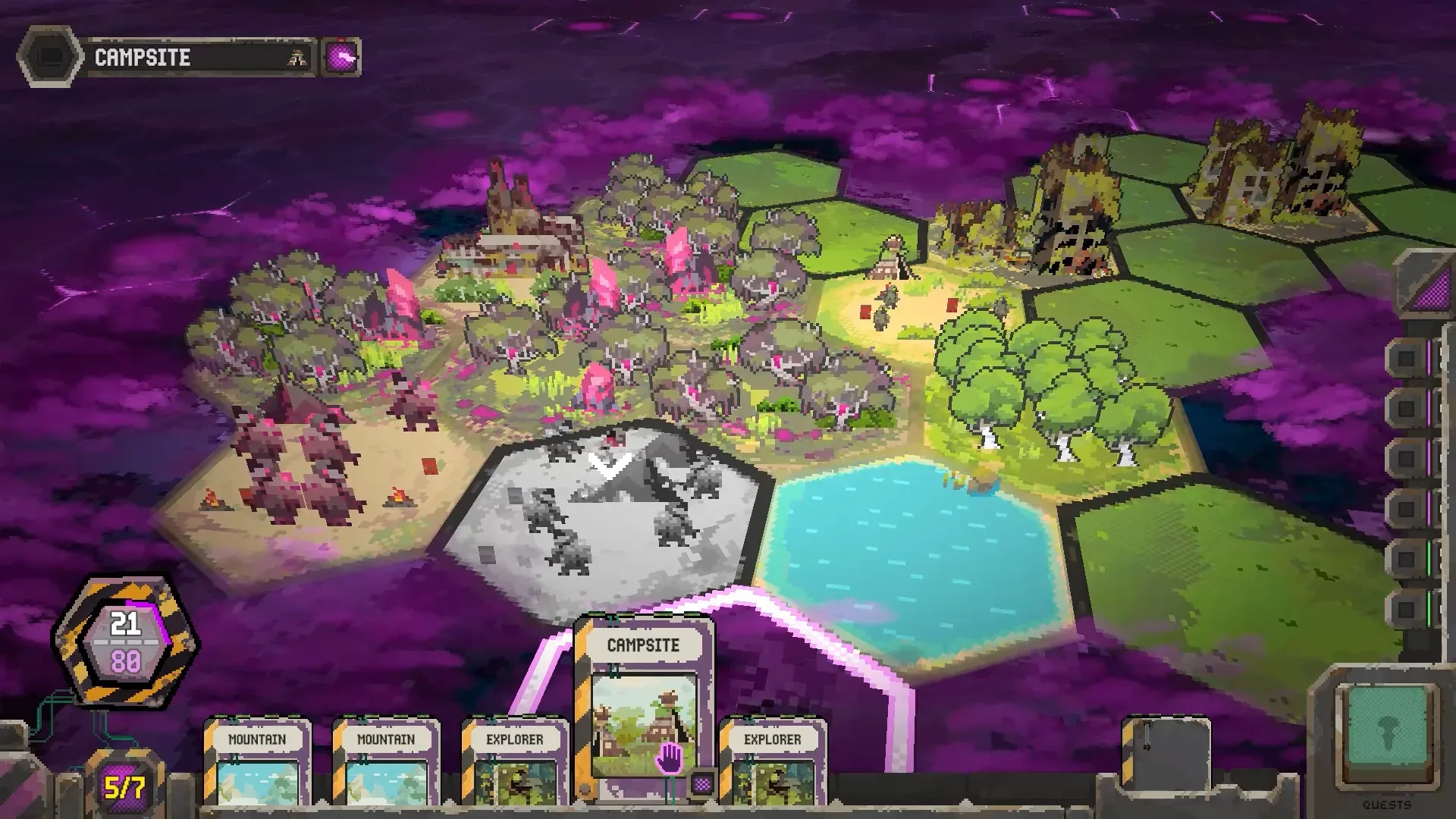
The central idea is deceptively tidy: each run starts with a single hexagonal tile, then expands through card placement as players attempt to reclaim poisoned territory. The practical pressure comes from the run’s score requirement. A level has a target score to reach, and failing to get there before the available cards are exhausted ends the run. That makes every placement part of both a building plan and a survival calculation.
A city builder where placement is the deck
Toxic Frontier uses a traditional hex grid, meaning each tile has up to six neighboring spaces instead of the four directions associated with square-grid games. That distinction matters because adjacency is a stated part of the design: tiles and cards can react to nearby cards and terrain. A choice is therefore not only about what a card does in isolation, but where it sits and what it touches.
In the game’s setup, cards are used to purify the toxic landscape and develop a community. Exploration can reveal additional tiles and cards, which in turn respond to the existing board. The result is intended to create synergies and combos—linked effects that become more valuable when particular elements are positioned together.
That is the key strategic promise behind the reveal. Players will not simply be filling open spaces with the next available option. A card may have more value beside a compatible tile, while a newly uncovered piece of terrain could change the value of a planned placement. Since the run can end when cards run out, waiting for a perfect arrangement may carry as much danger as committing to an imperfect but score-producing one.
What “roguelike card mechanics” means here
The announcement describes the card structure as roguelike, but it does not define every underlying system. What is clear is that Toxic Frontier is built around discrete runs, an expanding selection of cards and tiles, and the possibility of a run ending when the deck is depleted before its objective is met.
In this context, a run is a self-contained attempt to progress through the game’s board-based challenges. Rather than a conventional city-building scenario with unlimited time and a fixed toolkit, the card supply appears to impose a natural limit on how long a player can build. The stated need to hit a target score turns board efficiency into the immediate objective.
Meanwhile, synergy means two or more game elements work better together than they would separately. Combos are connected sequences or arrangements that generate enhanced results. The reveal does not specify individual card effects, so it is too early to map out an optimal strategy. Still, the emphasis on cards reacting to both placed cards and adjacent tiles suggests that learning spatial relationships will be core to each run.
Three biomes, evolving threats and a moral direction
The toxic frontier will span three distinct biomes. Each biome is set to introduce its own quests, mechanical wrinkles and environmental threats. The announcement does not detail those locations or hazards, but the structure indicates that the game is not presenting one static ruleset from beginning to end. Players can expect the board-building decisions to face new constraints as the community moves onward.
This progression is paired with a narrative choice. Players can pursue a path centered on building a haven, or choose to exploit the Toxic Frontier instead. The game lists two different story endings, tying that decision to more than a purely cosmetic label.
There is useful ambiguity in the premise. Purifying a wasteland and establishing a settlement naturally frames the player as a restorer, but the alternative route asks whether the same landscape can become a resource to use rather than a place to heal. The reveal does not explain the exact decisions, consequences or requirements behind either ending. What it does establish is that the settlement’s purpose will matter to the narrative, not solely to the score.
Unlocks and modes point to repeatable runs
Toxic Frontier is planned to include more than 40 unique cards to unlock. These are gameplay cards, not physical collectibles: the announcement positions them as part of the game’s expanding strategic toolkit. More cards should mean more potential interactions across the hex grid, though the reveal does not say precisely how unlocks are earned, whether they persist between runs, or how players will select cards once available.
The game will also feature four modes. Their names and rules have not yet been disclosed, so it would be premature to assume how they differ. The stated inclusion of multiple modes, two endings and increasingly complex tile interactions nevertheless suggests a design built for replaying the board-building loop under different conditions, rather than treating a single successful route as the whole experience.
Players who enjoy strategy games where an early placement can shape an entire attempt may want to keep an eye on it. The most important question will be how readable those interactions are: a game based on emergent tile behavior needs enough clarity for players to understand why a combination succeeds or fails, while preserving enough surprise for exploration to remain meaningful. That balance has not been demonstrated in detail yet, but it is where Toxic Frontier’s city-building and card-game identities will either click together or compete for attention.
The premise also arrives amid continued interest in run-based strategy designs that build tension from map choices and limited resources. For another newly revealed game taking roguelike structure in a different strategic direction, see WANE’s fractured-mind tactical RPG approach.
Steam Deck support is confirmed
Full Steam Deck support is among the announced features. That is notable for a game based on cards, tiles and spatial planning, where interface readability and control flow can make a substantial difference on a handheld screen. Specific control options, performance targets and display settings have not been outlined, but the support confirmation means the Steam version is intended to accommodate Valve’s portable hardware.
For now, the confirmed facts are straightforward: Toxic Frontier is coming to Steam; it combines post-nuclear hex-grid settlement building with card-driven roguelike runs; players must purify terrain, uncover new cards and tiles, meet score goals, and navigate three biomes with distinct challenges. Its larger decisions concern both board position and the kind of community players intend to create from the poisoned landscape.