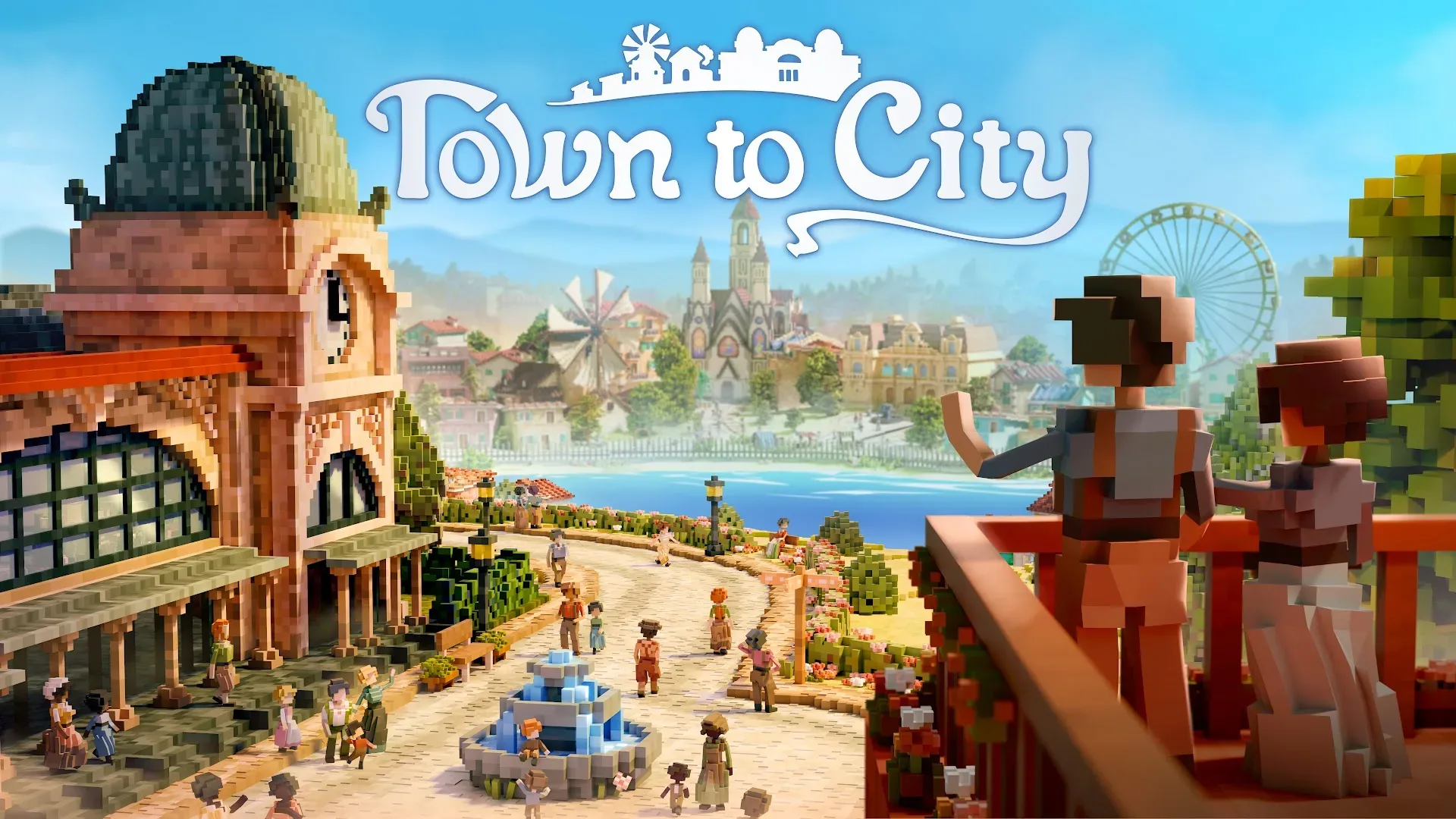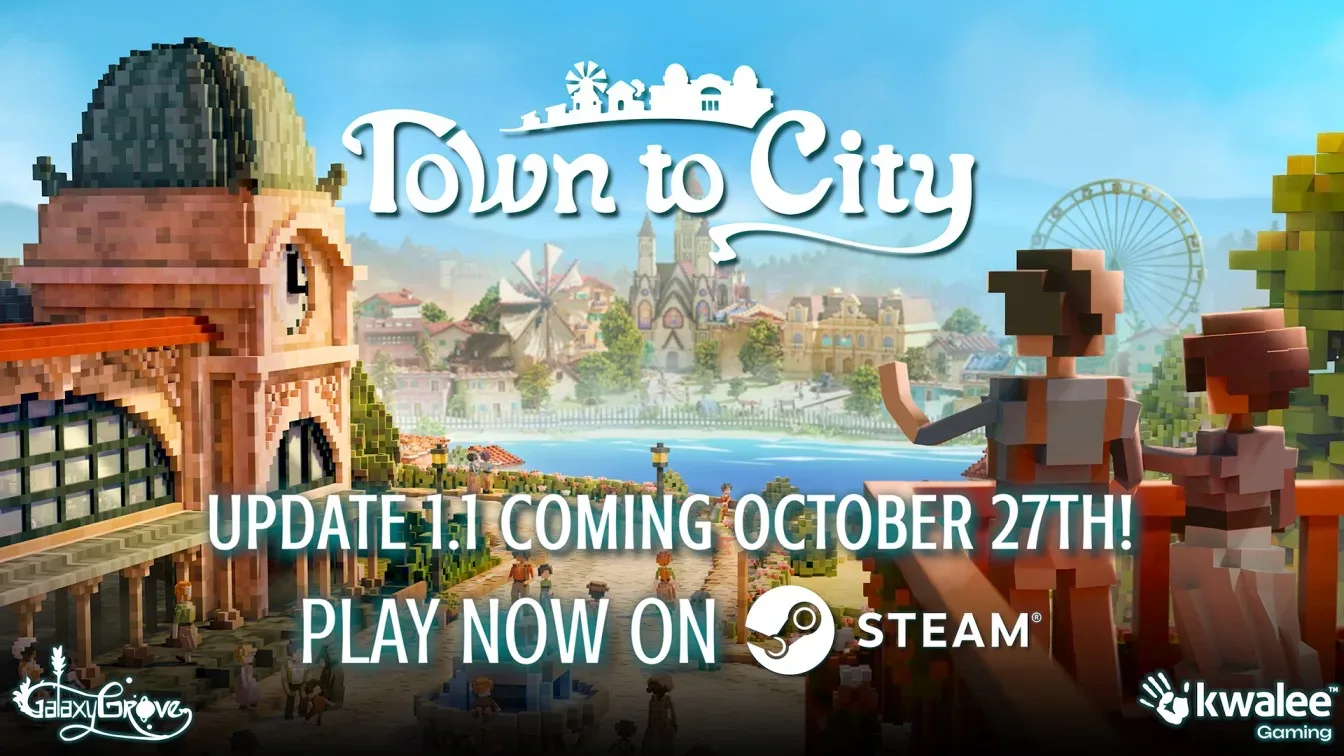
Town to City is set to receive a free update on Tuesday, October 27, 2026, with a clear emphasis on the part of city builders that can consume an entire evening: adjusting one attractive street corner until it stops looking like a row of buildings waiting for a bus.
The update adds modular mansion and palace building sets, lets players paint roads directly into their cities, and improves the gizmo tool used for object placement and adjustment. Taken together, the additions are aimed less at expanding a checklist of civic necessities and more at giving players finer control over a settlement’s visual identity.
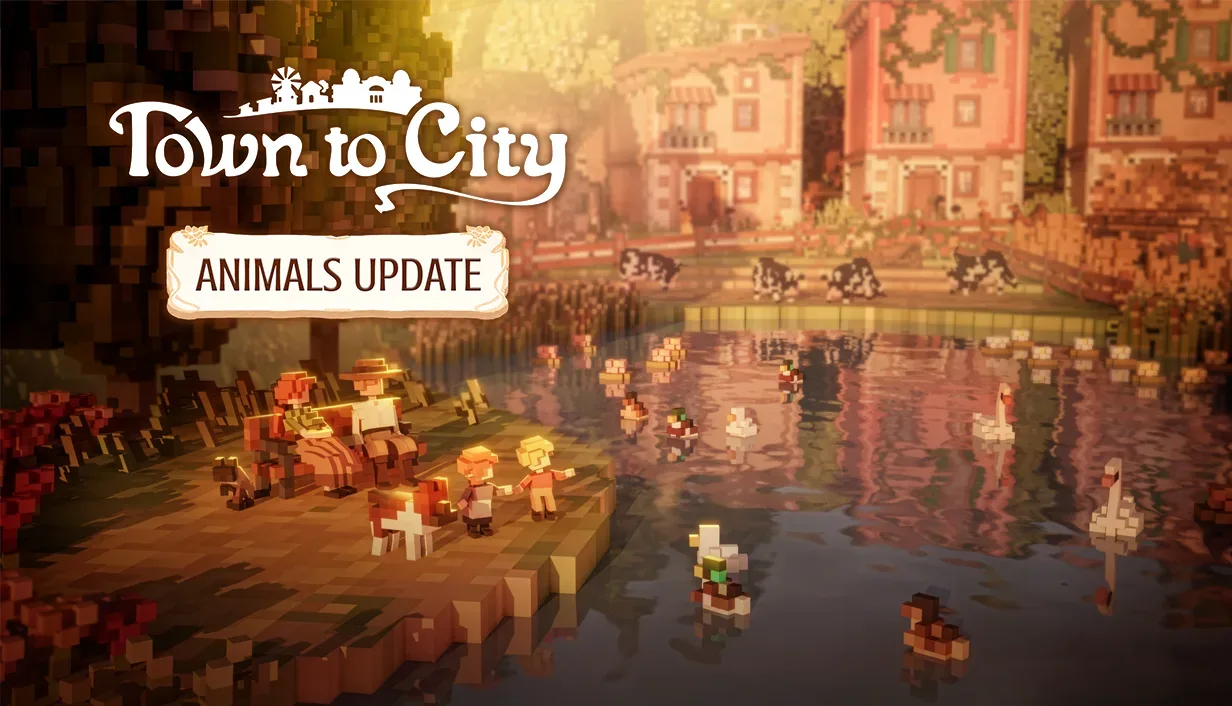
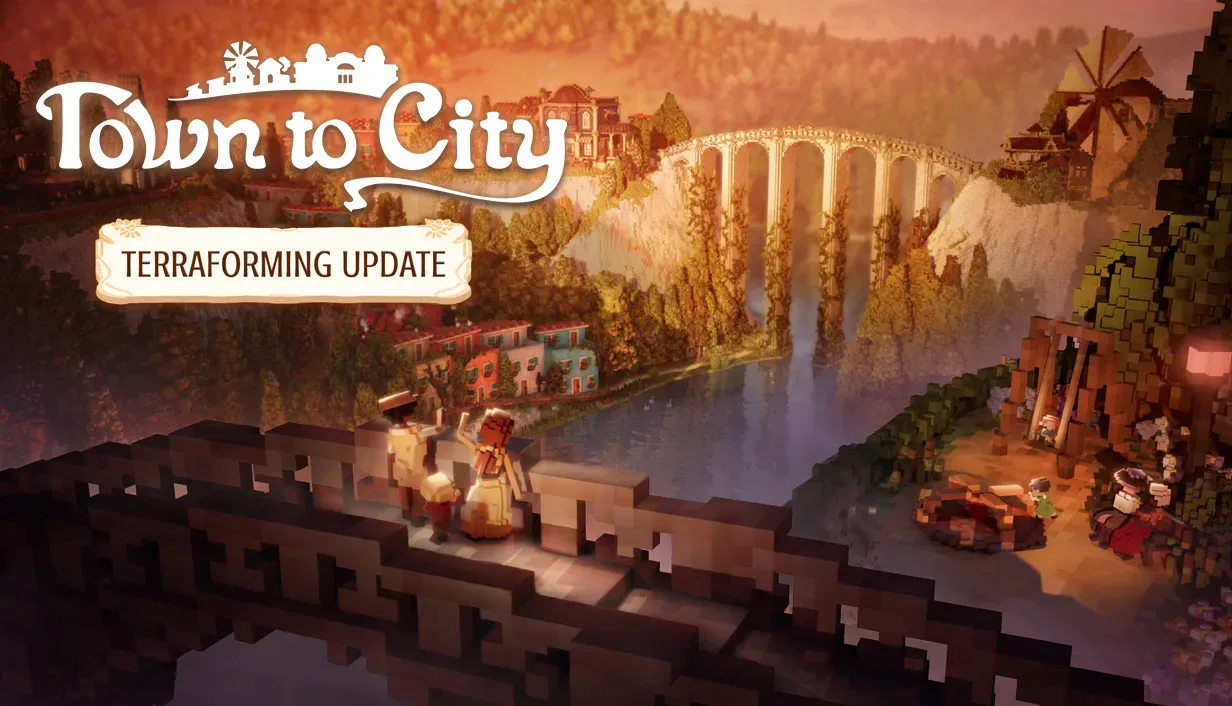
That focus fits the cosy city-builder’s development so far. Town to City, from Dutch independent studio Galaxy Grove, entered Early Access in September 2025. It has since added animals, a first-person Free Walk mode, terraforming, bridges, and other features, while its Steam user rating currently sits at Overwhelmingly Positive. The October update does not replace those foundational tools; it appears designed to make the results players build with them more flexible and easier to preserve.
Modular mansions and palaces put more of the design in players’ hands
The headline addition is a pair of modular construction sets for mansions and palaces. A modular set is a collection of building components that can be combined in different arrangements rather than a single pre-made structure placed as one object. In practical terms, that means the result can be shaped by a player’s choices about its footprint, height, frontage, ornament and colour rather than by one fixed blueprint.
Both new sets include recolourable foundations, walls and roofs. They also provide a range of windows, doors, balconies and decorative elements. Those categories matter because they cover the visual signals that distinguish one large building from another. A change to wall or roof colour can tie a residence into a district palette; a balcony can change the silhouette and perceived scale of a façade; windows and doors can make a broad exterior look more regular, more ornate or simply less blank.
The system should give builders room to make a large residence feel intentionally placed within a city rather than dropped in from an unrelated architectural catalogue. A compact, restrained arrangement can sit near a dense town centre, while a broader and more decorative combination may suit a landmark site. The update does not establish formal building rules, gameplay effects or new management systems for these pieces, so it is best understood as a creative toolkit rather than a promised simulation overhaul.
There is a useful distinction here between asset variety and combinatorial variety. Asset variety means receiving more individual buildings. Combinatorial variety means receiving parts whose possible combinations can produce many different buildings. The latter can be especially valuable in a city builder because repetition is conspicuous: players see the same streets, rooflines and facades over and over as a settlement grows. Recolourable components and selectable details offer ways to break up that repetition without requiring every building to be wholly bespoke.
Road painting changes how streets can be treated
Roads are also being reworked. Rather than relying solely on an existing road treatment, players will be able to paint roads directly onto their cities. Three new textures arrive with the feature: Vibrant Plaza, Sandstone and Cobblestone.
Related coverage includes Town to City’s Free Update Brings Modular Mansions, Paintable Roads on October 27.
Road texture is an aesthetic layer: it changes the surface appearance of a route or paved space, not necessarily its traffic behaviour, connection rules or construction cost. No changes to those simulation-facing systems have been detailed. But visual treatment can have an outsized influence on how players read a town. A plaza surface can mark out a civic or social focal point; sandstone can establish a warm, consistent material character; cobblestone can provide a more traditional-looking street finish.
Painting also suggests a more direct relationship between a builder and the city plan. Streets are usually the framework around which blocks, parks and buildings are arranged. Being able to alter their finish can help define districts after their shape is already in place. Players may be able to use different surfaces to visually separate a central square from surrounding residential routes, or to reinforce a particular atmosphere across a neighbourhood. Those are design possibilities, not confirmed gameplay outcomes, but they explain why a road tool can matter even when it introduces only three named textures.
It is worth keeping the scope precise: the update has announced three new road textures, not an unlimited material system or a redesigned transport model. The appeal lies in a straightforward degree of control over one of the city’s most visible connective elements.
The gizmo improvements may be the update’s most practical change
The less glamorous-sounding gizmo adjustments could prove just as significant for frequent builders. In 3D creation tools, a gizmo commonly refers to the on-screen controls used to move, rotate, scale or otherwise manipulate an object. In a game centred on arranging a town, the gizmo is part of the day-to-day interface between an idea and the object on the map.
Following the update, customized objects will remain attached to their surfaces and retain their modifications when they are moved or duplicated. This describes two related quality-of-life improvements.
- Surface attachment means an object customized on a surface should stay associated with that surface when adjusted, rather than requiring the player to rebuild its placement relationship from scratch.
- Modification retention means changes made to an object should carry over when it is moved or copied, preserving the work that went into its customized state.
For creative building, retention is not a minor convenience. A detailed arrangement often depends on repeated edits: position, orientation, colour and decorative choices may all be part of a desired look. If those changes persist through moving and duplication, a player can refine an arrangement, reuse it, and make variations from a reliable starting point. That can reduce the friction of experimentation, especially where decorative clusters or customized structures are involved.
The update’s features are therefore connected by a common idea. The mansion and palace pieces allow more individual composition. Road painting allows more direct control over the visual fabric around those buildings. Gizmo improvements make customized work less disposable when it needs to be repositioned or reproduced. One addition provides parts, another improves surfaces, and the third aims to protect the player’s effort.
What the update means for Early Access players
Early Access games evolve in public, and the additions already made to Town to City show a broadening toolkit: animals add life, Free Walk gives players a ground-level way to view their towns, terraforming changes the land, and bridges extend options for crossing it. The October update is more specifically concerned with expression and workflow.
That distinction is useful for anyone deciding what to expect on October 27. The announced content is not framed as a new scenario, campaign, platform release, pricing change or final-release date. It is a free update for the existing Early Access game, focused on building customization, road finishes and object manipulation. Players who enjoy arranging visual details may see the most immediate value; players looking for a new economic layer or newly confirmed progression systems should not assume those are included.
Still, visual tools are not superficial in a city builder. A city is both a system and a place players want to look at. A landmark palace gains meaning from how it sits beside a square. A neighbourhood gains character from recurring materials, street treatments and variations in façades. A first-person mode, added previously, also makes that visual coherence more relevant because it lets players take in their construction from inside it rather than only from a planning view.
For the wider PC audience, the update is another example of how ongoing support can matter during Early Access. Steam remains a major venue for games in development, something underscored by the platform’s enormous demo volume during events such as Steam Next Fest. In that crowded environment, clearly defined improvements to a game’s core creative loop can be more meaningful than a long list of vague promises. Here, Galaxy Grove has identified specific additions: two modular sets, three road textures, and concrete behaviour changes for customized objects.
What has been confirmed for October 27
The confirmed free update content consists of the following:
- Modular mansion and palace building sets.
- Recolourable foundations, walls and roofs within those sets.
- Windows, doors, balconies and decorative building elements.
- Direct road painting.
- Vibrant Plaza, Sandstone and Cobblestone road textures.
- Gizmo behaviour that keeps customized objects attached to surfaces and preserves their modifications when moved or duplicated.
Players can also view the official update trailer for a look at the announced features in motion. For now, the key date is October 27, 2026. It is a compact but targeted update: fewer reasons for every mansion to look like its neighbour, more ways to give streets their own material character, and a better chance that carefully placed decorations will stay put when the urge to redesign strikes again.