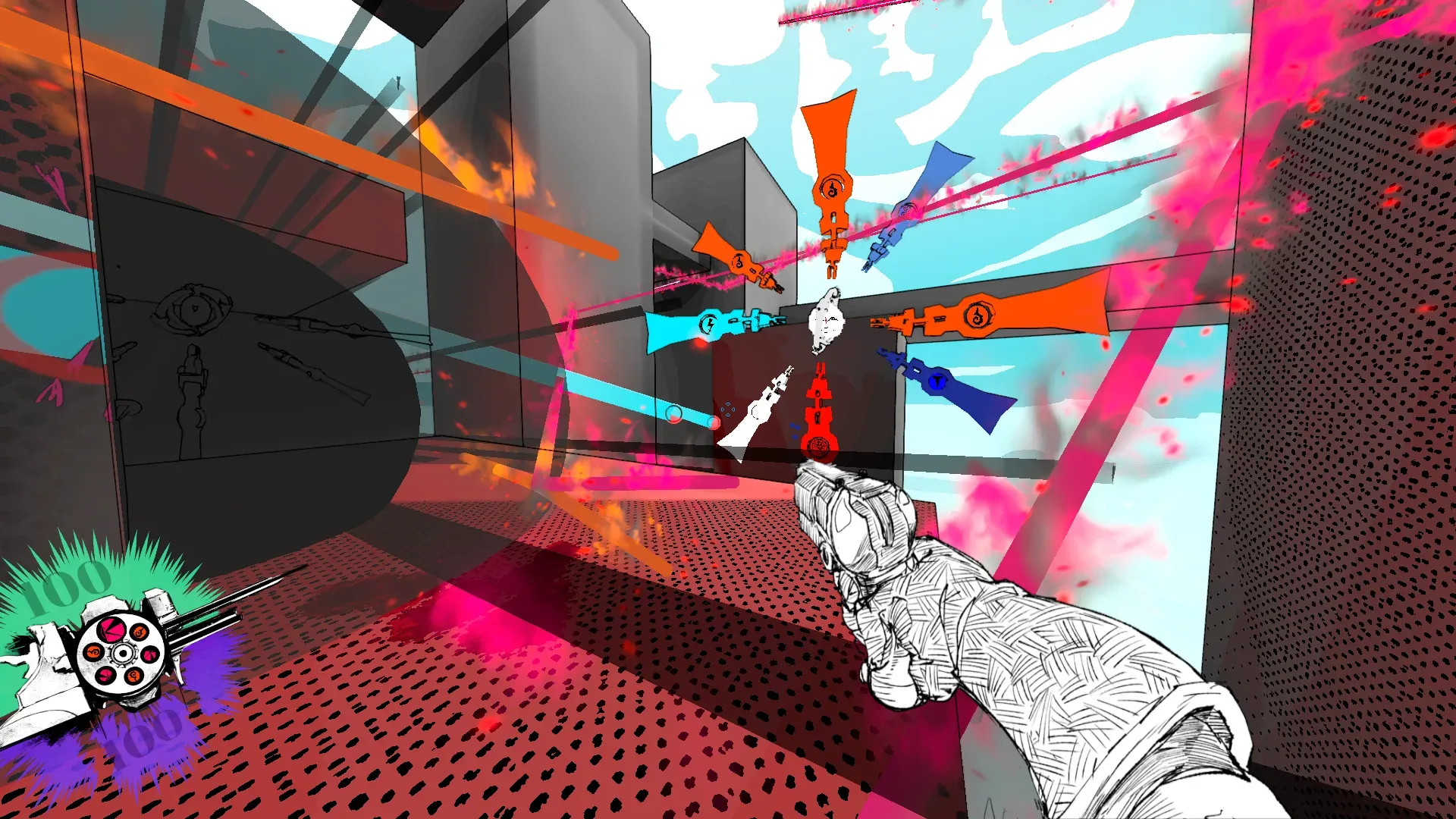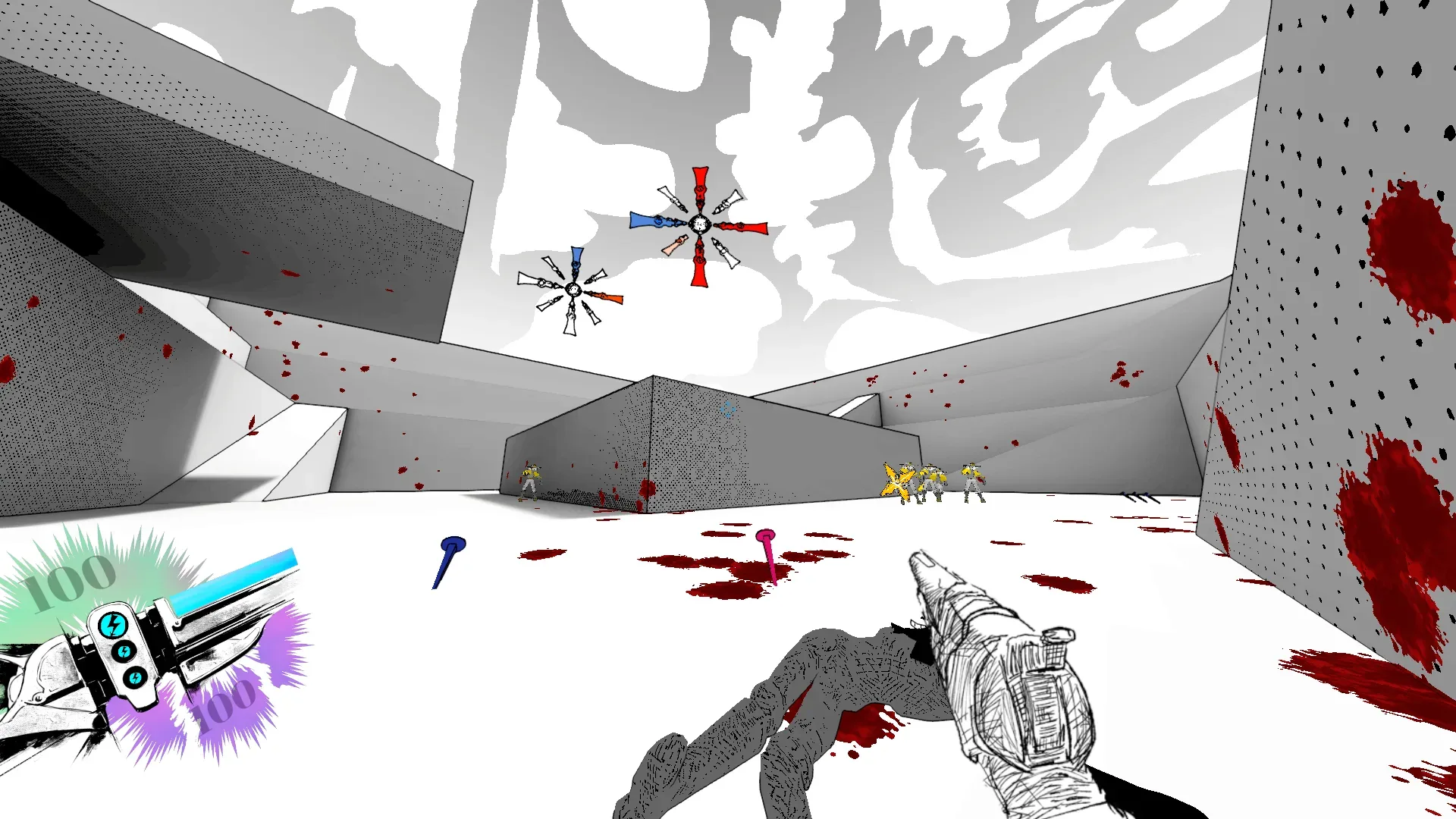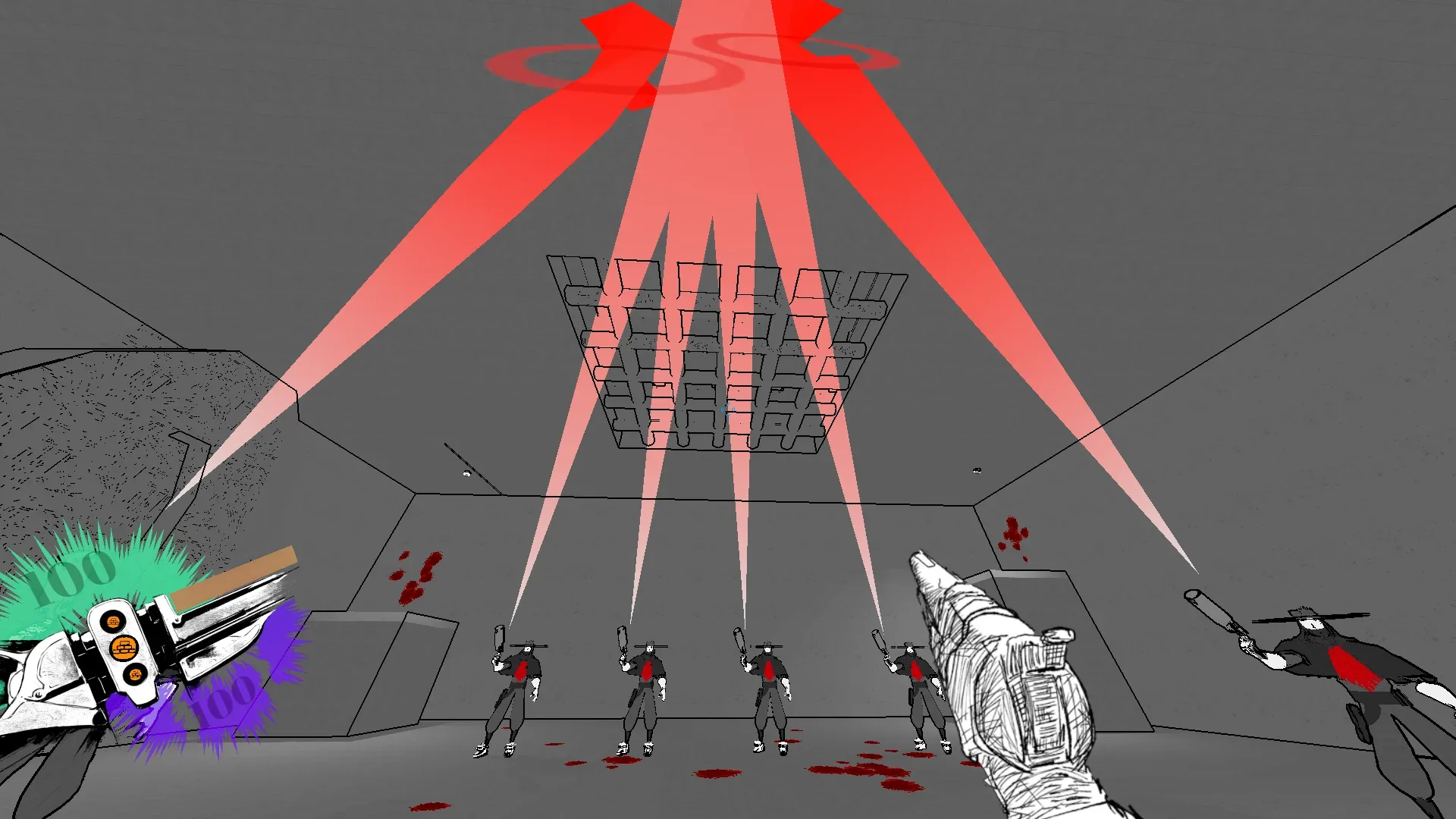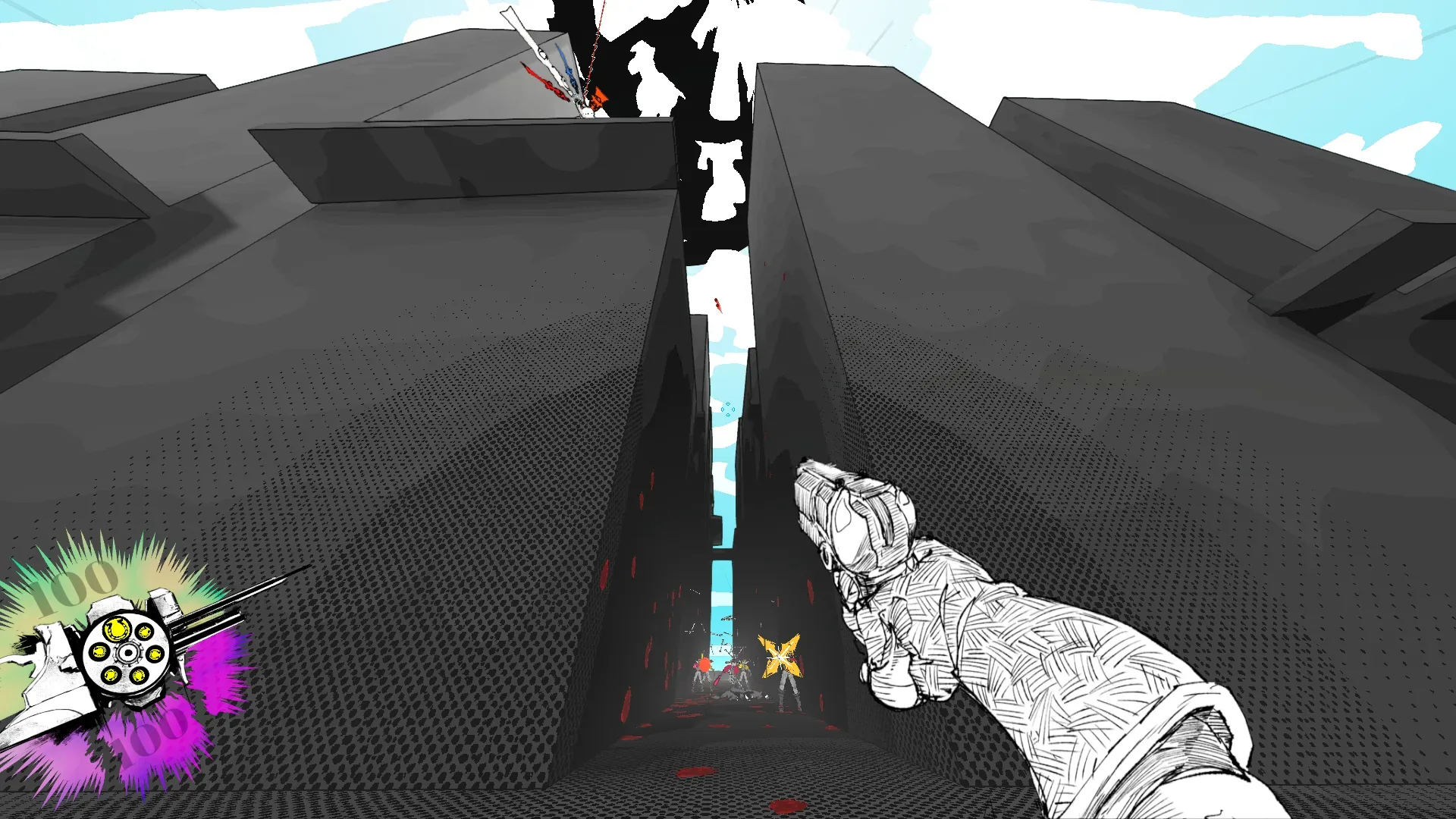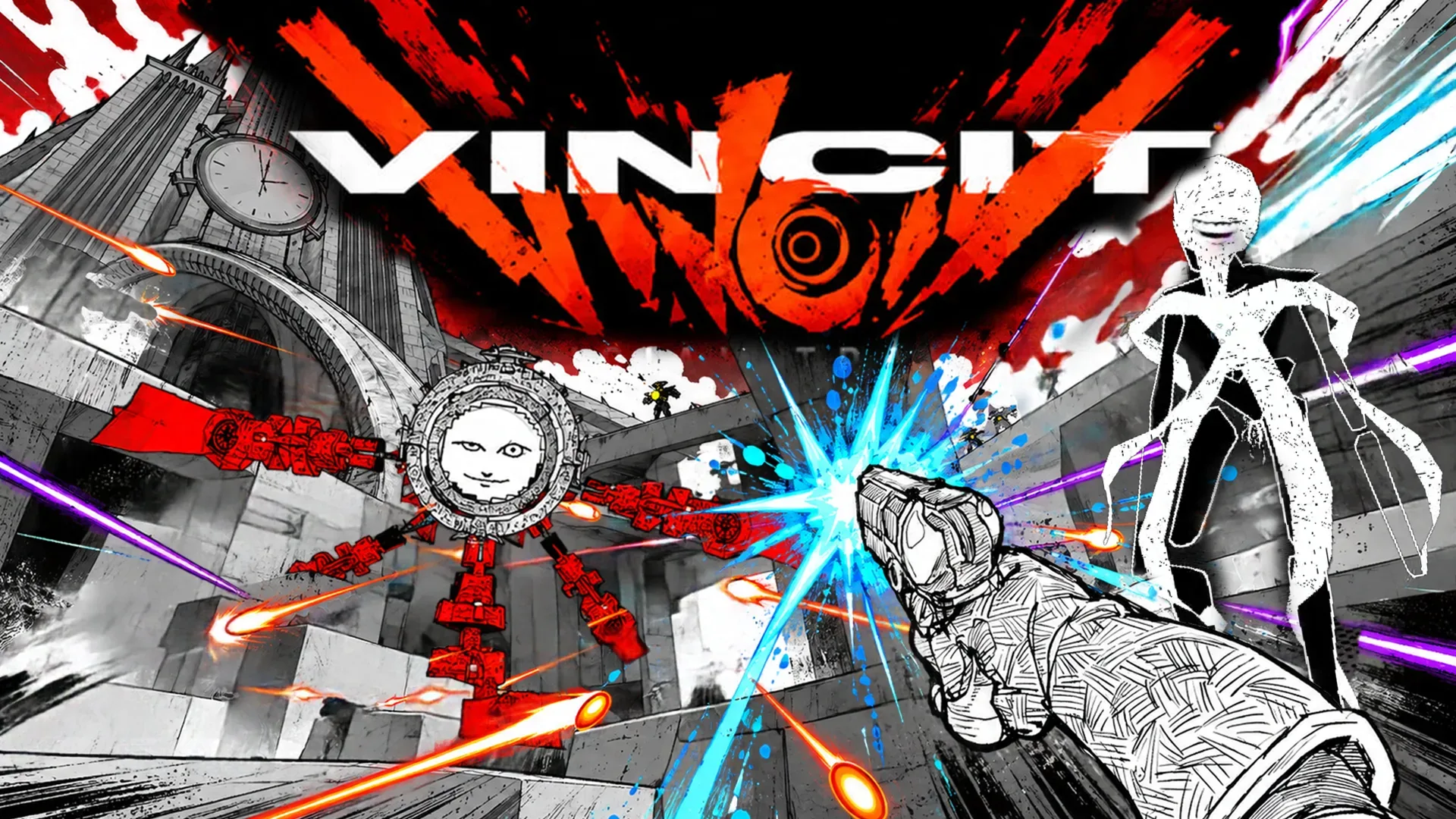
VINCIT has revealed its official trailer and outlined an unusually hands-on premise for a first-person shooter: bullets are not simply the end result of pulling a trigger. They are objects players can modify, manipulate and use as part of the battlefield itself.
Developed by Cowboy & Clown Games and published by Xiombarg, VINCIT is planned as a solo and co-op FPS with a manga-inspired visual style. The first public playtest is scheduled for the end of October, while a Steam Early Access launch is currently planned for 2027. Players can wishlist the game and request playtest access through its Steam page.
The central promise is a system that lets players infuse every bullet with one of dozens of effects, then react to how those altered projectiles interact with enemies, other projectiles and the environment. It is a concept that aims to put spell-like experimentation directly inside the moment-to-moment shooting rather than separating weapons from abilities.
What makes VINCIT’s ammunition system different
Most shooters treat ammunition as a resource with familiar variations: perhaps a weapon fires faster, has a larger blast radius, or applies a particular status effect. VINCIT instead frames individual bullets as manipulable physical pieces of the action. The announced examples include Fire, Water, Electricity, Healing and Nails, alongside additional effects not yet detailed.
That language matters because the system is not described merely as elemental damage. Effects are said to interact with enemies, environments and one another. In practical terms, the game appears to be asking players to consider a shot’s properties, motion and destination rather than only its aim point.
“Physics-based interactions” is the key technical phrase here. It means the game intends for bullets to behave as entities in its simulated space: players can redirect them, walk on them or transform them. Those mechanics could turn projectiles into temporary routes, moving hazards, delivery systems for effects or material for a fast improvisation. The exact limits, controls and combinations have not been specified, so those possibilities remain the broad design direction rather than confirmed tactics.
The feature set also puts a potentially interesting twist on misses and chaotic exchanges. In a conventional FPS, an errant shot is often wasted ammunition. A game built around redirecting and transforming bullets may leave more room to recover a bad angle, repurpose an existing projectile or treat the space between player and target as something to actively work with.
Gunplay meets spellcasting
The developers describe VINCIT as a meeting point between gunplay and spellcasting, citing the rapid pace of ULTRAKILL and the experimental spell combinations associated with MAGICKA as influences. That comparison is useful as a tonal and mechanical signpost, but it should not be mistaken for a list of confirmed systems borrowed from either game.
Related coverage includes VINCIT Trailer Reveals Bullet-Bending FPS Ahead of October Playtest.
What is confirmed is that VINCIT is pursuing speed alongside combinatorial choice. “Combinatorial” simply means that outcomes can arise from mixing a set of separate effects. If the individual options are varied enough and their interactions legible enough, the number of possible responses to a combat situation can quickly exceed the number of weapons on a standard loadout screen.
That is also the design’s largest challenge. A system with dozens of effects needs players to understand what is happening amid a high-speed encounter. VINCIT’s manga art direction may help give those effects a strong visual identity, but the trailer reveal does not yet establish how the game will teach combinations, communicate projectile states, or handle the visual clutter that can arise when several players are altering bullets at once. Those are questions a public test can meaningfully address.
Enemies are intended as reactive combat problems
VINCIT’s opponents are described not only as targets but as “reactive puzzles.” The revealed enemy types include bounty hunters, living machines and eldritch horrors. More significantly, foes may parry attacks, steal health, teleport or absorb bullets.
Each of those behaviors has clear implications for a bullet-centric game. An enemy that absorbs bullets, for example, could force players to alter a projectile before firing, redirect it at a different moment, or find an environmental interaction that gets around the defense. A teleporting opponent may challenge the player’s ability to make use of delayed, redirected or persistent projectile paths. Parrying puts the focus on timing and placement rather than sheer rate of fire.
The significance is not that every fight must become slow or puzzle-like. The stated inspiration points toward a fast FPS. Rather, the apparent goal is for opponents to interrupt a single dominant strategy and give players reasons to use the customization tools under pressure. Whether that produces satisfying adaptation rather than frustration will depend on the clarity of enemy tells, the reliability of the manipulation systems and how much time the player has to react.
Solo play and co-op raise different questions
VINCIT will support solo play as well as high-speed co-op runs. The same bullet mechanics could take on very different roles depending on how many people are in an encounter.
For solo players, projectile manipulation may be primarily about self-sufficiency: solving combat problems, navigating with bullets and finding combinations that cover multiple needs. In co-op, it may create opportunities for players to build on each other’s effects or to make quick, unplanned recoveries when an arena becomes chaotic. That is an analytical possibility based on the announced interaction-focused design, not a confirmed list of multiplayer features.
Co-op also increases the importance of readability. When several people can fire, redirect and transform physical bullets at high speed, the game needs to make it reasonably clear whose effects are active and what constitutes a danger, an opening or a useful platform. Public testing should offer the development team feedback on that balance before Early Access.
What the upcoming playtest can reveal
The end-of-October test is VINCIT’s first announced public playtest. At this stage, it is best viewed as an opportunity to sample an in-development game rather than a guarantee of the final feature set, performance or balance.
For interested players, the useful things to watch are straightforward: whether effects combine in ways that are understandable as well as surprising; whether physical bullets feel dependable enough to support movement and combat decisions; whether enemy counters encourage creativity; and whether solo and co-op pacing remain readable when the screen fills with altered ammunition.
These details matter especially for a game whose identity rests on systems interacting with systems. A single great-looking effect is not enough. The important test is whether players can quickly form a plan, execute it in a hectic fight, recognize the outcome, and adjust when an enemy response changes the situation.
VINCIT joins a broader collection of PC projects using Steam’s testing and Early Access paths to gather feedback before a fuller release. For another recent Steam-focused update, see our coverage of Become’s Steam milestone.
Release outlook
There is no final release date announced for VINCIT. The current plan is Steam Early Access in 2027, preceded by the public test at the end of October. No additional platforms, pricing, Early Access scope or test duration were provided.
For now, the trailer’s value is in defining a clear pitch: a fast manga-styled FPS where ammunition can be treated like an experimental spell system and even a piece of level geometry. If the game can make that idea immediate and readable in motion, VINCIT could offer a distinct alternative to shooters that reserve their strangest mechanics for a cooldown button.