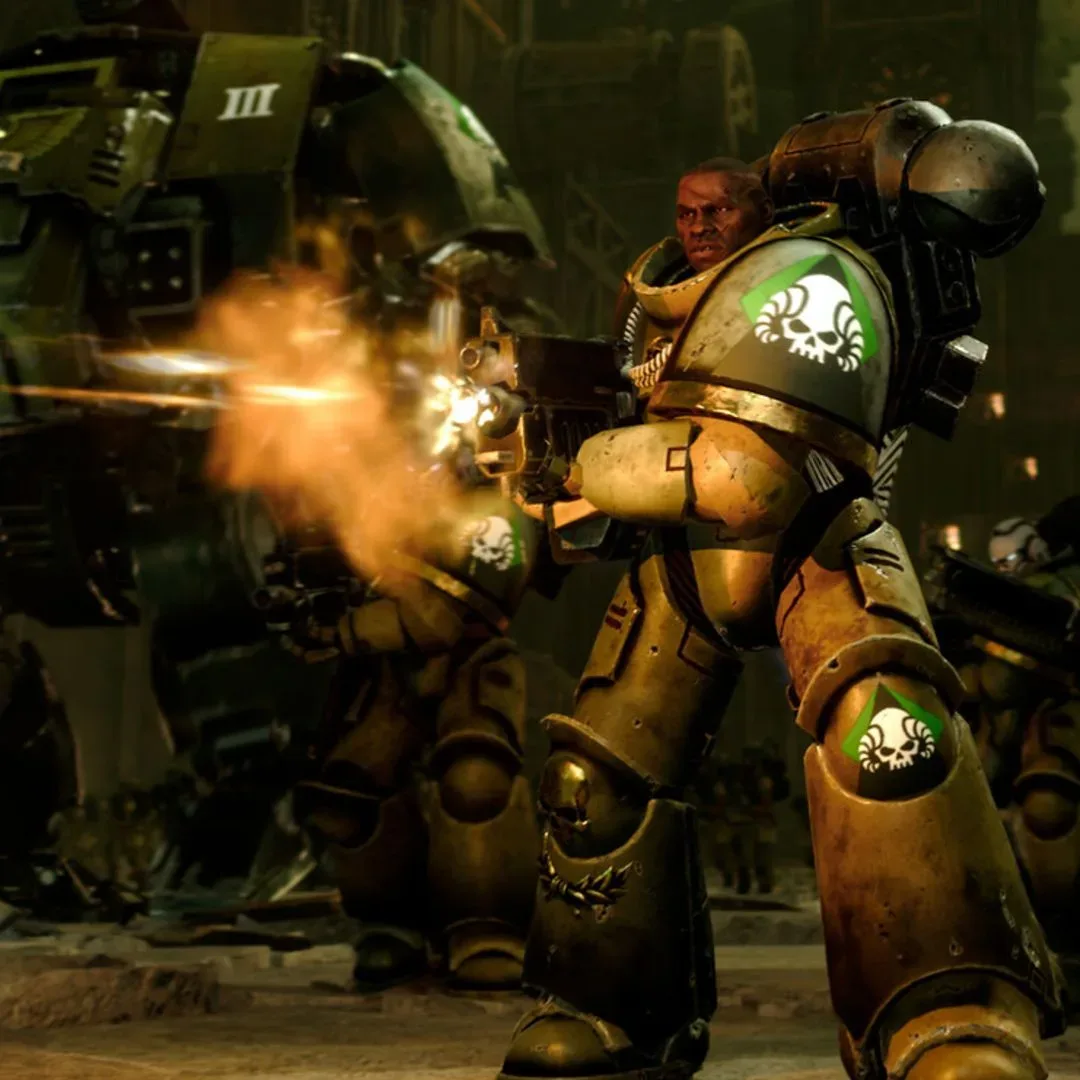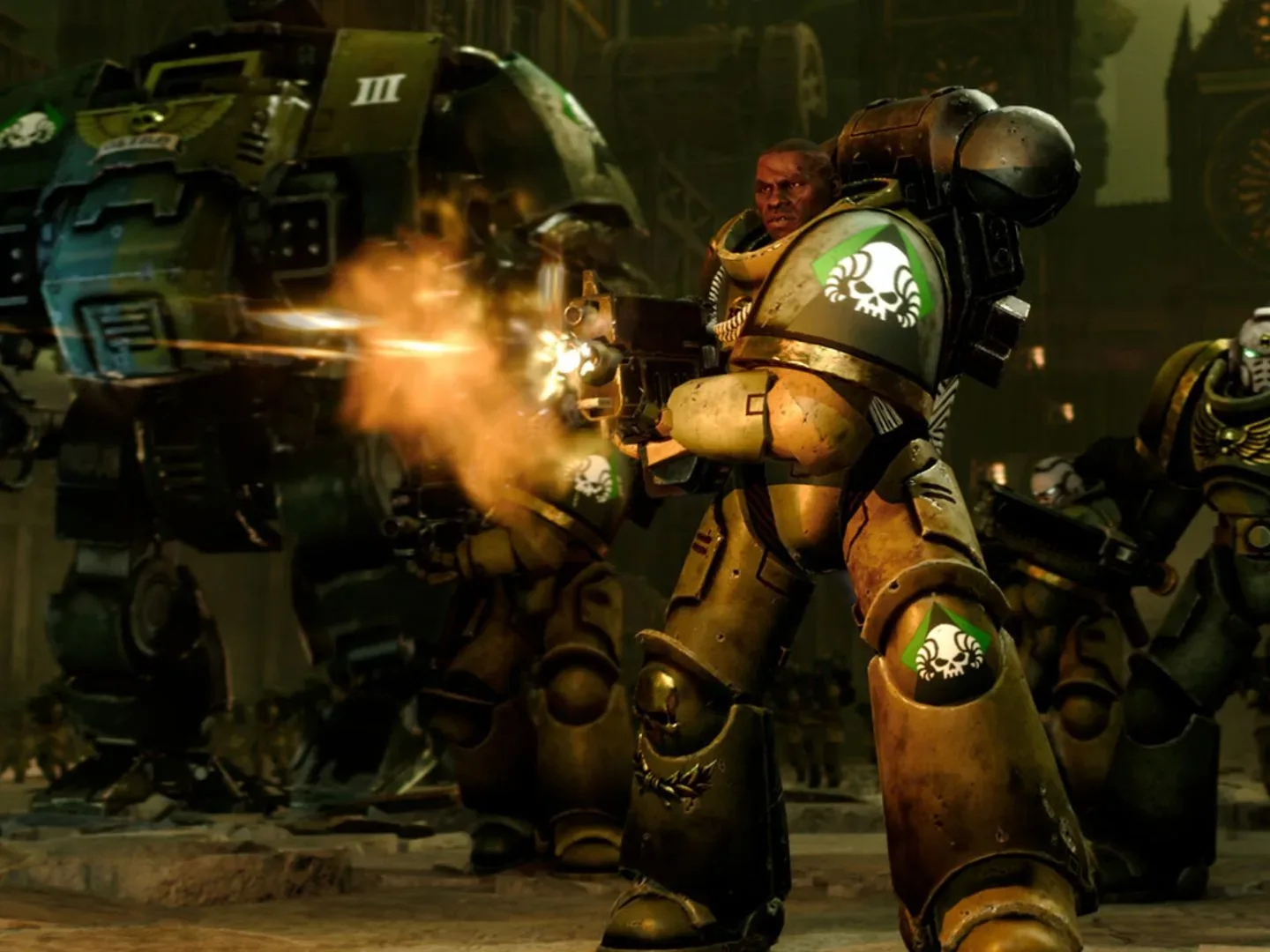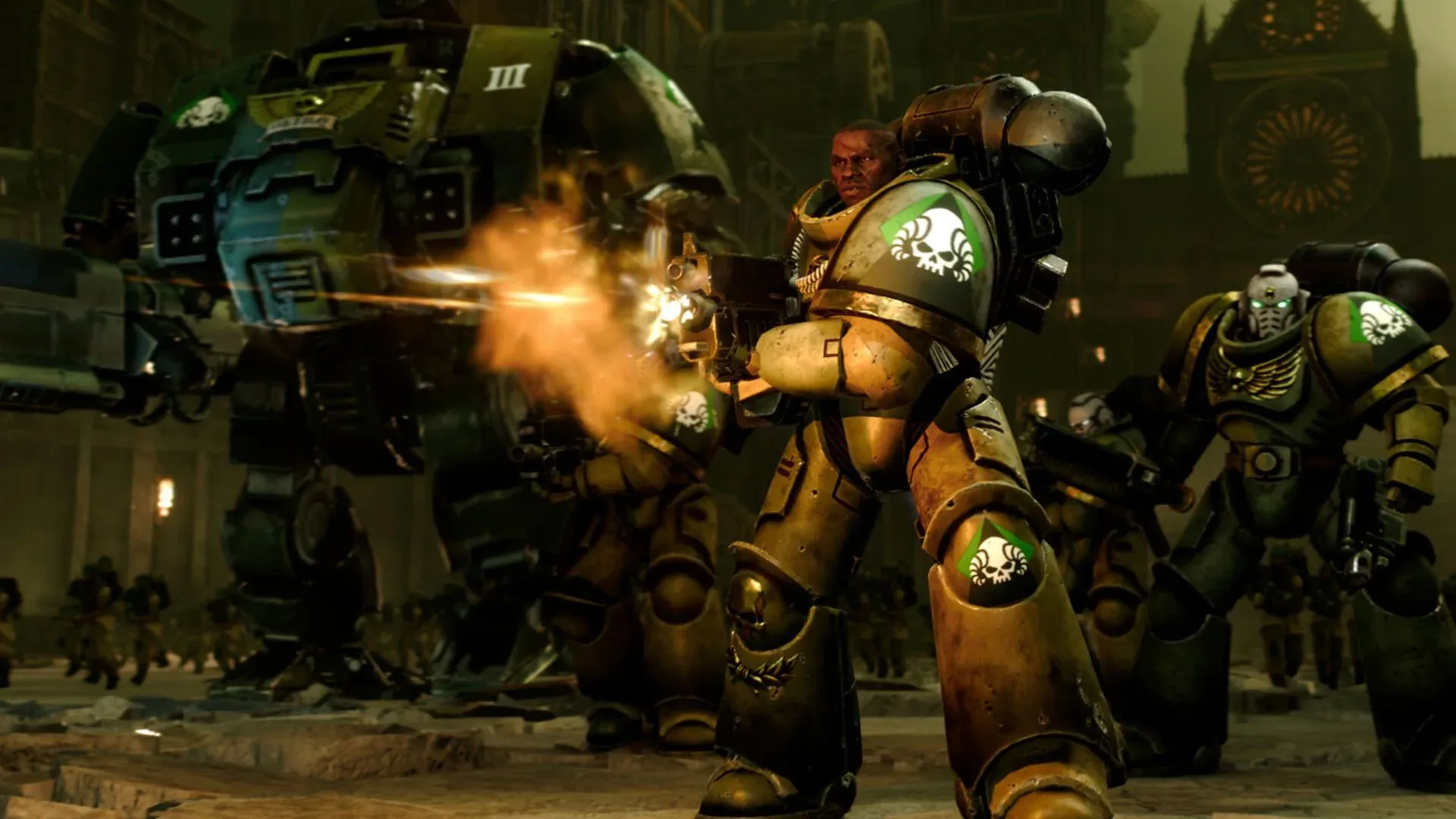
There is a special kind of administrative nightmare unique to the Imperium of Man: you deploy the Imperial Guard to keep order, only to discover that some of the people filing the complaint, carrying the rifles, and occupying the fortified district have decided they no longer recognize your authority. Total War: Warhammer 40K is bringing that unpleasant possibility to its launch campaign experience through the Traitor Guard.
The Traitor Guard will be present in the game as forces players can fight, with a role connected to unrest and uprisings around the campaign map. That establishes them as more than a background detail in the setting: wherever a player’s interstellar empire-building plans seem a little too tidy, there may be a rebellion waiting to turn the paperwork into plasma fire.
What is still unclear is just how distinct those forces will be when the shooting begins. The developer has not confirmed whether the Traitor Guard will have a mechanically separate battlefield identity from the Imperial Guard, nor whether they will be a playable faction at launch. For now, their confirmed place is that of a hostile campaign presence capable of making trouble for expanding powers.
A fifth force, but not a fifth playable faction
Total War: Warhammer 40K has confirmed four playable factions for launch: Space Marines, Orcs, Aeldari, and the Imperial Guard. The Traitor Guard sit outside that announced playable quartet, at least based on what has been disclosed so far.
That distinction matters. Strategy games can use campaign factions in several ways. Some are fully featured factions available to players from day one. Others act as regional opponents, rebels, event-driven armies, or other threats designed to disrupt a larger strategic contest. The available information places the Traitor Guard firmly in the latter category for the moment, while leaving plenty of room for their eventual design to be more complicated than a standard rebel label.
Dave Petry, battle product owner for Total War, has indicated that traitorous elements will show up as opponents and will be associated with campaign instability. His comments were deliberately restrained beyond that point. There is no confirmation yet of a dedicated Traitor Guard roster, unique commanders, special unit rules, campaign mechanics, or a path to controlling them.
That restraint is appropriate for a universe in which half the fun is wondering whether the suspiciously enthusiastic quartermaster has merely misplaced a shipment of ammunition or pledged the regiment’s souls to something with too many horns. Still, the confirmation gives players a clearer picture of how the game’s map could create pressure beyond the major launch factions simply fighting one another.
Why uprisings suit Total War’s 40K campaign
Total War campaigns are not only about winning open battles. Territory, movement, growth, public order, logistics, expansion, and the consequences of holding distant land all shape the broader strategy. A force that can ignite uprisings naturally fits that framework, particularly in Warhammer 40,000’s vast and unruly setting.
Related coverage includes Total War: Warhammer 40K Confirms Traitor Guard Presence at Launch.
The Imperial Guard are defined by scale, discipline, human soldiery, armor, artillery, and an often frightening willingness to keep advancing. The Traitor Guard begin with a useful narrative mirror to that identity: they are branches of that same broad military world which have broken away from the Imperium, whether through Chaos corruption, revolution, or other betrayals of imperial authority.
That does not automatically mean the game will portray them as a simple palette swap or as a full-scale Chaos military ecosystem. Both possibilities, and many positions between them, remain open. They could share equipment and organizational DNA with the Imperial Guard while gaining a few defining wrinkles. They could be mostly a campaign obstacle. They could be a foundation for something larger later. At present, none of those possibilities should be treated as confirmed.
What is confirmed is the basic strategic fantasy: an empire cannot assume that every formally Imperial force is loyal, and a campaign may have to contend with insurrection as well as conventional invasion. That is a promising source of texture in a setting built on sprawling wars, divided loyalties, and governments whose personnel policies are perhaps overdue for a review.
The Chaos question remains open
Traitor Guard inevitably invite questions about Chaos, but players should be careful not to turn the presence of one into a formal announcement of the other. There has been no concrete confirmation of Chaos as a faction in Total War: Warhammer 40K from the information currently available.
The Traitor Guard can be associated with Chaos corruption in the fiction, but they can also arise through revolution or other forms of rebellion. Their inclusion therefore broadens the campaign’s sense of danger without, by itself, revealing the developer’s full plan for the setting’s many heretical powers.
The developer has already said that additional factions are planned after launch. That makes future expansion a certainty in broad terms, but it does not identify which factions will arrive, when they will arrive, or how the Traitor Guard might fit into that schedule. It is reasonable to see them as an intriguing signpost toward the wider 40K universe; it is not yet reasonable to draw a completed faction roadmap in red ink and skull stickers.
For fans, the appeal is obvious. Warhammer 40,000 is too large to compress into only four player factions forever, and its villains, splinter groups, and doomed loyalists are often as memorable as its headline armies. A campaign system that acknowledges internal collapse alongside galactic warfare is a sensible way to begin making that enormous setting feel alive.
There is precedent for non-playable factions growing later
Total War has previous experience with factions that exist in a game’s world before becoming fully playable. In the first Total War: Warhammer, Bretonnia appeared on the campaign map at launch but did not initially arrive with a complete playable roster. The faction became playable the following year after that roster had been developed further.
That history does not prove the Traitor Guard will follow the same route. It does, however, show that a faction’s launch status need not permanently define its future. A campaign opponent can be meaningful in the early version of a game without representing the final word on its design, visibility, or player access.
It also helps explain why the current answer has so many carefully closed doors. The developer may simply be preserving details for later. The Traitor Guard may have a limited but specific launch function. Or there may be broader plans still waiting for the right moment. Until more is shared, the safest reading is the straightforward one: they are in, they are hostile, and they will be part of the campaign’s troublemaking machinery.
Battle spectacle and campaign consequences
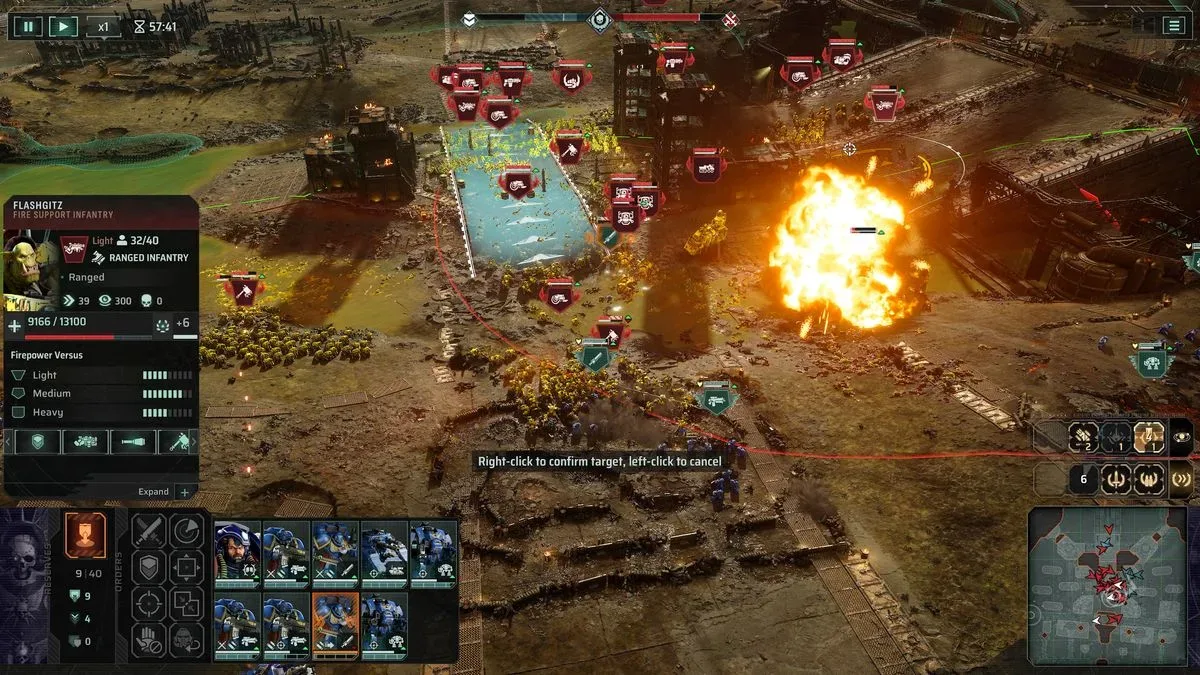
The game’s latest gameplay has created optimism around its battles, and a closed beta is planned. Neither point answers the outstanding Traitor Guard questions, but together they frame the project’s ambition: large-scale real-time warfare paired with a campaign layer meant to reflect the instability of the 41st millennium.
That combination is important. A Space Marine army fighting Orcs may supply the immediate fireworks, but rebellions can make the strategic layer feel less scripted. An uprising behind a frontline can force an army to turn back, redistribute resources, or decide which problem is allowed to become catastrophic first. In a Total War game, that sort of pressure often creates the memorable stories players retell later: not the battle that went exactly as planned, but the one caused by three simultaneous disasters and an army that was definitely supposed to be somewhere else.
It is the same reason apocalyptic settings work best when the stakes remain personal and immediate, an idea explored in this look at why Ys VIII: Lacrimosa of Dana makes its apocalypse feel personal. A galaxy may be enormous, but a threatened province, disloyal regiment, or collapsed defensive line gives a player a concrete crisis to solve.
For Total War: Warhammer 40K, the Traitor Guard confirmation is modest in scope but meaningful in implication. Launch will feature Space Marines, Orcs, Aeldari, and Imperial Guard as playable powers. Beyond them, traitorous Guard forces will be waiting to fight and to foster uprisings across the campaign. Whether they are merely disgruntled former loyalists, a distinct combat force, or the beginning of a much bigger heretical story is still under wraps. The only dependable forecast is that the galaxy’s bureaucracy is about to get considerably worse.