Major story spoilers for Ys VIII: Lacrimosa of Dana follow.
Released by Nihon Falcom in 2016, Ys VIII: Lacrimosa of Dana begins with the familiar promise of an adventure: Adol Christin survives a wreck, wakes up on the mysterious Seiren Island, and starts gathering fellow castaways. It is a terrific action RPG on the immediate, practical level. There are swift battles, huge monsters, new paths to open, materials to collect, and a coastal wilderness that continuously turns “one more objective” into a much longer expedition than planned.
Yet the game’s lasting power comes from the emotional trick it pulls with that premise. It initially resembles a survival story about turning disaster into community. Then it expands into a tale about extinction, memory, environmental disruption, and one woman who knows the end is coming but cannot simply command the world to listen. Seiren is full of things to hit with swords, certainly, but Ys VIII makes sure that a player understands what can be lost when the swinging stops.
That combination is why it remains such a standout within modern JRPGs. Its action has the velocity and clarity one wants from the Ys series, but its apocalypse carries weight because the game spends so much time on people who are not trying to save the universe. They are trying to get home, reopen a little shop, honor a dead friend, deliver supplies, or have a child safely after a catastrophe.
Castaway Village makes survival more than a checklist
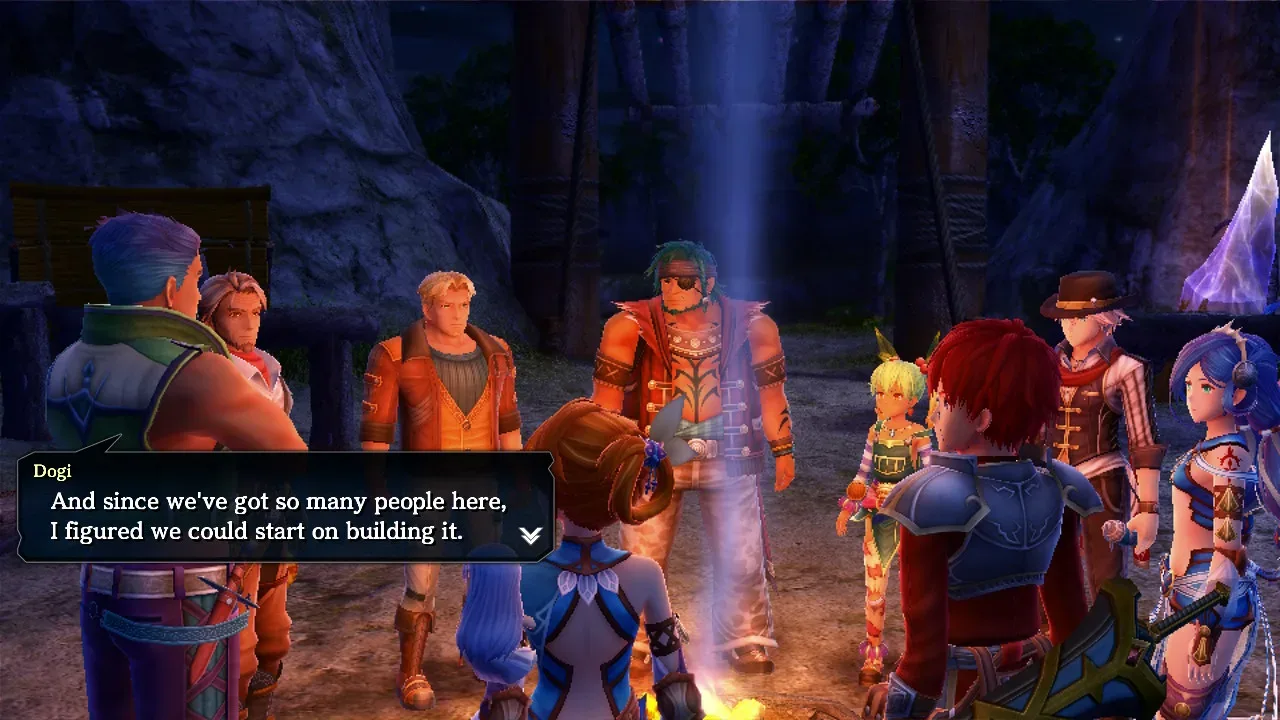
Adol’s early journey is structured around rescuing stranded passengers and building Castaway Village. Mechanically, every recovered person can feel like progress: another service, another quest line, another reason to explore an unopened piece of the island. Dramatically, however, the village becomes a rebuttal to the idea that survival is only about the protagonist.
The residents gain definition through requests and growing bonds. Hummel, at first a reserved and ruthlessly practical transporter, gradually reveals a more complicated moral history. His past includes conflict with his father and the realization that a delivery job linked to society’s underbelly could still protect vulnerable people through urgently needed medicine. A later quest involving a kidnapped Saurian egg is difficult precisely because it asks this apparently detached character to show compassion in a dangerous place.
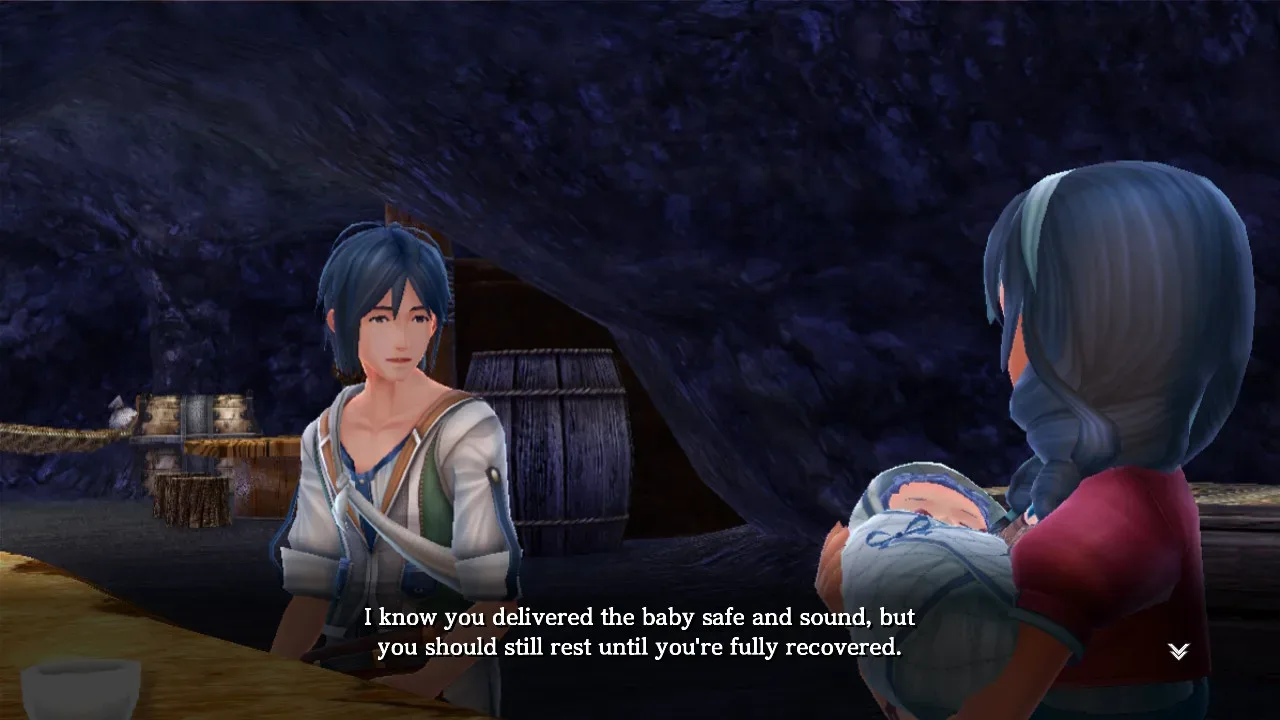
Alison and Ed offer another kind of stakes. Alison, a seamstress, is pregnant and separated from her missing husband after the wreck. The effort to cheer her up by seeking a flower from her home leads to Ed’s rescue, their reunion, and the safe arrival of their premature baby. It is not a grand mythology beat. That is exactly why it works. After an island full of combat arenas and ancient mysteries, the game pauses to let a family have a future.
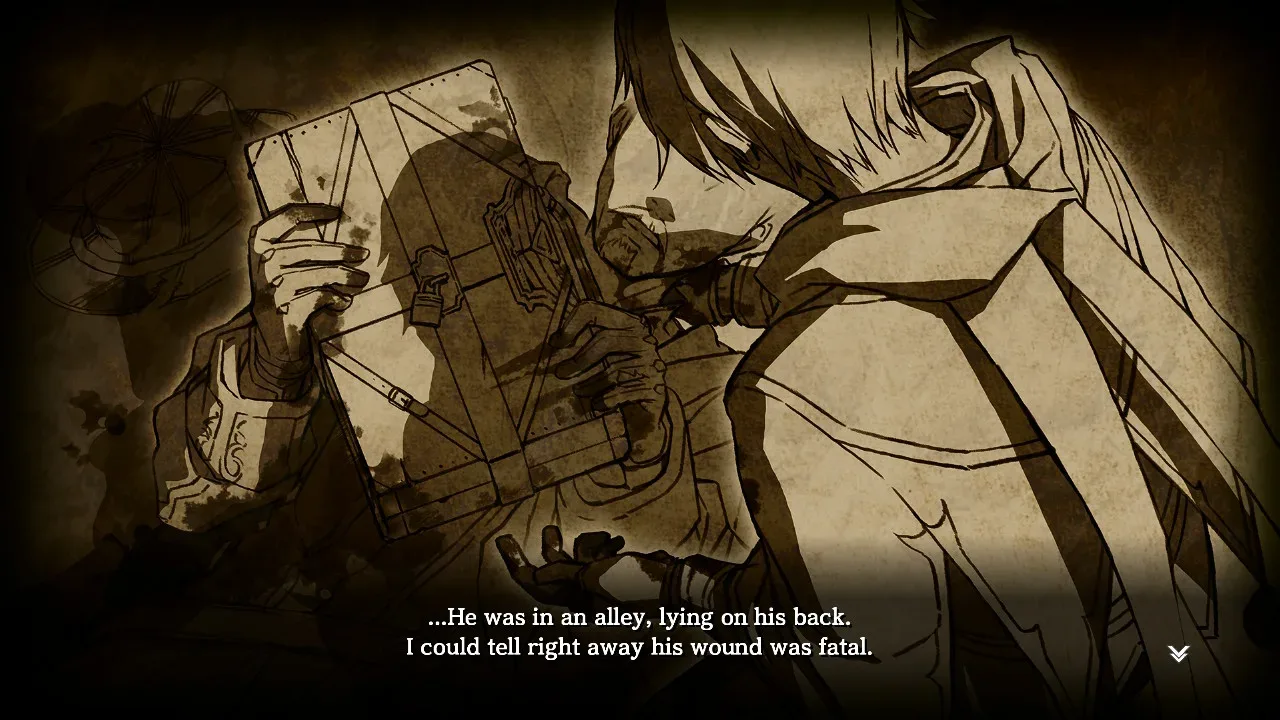
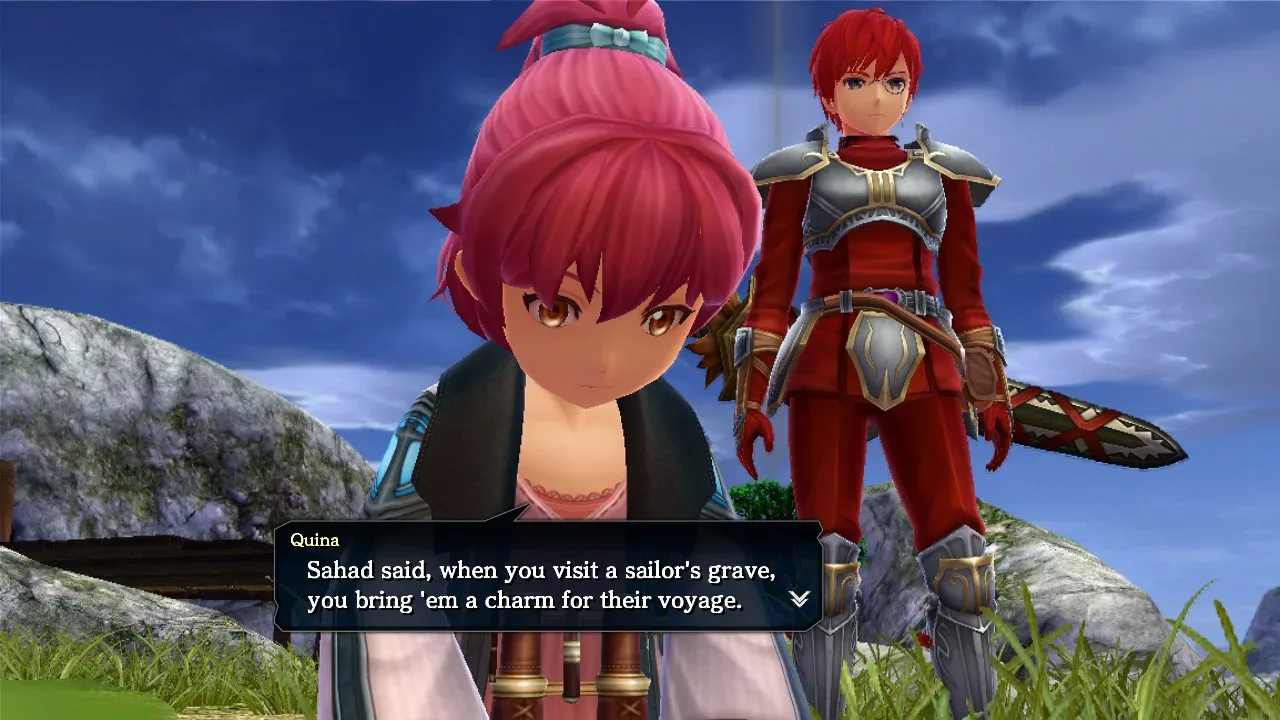
Even grief is made communal. Captain Barbaros dies during the events on Seiren, but he is not shuffled away once the plot needs a new problem. Katthew seeks items for a ritual in the captain’s memory, while Quina—whose life Barbaros saved—finds her own way to pay tribute. These threads make the village feel as though it remembers. For a useful comparison of how a game can gain meaning through what players bring to it, see why The Wind Waker HD feels different when a new player takes the helm.
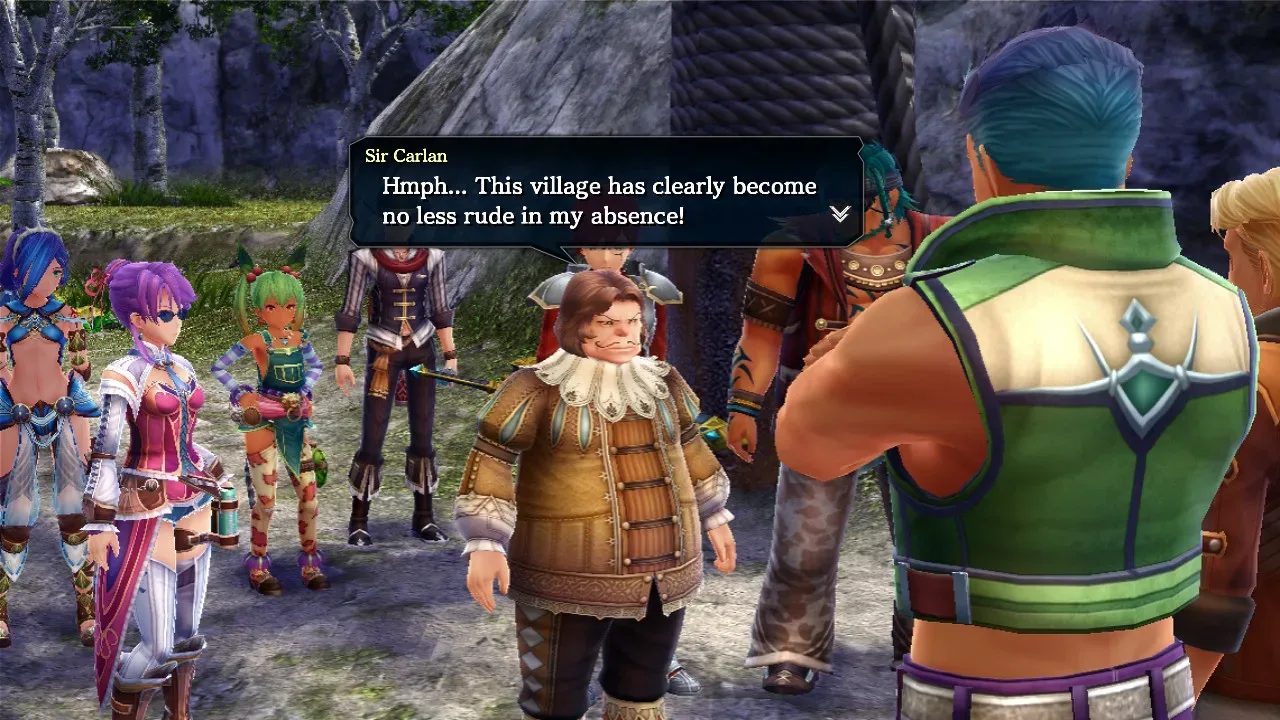
Ys VIII is not sentimental about every castaway. Sir Carlan is a notably abrasive aristocrat, resistant to shared work and eager to spread fear. His actions make him an effective reminder that a disaster does not automatically make everyone better. The village is compelling because its solidarity must be built around clashing personalities, uneven contributions, old secrets, and losses that cannot be repaired.
Combat makes exploration feel gloriously reckless
None of this patient character work would land as cleanly if the moment-to-moment game were a chore. Fortunately, Ys VIII has exceptional momentum. Party combat is fast, readable, and energetic, built for moving through groups of enemies rather than cautiously poking at them. The animation, music, and responsiveness give exploration an urgent, propulsive rhythm. A trek for a survivor or a crafting component can become a lengthy sequence of fights, discoveries, and shortcuts without losing its sense of forward motion.
The game also gives optional content genuine texture. Gathering all 24 available castaways grants access to areas including the Silent Tower, where pure orichalcum supports top-tier equipment and a stronger connection with blacksmith Kathleen. The tower also contains Mephorashmoo, a boss that may prove more demanding than the main finale. Its fight asks players to use barriers in the room to avoid devastating attacks, making the space itself part of the solution.
This is a smart fit for an RPG about a community. Completion does not merely produce an abstract percentage; it opens a door because enough people have been saved and brought together. Of course, it also means a player may have to bring back a person they would happily leave off the passenger manifest. Survival, Ys VIII suggests with a sly shrug, sometimes means tolerating Sir Carlan.
Dana changes the scale and meaning of the journey
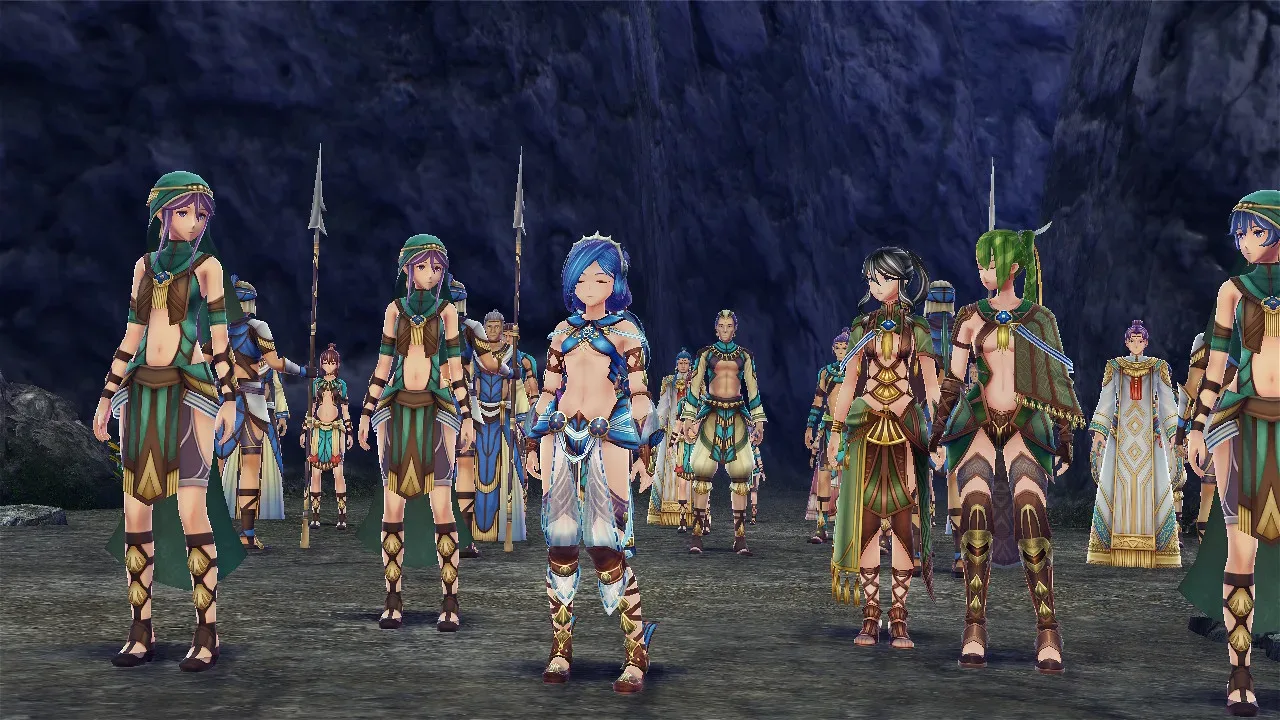
For much of the opening, Adol receives puzzling visions of Dana. Eventually, the game shifts into the distant past and lets players control her in a living Eternia, a city that exists only as ruins in Adol’s era. This is the structural gamble that elevates the story. Rather than treating Dana as a mysterious prize at the end of Adol’s adventure, the game gives her a history, a society, responsibilities, and an impossible burden.
Dana possesses foreknowledge of the future. That power is less a gift than a wound. Her mother gives her a necklace meant to suppress overwhelming visions, bringing some normalcy but also leaving Dana with agonizing uncertainty surrounding a fire that kills her mother. As the Maiden of the Great Tree, Dana tries to help people in ordinary ways while carrying knowledge of an extraordinary disaster: the eventual destruction of her civilization.
The Eternians prepare for catastrophe, including an enormous essence dome intended to shield them from a meteor shower. It appears to offer hope, then fails to prevent horrific damage. Winter adds to the devastation, and blame turns toward Dana. Her tragedy is not simply that she outlives her people. It is that she struggles to protect them and is still accused of causing the calamity.
When Adol’s party later finds Dana in stasis beneath the Great Tree of Origins, her arrival changes the party’s emotional center. Adol remains the adventurous lens through which the island is explored, but Dana becomes the story’s essential figure. Her conflict is specific and devastating: she is asked to confront a system in which life is renewed through repeated extinction.
The other Wardens sharpen that horror. They are survivors of vanished species, kept alive to observe and guide further destruction. Their resignation is understandable but chilling. Dana’s refusal to give in matters because the game has already shown what resignation looks like when grief hardens into detachment.
An extinction story that implicates the player
Ys VIII becomes more interesting when its themes are turned back toward its own gameplay. The Primordials of Seiren are imposing prehistoric creatures, and overcoming them is naturally satisfying in an action RPG. But many are also defending their territory from armed outsiders. The castaways harvest resources, kill wildlife, and press further into the island. As the Saurians respond and eventually raid Castaway Village, the conflict is no longer cleanly framed as heroes versus senseless monsters.
That irony matters. Adol and the castaways want to escape an extinction cycle enforced by the Great Tree, yet they can become agents of destruction for Seiren’s ecosystem. The game does not abandon the pleasures of monster-slaying, nor does it fully resolve that contradiction. Instead, it leaves an uncomfortable residue beneath every victory. The player wants the next resource and the next route; the island is paying for that progress.
A bittersweet ending that refuses an easy rescue
Ys VIII has three endings, with 200 reputation points required for the good ending. The standard resolution can feel incomplete, while the late-arriving antagonist and final threats may not have the same impact as Dana’s much more personal struggle. The stronger ending still declines to offer uncomplicated happiness.
Dana makes a final sacrifice that removes her existence from the others’ reality. Maia, the Earth goddess, restores their memories, and further conflict follows, ultimately leading to Dana’s deification. It is an elevation, but not a reunion. Dana does not simply return to the people she lost or get to resume an ordinary life. Her lachrymosa—her sorrow—remains central to what she becomes.
The farewell aboard the Lombardia II therefore lands with unusual melancholy. The villagers can speak one last time before sailing toward their separate futures. They have survived, changed, and regained the possibility of home. Dana, meanwhile, is left with a cosmic role born from sacrifice. That imbalance is precisely what makes the ending stick. Ys VIII starts as a game about stranded people finding a way off an island. By the end, it asks whether survival is enough when someone else must remain behind to make it possible.