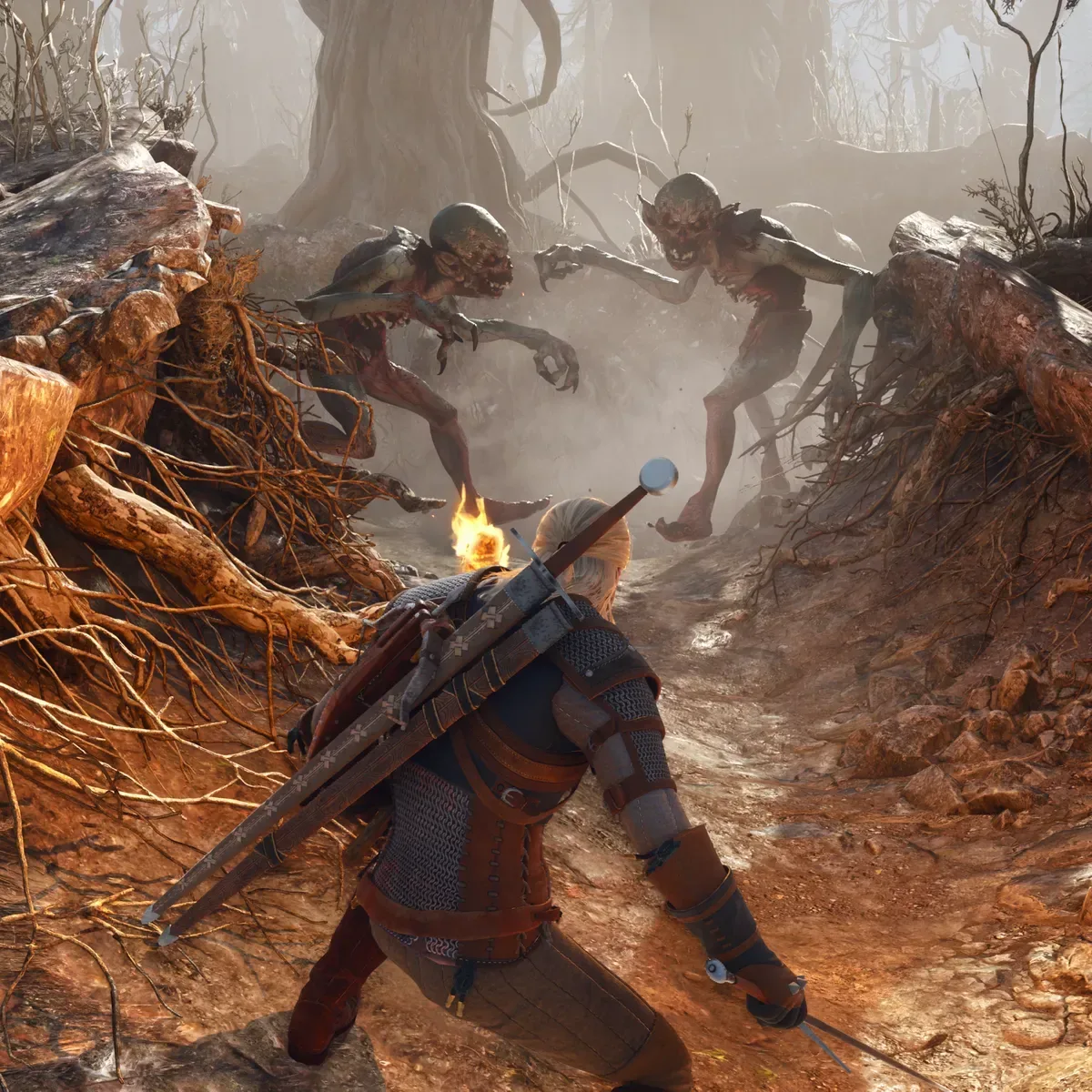
The Witcher 3 Remastered has taken Geralt’s journey to a new all-time high on Steam. The revised version of CD Projekt Red’s 2015 RPG reached 137,724 concurrent players on the PC storefront, setting a record roughly 11 years after the original game arrived. It is a notable resurgence for a single-player RPG whose earlier Steam peak, 103,329 players in January 2020, was already substantial.
The new record followed the remaster’s release early in the previous week. More than 120,000 people were playing within hours of launch, and participation continued to climb over the following days rather than immediately falling away. The 137,724 figure represents the largest number of people logged into the game on Steam at one time; it does not mean 137,724 copies were sold, nor does it measure players using other PC stores or platforms.
That distinction matters, but it does not make the number any less remarkable. Concurrent-player counts are a useful snapshot of attention concentrated at one moment. For a story-heavy, predominantly single-player adventure, a peak this large suggests both returning players and newcomers had reason to begin—or revisit—Geralt’s adventure at the same time.
A new high, beyond the Netflix-era surge
Before the remaster, The Witcher 3’s highest Steam concurrency came in January 2020, soon after the debut of the Netflix adaptation starring Henry Cavill as Geralt. That high was 103,329. The new peak of 137,724 is 34,395 players higher, or roughly a third above the previous record.
The two spikes illustrate different routes by which an established game can find a fresh audience. The 2020 rise coincided with attention flowing from a television adaptation into the game. This time, the immediate catalyst is a substantial free upgrade to the game itself. Both are reminders that an older release is not necessarily a dormant one: a new cultural entry point or a meaningful technical refresh can bring a very large audience back at once.
SteamDB data captured the new record around 18 hours before the reported milestone. SteamDB tracks public Steam activity and is commonly used to follow player-count trends. Its concurrent-player number should be read as a peak, not as a daily average or a measure of every person who has played during the remaster’s launch period.
What the remaster changes
The upgrade is described as free and includes major visual improvements alongside improved combat and further changes. “Remaster” can mean different things from game to game, but in this case the stated focus is on refreshing the presentation and updating elements of play while returning players to the same foundational RPG adventure.
Visual upgrades are especially significant for a game first released in 2015. They can reduce the perceived gap between an older favorite and contemporary releases, making a return trip easier to justify for existing owners and making a first playthrough feel more approachable for people who missed it. Combat adjustments can matter just as much. Combat is the part of an RPG that players repeat most often, so even refinements that sound modest in a feature list may affect the moment-to-moment feel of a long adventure.
Related coverage includes The Witcher 3 Remastered Sets New Steam Record With Nearly 140,000 Concurrent Players.
There is an important practical point for prospective players: a free upgrade does not automatically mean every PC will have the same experience. Sweeping visual improvements may place greater demands on a gaming setup, while individual issues can still emerge after a large release. Anyone returning to the game should review available settings, adjust them to their hardware, and watch for follow-up patches if they encounter problems. Players considering an upgrade to their own compact PC setup may also find broader context in this look at mini PC gaming setups.
CD Projekt Red acknowledges the turnout
Paweł Sasko, currently associate game director on the Cyberpunk 2077 sequel, shared the peak count and thanked players in a social-media post. “There is plenty of you on the path this weekend, my dears witchers,” he wrote, adding, “Much love and gratitude for playing our games.”
“There is plenty of you on the path this weekend, my dears witchers. Much love and gratitude for playing our games.”
The response is notable because the Steam milestone is more than a favorable launch-weekend headline for a new game. It is a record for a title with an unusually long public history, one that has continued to attract new attention long after its original release. The scale of the return also gives the team a large, active group able to identify problems and provide feedback on the update.
More fixes are planned as players report issues
CD Projekt Red has indicated that further updates are planned as players report issues. That is a sensible commitment for a release that revises a large RPG: visual upgrades, combat changes, and the variety of PC configurations in use can all create issues that only become apparent when a very large audience begins playing at once.
For players, the practical implication is straightforward. If a problem appears soon after installing the upgrade, it is worth distinguishing between an issue that can be addressed through settings and one that may require a patch. Keeping the game current will be especially important while the developer is collecting reports and deploying fixes. At the same time, a promise of future updates is not a guarantee that any specific issue will be resolved on a particular schedule, so it is best treated as an ongoing support commitment rather than a detailed patch roadmap.
The source material does not specify the complete change list, technical requirements, individual bug reports, or timing for the next updates. Those omissions are worth keeping in mind amid the excitement around the player count. The proven facts are the new Steam record, the free upgrade’s stated emphasis on visual and combat improvements, and the developer’s intention to continue refining the release based on feedback.
Why the player peak matters
The Witcher 3 Remastered’s 137,724-player record is a powerful indication of renewed interest, but it should not be stretched into claims it cannot support. It does not by itself establish total sales, long-term retention, or performance across consoles and other PC platforms. It is instead a measure of simultaneous activity on one service at its busiest recorded moment.
Even with that limitation, the comparison with 2020 is meaningful. The older record was established during a major wave of attention for the wider Witcher franchise. The remaster has now surpassed it on Steam through a game-focused update, suggesting that the appeal of returning to the RPG remains exceptionally strong when the experience receives a material refresh.
The remaster is also said to be the top-scoring game of 2026 on Metacritic at present, narrowly ahead of CD Projekt Red’s original RPG. That is a separate kind of measure from Steam concurrency: critic-aggregate standing reflects reviewed reception, while concurrent players reflect real-time audience activity. Together, they sketch a favorable early picture, though neither metric alone can settle the long-term reception of an evolving update.
What to watch next
The next useful data point will be how the Steam population settles after the launch rush. A peak is inherently a high-water mark, and player counts usually change as early adopters finish, pause, or move between games. The more revealing question will be whether the remaster sustains an elevated audience over time while patches address reported concerns.
For now, the headline is simple: an 11-year-old RPG has beaten its own Steam record, moving past a peak once associated with a major TV-driven resurgence. The Witcher 3 Remastered has given many players a reason to walk the Path again—and 137,724 of them did so at once on Steam.