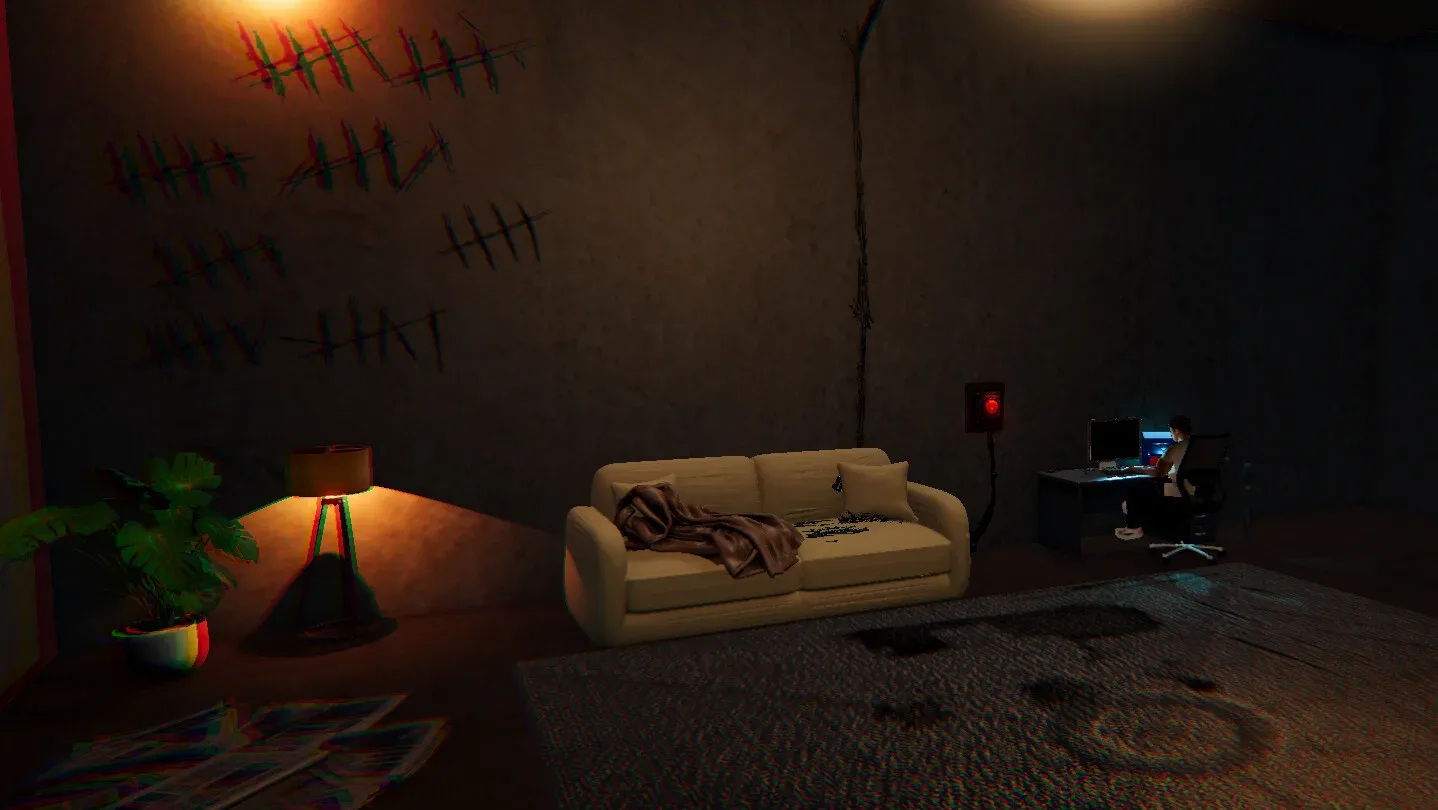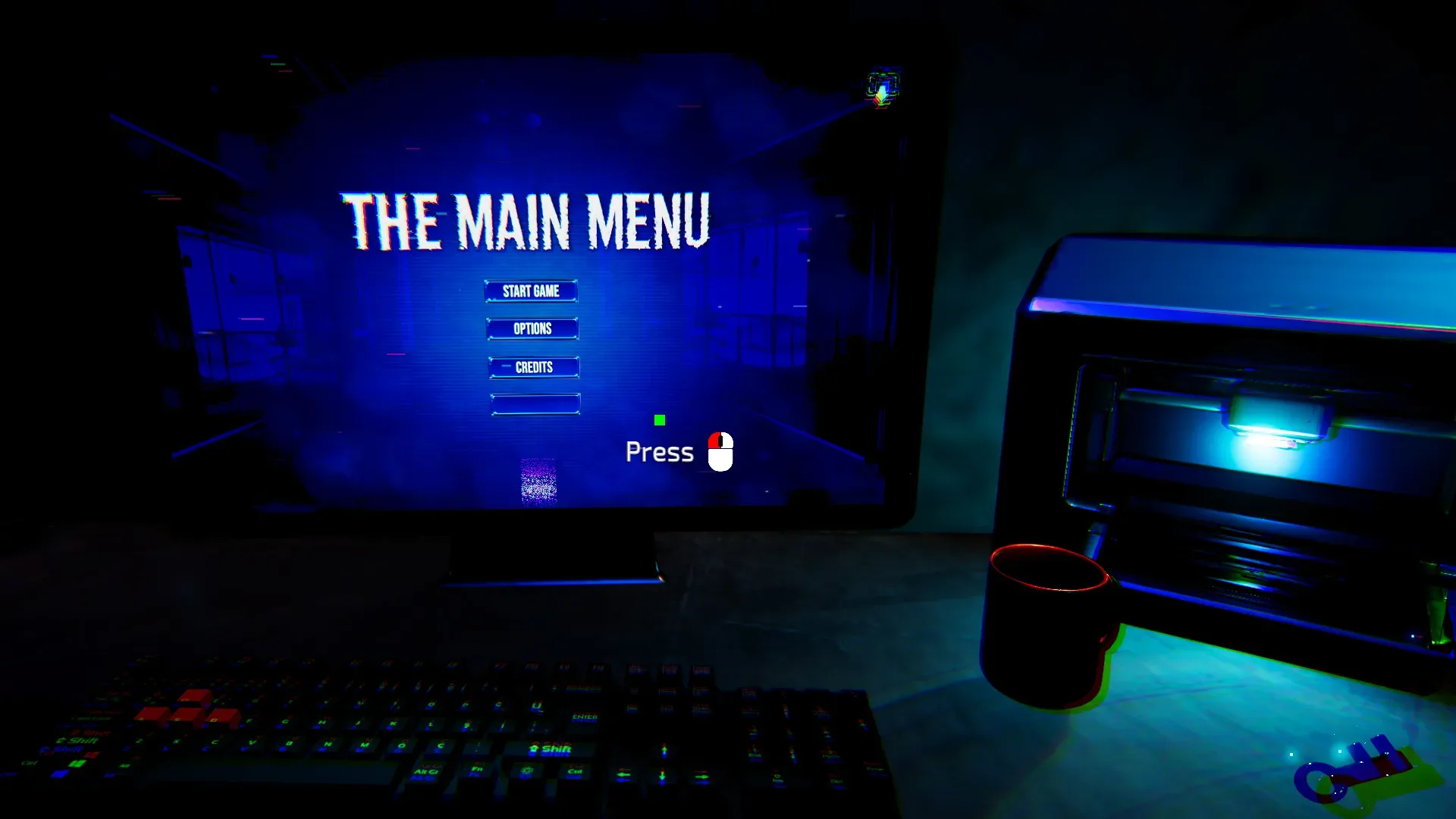
The Main Menu is scheduled to release a demo on Steam on October 20, 2026, presenting a psychological horror puzzle adventure with an unusually literal twist on the idea of “the main menu.” Rather than functioning as a neutral screen used to start, configure, or exit a game, the interface is the central tool for escaping its nightmare scenario.
The premise begins with the player chained to a chair in front of a computer. The surrounding space is not merely a backdrop for conventional inventory puzzles or environmental interaction. Instead, players manipulate buttons and settings on a corrupted main menu, with those two-dimensional interface actions producing physical changes in the three-dimensional room. The menu is described as the player’s only means of escape.
That setup turns a familiar part of PC gaming into an object of suspicion. Menus are usually designed to be dependable: a place to change display settings, adjust volume, begin a session, or return safely to the desktop. The Main Menu reverses that expectation. A button may not simply alter an option; it may alter the confines of the room, and a setting may be as important as any traditional escape-room mechanism.
A puzzle game where the interface is part of the room
The key technical idea behind The Main Menu is the relationship between a 2D user interface and a 3D game world. A user interface, often shortened to UI, is the on-screen layer through which players issue commands: menus, icons, sliders, prompts, and settings pages. Most games keep that layer separate from the playable world. Here, the separation is deliberately broken down.
The game’s puzzles ask the player to observe how actions taken in the menu affect their physical surroundings. That is a distinct approach from a game that simply displays clues in a menu or uses a computer terminal as a story prop. The stated mechanic is that changing the UI itself changes the room. Progress therefore depends on recognizing a connection between an abstract screen-level action and a tangible environmental result.
In practical terms, the demo’s premise suggests that players should scrutinize controls they might otherwise dismiss as routine. The game is built around the unnerving question of whether something on the screen is actually clickable—and, if it is, what consequence that click will have beyond the menu. That uncertainty is doing double duty: it is both a puzzle language and a horror device.
Escape-room games generally organize play around a closed space, limited tools, and linked observations. A player identifies an obstacle, finds a clue, tests a possible relationship, and uses the result to open up another route or reveal another layer of the mystery. The Main Menu retains that structure while shifting the player’s toolset away from keys, levers, and physical objects alone. The interface becomes the mechanism through which the room can be reconfigured.
The Entity turns discovery into pressure
The room is not presented as a passive puzzle box. A mysterious Entity watches the player and interferes with progress, introducing further obstacles as the relationship between the menu and the room becomes clearer. The available description does not identify what the Entity is, what it wants, or how it obstructs the escape attempt. That lack of definition is central to the game’s psychological-horror framing.
Psychological horror often creates tension through uncertainty, distorted perception, vulnerability, and doubt rather than relying solely on overt threats. In this case, the uncertainty extends beyond the room itself. If the player is using a computer menu to reshape reality, then the obvious question is who—or what—has authority over that menu. The Entity’s interference raises the possibility that the player is not the only one interacting with the game’s systems.
That theme fits the title especially well. “Main menu” normally implies control: it is the first screen a player sees and the place where they choose what happens next. By making it corrupted and contested, the game turns an expected symbol of player control into a source of instability. The player may be able to make changes, but the Entity can disrupt those changes or create new complications. Escape is thus tied not just to solving a puzzle, but to understanding the rules of a system that may be actively resisting understanding.
Why a corrupted menu is an effective horror setting
Horror games often derive power from making ordinary spaces feel unreliable. A house, hallway, hospital, or computer desktop can become unsettling when its familiar rules fail. The Main Menu applies that principle to a layer of games that players normally treat as invisible infrastructure. The menu is usually a pause between meaningful actions. Here, it is where meaningful actions happen.
The design can create tension without requiring the player to look away from the interface. A normal game teaches people to navigate menus efficiently and without much thought. A horror game built around the menu can exploit that habit: the player may have to ask whether an ordinary-looking button is safe, whether a setting has a hidden purpose, or whether a new menu element is a clue, a trap, or an intervention by the Entity.
It also creates a potentially unusual form of environmental observation. In a conventional room-escape puzzle, players inspect physical details such as markings, furniture, locks, and objects. In The Main Menu, the menu itself is another environment to inspect. Labels, options, interface changes, and the apparent boundaries of the screen can all become narratively meaningful because UI interaction is directly tied to the room.
That does not mean every interface element is confirmed to be interactive; the announced concept only establishes that buttons and settings can be manipulated to change the space. Still, the game’s stated design invites a more suspicious style of play than a standard settings screen ever would. The unsettling “can I click that?” feeling is not incidental flavor. It is the central question around which the puzzles are designed.
What the Steam demo establishes—and what remains unknown
The October 20 demo will give PC players a chance to encounter the game’s core concept on Steam. The supplied details establish the setting, genre, basic interaction model, and the Entity’s role as an interfering force. They do not specify the demo’s length, the number of puzzles it contains, its system requirements, supported languages, accessibility options, or the release timing of a full version.
Those distinctions matter for a concept-driven puzzle game. A demo can communicate a mechanic quickly, but it cannot by itself answer how broadly that mechanic will develop. The central question for the eventual wider experience is not merely whether menu interactions alter a room; that premise is already clear. It is how many different ways the game can reinterpret the relationship between player, UI, room, and Entity without reducing the idea to a single trick.
For now, the announced design is deliberately focused: the player is confined, the menu is corrupted, the room responds to it, and an unknown presence is working against the escape. That is enough to establish a compact horror hook without making claims about story scope or later-game features that have not been detailed.
What to watch for in the demo
Players approaching the demo may want to keep its unusual division of attention in mind. The important information is likely to exist across two connected layers: the room and the interface. Examining only the physical environment, or only the menu, risks missing the intended feedback loop between them.
- Watch for cause and effect: When an interface control changes, take note of what shifts in the room and whether the effect reveals a new obstacle or clue.
- Treat routine UI elements carefully: The premise specifically centers on buttons and settings, so familiar menu conventions may be part of the puzzle language rather than background functionality.
- Expect interference: The Entity is described as introducing obstacles, meaning an apparent solution may lead to a changed problem rather than a clean escape.
- Separate confirmed facts from inference: The game promises a surreal interface-driven escape-room mystery, but its larger explanation for the Entity and the nature of the corrupted menu remains undisclosed.
The design arrives amid a broader appetite for horror games that make systems themselves feel threatening, rather than treating menus and game logic as purely functional. For another recent item in the horror-game business space, see Techland’s update on Dying Light: The Beast. The Main Menu, however, is working from a markedly different angle: it makes the boundary between game system and game world the puzzle.
An official trailer is available ahead of the demo’s Steam debut. The stated release date is October 20, 2026.