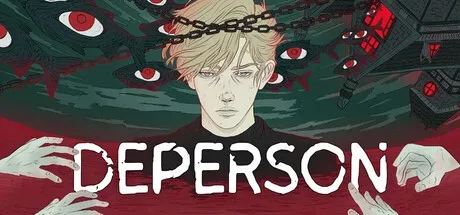
DEPERSON is a hand-drawn psychological horror adventure that places its central mystery inside a broader system of control. Its protagonist, Aaron, wakes without memories in Indrija, a dystopian nation where obedience is framed as a condition of survival. What begins as an attempt to understand his situation gradually gives way to surreal horror, with reality itself becoming increasingly unreliable.
A demo is now available on Steam, giving players an early look at a project built around oppressive atmosphere, environmental problem-solving and choices intended to affect both Aaron and the people around him. DEPERSON was also presented at Tokyo Games Show, following a Best Visuals finalist placement at the Gamescom Awards 2026 and an Excellence in Art nomination at the Busan Indie Connect Festival 2026.
A horror story about more than escape
Indrija is not merely a backdrop for a missing-memory setup. The premise positions Aaron in a society where compliance is necessary to get by, tying its political pressure directly to its personal horror. Aaron is fleeing the regime around him, but the game’s setup makes clear that a more frightening threat is waiting beneath that immediate danger.
That distinction matters for a psychological horror game. In this branch of horror, the main tension is often not simply whether a protagonist can survive a monster or leave a dangerous place. It comes from uncertainty: whether memories can be trusted, whether a character understands their own role in past events, and whether the world being perceived is stable. DEPERSON explicitly centers memory and identity alongside trauma and oppression, giving its surreal turns a thematic function rather than treating them as decoration.
The title itself points toward that concern. “Depersonalization” is commonly used to describe an unsettling sense of detachment from oneself, though the game’s story should not be read as a clinical depiction based on the information available. Within DEPERSON’s fictional context, the name suggests a useful lens for Aaron’s condition: a character who lacks the memories that normally establish continuity between past self and present self, while living in a nation that demands the suppression of individual agency.
Point-and-click foundations, with movement and character abilities
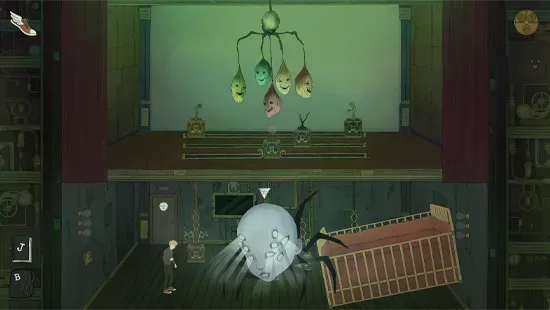
DEPERSON combines classic point-and-click adventure design with environmental puzzles, platforming and character-specific abilities. That mixture should make the demo particularly useful for players trying to understand the game’s cadence, because each component solves a different design problem.
- Point-and-click adventure design generally centers on observing spaces, interacting with objects and characters, and using gathered information to progress.
- Environmental puzzles ask players to interpret the layout and objects in an area, rather than relying solely on menus or dialogue prompts.
- Platforming introduces movement challenges, such as navigating spaces through jumps and traversal.
- Character-specific abilities indicate that progression can depend on what a particular character can do, potentially changing how players approach a location or obstacle.
The overlap could be a significant part of DEPERSON’s identity. Traditional adventure games often derive their tension from finding the right connection between clues, people and objects. Platforming adds physical positioning and forward motion, while abilities can turn a puzzle from a matter of noticing something into a matter of deciding who can act on it. The available details do not establish how frequently each system appears or how they are balanced, but they do describe a game that is aiming beyond a purely cursor-led adventure format.
For horror, this can also affect pacing. A quiet scene spent studying an environment can establish unease differently from a sequence requiring traversal. In a story about distorted reality, shifts between investigation, puzzle-solving and movement have the potential to make spaces feel less predictable. That is an analytical possibility based on the stated design, not a claim about how any individual sequence plays.
Choices are tied to people as well as endings
DEPERSON says player decisions will shape Aaron and the people around him, leading to multiple, varied endings. The important part of that promise is not just the presence of alternate conclusions. Branching stories are most meaningful when decisions carry consequences during the journey, especially when they affect relationships, trust or another character’s circumstances.
In this case, the themes make that structure especially relevant. A game concerned with obedience can use decisions to ask what resistance costs, what compromise looks like and how a person behaves when basic safety is uncertain. Meanwhile, a protagonist without memories gives choices an additional layer: players are not simply determining what Aaron will do next, but may be helping define who he is in the absence of a complete past.
There is still plenty that has not been specified. No particular choice paths, endings or consequences have been detailed, and the available information does not say whether all decisions alter plot events, character relationships, dialogue, access to areas or some combination of those elements. Players should therefore treat the multiple-ending description as an indication of intended replay value, rather than assume a particular scale of branching before experiencing more of the game.
Hand-drawn art has become part of the game’s early recognition
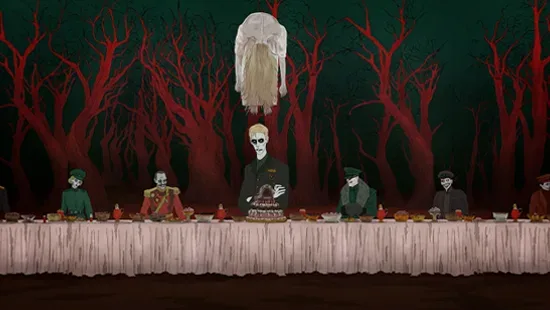
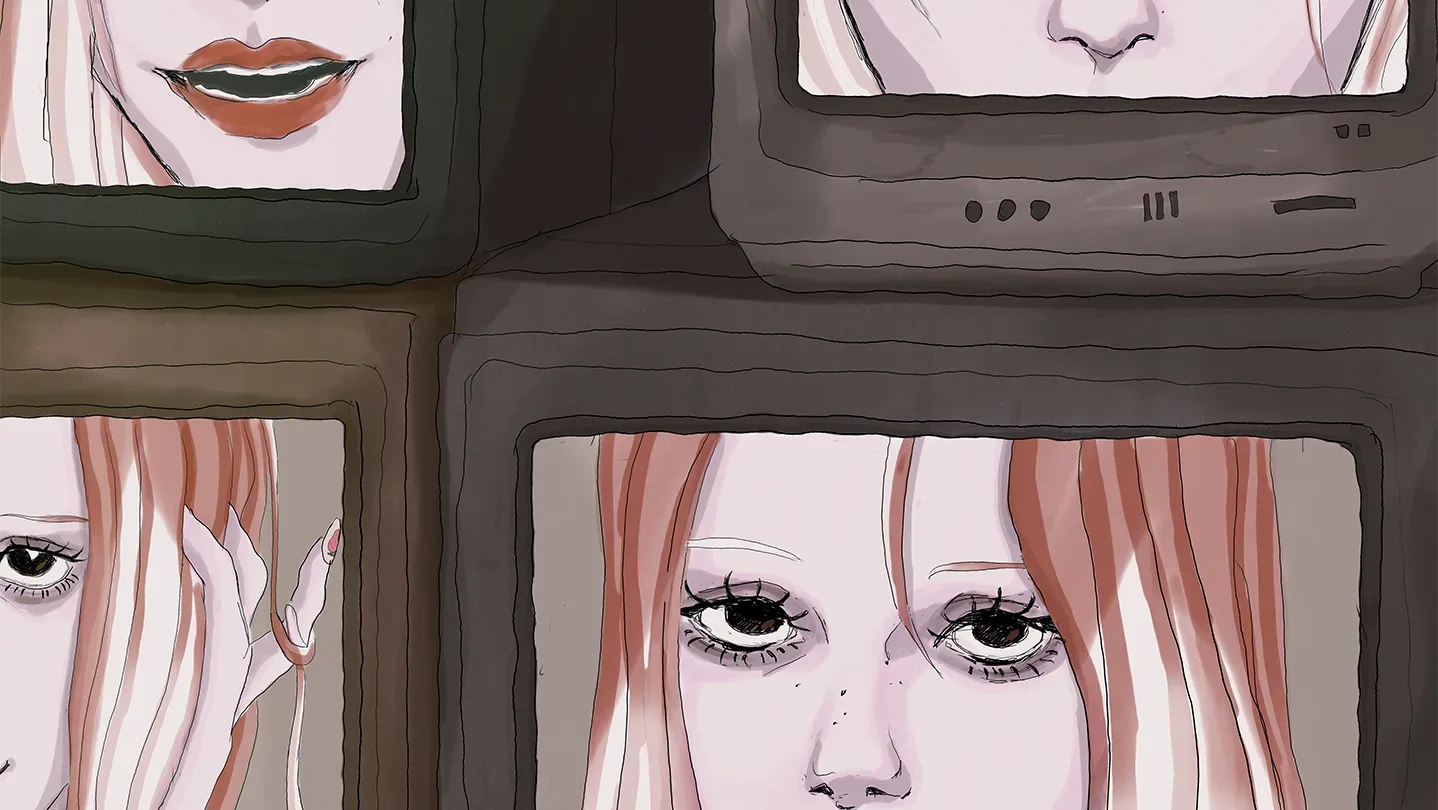
DEPERSON’s visual presentation is one of its clearest calling cards. The game uses hand-drawn art to support its oppressive, surreal setting, and that approach has already received formal recognition. It was a finalist for Best Visuals at the Gamescom Awards 2026 and was nominated for Excellence in Art at the Busan Indie Connect Festival 2026.
Those honors do not establish how the final game will be received, but they do provide useful context for why its art has been a focus of early attention. In a psychological horror adventure, visual style does more than make a game identifiable in a screenshot. It can set the emotional distance between player and world. Hand-drawn imagery may make a setting feel intimate, fragile, dreamlike or deliberately artificial; in a story where reality begins to bleed into nightmare, that flexibility is especially well suited to the subject matter.
The soundtrack is described as adaptive and haunting. An adaptive soundtrack changes in response to gameplay conditions or events instead of remaining fixed in a single linear arrangement. No details have been provided about exactly what triggers DEPERSON’s musical changes, but the intent is clear: audio is positioned as an active part of the atmosphere, accompanying the game’s shifts in tension and perception.
What the Steam demo can establish
A demo cannot answer every question about a narrative game with multiple endings, but it can establish the fundamentals. For DEPERSON, those fundamentals include whether its interaction model feels natural across investigation, puzzles and traversal; whether its art and soundtrack create the intended sense of unease; and how effectively it introduces Indrija and Aaron’s uncertain situation.
It can also show how the game handles clarity. Psychological horror benefits from ambiguity in its fiction, but its basic interaction language still needs to communicate enough for players to understand what they can examine, where they can go and why an ability or item matters. The balance between deliberate narrative uncertainty and readable puzzle design will be central to how the game’s ideas land.
DEPERSON’s development is informed by an engaged community that contributes feedback and fan creations. For a project combining several adventure-game traditions with a strongly authored aesthetic, that feedback can be valuable in identifying whether puzzles, movement and narrative decisions are communicating their purpose without flattening the mystery.
Players interested in another recent PC horror demo with a very different mechanical premise can also see Coal Duty’s proximity-chat horror demo details. DEPERSON, by contrast, is framing its horror around a hand-drawn dystopia, a protagonist without a past and choices that may reshape both his identity and the fates of those near him.
For now, the Steam demo is the available way to assess that blend firsthand. The project’s stated ambitions are substantial: a surreal horror narrative about trauma, memory and control, delivered through puzzle-led exploration and branching outcomes rather than a single fixed path.