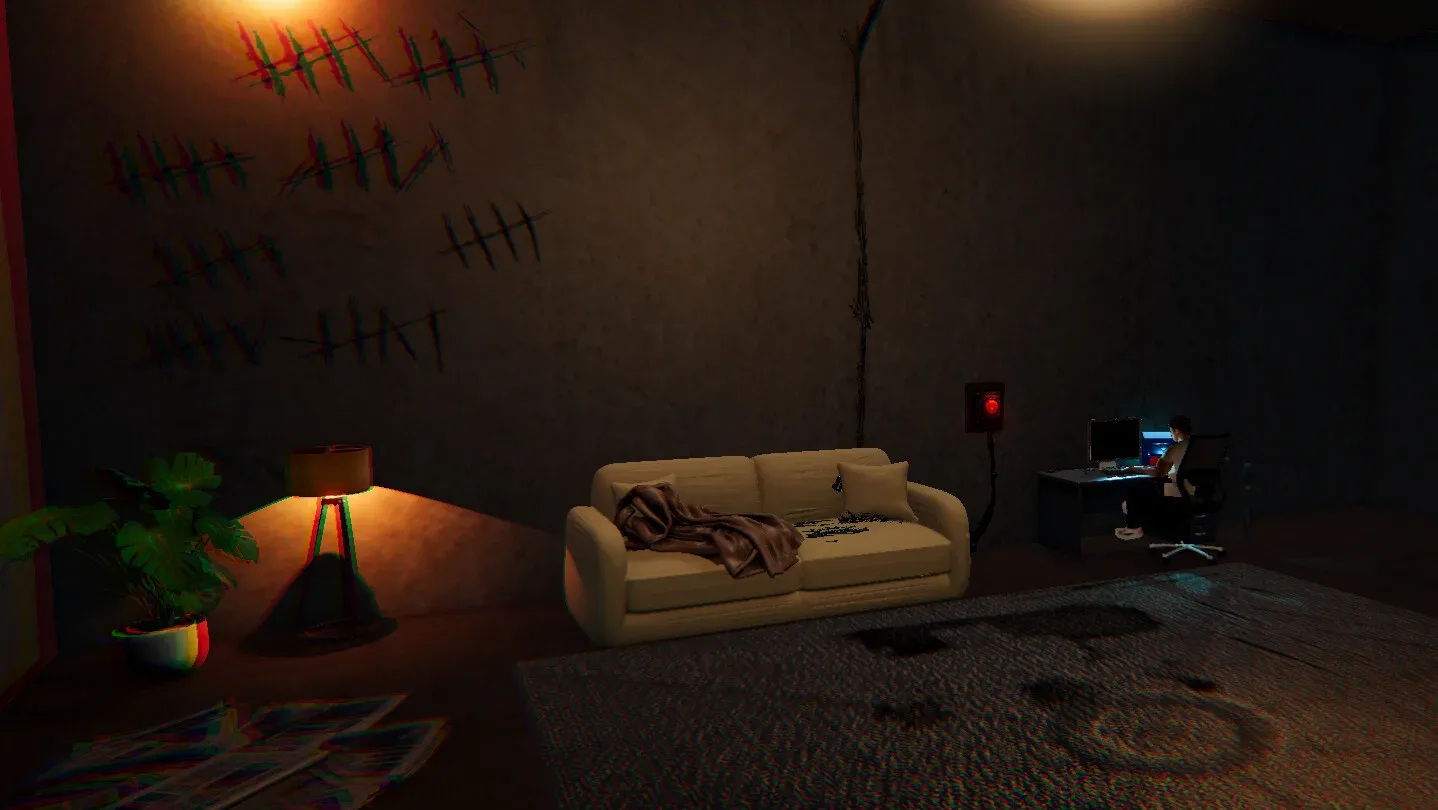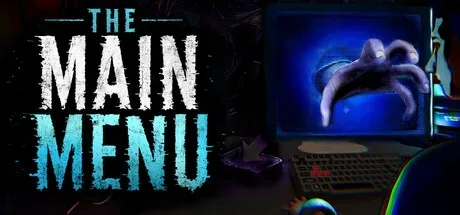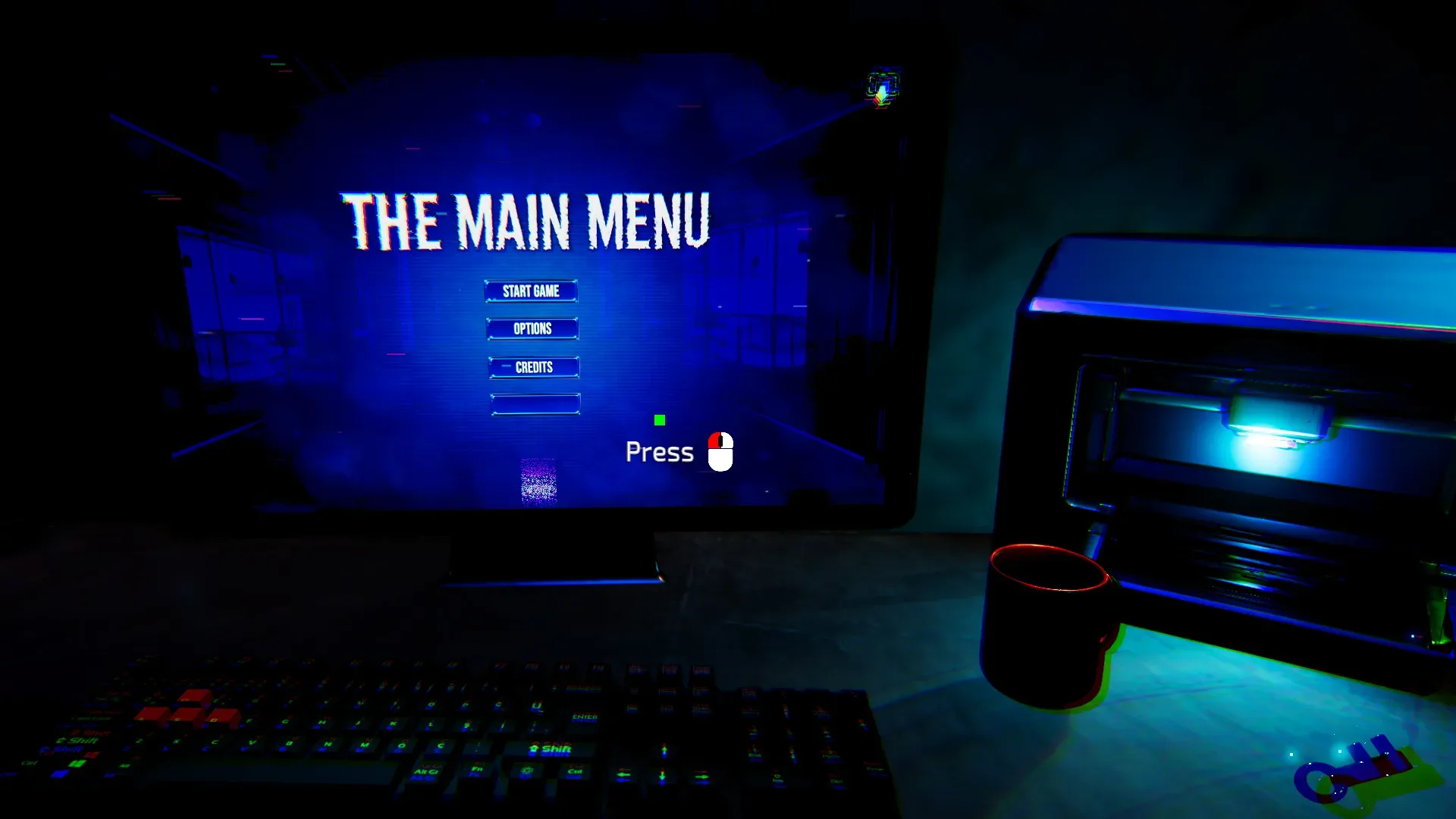
The Main Menu demo is now available on Steam. The psychological horror puzzle adventure starts with a deliberately unsettling premise: the player wakes up trapped in a room, faced with a corrupted main menu. Rather than serving as a simple gateway to the game, that menu is the game’s central object, puzzle interface and apparent route to escape.
The key idea is that changing the menu changes the physical room around the player. In practical terms, actions taken in a two-dimensional user interface can have consequences in the three-dimensional space of the room. The demo is built around learning that relationship, experimenting with what can be selected or altered, and working out how those changes can open a path forward.
It is a compact concept, but one that directly targets a familiar player habit: most people see a main menu as a safe, functional screen to move past as quickly as possible. The Main Menu instead makes it suspicious. A button, setting or visual element that appears decorative may be part of the puzzle, and the intended sensation is a creeping version of a very particular question: can I click that?
A main menu that is no longer safely outside the game
In most games, the main menu sits outside the playable world. It is where players start a session, adjust options or leave the application. It is generally predictable, stable and separated from the fiction. The Main Menu blurs that boundary by placing a damaged version of that interface inside its horror scenario.
That makes the menu more than presentation. It becomes an interactive puzzle system: the player examines available UI elements, changes something on-screen, then observes the real-world consequence within the room. The central challenge is not merely noticing that an interaction is possible, but figuring out what the connection between a menu action and a physical result might be.
The supplied details describe the game as a surreal horror experience built around this very structure. “Surreal” is meaningful here because the normal rules of software interfaces and physical spaces are being made to overlap. A menu should not reshape a room, but the game’s premise says it does. That mismatch is where its unease and puzzle logic meet.
What players can expect from the demo
The demo presents an escape-room mystery. Escape-room design generally centers on being enclosed in a limited space, inspecting clues, recognizing links between objects and systems, and unlocking new possibilities through deduction. Here, the corrupted menu supplies the unusual layer over that formula.
The room is not described as a conventional inventory-driven puzzle space, and the available information does not establish specific puzzles, menu options or a total length for the demo. What is clear is the structure: the main menu is the player’s only stated means of escape, and its manipulation physically affects the surrounding room.
Related coverage includes The Main Menu Demo Is Now Available on Steam.
That suggests an important approach for anyone trying the demo: pay attention to cause and effect. If an interface action produces a change in the room, that change may reveal the next interaction, explain a previously inaccessible feature, or establish a rule that applies elsewhere. This is not a walkthrough or a guarantee of individual solutions; it is simply the most natural way to engage with a game whose advertised hook is a link between UI changes and environmental changes.
- Inspect the interface: Treat the menu itself as part of the puzzle space rather than a screen to dismiss.
- Observe the room after changes: The premise hinges on physical consequences, so what changes may matter as much as the click that caused it.
- Look for relationships: The game is framed around gradually understanding how menu and room affect one another.
- Expect interference: Progress will not be purely mechanical, as another presence is positioned to introduce obstacles.
The Entity adds pressure to the puzzle
As the relationship between the menu and the room becomes clearer, a mysterious Entity watches and interferes with progress. The available description does not identify this Entity, define its motives or explain exactly how it obstructs the player. That uncertainty appears to be part of the game’s mystery.
Its presence shifts the premise beyond a purely abstract interface puzzle. There is an observing force within the scenario, and it can create new obstacles. In horror terms, that creates pressure around experimentation: interacting with the menu is necessary to escape, but it may also draw attention or provoke further complications.
The story questions raised by the setup are similarly broad by design. If a corrupted menu can alter a room, what is actually controlling the environment? Is the menu a tool, a trap, or both? And what exactly is the Entity’s role in the game’s strange system? The demo’s setup positions those questions alongside the escape objective instead of treating narrative and puzzles as completely separate tracks.
Why the 2D-to-3D hook matters
The game’s mechanics are described as two-dimensional UI actions affecting a three-dimensional room. Those terms are simple but useful for understanding the pitch. A 2D UI, or two-dimensional user interface, is the flat on-screen layer of buttons, labels, panels and controls. A 3D room is the spatial environment the player inhabits and navigates, with apparent depth and physical objects.
Games regularly use menus to control settings or organize information, while puzzle adventures regularly ask players to alter the environment. The Main Menu joins those ideas by making an interface alteration part of environmental manipulation. The tension comes from the player needing to think across two normally separate layers: what does a control appear to do, and what does it actually do to the world?
That also makes the corrupted state of the menu significant. A conventional menu implies reliability: pressing an option should produce an expected result. A corrupted menu implies that labels, behavior or presentation may no longer be trustworthy. The game’s horror does not need to rely solely on a creature in the room when the player’s basic means of control has become suspect.
A demo for players who enjoy conceptual horror puzzles
The Main Menu appears aimed at players interested in psychological horror, escape-room mysteries and games that turn familiar systems into the source of the problem. Its stated design focus is discovery through interaction—the moment of realizing that an overlooked on-screen element may be actionable.
That direction distinguishes it from a standard horror setup built only around navigating dark corridors or avoiding a visible threat. The room is important, but so is the layer that would usually sit outside the world entirely. The player is not simply searching the room for an answer; they are also questioning the software-like frame through which they are playing.
The Steam demo is available now for those who want to see how far the idea goes and what rules govern the connection between the damaged menu, the changing room and the Entity that interferes with escape. For more recent PC demo availability news, see our coverage of another game with a Steam demo available now.