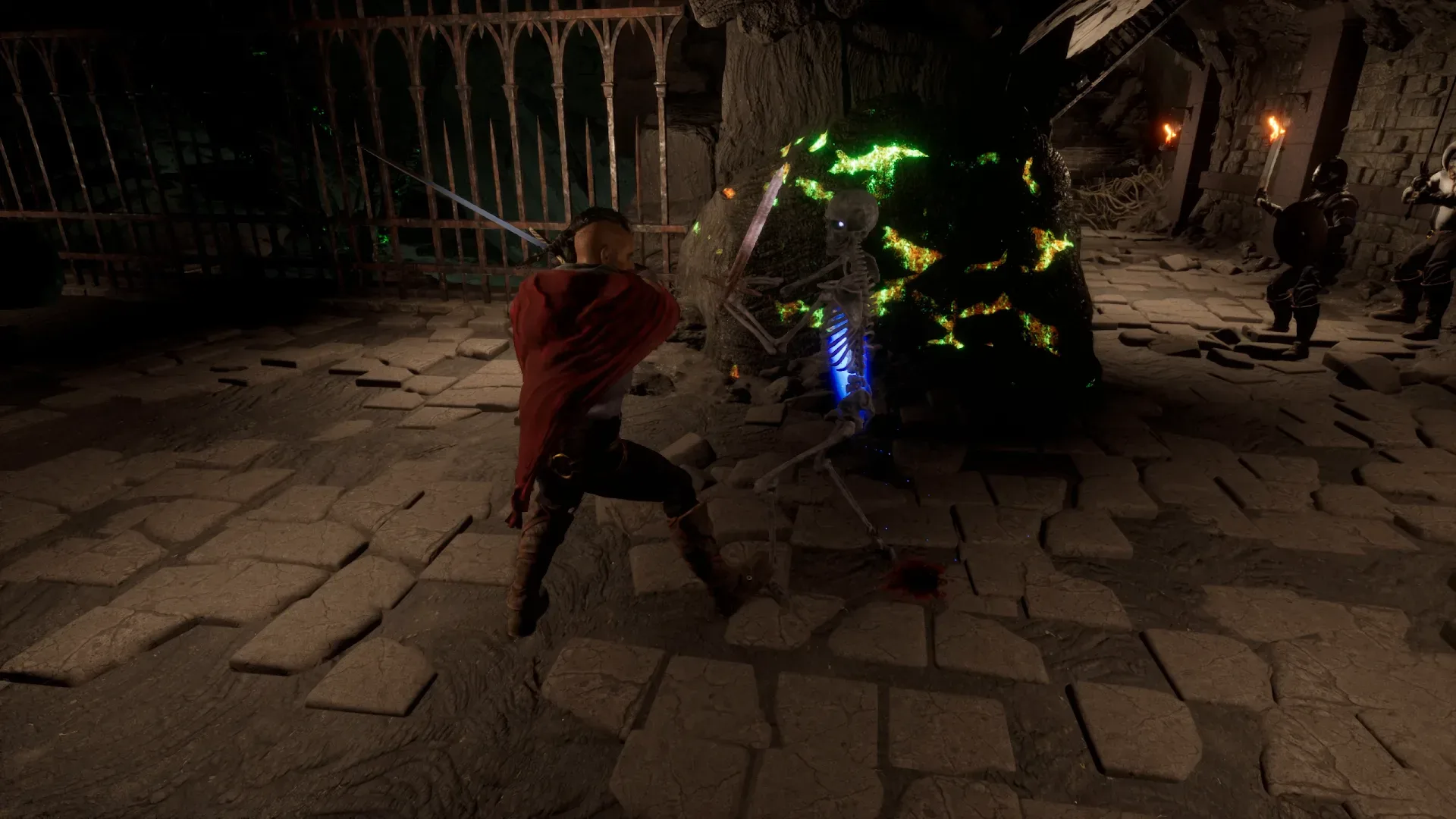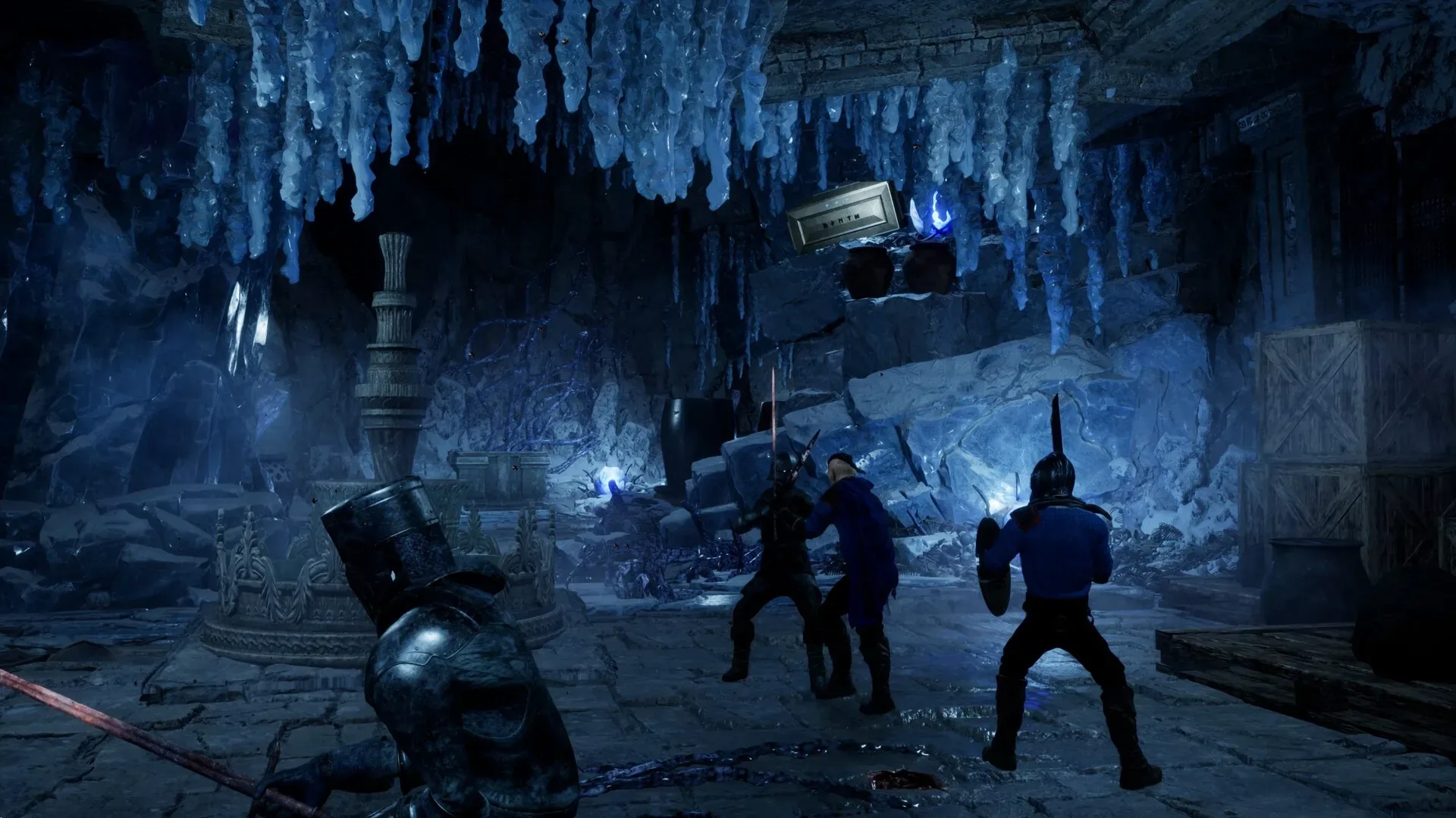
There is a particular kind of confidence required to build a multiplayer game around sword fighting where a mistimed block can be as consequential as a missed attack. Swordeye, the upcoming Steam game from solo developer ALX Theory, is leaning fully into that premise with an updated demo planned for October’s Steam Next Fest.
Previously known as Swordai, Swordeye is described as a melee-focused extraction PvPvE game. The updated demo is intended to give players a broader sampling of that structure: an open-world map, a Tier 1 dungeon area and a revised Ice Cave, plus encounters against NPC opponents and other players. Its central question is not simply whether players can defeat enemies, but whether they can secure loot and make it out with it.
That makes the demo an important opportunity to see how Swordeye’s systems meet in practice. The game combines tactical raids, large multiplayer dungeons, duels and tournament play with persistent character advancement. In a genre space often built around ranged weapons, its identity rests on close-range decision-making: choosing the correct direction for an attack, reading an opponent’s response, and knowing when survival is worth more than pressing a fight.
An extraction game built around blades
“PvPvE” is shorthand for player-versus-player-versus-environment. In Swordeye, the environment includes hazards and monsters, while human players introduce the unpredictability of direct competition. A player may be navigating traps or fighting computer-controlled foes while knowing another person could arrive to contest the same route, reward or escape.
The extraction part defines the stakes. Loot is not framed merely as a score awarded at the end of a match; acquiring it and successfully taking it out is positioned as the engine of progression. That distinction matters. Finding treasure in a dangerous dungeon is only the first half of the job. The remaining challenge is preserving it through whatever enemies, hazards and rival players stand between the player and a safe exit.
Swordeye’s progression is planned to include loot, crafting, gear upgrades, skills and a skill tree, alongside customizable loadouts. A loadout generally means the set of gear and abilities a player chooses before entering a run. Persistent progression means those systems are meant to extend beyond one isolated match or dungeon attempt, giving trials and successful extractions a longer-term purpose.
The available details do not spell out every penalty or reward condition, so it is too early to assume exactly how punishing an unsuccessful extraction will be. What is clear is the intended loop: enter a hostile space, pursue valuables and advancement, then extract to convert the risk into durable progress.
Six directions, several ways to outthink an opponent
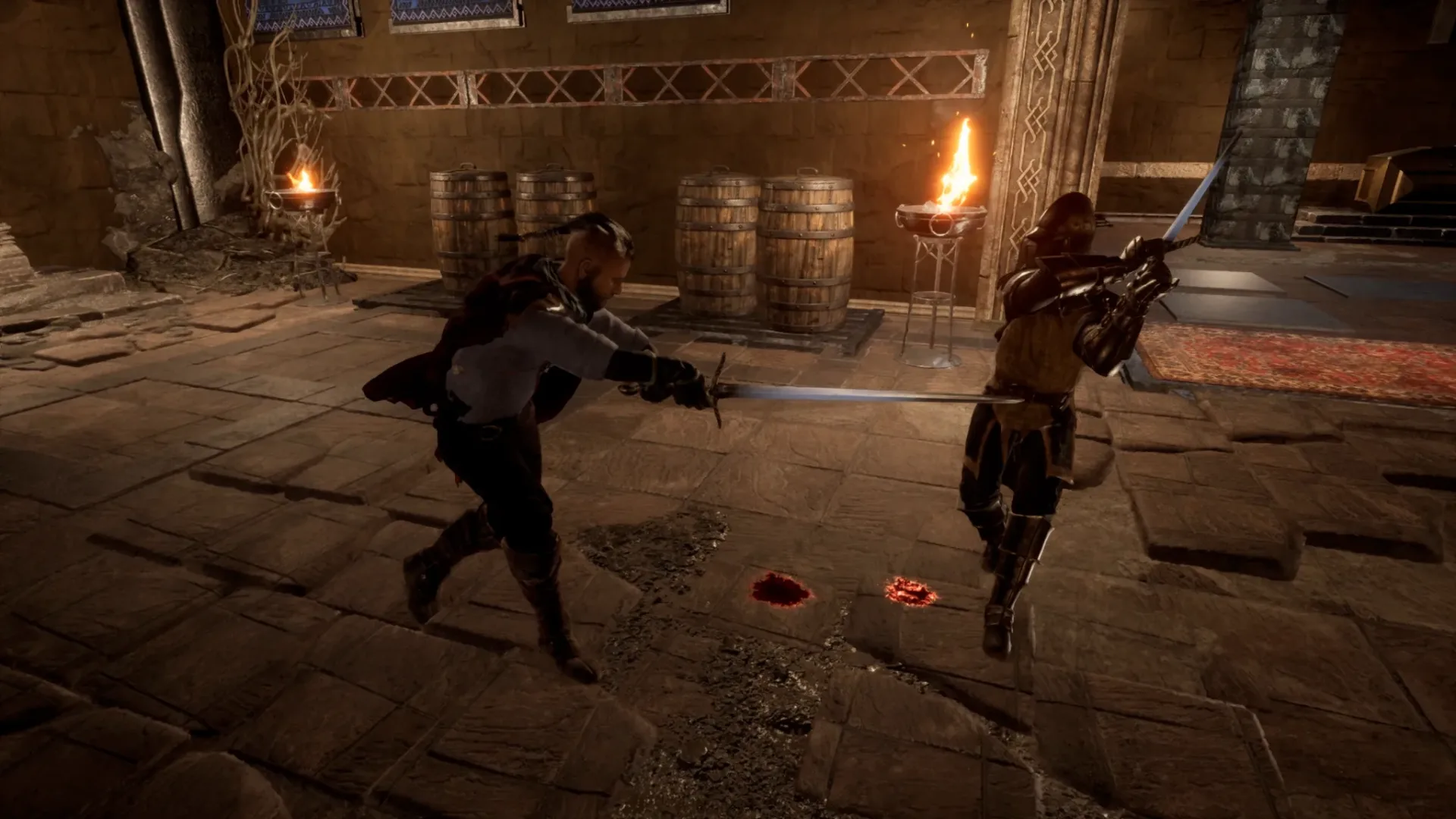
Swordeye’s most distinctive advertised mechanic is its hardcore six-directional combat. Directional melee systems ask players to consider the line of an incoming or outgoing strike rather than relying solely on a single generic attack and block button. In Swordeye’s case, six directions are central to its combat model.
That premise gives weight to the game’s emphasis on precision. An attack, block or parry is supposed to matter individually, which suggests combat will reward timing and anticipation as much as repeated offense. The broader moveset includes ripostes, feints, kicks and combos.
- Parry: a precisely timed defensive response to an enemy attack.
- Riposte: a counterattack that follows a successful parry or defensive opening.
- Feint: an attack that is deliberately interrupted or altered to provoke the opponent into defending the wrong threat.
- Kick: a close-range disruptive option, potentially useful for breaking pressure or creating an opening.
- Combo: a connected sequence of attacks or actions that builds from a successful opening.
Those terms collectively point toward fights that are meant to have layers beyond simple reaction speed. Feints and directional choices create uncertainty. Parries and ripostes give defenders a way to turn that uncertainty back on an aggressor. Kicks can add a positional or tempo-changing tool. Combos offer the payoff when a player earns the right opening.
For players trying the demo, the useful early goal may be learning the relationship between attack directions and defensive coverage before worrying about long-term optimization. If the advertised system delivers on its premise, recognizing a repeated pattern from another combatant could be more valuable than rushing to swing first. The game explicitly frames every strike, block and parry as meaningful, so patient observation may be as relevant as mechanical speed.
What the updated demo includes
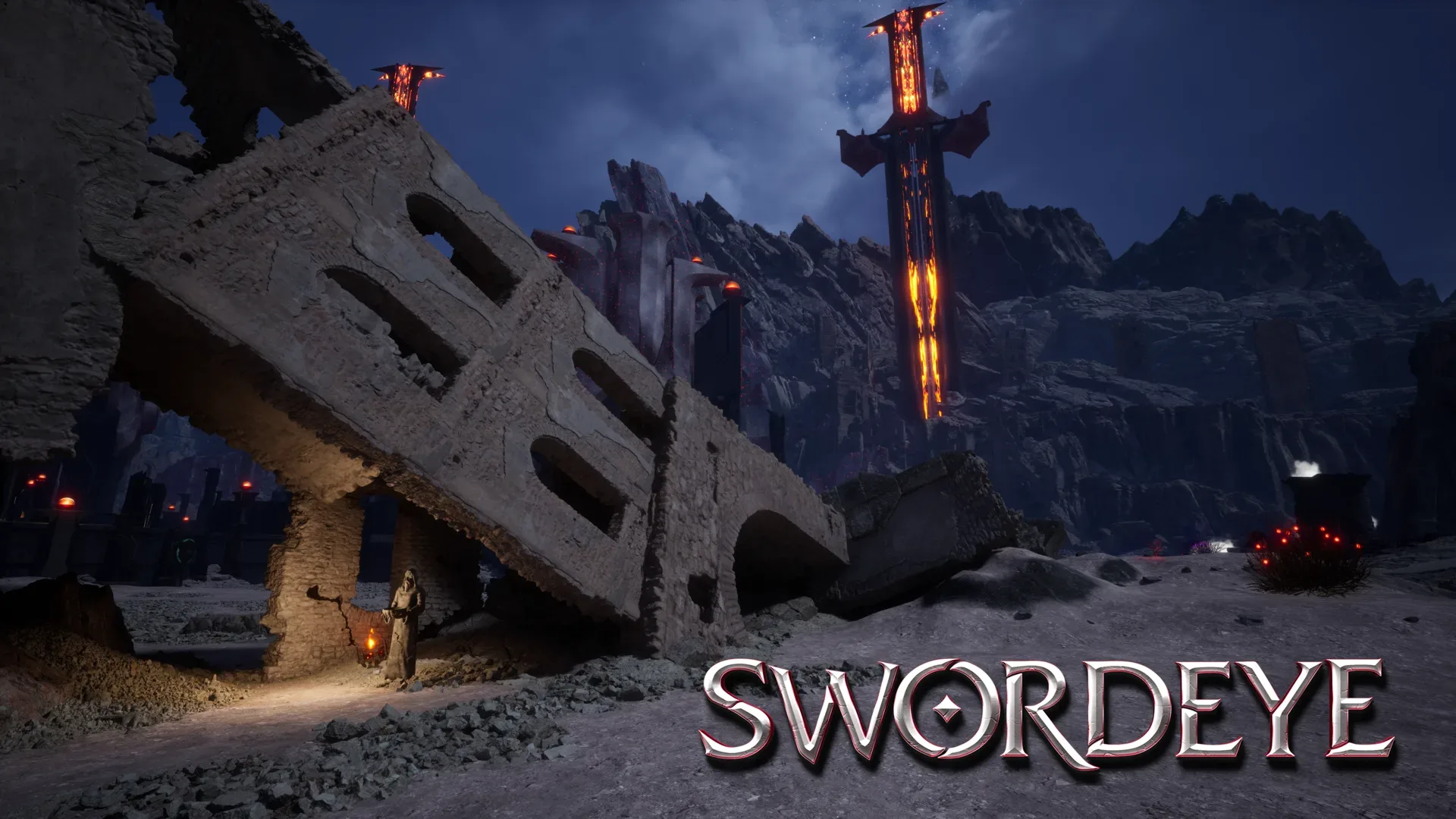
The October Steam Next Fest build is set to include several distinct spaces rather than only a single arena. Players can explore an open-world map, enter a Tier 1 dungeon area and revisit an updated Ice Cave. The combination should let the demo demonstrate both wider exploration and more concentrated dungeon pressure.
The Tier 1 label establishes this dungeon as an entry-level portion of the game’s dungeon structure, though no further details have been provided about its specific difficulty, loot table or progression requirements. The Ice Cave is identified as updated, but the nature of those changes has not been detailed. Treat both areas as opportunities to evaluate the current build rather than as a complete inventory of the planned game.
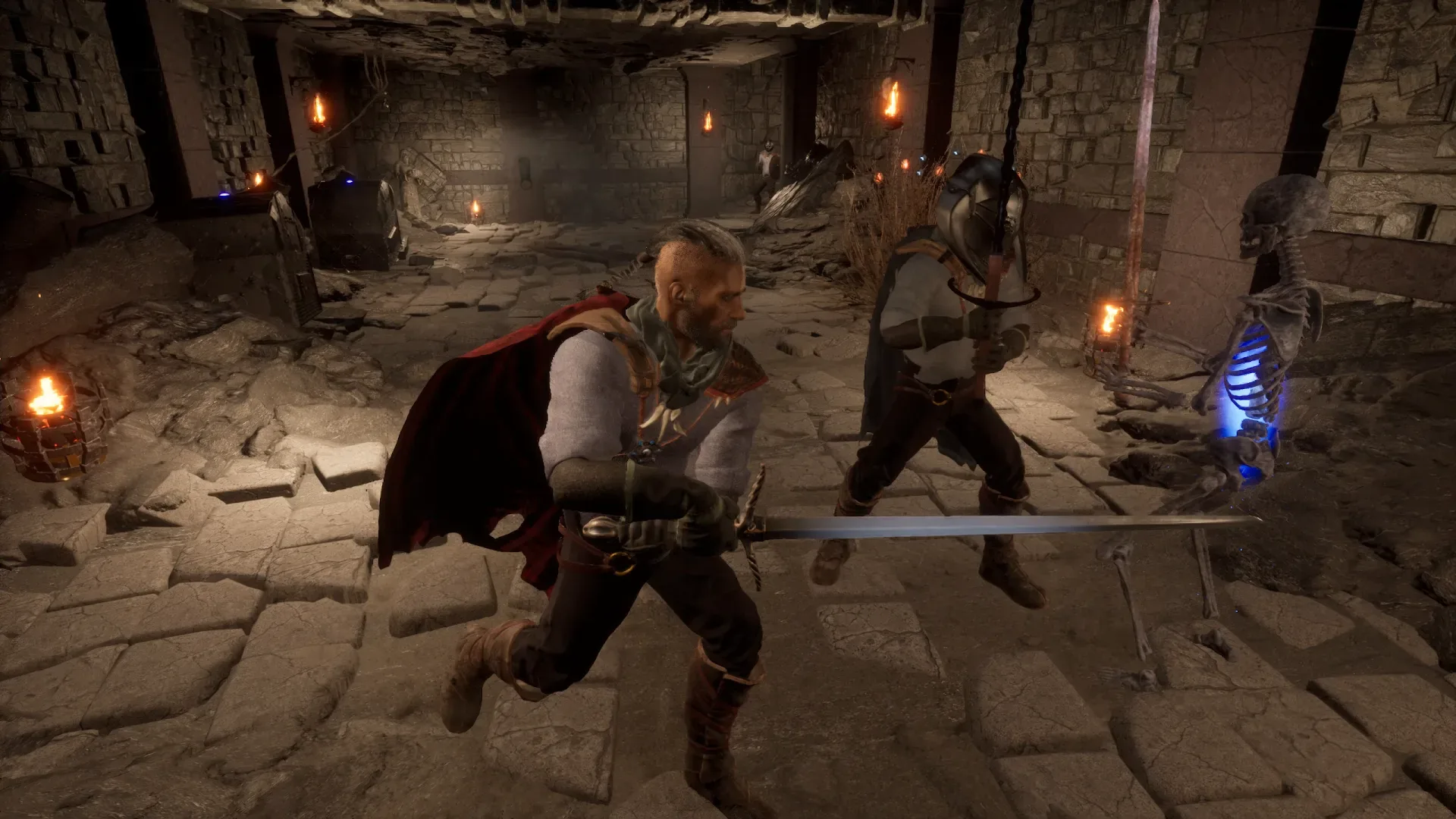
In addition to NPC combat, the demo will allow encounters with other players. That is especially relevant because Swordeye is supporting solo or group play in massive multiplayer dungeons. Solo players will need to weigh self-reliance against the risks of facing coordinated opponents, while groups will have their own challenges in communication, positioning and managing loot priorities. The game’s public description confirms both approaches, but does not establish how parties are formed or how every dungeon rule operates.
Beyond raids, Swordeye lists 1v1 tournaments and lethal duels among its modes or activities. These are potentially valuable complements to the extraction structure. A tournament or one-on-one duel can place the directional combat system under a clearer spotlight, without the additional variables of monsters, traps and an open-world route. Raids, by contrast, test whether the same combat fundamentals remain reliable when the player has competing objectives and imperfect information.
A tower of hand-crafted dungeon crawls
Swordeye’s dungeon design is also framed around a tower, with each floor described as a distinct hand-crafted dungeon crawl. Each is planned to contain a combination of enemies, trials, traps and treasure. “Hand-crafted” is a meaningful phrase here: it indicates authored dungeon spaces rather than promising that every layout will be assembled randomly.
That approach could give each floor its own combat and navigation identity, since hazards and trials can change what is safe to pursue and where players choose to fight. However, specifics such as the number of floors, enemy types, dungeon objectives and how the tower connects to the open-world map have not been provided. The current information supports the high-level structure, not a full map of its content.
Still, the tower concept fits the extraction focus neatly. Traps, monsters, treasure and competing players each create reasons to make trade-offs. A direct route may be dangerous. A fight may reveal a reward but leave a player exposed. A piece of loot may be desirable, but carrying it onward is only worthwhile if the player can survive the next encounter and successfully extract.
What to watch for during Steam Next Fest
The updated demo’s value will be in showing whether Swordeye can make its close-quarters combat readable under PvPvE pressure. Directional swordplay can be compelling when players understand why a defense succeeded or failed; it becomes harder to learn when attacks, blocks and counterattacks lack clear logic. The demo’s NPC fights and player encounters should give visitors different ways to examine that clarity.
There is also an important balance question between the game’s systems. Persistent gear, crafting and skill trees create reasons to keep returning, but the stated focus on precision combat means progress systems will need to coexist with the value of player knowledge. The supplied details do not establish the eventual balance, and a demo can only offer a snapshot. But it can reveal whether the core actions—attacking, blocking, parrying, feinting and escaping—already have a strong foundation.
Steam Next Fest demos are useful precisely because they allow games still on the road to release to put a playable slice in front of a broader audience. For players already following other PC games that use updates to refine their core systems, recent PC update news offers a reminder that public builds and post-launch support can both shape a game’s eventual direction.
For Swordeye, the immediate focus is narrower and more direct: can its updated demo make a dangerous dungeon run feel like a contest of blade work, judgment and nerve? The planned open-world area, dungeon, Ice Cave, NPC opposition and player conflict should give Steam Next Fest visitors a substantial first look at that proposition. Swordeye is listed as coming soon to Steam.