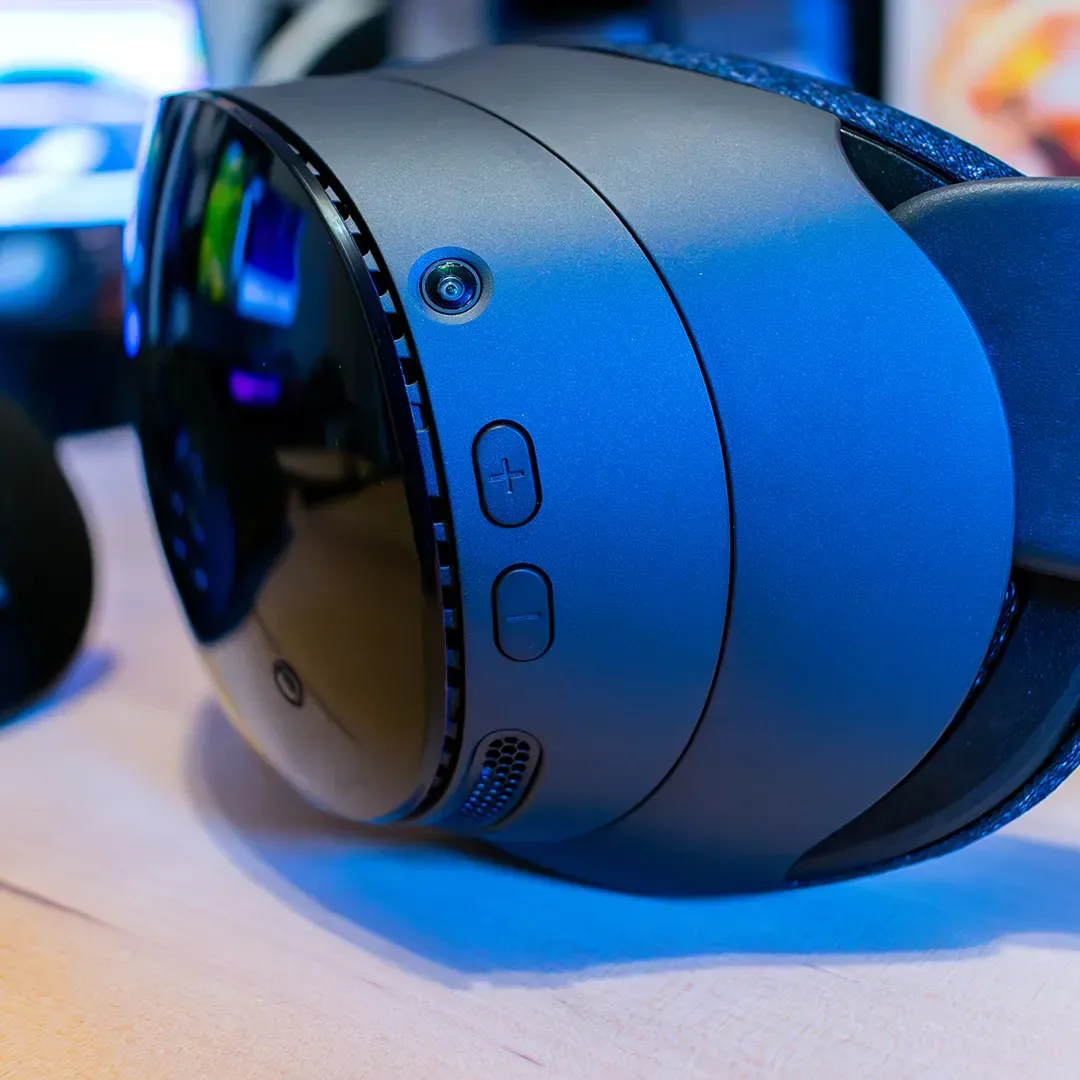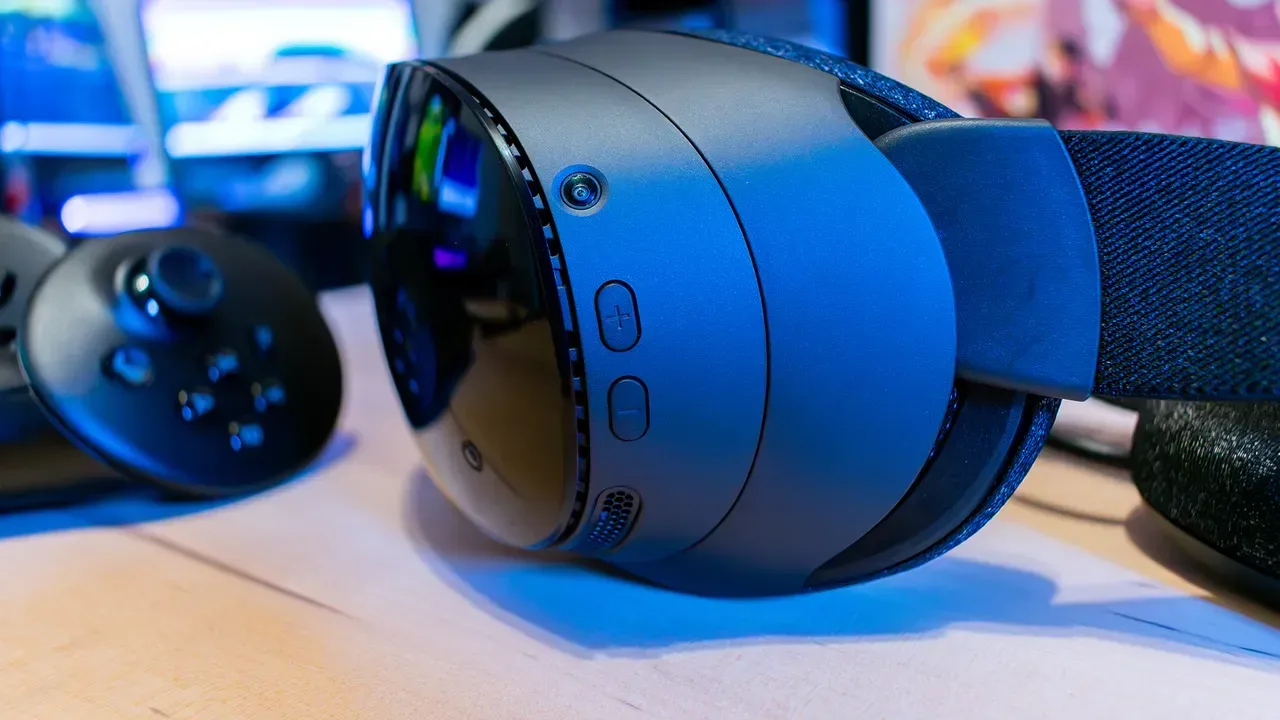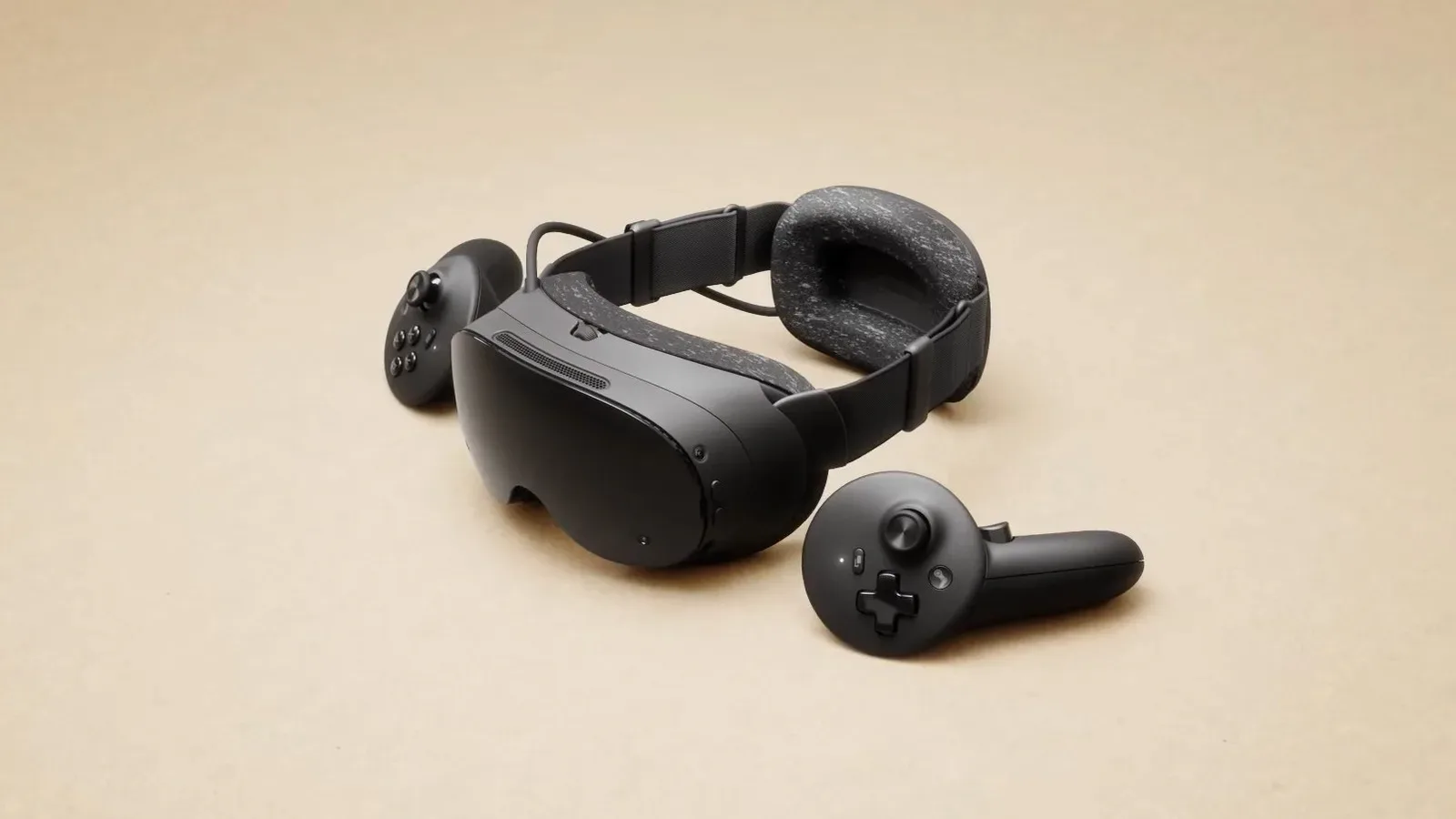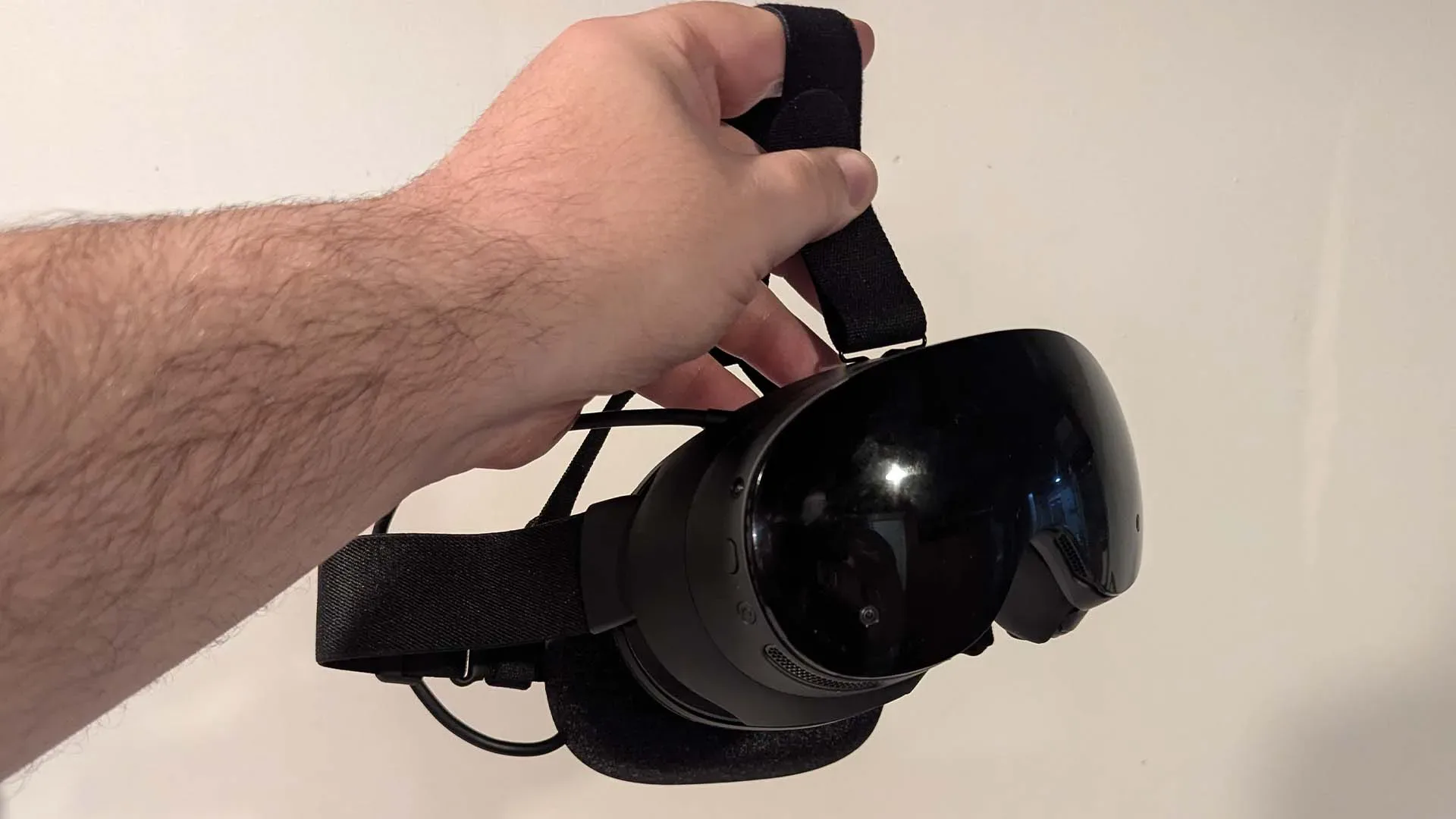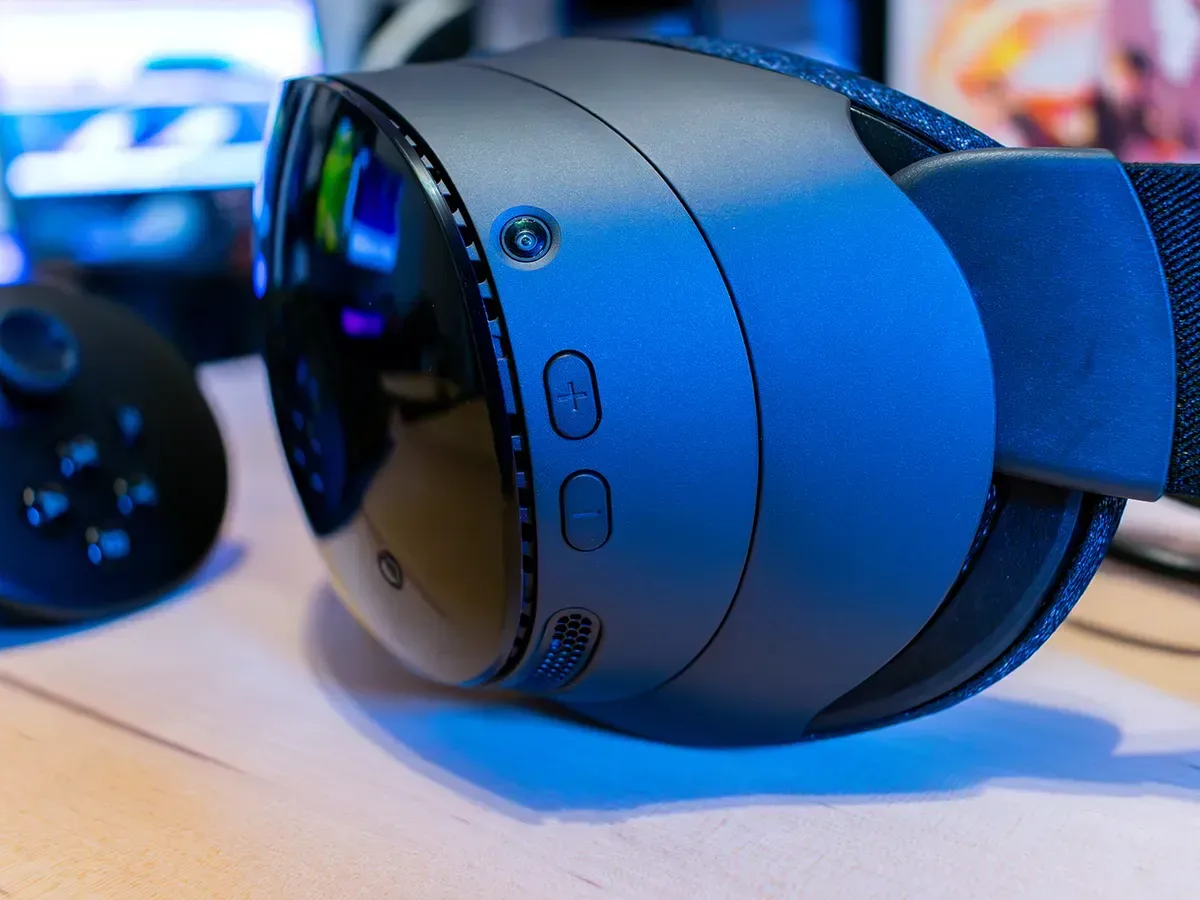
Valve’s Steam Frame has arrived with the kind of specification list that makes PCVR enthusiasts sit up straight—and a price that may make plenty of them sit right back down. The headset starts at $1,059 for its 256GB configuration, while the 1TB version comes in at $1,299. That firmly places the Frame in premium hardware territory rather than the more accessible standalone-VR lane many prospective buyers may have hoped it would occupy.
Both versions pair a Qualcomm Snapdragon 8 Gen 3 processor with 16GB of RAM. In the box, Valve includes two controllers, an eye spacer intended for glasses wearers, and a dedicated Wi-Fi 6GHz dongle built for wireless PCVR streaming. Those bundled pieces matter: PCVR without a cable is central to the Frame’s identity, and the dedicated networking hardware suggests Valve wants to reduce one of wireless VR’s most persistent annoyances—the gap between a powerful gaming PC and a headset that needs a stable, responsive stream.
The price is the headline, though. At $1,059, the entry model is considerably beyond the cost-conscious VR proposition that a direct, broad-market Meta Quest 3 challenger might have represented. Steam Frame is instead making a narrower argument: pay more for a headset tailored around streaming PC games, with a stronger suite of enthusiast-focused features than a value-oriented standalone device.
A premium PCVR pitch, not a budget standalone battle
The Steam Frame’s headline hardware separates it from less expensive VR options in several ways. It has eye tracking, 16GB of RAM, and the aforementioned dedicated wireless PC dongle. The 16GB memory total is double that of Meta’s Quest 3, while eye tracking is another capability not present on Meta’s mainstream headset. These are meaningful distinctions on a spec sheet, but they also point toward a particular buyer: someone who already has, or intends to buy, a gaming PC and sees VR as an extension of that setup.
That is a subtly different audience from someone who primarily wants to download and play self-contained VR games directly on a headset. For that person, affordability and standalone software are likely to outweigh higher-end streaming features. The Frame does use a Snapdragon 8 Gen 3 chip and includes onboard storage, with 256GB or 1TB depending on the version, but its stated design priority is PCVR streaming rather than competing solely on the merits of standalone play.
In other words, the Frame does not need to win every headset comparison to make sense. It needs to persuade PC players who care about an untethered setup, tracking technology, memory headroom, and integration with their existing gaming ecosystem. Whether that package is worth four figures will depend heavily on how much an individual player values those specific advantages.
Valve’s current hardware priorities have also been shaped by broader component realities. The company has indicated that cost pressure affecting its other hardware has been a factor here as well. That context is worth keeping in mind alongside Valve’s comments on RAM price pressure and Steam Deck 2 planning: memory pricing is not merely an abstract manufacturing concern when a new headset is arriving with 16GB of RAM and a premium bill of materials.
How Steam Frame compares on price
The Frame’s sticker price looks imposing beside mainstream standalone headsets, but the comparison shifts when the field is limited to dedicated PCVR equipment. Samsung’s Galaxy XR is priced at $1,799, while Pimax’s Crystal Light costs $899. The Pimax option is wired-only, an important caveat when the Steam Frame is explicitly selling wireless PC streaming as one of its chief features.
Related coverage includes Steam Frame Starts at $1,059 as Valve Opens VR Headset Reservations.
That does not make $1,059 inexpensive. It does, however, put Valve’s number in a more recognizable premium-PCVR range. Buyers weighing the Frame against the Galaxy XR, Pimax Crystal Light, or other specialized headsets are unlikely to assess the purchase exactly as they would a Quest 3. Wireless functionality, tracking features, fit, software preferences, PC hardware, and comfort with a cable all become part of the calculation.
- Steam Frame 256GB: $1,059
- Steam Frame 1TB: $1,299
- Processor: Qualcomm Snapdragon 8 Gen 3
- Memory: 16GB RAM
- Included accessories: two controllers, glasses eye spacer, dedicated Wi-Fi 6GHz PCVR dongle
- Samsung Galaxy XR reference price: $1,799
- Pimax Crystal Light reference price: $899, wired-only
The 1TB model’s $240 jump over the 256GB version is another decision point. Storage capacity is always useful, especially for players who expect to keep a sizable local library available, but prospective owners will need to decide whether their anticipated usage makes that premium worthwhile. The included accessories do not change between the two configurations, so storage is the principal stated distinction.
Reservations are open, but timing could be tight
Valve is using a reservation process for Steam Frame rather than simply opening unrestricted immediate purchases. Interested buyers can register for either model from now until September 17 at 10 a.m. PST. After that window closes, Valve will sort registrations into a reservation list and a waitlist.
Anyone who signs up after the September 17 cutoff will join the back of the waitlist. That makes the deadline especially important for buyers who have already settled on a model. Reserving does not erase the likelihood of waiting, but getting into the initial pool provides a better position than arriving after the sorting process has begun.
Shipping is expected to begin September 18. As reservation-list customers receive their headsets, Valve plans to contact people on the waitlist by email and move them into the reservation list. The process is designed to keep fulfillment moving as inventory becomes available rather than leaving interested buyers with no path forward.
Steam Frame reservation timeline
- Reservations for the 256GB and 1TB models are open now.
- The initial registration period ends September 17 at 10 a.m. PST.
- Valve will divide initial registrants between a reservation list and a waitlist.
- Registrations made after the cutoff go to the back of the waitlist.
- Shipping is expected to start September 18.
- Waitlisted customers will be contacted by email as they are moved into the reservation list.
Anyone thinking about the Steam Frame should prepare for a potentially extended queue. Based on the expected demand pattern around Valve’s other recent hardware, reservations may run through the end of the year and possibly into the early months of the following year. That remains an expectation rather than a guaranteed timetable, but it is a practical reason not to treat the September 17 cutoff casually.
What the price says about Valve’s VR strategy
Steam Frame’s arrival suggests Valve is willing to compete at the enthusiast end of VR rather than chase the lowest possible entry price. The company is pairing a modern mobile processor and substantial memory with eye tracking and a dedicated high-frequency wireless connection for PC streaming. It is a feature set aimed at minimizing friction for players who want their desktop gaming power in a headset without a permanent cable attached.
The trade-off is immediate and unmistakable: the product is not priced like an impulse purchase, a casual household entertainment device, or a straightforward alternative for someone whose priority is inexpensive standalone VR. A 256GB starting point above $1,000 creates a high bar, even before accounting for the gaming PC that makes the Frame’s core PCVR proposition most compelling.
Still, premium hardware is not judged only by its opening number. The Frame’s eventual reputation will depend on whether its streaming design, controllers, eye tracking, Wi-Fi 6GHz dongle, and 16GB RAM package feel coherent to the people who buy it. Valve has given that audience a clearly defined proposition. Now it has to convince them that premium wireless PCVR is worth a premium reservation.