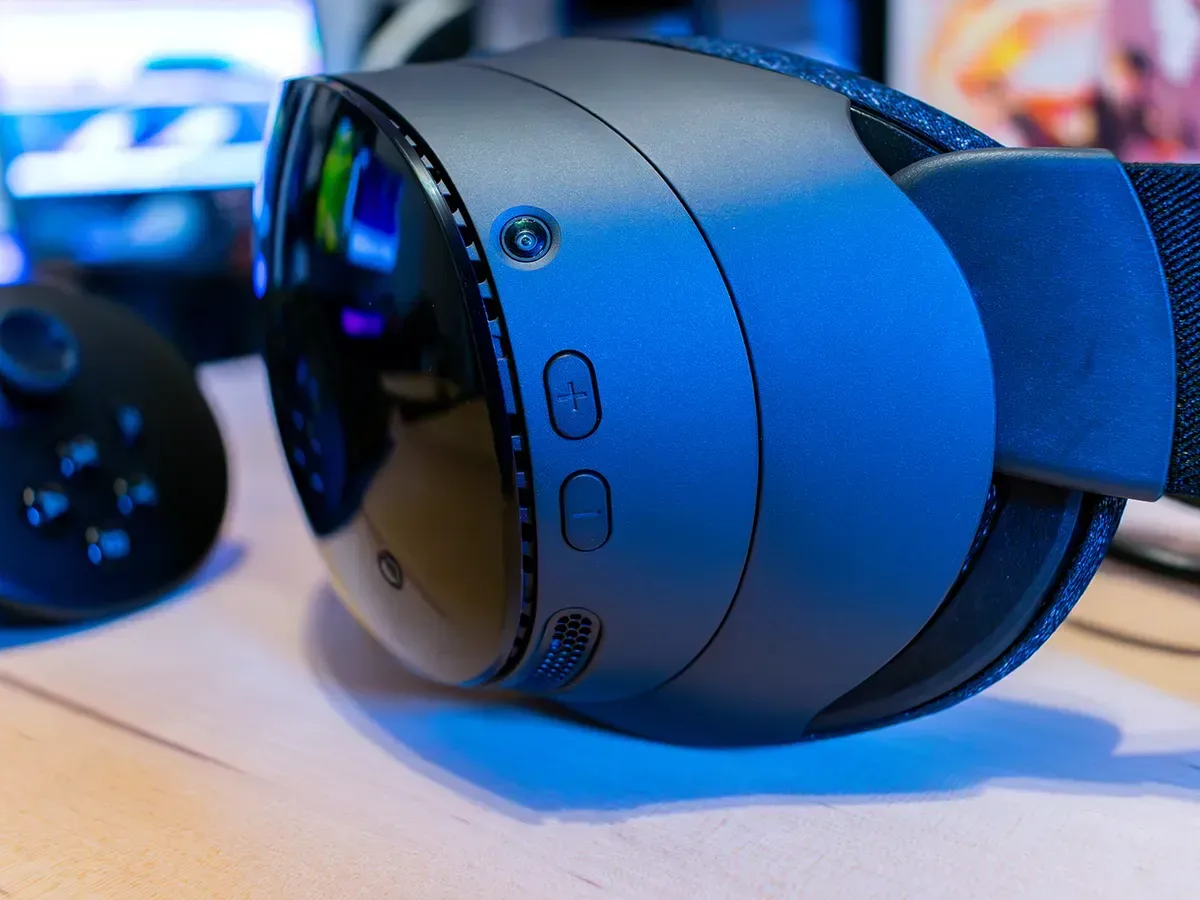
Steam Frame reservation emails are now reaching applicants, and an unwelcome side quest has appeared almost immediately: resale listings for reservations at sharply inflated prices.
Valve lists the 256GB Steam Frame kit at $1,059 and the 1TB version at $1,299. Listings spotted on eBay began around $1,700 for the lower-capacity kit and around $2,000 for the 1TB option. In other words, the asking prices add hundreds of dollars to hardware that was already positioned as a premium purchase.
At least some listings appeared to have sold. But the response has not been limited to frustrated replies and screenshots. Steam users have organized efforts to report reservation listings to eBay, while some have also tried to report accounts connected to the reservations to Valve. Reports from participants indicate that some listings were removed after being flagged.
What is being resold is a place in line
The crucial detail is that these are not ordinary listings for a retail headset sitting in someone’s home. The listings concern a reservation opportunity: a place in Valve’s purchase process for Steam Frame. That distinction matters, both for prospective buyers and for platforms assessing what a seller can actually deliver.
Valve used a randomized system rather than a simple first-come, first-served preorder rush. People with Steam accounts could choose the Steam Frame configuration they wanted, after which entries were randomized into two groups: reservations and a waitlist. Reservation emails indicate which applicants have cleared the first hurdle; they do not turn scarcity into a consumer-friendly product feature.
A reservation is an opportunity to proceed through a seller’s purchasing process. It is not automatically the same thing as a transferable physical good. That makes the resale pitch especially awkward. A buyer may be paying a substantial premium for an account-linked place in a system whose rules, eligibility and transferability are not established by the listings themselves.
For anyone who wants the headset, the practical takeaway is plain: an inflated listing should not be treated as proof that normal retail access is over. Valve’s system includes a waitlist, and the available evidence here does not establish that a third-party reservation purchase is supported, safe or necessary.
The premium is steep before resale enters the picture
Steam Frame’s listed pricing already sets a high bar. The 256GB kit is $1,059, while the 1TB model costs $1,299. The observed resale asks push the 256GB configuration roughly $641 above its listed price, and the 1TB ask roughly $701 higher. Those are asking-price comparisons, not proof that every listing will sell or that a stable secondary-market value has formed.
Related coverage includes Steam Frame Reservation Scalping Appears Online as Community Pushes Back.
Still, they illustrate why community members are objecting so strongly. Buyers considering a headset at this level are weighing the device itself, storage capacity and platform against a major extra payment that does not improve the actual hardware.
The product is described as offering an open platform and wireless PCVR. PCVR means virtual reality that is used with a personal computer, rather than being confined to a closed standalone-device ecosystem. An open platform can be a meaningful attraction to players who value flexibility, but it does not make a reservation mark-up any more appealing.
There is also a hardware-value question in the discussion. The available information points to the continuing RAM shortage as a factor in the headset’s high baseline price, while noting that Steam Frame does not use OLED optics. OLED is a display technology often discussed in premium-screen comparisons because each pixel produces its own light. Whether that omission is a deal-breaker will depend on individual priorities, but it underlines a broader point: buyers should evaluate Valve’s listed package on its own merits before even contemplating a resale surcharge.
A lottery can reduce the rush without ending resale attempts
Valve’s randomized reservation approach is a direct attempt to avoid a traditional online launch race, where faster connections, automation or sheer luck in refreshing a page can dominate access. Randomization changes the mechanism: applicants enter first, then the company selects reservations and waitlist placements from that pool.
That can make access less dependent on who reaches a checkout page in the first seconds. It can also make it harder for a straightforward first-come rush to become a contest of speed. Valve applied the same broad anti-scalping idea to Steam Machine and Steam Frame.
But a lottery is not an absolute barrier. It can limit the benefit of being quickest without eliminating the incentive for participants to seek profitable allocations. The current listings show the gap between reducing an opportunity and removing it entirely. If demand outstrips the immediately available supply, someone may still try to sell their position to another buyer.
That does not mean the system failed at its narrower job. There is no supplied number for how many reservations were issued, how many listings appeared or how much worse scalping might have been under a conventional preorder. It does mean that the existence of a lottery should not be mistaken for a guarantee that no secondary market will emerge.
Community reporting has become the immediate countermeasure
The most visible response is coordinated reporting. Users on the Steam subreddit circulated instructions for flagging listings, and one participant said they received a stream of emails confirming reported content had been removed. That is evidence of action on individual reports, not confirmation that every listing has been removed or that the problem is finished.
Some users have gone further by looking for Steam usernames included in listings and reporting those details to Valve. One proposed method involves asking a seller for the Steam ID connected to a reservation, ostensibly to check its VAC or ban status, then reporting the information to Valve if it is provided. VAC is Valve’s anti-cheat enforcement system; in this context, the suggested check is being used as a way to request an account identifier tied to the claimed reservation.
There is a practical caution worth emphasizing: buyers should not assume that an account name, a claimed status check or a message from a seller proves that a reservation can be transferred or honored. Nor should community members harass sellers or attempt to access accounts. Reporting tools and platform processes exist for a reason; they create a record that the marketplace and Valve can assess under their own rules.
The encouraging part is that players are not treating inflated listings as an unavoidable tax on enthusiasm. Reporting appears to be having some effect, and the discussion has focused attention on the difference between Valve’s listed prices and opportunistic resale asks.
What prospective Steam Frame buyers can do now
- Compare every offer with Valve’s listed price. The baseline is $1,059 for 256GB and $1,299 for 1TB, before any reseller adds a premium.
- Recognize the difference between hardware and a reservation. A listing tied to a place in line is not the same proposition as buying a boxed retail headset.
- Use marketplace reporting channels for suspect listings. Reports have apparently led to removals in at least some cases.
- Keep claims in proportion to the evidence. A listing that looks convincing does not, by itself, establish transferability, legitimacy or delivery.
- Be patient with the official process. The reservation system has both selected reservations and a waitlist, so an initial waitlist result is not the same as a final verdict on access.
The Steam Frame situation is an early reminder that scarcity creates two competing instincts: some people try to monetize it, while others try to stop them. Valve’s lottery-based reservation process may have prevented a pure checkout-speed showdown, but it has not stopped people from trying to sell access at a large premium.
For now, the useful signal is not the eye-catching $2,000 listing. It is the contrast between those asks and Valve’s official prices, plus the evidence that reports can result in removals. Buyers interested in Steam Frame are best served by keeping that distinction front and center—and by following developments around Valve’s PC hardware with the same skepticism they might bring to any rare drop. For more Valve context, see this look at a Valve veteran’s account of an early Portal design discussion.