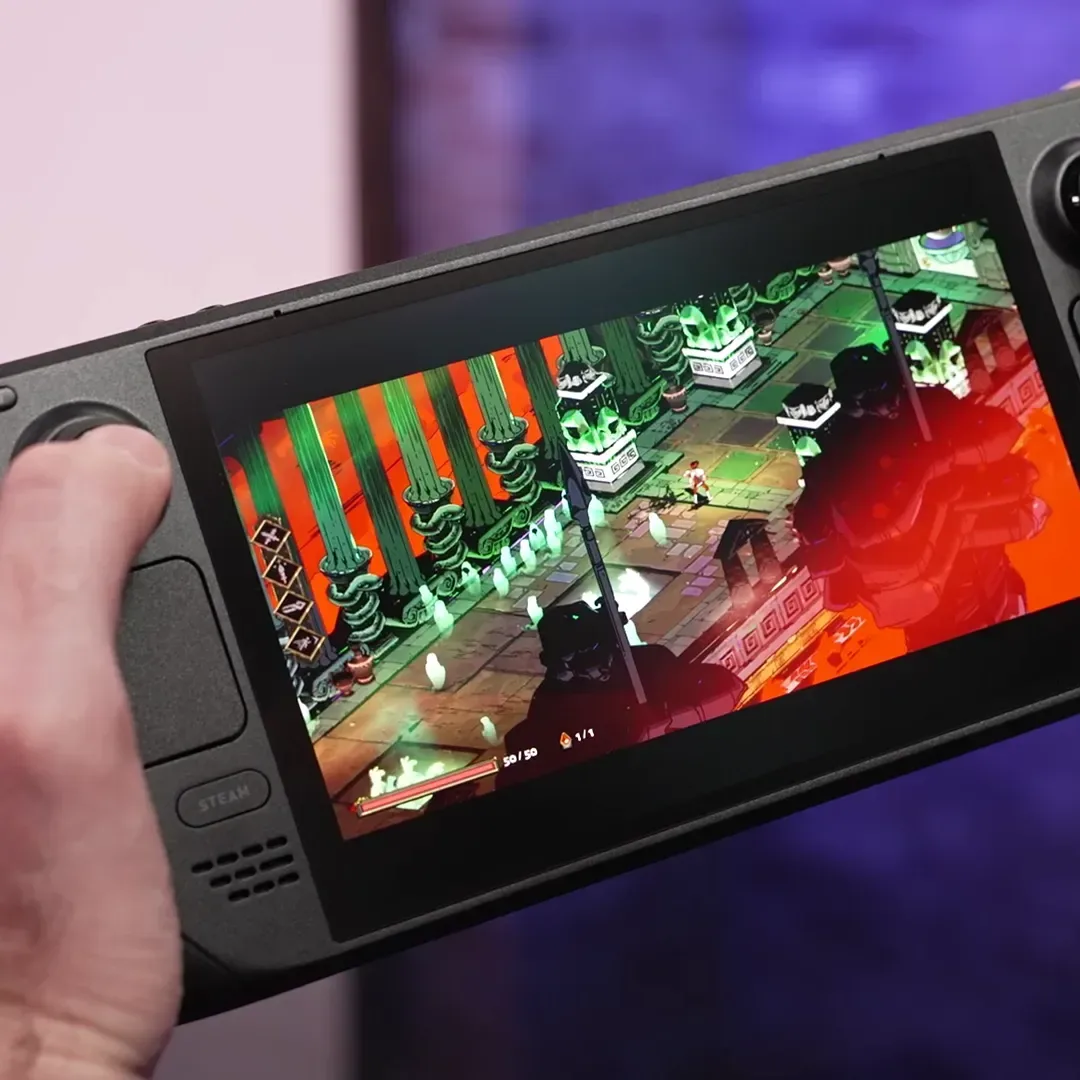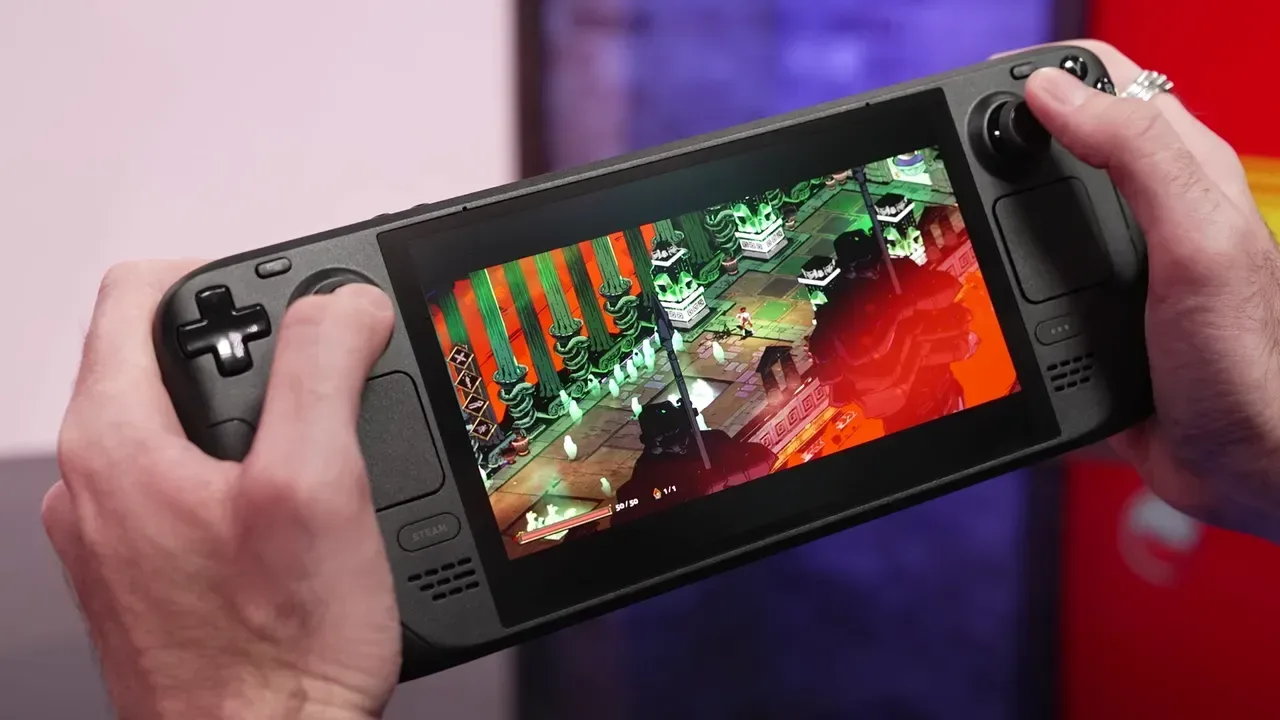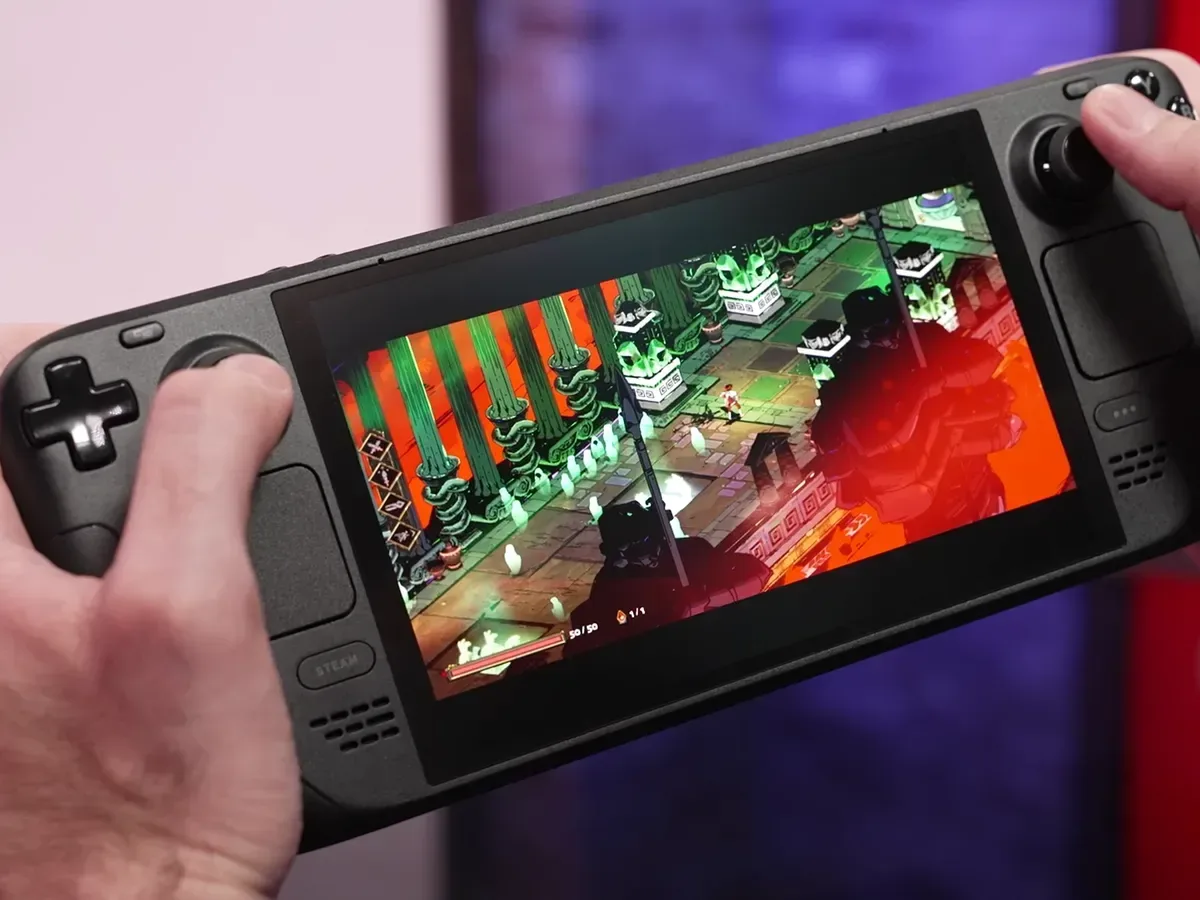
The Steam Deck’s latest apparent job is a little more ambitious than clearing a roguelike run during a train journey: helping engineers test a prototype ExoMars rover.
In footage from Airbus’ UK work on the rover, a senior engineer demonstrates prototypes in a simulated Mars environment. One rover is initially given a simple forward instruction through a laptop. Later, a different rover is driven in real time with a Steam Deck using an unspecified custom application. The handheld’s integrated controls make the setup look strikingly familiar to anyone used to steering a vehicle in a game—though this vehicle is designed for terrain rather less forgiving than a virtual racetrack.
That does not mean the Steam Deck is set to become the control system for a rover operating on Mars. The demonstration concerns local testing. The intended rover operation is autonomous, using mounted 3D cameras, because the enormous distance between Earth and Mars makes immediate manual input impractical. What it does show is that a gaming handheld can be useful as an on-site interface while engineers develop, evaluate, and operate a real robotic platform.
What the Steam Deck is doing—and what remains unknown
The clearest confirmed detail is simple: the Steam Deck was running a custom program that enabled real-time control of a prototype rover. The video does not identify the software, the connection method, the underlying robotics stack, or whether the handheld was handling anything beyond input and display duties. Those gaps matter.
It would be easy to leap from “a Steam Deck drove a rover” to “the Steam Deck is a space-grade rover computer.” The available evidence does not support that. A handheld can serve as a human-machine interface—the device through which an operator sees information and sends commands—without being the rover’s main computer or the place where autonomous navigation decisions are calculated.
That distinction is useful. A rover prototype can have its own onboard systems for locomotion, cameras, sensors, and navigation while a separate portable device provides an engineer with a convenient controller. In the demonstration, the Deck’s value appears to be exactly that combination of familiar physical inputs and a compact screen, packed into a portable general-purpose computer.
A few terms behind the demo
- Autonomous operation: a machine performs tasks without needing an operator to issue each movement command as it happens. Here, mounted 3D cameras are intended to support that capability.
- 3D cameras: cameras that provide depth-related environmental information rather than only a flat image. For a rover, this can help a system interpret terrain and obstacles.
- Local control: operating equipment nearby, rather than attempting to command it across the Earth-Mars distance.
- Prototype: an early or developmental version used for testing. A prototype demo is evidence of a working test arrangement, not automatically a declaration of the final mission configuration.
In other words, the memorable part of the clip is not that a consumer gaming product has secretly replaced specialised rover engineering. It is that a readily available, adaptable PC-like device can become a useful part of an engineering workflow when paired with the right custom software.
Why a game controller makes practical sense
There is a clear logic to using a handheld with built-in controls for local rover work. Driving a mobile robot calls for directional input, speed control, and rapid operator responses. A laptop can provide a strong development environment and a larger display, but it generally needs a separate controller or a less direct keyboard-based control scheme for vehicle movement. The Steam Deck arrives with sticks, buttons, triggers, trackpads, a screen, and computing hardware in one unit.
Related coverage includes Steam Deck Helps Engineers Test ExoMars Rover Prototypes.
That is not an argument that every robotics team should buy gaming handhelds. Engineering needs vary, and the video leaves significant technical questions unanswered. But the form factor has obvious advantages in a test environment: it is portable, self-contained, and designed around a control layout many operators already understand. The basic experience is also legible at a glance. Someone watching can immediately see which human actions are being translated into a rover’s movement, rather than having to interpret a keyboard command line or a rack of specialist equipment.
There is precedent for the broader idea. Steam Deck hardware has previously been spotted in use controlling droids at Disney’s Galaxy’s Edge. That does not establish that the same software or technical design is involved here; it does establish that robotics operators have found a use for the device’s blend of computing and physical controls in more than one setting.
The bigger story is openness, not a novelty controller
The rover appearance is a neat example of what happens when gaming hardware is not confined to gaming. Valve’s devices run Linux and do not prevent owners from installing other programs or even different operating systems. That makes the Steam Deck more than a closed appliance dedicated solely to a storefront and a fixed library of approved applications.
For an engineer or hobbyist, that openness means a handheld can potentially be treated as a small computer with an unusually complete input layout. The operating system and software environment can be adjusted to suit a job. A team can develop a custom tool rather than waiting for a console maker to certify an application that was never part of its intended entertainment ecosystem.
That same philosophy is relevant to the Steam Machine and Steam Frame, which are also described as Linux-based hardware with room for users to install other software or operating systems. The immediate proof point is the Deck and the rover test; any use of the other devices in science or robotics remains a possibility rather than a demonstrated fact in this case.
Still, it is a reasonable area to watch. The Steam Frame’s motion-tracking capabilities could be interesting to developers building spatial interfaces, visualisation tools, or control systems. But “could” is doing important work there. No specific scientific or industrial Steam Frame use is established by the rover demonstration, and treating speculation as a product feature would miss the point.
Good PC hardware can cross categories
The underlying principle is less strange than the image of a rover being piloted by a gaming handheld suggests. Strong general-purpose hardware often travels between fields because the fundamentals overlap: processing capability, graphics and display output, portable power, input devices, and software flexibility. A machine that can render games, read controls with low delay, and run a broad software stack may also be useful for visualising data, commanding a robot locally, or prototyping a bespoke interface.
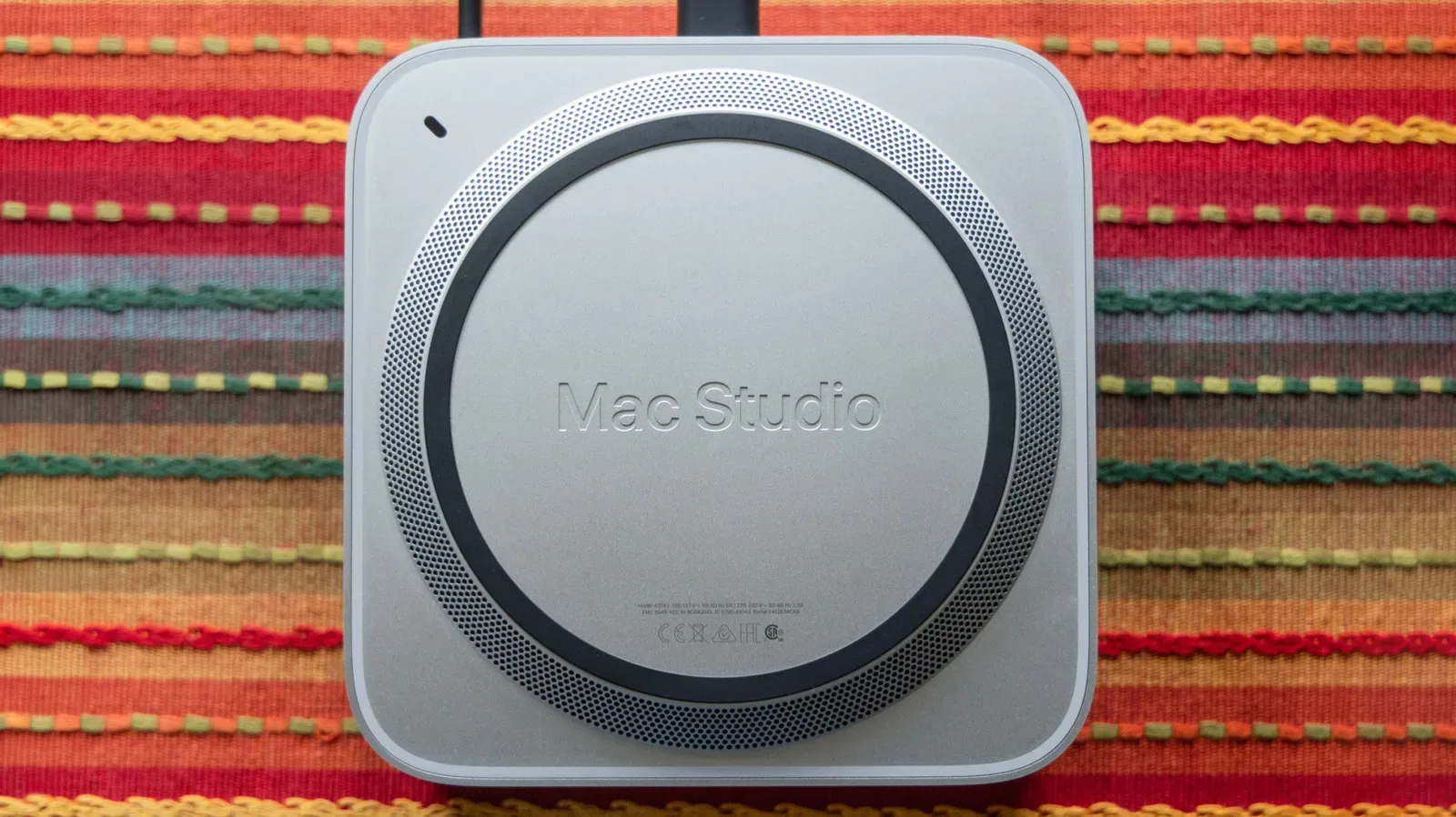
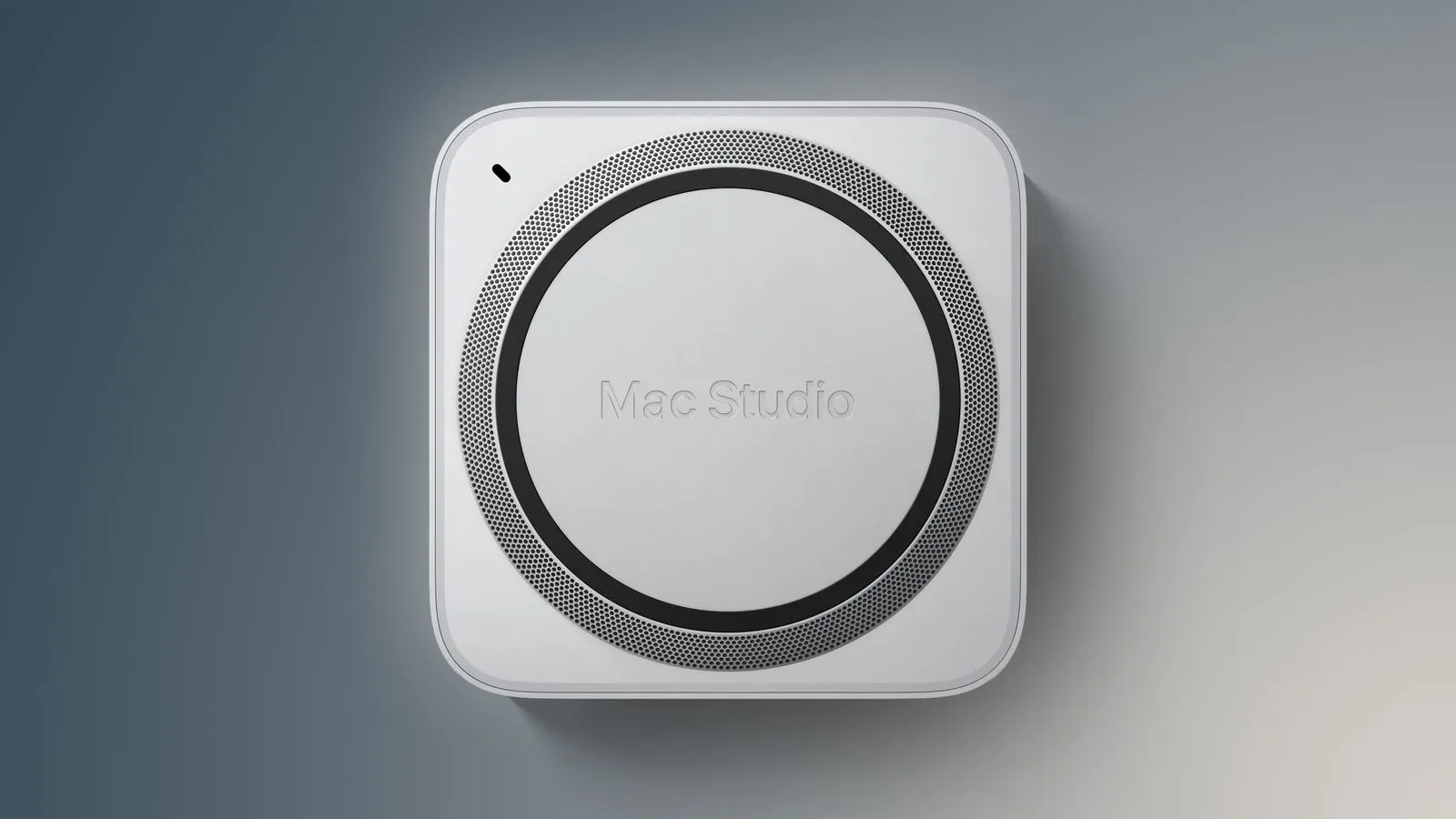
That versatility is closely related to the wider PC-hardware conversation around capability, price, and who really benefits from higher-end systems. For another example of how those trade-offs shape a purchase, see our look at the Apple M5 Mac Studio’s cost and intended audience.
The Steam Deck case also offers a useful corrective to the idea that gaming hardware has value only when it sells games. A closed system can be excellent at its narrowly designed job, but a more open machine can gain a second life in applications its original maker may never have expected. That flexibility may help explain why a device designed around a game library can appear in robotics labs and themed entertainment operations.
Not every cool demo changes the mission
There are sensible limits to the takeaway. Nothing in the available material says Airbus selected the Steam Deck as a permanent standard, that it will travel to Mars, or that it is essential to ExoMars rover development. The custom software is unidentified, and the engineering division of labour between handheld, local computer, rover, cameras, and other systems is not described.
Those omissions should not diminish what is genuinely interesting: the test is a concrete demonstration of a consumer-oriented device being pressed into service as a local control interface for serious robotics development. It is both a fun image and a practical reminder that hardware categories are often less fixed than their marketing suggests.
For players, the story is not a reason to expect every Steam Deck to become a planetary exploration rig. It is a reminder of what makes the platform unusually adaptable. For engineers, it is a small but visible example of an off-the-shelf device offering familiar controls and a flexible software environment. And for the rover, it is presumably reassuring to learn that its early driving lessons happened before anyone tried to send it several planets away.