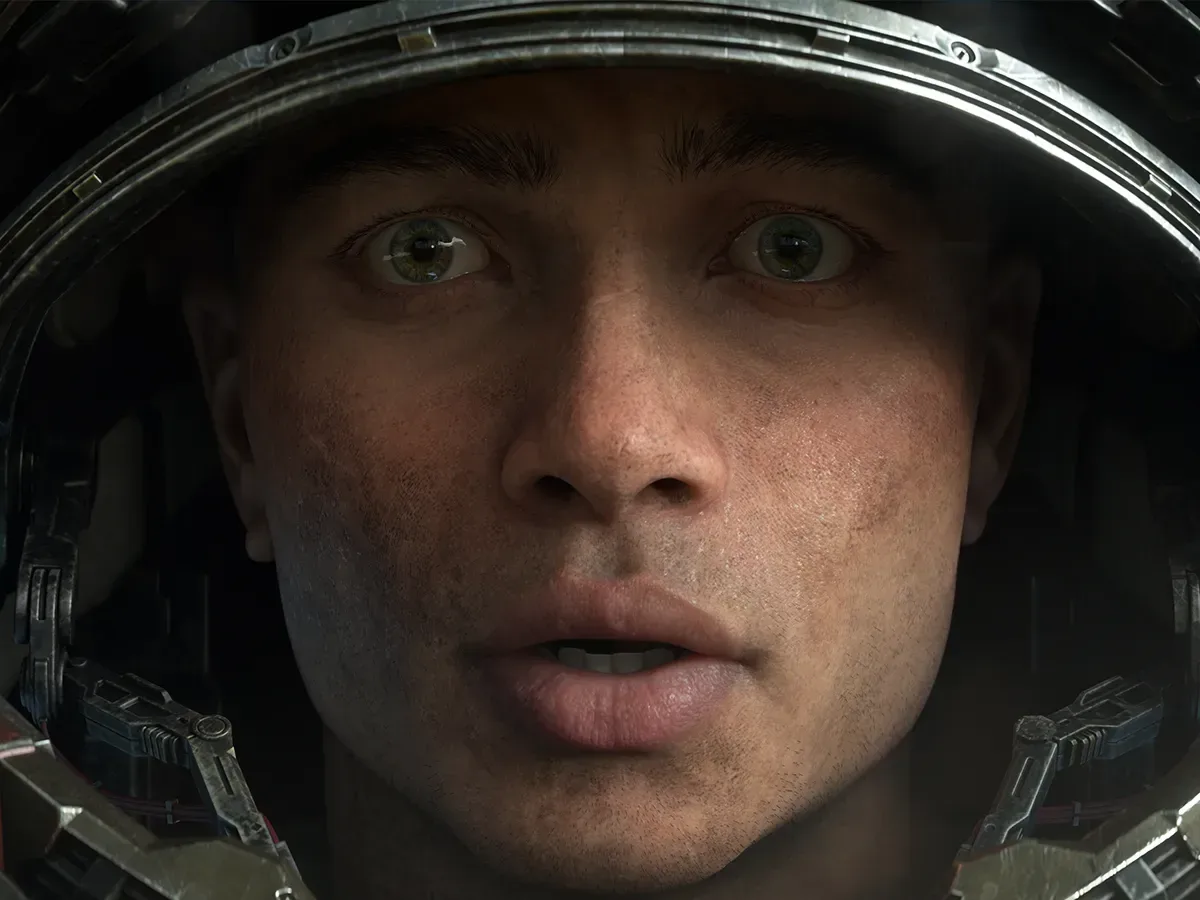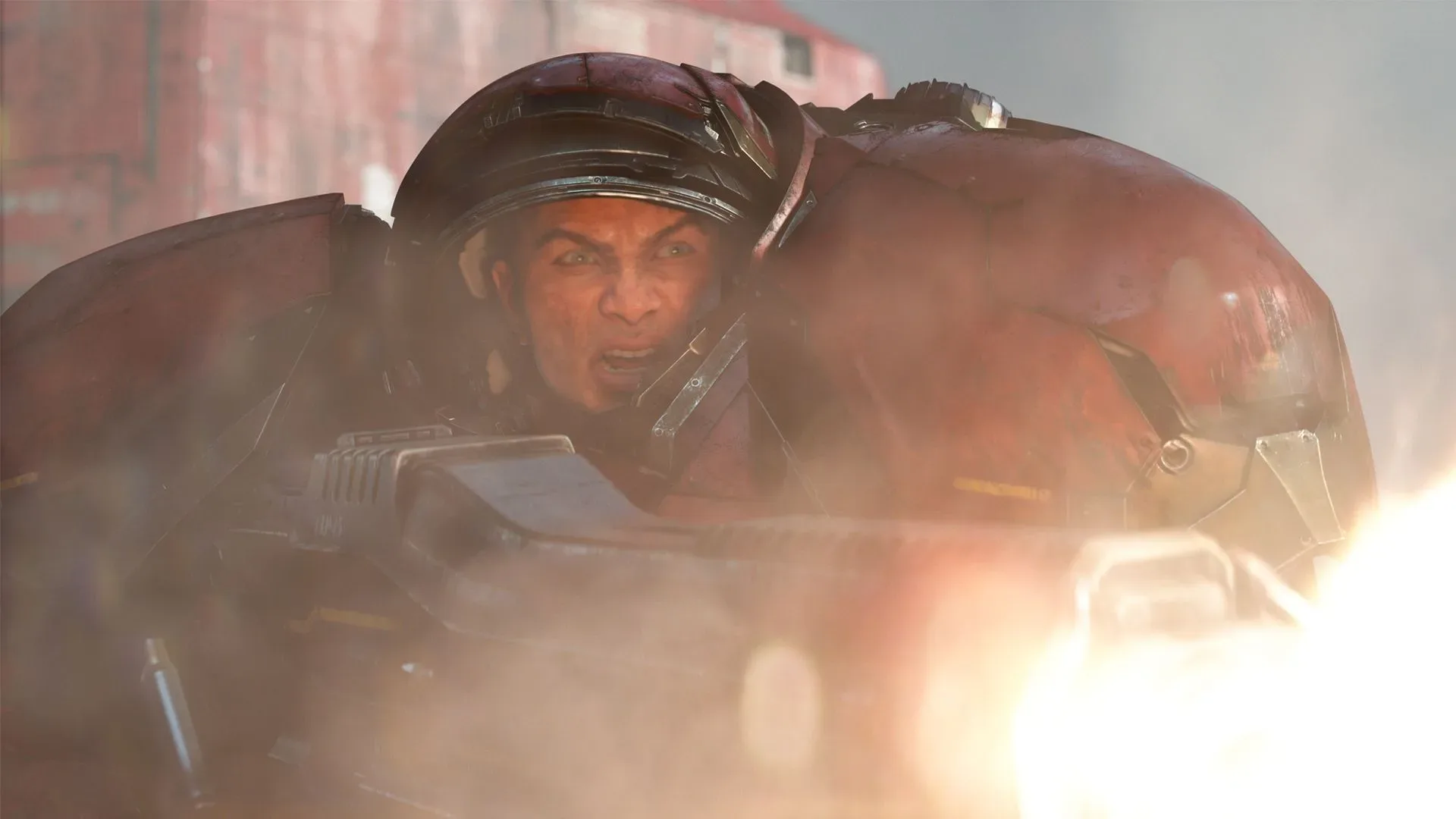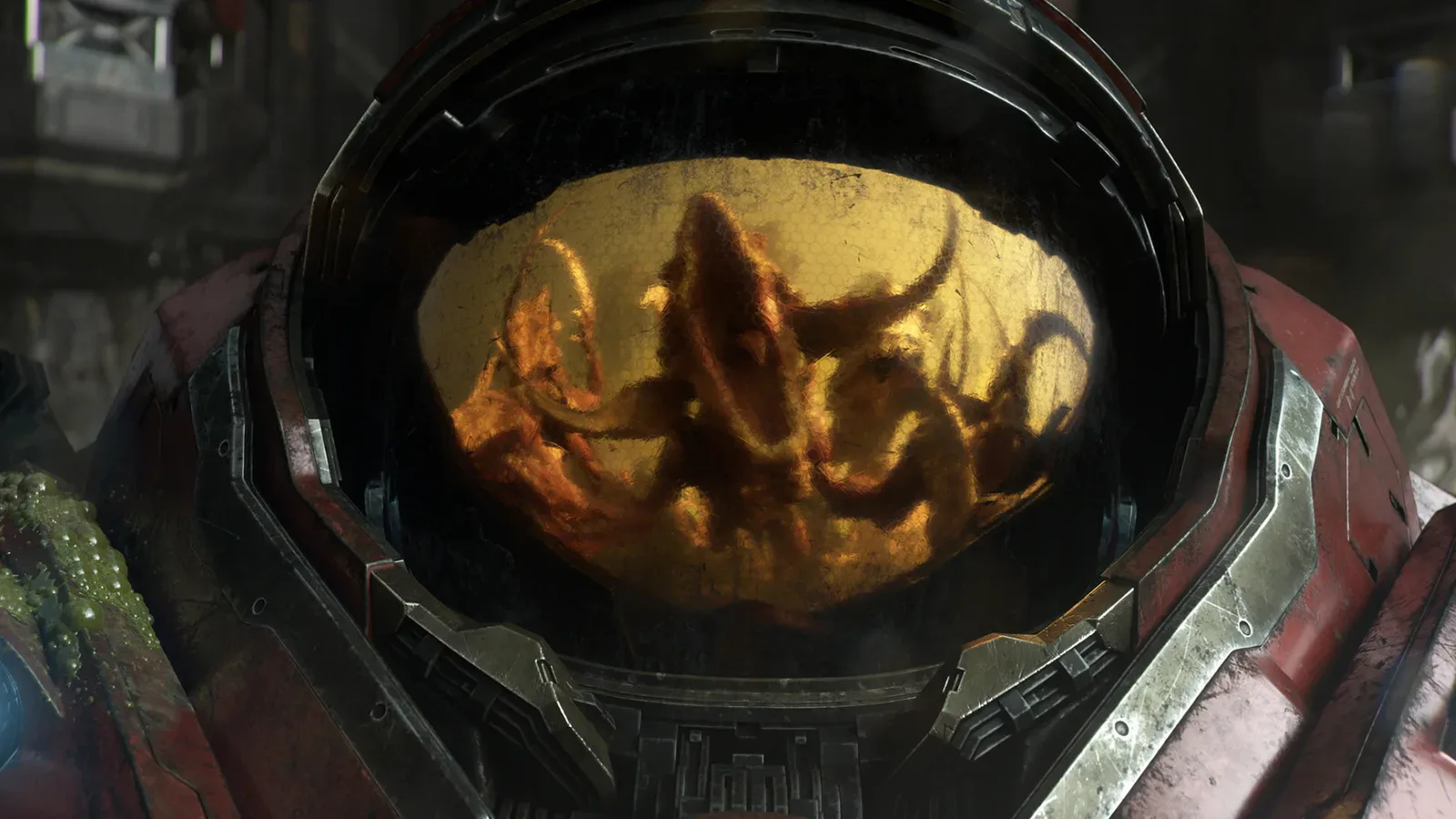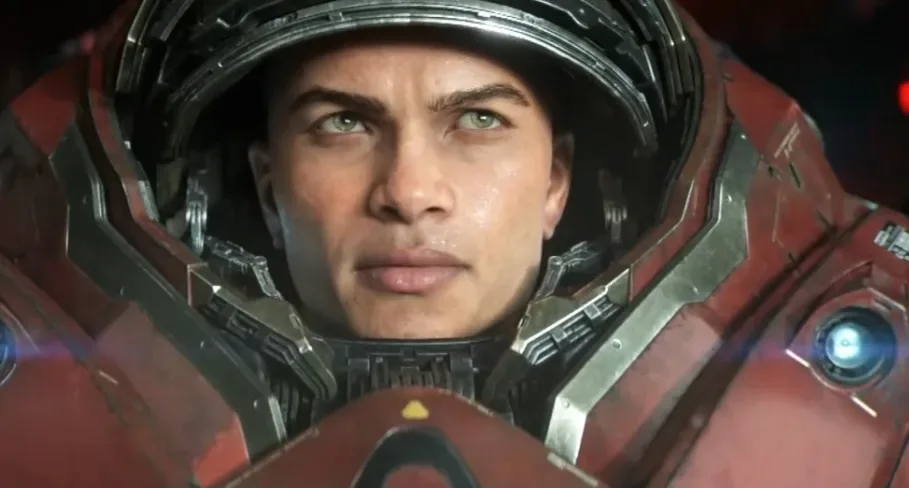
BlizzCon 2026 delivered a major return for StarCraft in a format the series has not traditionally occupied: a shooter. The newly announced project is still a long way from release, with Blizzard targeting 2030, and the first cinematic tease necessarily leaves enormous questions unanswered. Yet comments from StarCraft franchise lead Dan Hay offer a useful early outline of the kind of science-fiction adventure the team hopes to build.
The broad pitch combines a Terran Marine protagonist, an apparent Zerg threat, an open world built for discovery, and a conventional campaign with a defined arc. The more unexpected creative touchstone, however, is Deadwood. Hay has suggested an aspiration for a close-knit, contentious group of people trying to endure in a larger, hostile universe—an idea he summarized as “Deadwood in space.”
It is a striking image for a property often associated with colossal alien armies, capital ships, psychic warfare, and real-time strategy battles measured in bases and unit counts. A StarCraft shooter can certainly make room for those spectacular sights. But the early framing indicates that Blizzard also wants room for smaller frictions: people who know one another, do not necessarily like one another, and nevertheless need one another to survive.
A Terran Marine story with a clear arc
Hay has confirmed that the game centers on the experience of a Terran Marine and described its story as a single character’s journey from humble beginnings toward heroism. He also said the narrative will have a beginning, middle, and end. That wording matters, because it points toward a focused, authored campaign rather than a purely repeatable sandbox without a fixed dramatic route.
StarCraft has always had plenty of potential for that perspective. In strategy games, Marines are foundational battlefield units: recognizable, heavily armored, and often deployed in great numbers. Putting one at the center of a shooter creates a different scale. Instead of treating the Marine as one icon among a vast force, the game can explore what it means to inhabit that armor while confronting a universe filled with enemies and powers much larger than one soldier.
The teaser’s tone leaned toward military science fiction, while the reported Zerg-facing premise immediately supplies an alien danger suited to a shooter. Still, the available details do not establish the full scope of the story, its supporting cast, its planets, or how the other StarCraft factions might figure into the campaign. The Terran Marine and Zerg elements are the firmest pieces of the early setup; much else remains intentionally open.
That uncertainty is worth preserving. A 2030 target leaves years for individual systems, story details, and even terminology to evolve. The project has been revealed early, but it has not been presented as a finished design document with every feature locked into place.
“Deadwood in space” is about people, not saloons
The Deadwood comparison should not be read as a literal promise of frontier saloons transplanted onto a Terran colony. Hay’s point was about the series’ interpersonal tension and its ability to make a comparatively contained set of characters feel like part of a much larger world. The people are interconnected, they clash, and survival creates a practical dependence despite their differences.
For StarCraft, that could be a valuable counterweight to the setting’s giant-scale warfare. The franchise already has empires, militarized corporations, colonies, alien swarms, and worlds caught in the crossfire. A shooter need not abandon the scale to find its emotional anchor. Instead, a smaller cast could turn the universe from a backdrop into a place whose pressures land directly on the people involved.
It also suggests a potential tonal range beyond uninterrupted combat. Hay has discussed both large and small moments, which leaves space for a campaign that moves between battlefield danger, exploration, character encounters, and the consequences of living in a contested region of space. Whether the final game achieves that blend remains a question for the years ahead, but the stated ambition is more textured than simply “StarCraft, now with guns.”
For a closer look at the game’s scale-driven ambitions, including the desire to make StarCraft’s creatures feel imposing, see StarCraft’s 2030 open-world shooter and its focus on enormous Hydralisks.
An open world that pushes back
Blizzard has been direct that the shooter is planned as an open-world game. Hay’s description emphasizes leaving into the environment, choosing directions, finding things, and encountering points of interest that may recall places or ideas from earlier StarCraft games. That is the exploratory side of the proposal.
The other side is resistance. Hay has said the game’s factions are disruptive and that the world is intended to fight back against the player. In practical terms, that paints a picture of a setting that is not meant to sit passively while the Marine wanders through it. Exactly how it will react has not been explained.
It would be premature to convert that high-level language into a checklist of mechanics. There has been no confirmation of outpost capture, faction reputation, territory control, dynamic invasions, co-op, procedural events, or any particular activity structure. Those are familiar ways other open-world games have expressed a reactive world, but they are not commitments made for this StarCraft project.
What is clear is the intended feeling: exploration should lead to discoveries, and the forces inhabiting the world should create pressure rather than merely wait to be found. If Blizzard can make that loop feel appropriately StarCraft-like, the open-world structure could distinguish the project from a straightforward mission-to-mission military shooter.
Third-person and gear talk remain hints, not promises
Hay also alluded to a third-person viewpoint while discussing the appeal of playing a towering, extremely heavy armored Marine and actually seeing the suit. That is a strong signal about the perspective, but it is not a full formal specification. Blizzard has not laid out camera options, controls, combat systems, or how movement will work in the final game.
Similarly, comments around equipment point toward some form of gear swapping and character progression. There may be upgrades to pursue as the protagonist develops, which would fit the stated rise-from-nobody narrative. But the team has not confirmed a conventional loot-shooter structure, the kinds of gear involved, rarity tiers, crafting, inventory management, or any other familiar genre framework.
The distinction is important because “upgrades” can mean almost anything in a game this far from launch. It may describe narrative-gated enhancements, modular armor components, weapons, abilities, a broader build system, or something that does not map neatly onto current shooter labels. The most responsible reading is that progression appears likely, while its form is unknown.
Why reveal a game four years early?
A 2030 date is unusually distant for a project receiving a cinematic reveal, and Hay has addressed that gap as a matter of focus as well as fan communication. He described a target date as a way to give the development team a shared destination—something that can concentrate effort and provide a frame of accountability.
There is also a community element. StarCraft has been waiting a long time for a major new game announcement, and Hay characterized the opportunity to work on the franchise as extraordinarily fortunate. The reveal, in that light, is not a promise that every unanswered question has an answer ready for public consumption. It is an early signal that a new chapter is in development and that Blizzard believes it is time to show a small piece of it.
That framing fits the cautious nature of the details so far. The team has offered a release year, genre direction, setting elements, a central-character arc, and a philosophy for the open world. It has not announced platforms, detailed modes, a gameplay demonstration, or a release date beyond 2030.
For now, the new StarCraft shooter is best understood as an ambitious outline: one Marine’s climb toward hero status, exploration across an open world that is meant to resist the player, and a character-driven survival dynamic set against the franchise’s vast interstellar conflict. The “Deadwood in space” comparison is not a feature list, but it may be the clearest indication yet that Blizzard wants this return to StarCraft to be as concerned with the people inside the armor as the monsters outside it.