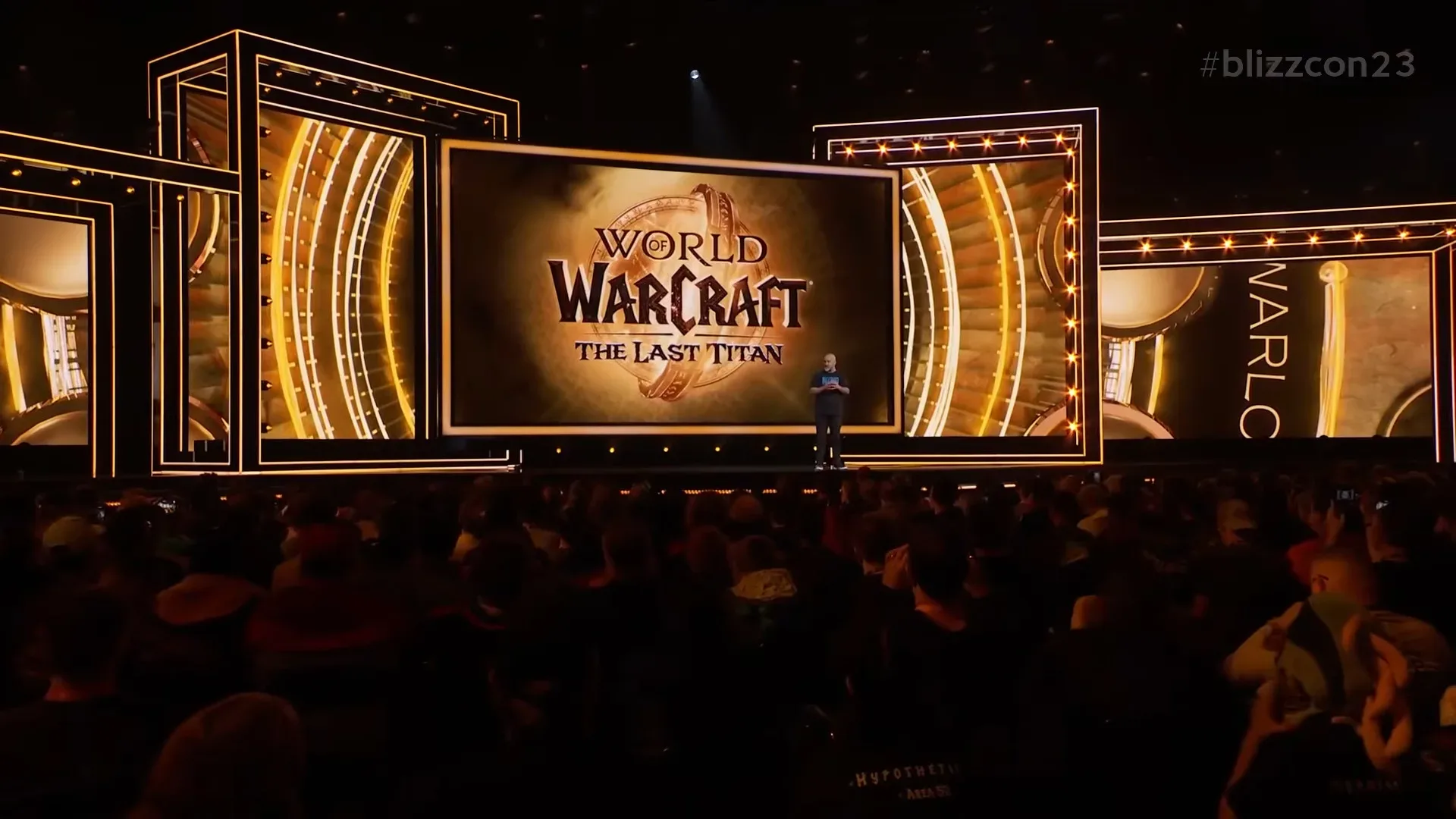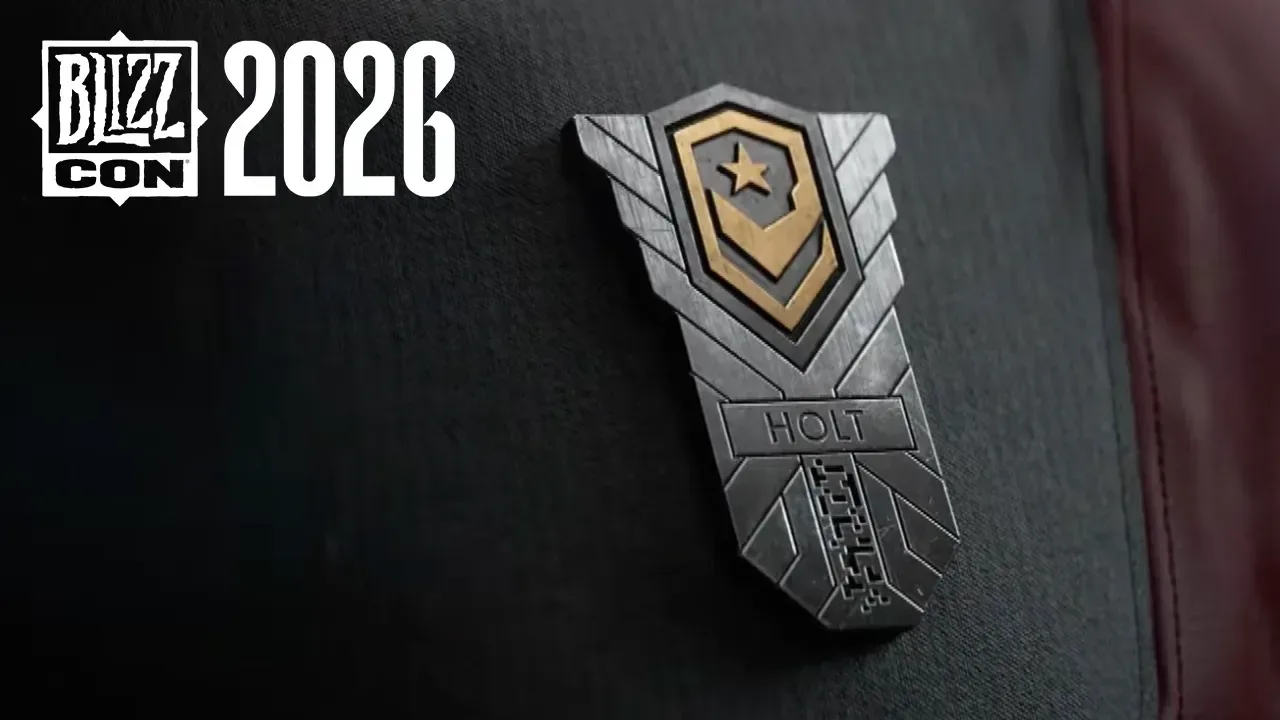
StarCraft is returning, but the familiar command-center view is stepping aside. Blizzard used BlizzCon 2026 to reveal a new entry simply titled StarCraft, and the series’ next major game is described as an open-world shooter planned for 2030. That is a dramatic genre pivot for one of PC gaming’s defining real-time strategy franchises—and an announcement delivered with a launch target far enough away to make the wait part of the news.
The new project comes more than 15 years after StarCraft II arrived. Its reveal answers the broad question that has followed the franchise for years: yes, Blizzard is making another StarCraft game. Yet it also opens a much bigger batch of questions. The announcement establishes the genre and the intended year, but it does not provide the fuller picture players will want: a playable faction, protagonist, setting, platforms, business model, multiplayer details, or an exact release date.
For now, the core fact is unusually straightforward: StarCraft is being built as an open-world shooter and is expected in 2030. The rest is territory waiting to be mapped, ideally without a zergling chewing through the cartographer.
A new perspective on an old interstellar war
The original StarCraft legacy was built on real-time strategy: harvesting resources, constructing bases, researching upgrades, and directing armies across battlefields. Its three central groups—the human Terrans, insectoid Zerg, and technologically advanced Protoss—created a setting that could support grand campaigns as well as fiercely competitive matches. A shooter fundamentally changes where the player stands in that universe.
Instead of managing a conflict from above, an open-world format suggests that players may be positioned within it, traveling through its environments and confronting its dangers at ground level. That possibility is enticing because StarCraft has always had a dense sci-fi identity beyond its strategy interface: Dominion power structures, Ghost operatives, colonial worlds, alien ruins, Terran hardware, Protoss technology, and the relentless biological threat of the Zerg.
Still, “open-world shooter” is a broad description, not a design document. It can encompass narrative missions across connected regions, social spaces, exploration, survival elements, co-op systems, player-versus-player modes, or some mixture of several approaches. None of those features have been confirmed here. It is also not yet clear whether the game will put players in the boots of one established faction, invite multiple perspectives, or pursue a new corner of the setting entirely.
That uncertainty is important. It is easy to picture jetpacks, siege tanks on the horizon, and a very ill-advised decision to approach a Hydralisk up close. But those are expectations players may bring to the premise, rather than announced features.
The long road from Ghost and Ares
A StarCraft shooter is not a new ambition for Blizzard. The 2030 project is notable in part because it follows two prior efforts that never reached release.
Related coverage includes StarCraft Returns in 2030 as Blizzard Reveals Open-World Shooter.
The first was StarCraft: Ghost, announced in 2002. It was intended as a tactical-action game for consoles starring a Ghost operative working for the Dominion. Ghosts are among the franchise’s most recognizable specialist units, making the concept a natural way to translate StarCraft’s world into a more personal action game. After delays and a lengthy development process, Ghost was canceled in 2006.
A later shooter effort, known by the codename Ares, was canceled in 2019. It was reportedly envisioned with a Battlefield-like flavor inside the StarCraft setting. Development was ended as Blizzard focused resources on Diablo IV and Overwatch 2. That history makes the newest announcement feel like a third serious attempt to make the franchise work outside its RTS home.
Reports and industry discussion had kept the possibility alive in recent years. In 2024, Dan Hay, a former Far Cry executive producer who joined Blizzard in 2022, was linked to a new attempt at a StarCraft shooter. A job listing later that year for an upcoming open-world shooter encouraged further speculation. BlizzCon 2026 has now put a name and a release-year target to what had previously been rumor and inference.
There is a useful difference between acknowledging that lineage and assuming the current game simply resurrects an old blueprint. Ghost, Ares, and the newly announced StarCraft belong to distinct development periods and different stated concepts. The common denominator is the desire to bring StarCraft into a shooter format. What has been announced does not establish that assets, systems, stories, or designs from either canceled project are being carried forward.
Why the 2030 target matters
2030 is not a release window that calls for calendar reminders just yet. It signals that Blizzard is introducing this StarCraft project at an early stage, years before the public is likely to learn its final shape. Long lead times have been a recurring part of Blizzard’s history, particularly for games with high expectations and major production scope. The company has often preferred to reveal projects well before they are close to players’ hands.
For fans, the distance cuts both ways. It offers the prospect of a deliberate development cycle for a franchise that has been dormant in terms of new major releases. On the other hand, a title still targeting 2030 has plenty of time to change. Release timing, platforms, features, scope, and even creative direction can evolve across a development span that long. The announced year is the current target, not a substitute for a final release date.
It also puts StarCraft’s return into the wider context of Blizzard’s slate. The studio has other enormous fantasy and online worlds to support, including Diablo and World of Warcraft. For a look at another distant Blizzard release plan, see the reported 2029 target for Diablo 5. StarCraft’s 2030 plan indicates that the publisher is willing to place the series back among those long-horizon tentpole projects.
The teaser campaign did its job
The formal announcement was preceded by unusual activity on the official StarCraft website. Visual glitches appeared across the site, along with a warning telling visitors that their device had been compromised. Fans interpreted the interference as a signal that a franchise update was imminent, and that reading proved correct.
It was a fitting bit of presentation for StarCraft, a universe full of infiltration, psionics, hacking, covert operations, and communications that rarely remain peaceful for long. More practically, it gave an alert community something tangible to investigate before BlizzCon. The campaign did not disclose the full project, but it successfully turned speculation toward a real announcement.
What has and has not been confirmed
With a 2030 target, keeping the known details separate from the unknowns is especially worthwhile.
- Confirmed: Blizzard announced a new game titled StarCraft at BlizzCon 2026.
- Confirmed: It is described as an open-world shooter.
- Confirmed: Its planned release year is 2030.
- Confirmed historical context: StarCraft: Ghost was announced in 2002 and canceled in 2006, while the shooter project codenamed Ares was canceled in 2019.
- Not detailed in the announcement: Platforms, a specific launch date, gameplay structure, characters, factions, campaign details, multiplayer plans, and footage-based evidence of how the game plays.
That leaves plenty for Blizzard to reveal later, but it also gives the new project a clear initial identity. It is not being framed as StarCraft III or as a return to orthodox real-time strategy. It is a shooter with an open-world premise, carrying one of the most enduring names in science-fiction gaming.
The challenge now is substantial. StarCraft has survived through competitive play, memorable campaigns, and a setting whose conflicts scale from a single cloaked operative to entire worlds under siege. A successful shooter needs to make that universe convincing at human scale while giving longtime fans reasons to recognize its DNA. After the unrealized promise of Ghost and Ares, this third effort has a long runway—and a lot riding on where it lands.