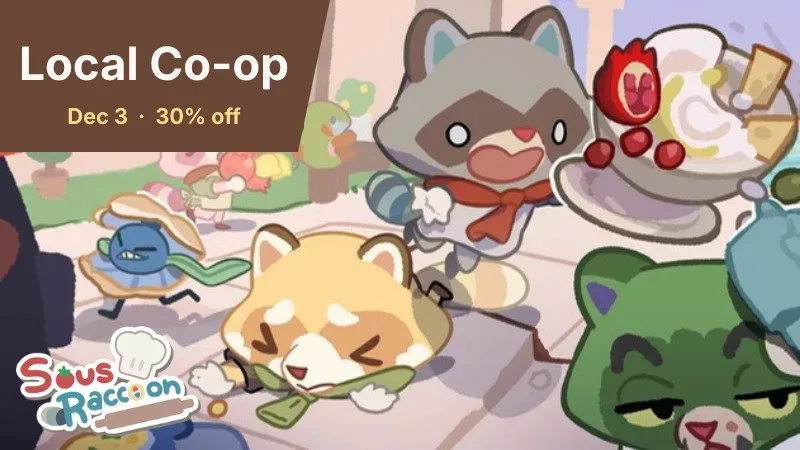
Sous Raccoon, the kitchen-management roguelite from Novice Flow, is due to receive two-player local co-op on December 3. The update will let two people play together on one screen with a single copy of the game, providing a more direct way to share the game’s increasingly chaotic restaurant shifts.
The same date also brings a 30% Steam discount. The listed price will fall from $14.99 to $10.49, described as the game’s biggest Steam discount so far.
Local play is being added alongside, rather than in place of, the game’s existing multiplayer option. Online co-op will remain available for up to four players. That distinction matters: the new mode is specifically for a pair playing together in the same room and viewing the same screen, while the online arrangement continues to support a larger group.
A shared kitchen with sharply divided jobs
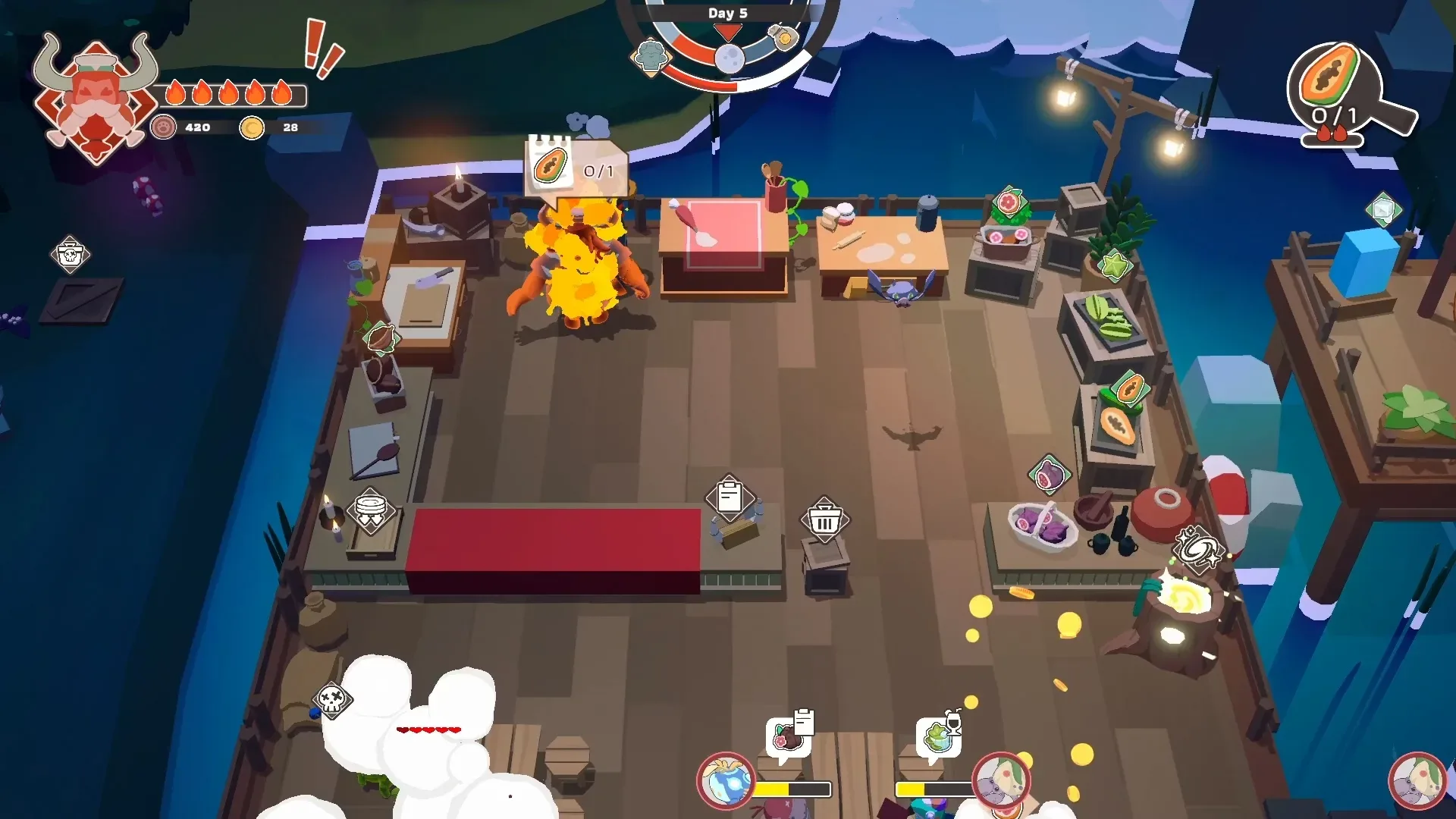
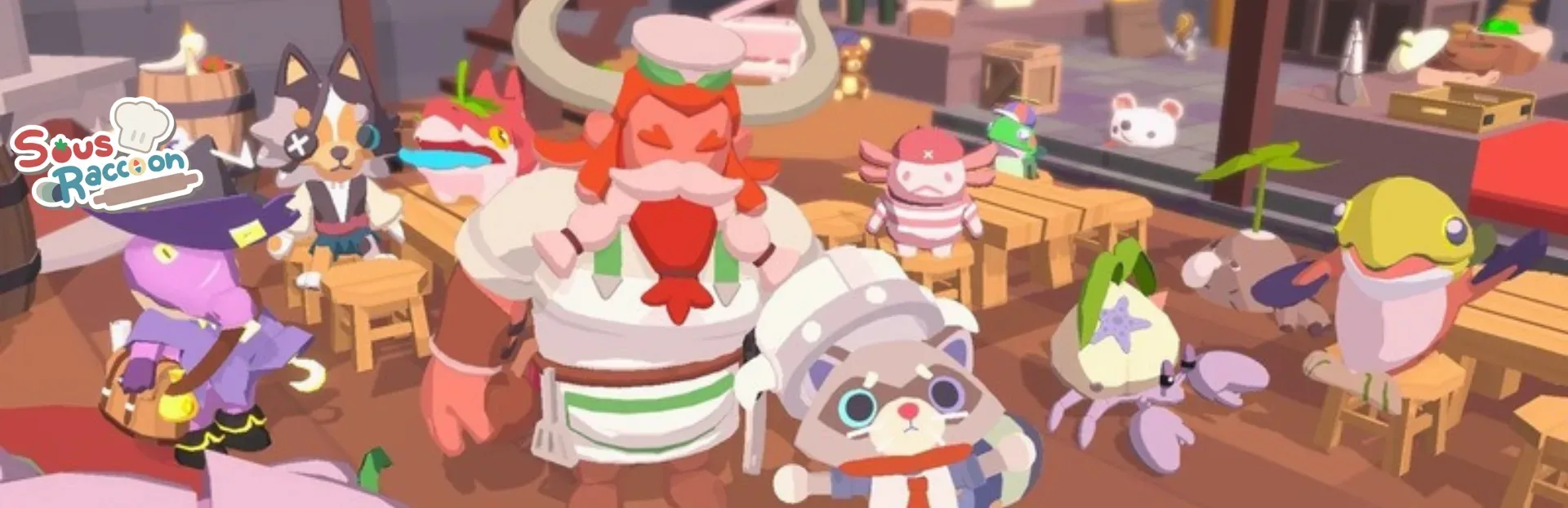
In Sous Raccoon, players take the role of Elmo, a raccoon thief who has become a sous chef for a chef with a notably short fuse. The basic objective is straightforward enough: cook incoming orders, serve the restaurant’s customers, and keep monsters from ruining the shift. The complication is that all three demands can collide.
The local co-op setup is built around splitting those responsibilities. One player can focus on ingredient preparation and carrying completed items to Chef. The other can concentrate on serving diners and responding when the Monster Wave alarm sounds. When that alarm goes off, the rolling pin becomes a practical tool rather than a piece of kitchen décor.
That division does not mean either player can safely ignore the other half of the restaurant. A customer injured during the disorder makes Chef angrier. If his temper gets out of hand, he bursts into flames and fires both players. It is a shared fail state: even a player efficiently managing orders is vulnerable to a partner’s accidental customer-related catastrophe.
There is, however, an appropriately odd remedy for one of those mistakes. Players can accidentally hit a customer, then dance beside them to heal them. That mechanic turns a possible disaster into a brief recovery task, but it also asks the team to recognize the problem and react quickly while orders, monsters, and Chef’s patience continue to demand attention.
What “local co-op” means here
Local co-op, sometimes called couch co-op, means multiple people play together from the same physical location rather than connecting over the internet. For Sous Raccoon’s new mode, that means two players, one screen, and one purchased copy of the game. It is a deliberately different proposition from the unchanged online mode for as many as four players.
Related coverage includes Sous Raccoon adds couch co-op and a 30% Steam discount December 3.
Same-screen play can make communication more immediate. Rather than describing what is happening through a headset, players can see the full kitchen situation together: preparation, serving, alarms, injured customers, and the hazards that threaten the current run. The trade-off is that both players must organize themselves in the same visual space, making role clarity especially useful once the restaurant gets busy.
The update’s described jobs suggest a simple starting plan for new pairs:
- Assign an order lead: Have one player keep ingredients moving and bring prepared food to Chef.
- Assign a floor lead: Let the second player monitor diners, serve tables, and react to Monster Wave alarms.
- Call out emergencies: Customer damage affects the whole team because it worsens Chef’s anger.
- Be ready to switch: The player holding a rolling pin during an alarm may need help, and the cooking line cannot be abandoned indefinitely.
This is not a rigid prescription for success, since the game’s runs are designed to vary. It is simply a practical way to prevent both players from chasing the same task while another crucial job is left unattended.
The roguelite part of the restaurant rush
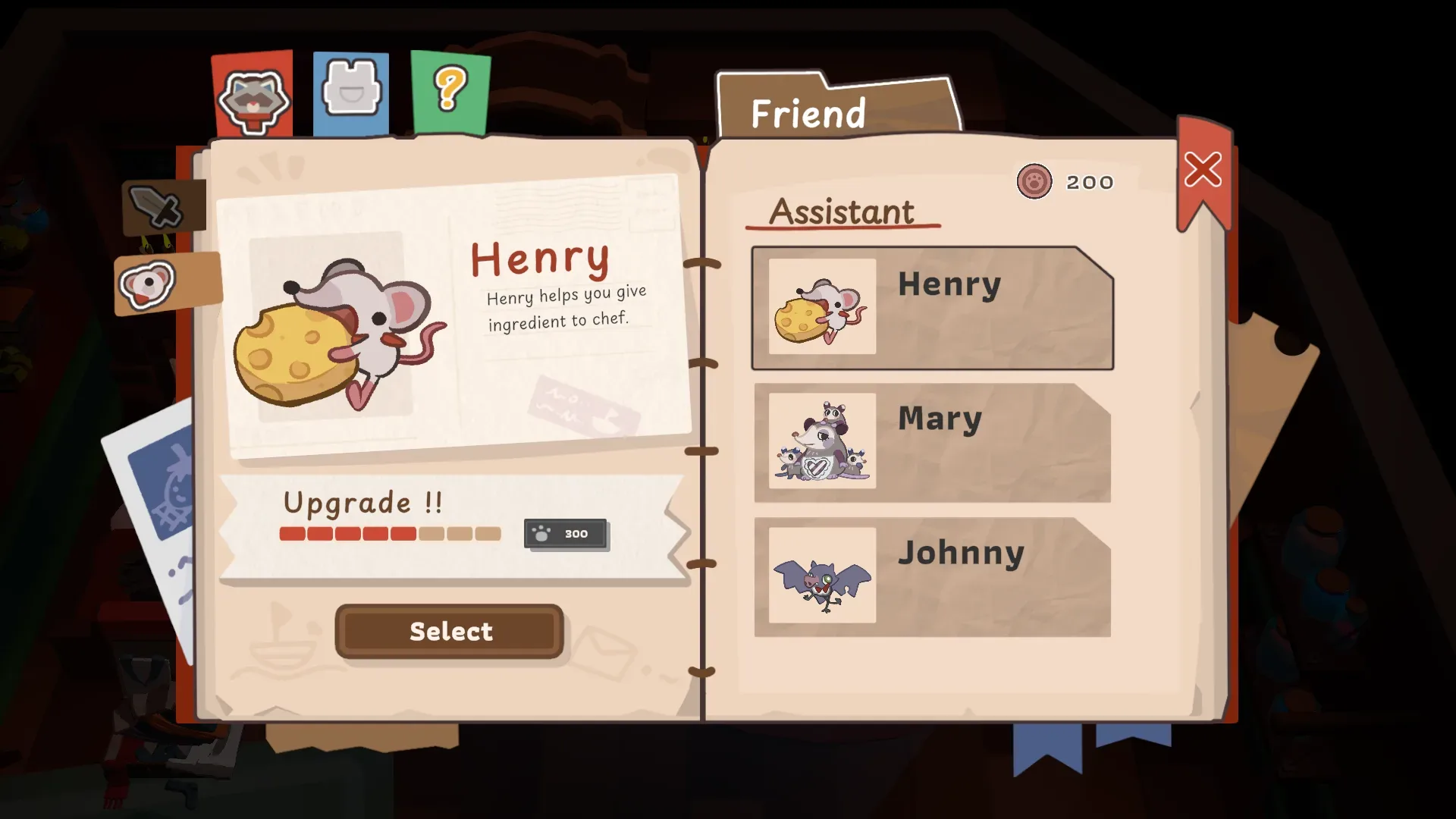
Sous Raccoon is described as a roguelite. In broad terms, a roguelite is a game structured around repeatable runs that change from attempt to attempt, while retaining some form of progression between those runs. In this case, each shift can play differently, and players earn coins between shifts to purchase perks.
Perks are ongoing advantages or modifications that players buy to improve future attempts. The supplied details do not specify individual perks, so it is best not to assume exactly how they alter the kitchen. What is clear is that coins earned after shifts create a link between one attempt and the next, giving players a reason to keep working through the restaurant’s failures and surprises.
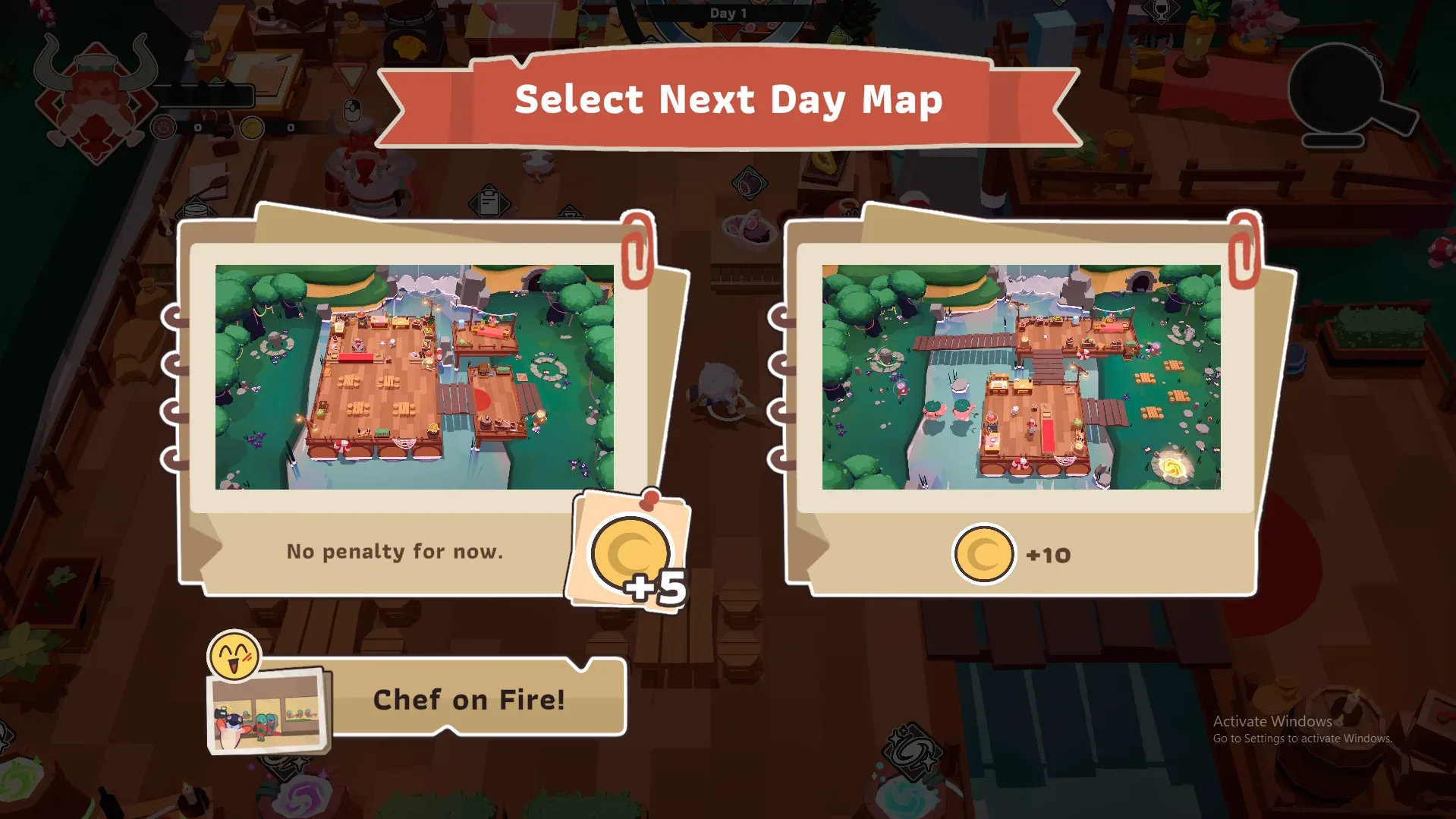
The game has four kitchens, each with its own layout, hazards, and monsters. Layout refers to the arrangement of the work area and therefore the routes players take while carrying ingredients or food. Hazards are environmental threats that add pressure beyond normal cooking and table service. Monsters bring the combat-oriented part of the game into the restaurant equation, particularly when a Monster Wave alarm calls for the rolling pin.
For local teams, that structure means a successful routine in one kitchen may not transfer perfectly to another. A pair may understand who usually cooks and who usually serves, but different layouts and threats can force them to adapt their movement and priorities. The crucial point is not merely speed; it is maintaining enough awareness to avoid a small error spiraling into customer injuries, an enraged Chef, and an abrupt firing.
Why the update fits the game’s premise
Sous Raccoon combines restaurant management with combat and run-based progression. Its slapstick edge is central to the pitch: customers can be accidentally struck, healing can involve dancing, and an angry chef can literally ignite. Local co-op puts two people in the middle of that chain of consequences at once.
It also changes the nature of responsibility. In solo play, every unserved table or missed alarm is plainly one player’s problem. With two players on one screen, mistakes and recoveries become collaborative. One person may be concentrating on ingredients at the exact moment the other must choose between serving a table and stopping monsters. The tension comes from those competing demands, not simply from a checklist of chores.
The continuing four-player online option means the December 3 patch does not narrow the game’s social side. Instead, it adds a smaller, same-room configuration for players who want a two-person session without requiring a second copy. Players interested in the broader PC multiplayer landscape can also see how other projects are expanding or reshaping co-op options in this PC multiplayer update coverage.
December 3 update at a glance
- Two-player local co-op is being added.
- Both local players share one screen.
- Only one copy of Sous Raccoon is required for that local setup.
- Online co-op for up to four players is unchanged.
- A 30% Steam discount begins the same day.
- The listed Steam price changes from $14.99 to $10.49.
Novice Flow developed Sous Raccoon, with Rising Tide Publishing handling publication. The December 3 update is focused on expanding how people can tackle the kitchen rather than changing the underlying goal: keep the orders moving, the diners safe, the monsters away, and Chef from reaching his flaming breaking point.