Soulja Boy has brought his latest gaming venture to PC with Soulja Boy: Rap Empire, a title positioned around the artist’s own career and, based on his public description, a set of competitive multiplayer modes. The release is notable less for a fully detailed feature list—which has not been provided—than for the apparent shift in the game’s emphasis: an earlier playable build was said to focus heavily on career material, while the current messaging promotes player-versus-player combat.
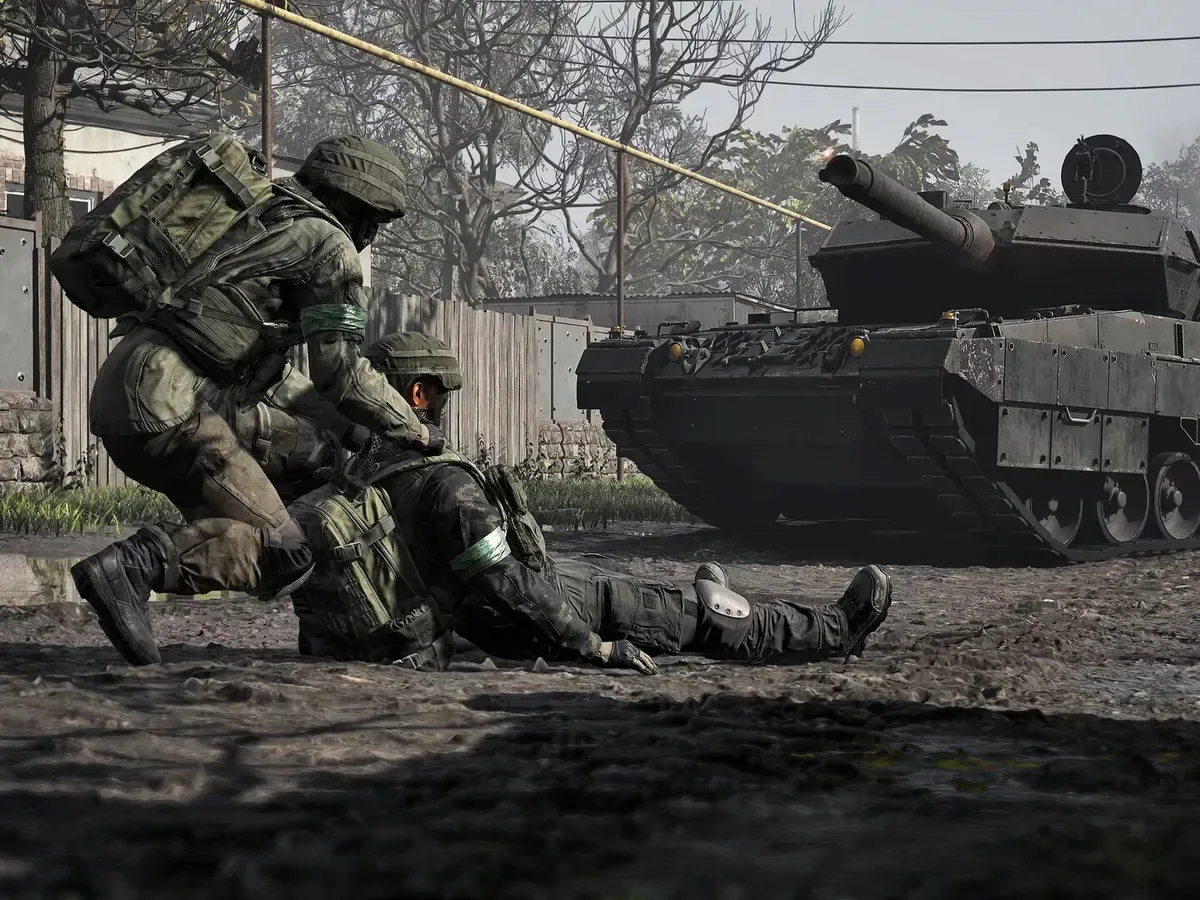
In a social-media post, Soulja Boy described Rap Empire as a “3D multiplayer video game” in which players choose a fighter, customize a loadout, and compete in Free For All, Team Deathmatch, and 1v1 Combat Mode. The game is available on PC.
That is a reasonably clear outline of the proposed multiplayer structure, but important details remain unconfirmed. There is no supplied information on the game’s exact storefront, system requirements, price, roster size, maps, progression systems, online matchmaking, controller support, or whether the cited modes are available in every version of the game. For interested players, that distinction matters: a game announcing modes and a game with those modes accessible in a particular build are not necessarily the same thing.
A career-focused game may now be widening its scope
An account of a playable version tested on October 17 said that multiplayer was not present at that time and that the experience was substantially different from the newly promoted pitch, concentrating instead on Soulja Boy’s career. That points to multiplayer potentially being a newer update or a feature added after that particular test. It also means prospective players should approach the current feature list with sensible caution until the PC version’s available build and notes clarify exactly what has changed.
The available information does not establish whether the career-oriented portion remains in the current game, has been revised, or sits alongside the competitive modes. Nor does it explain how the two approaches connect. A music-artist game can use a career framework in many ways: as narrative context, as themed presentation, as a progression structure, or simply as an interactive tribute. None of those specific implementations can be assumed here. What is supported is that the earlier playable build was framed around Soulja Boy’s career, and that the current public description puts combat modes at the center.
What the announced modes mean
The terminology in Soulja Boy’s post will be familiar to multiplayer-game players, even though the game’s precise rules have not been detailed.
- Free For All: a competitive format in which each participant ordinarily plays for themselves rather than as part of a permanent team. The goal and scoring conditions have not been specified for Rap Empire.
- Team Deathmatch: a mode generally built around opposing teams competing through eliminations or a comparable score race. The announcement does not state team sizes, match duration, victory score, respawn rules, or whether squads can be formed with friends.
- 1v1 Combat Mode: a head-to-head format with one fighter on each side. It is the clearest possible competitive setup in broad terms, but the game’s arena rules, character balance, round structure, and whether players can spectate are unknown.
- Loadout customization: the ability to configure a player character’s selected equipment or options before a match. The post confirms customization at a high level, but not what items or attributes are adjustable, whether choices are cosmetic or gameplay-affecting, or how they are unlocked.
Those gaps are not trivial. “Choose your fighter” could indicate distinct playable characters, but it does not by itself confirm how differently they play. Likewise, a customizable loadout can offer meaningful strategy, purely visual personalization, or a mix of both. Until the game itself provides a fuller breakdown, it is more accurate to treat the post as a description of the modes’ categories rather than a technical specification.
The practical question for PC players
The most useful takeaway is that Soulja Boy: Rap Empire appears to be in motion rather than locked to one clearly documented format. Reports about the October 17 build and the subsequent multiplayer pitch suggest that the game can change. For a PC title built around online competition, the current version is particularly important: the player experience depends not only on what is advertised, but on the modes that are live, the state of online access, and the mechanics currently supported.
Related coverage includes Soulja Boy’s ‘Rap Empire’ Brings His Gaming Ambitions to PC.
Players interested specifically in the competitive component should verify the version details before treating Free For All, Team Deathmatch, and 1v1 combat as a settled, exhaustive list. They should also distinguish confirmed facts from reasonable but unverified assumptions. The confirmed points are comparatively narrow: it is a PC game; Soulja Boy has called it a 3D multiplayer game; he has named three combat formats; and he has said players can select fighters and customize loadouts. Everything beyond that—including the moment-to-moment combat design—needs more direct information.
That caution is especially warranted because an artist-branded game can attract two audiences with different expectations. One group may want a game tied closely to the artist’s story and persona. Another may be looking for a repeatable online action game. The earlier career emphasis and the later multiplayer messaging could potentially speak to both groups, but the relationship between those components has not been explained. Players seeking a particular experience should avoid filling in the blanks with genre expectations.
A continuing connection between Soulja Boy and games
Rap Empire is not Soulja Boy’s first attempt to enter the gaming space. In 2018, he launched the SouljaGame Console and Handheld, and he attempted to revive that hardware effort in 2025. The PC game therefore continues a longer interest in games rather than representing a one-off tie-in.
The difference is worth noting. A console or handheld is hardware: its success depends on the device, its software catalog, distribution, and support. A PC game is software that reaches players through the existing PC ecosystem. That does not tell us anything about Rap Empire’s production, business model, or long-term plans, none of which have been detailed. It does, however, make this project a different kind of gaming initiative—one centered on a single artist-linked title rather than a separate platform.
For the wider PC audience, the story is also a reminder that game projects can evolve quickly after a playable version appears. Multiplayer additions can alter a game’s focus, repeatability, and the kind of community it hopes to attract. In this case, the available evidence indicates a movement from a career-centered experience toward a public pitch led by competitive modes. Whether that becomes the game’s defining identity will depend on the version players can access and on further specifics that have yet to be shared.
PC players following new releases may also be interested in how other smaller projects are using their format as a hook, including Fallbearers’ balancing-focused PC demo. In the case of Soulja Boy: Rap Empire, the central hook currently is straightforward: a Soulja Boy-branded game with career-related roots and a newly emphasized competitive multiplayer component.
What is confirmed—and what still needs clarity
For now, the most accurate picture is a limited but distinct one. Soulja Boy: Rap Empire is on PC. Soulja Boy says players can choose fighters, alter loadouts, and compete in Free For All, Team Deathmatch, and 1v1 Combat Mode. A playable version discussed on October 17 reportedly lacked multiplayer and concentrated on his career, making the multiplayer element appear to be a subsequent update or at least a newer part of the public presentation.
What remains unclear is nearly everything that determines how the game feels to play: the scope of its career content, the mechanics of combat, the nature of its fighters and loadouts, and the complete status of its multiplayer implementation. Those are meaningful unknowns, not a verdict on the game. They simply set the boundary between what has been announced and what still needs to be established.