Shure is refreshing its entry-level USB gaming microphone with the MV6 Gen 2, a model that keeps the original MV6’s straightforward plug-and-play premise while expanding the amount of audio control available in software. The headline for prospective streamers and gamers is unusually simple: the price remains $169 in the US and £159 in the UK.
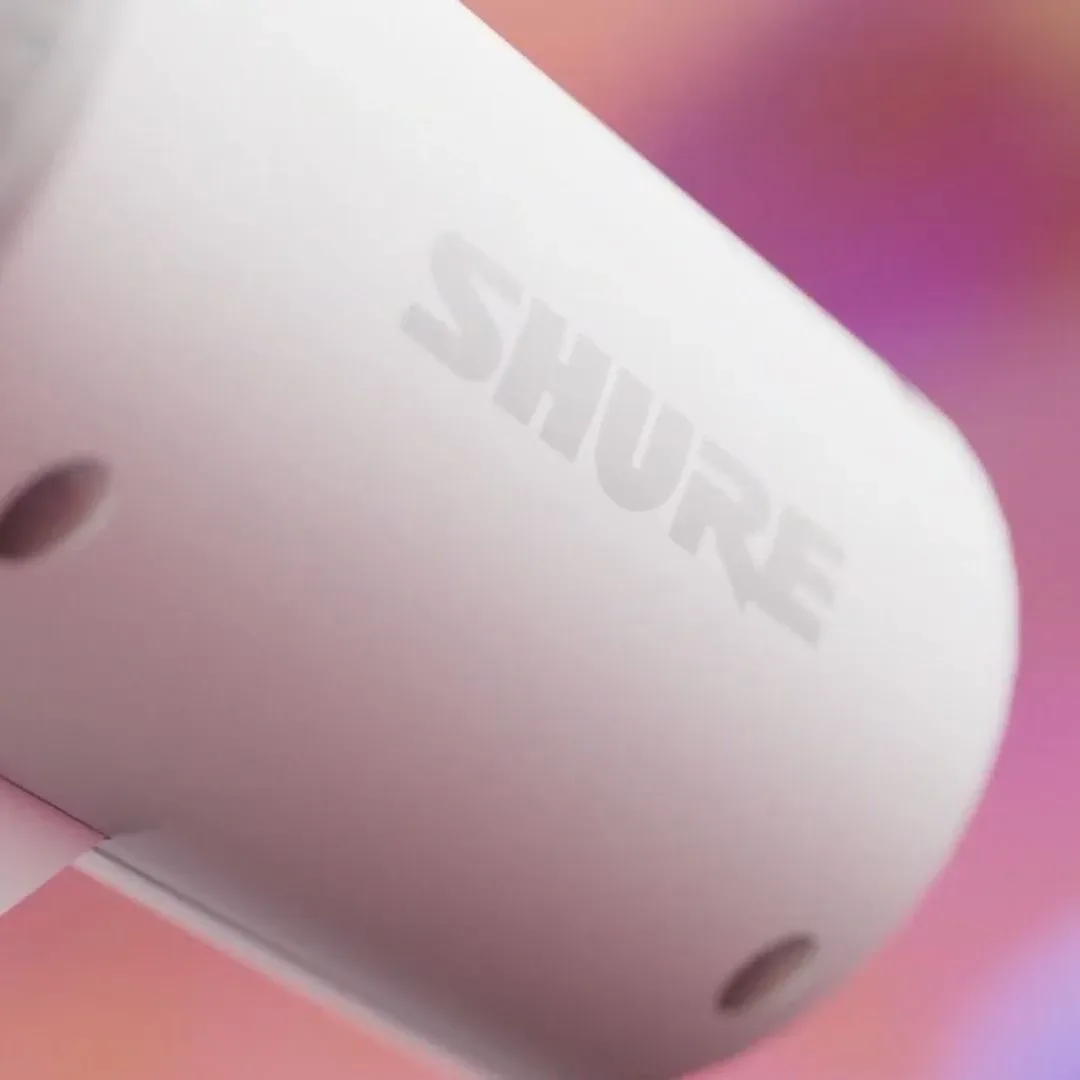
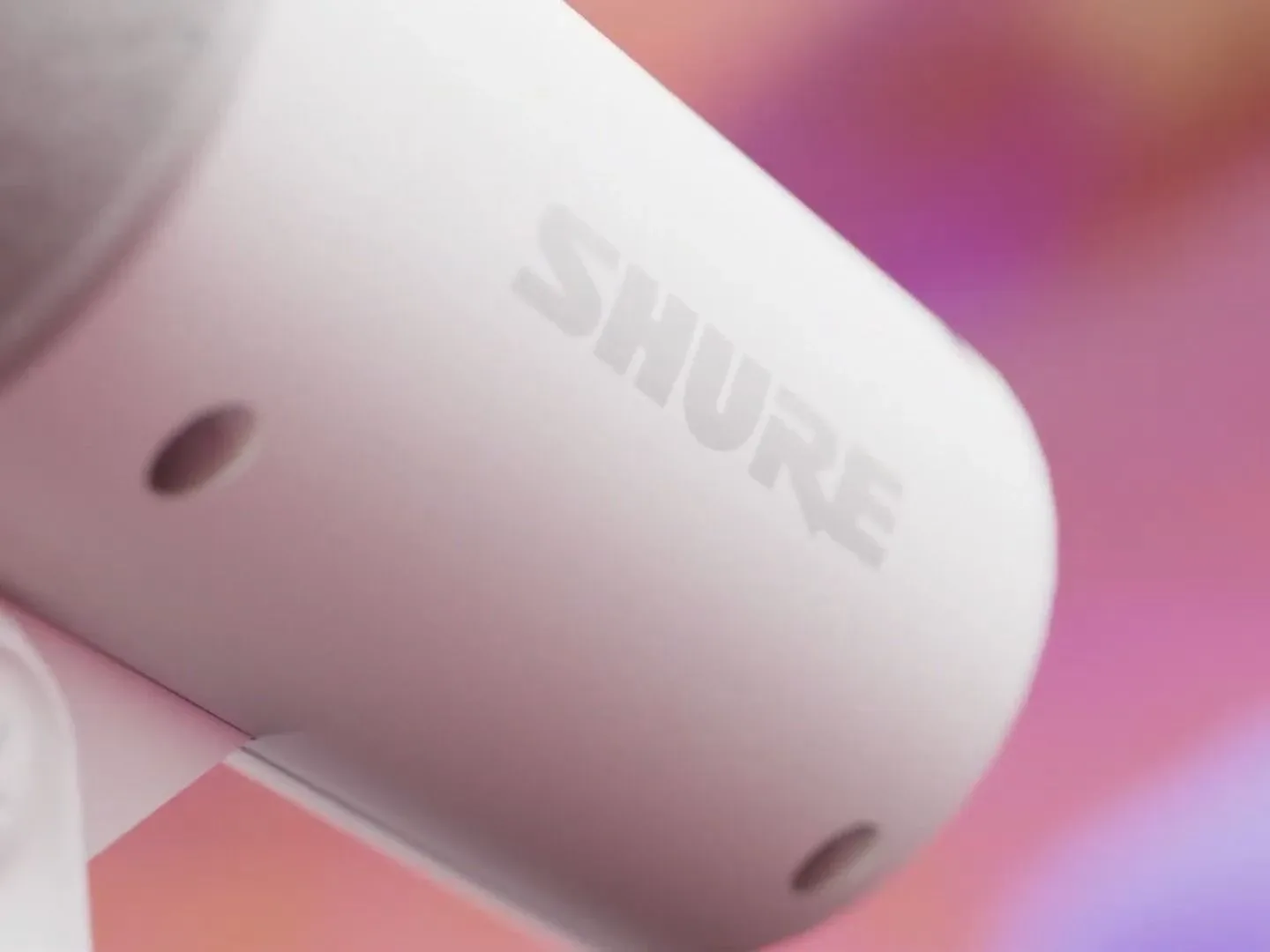
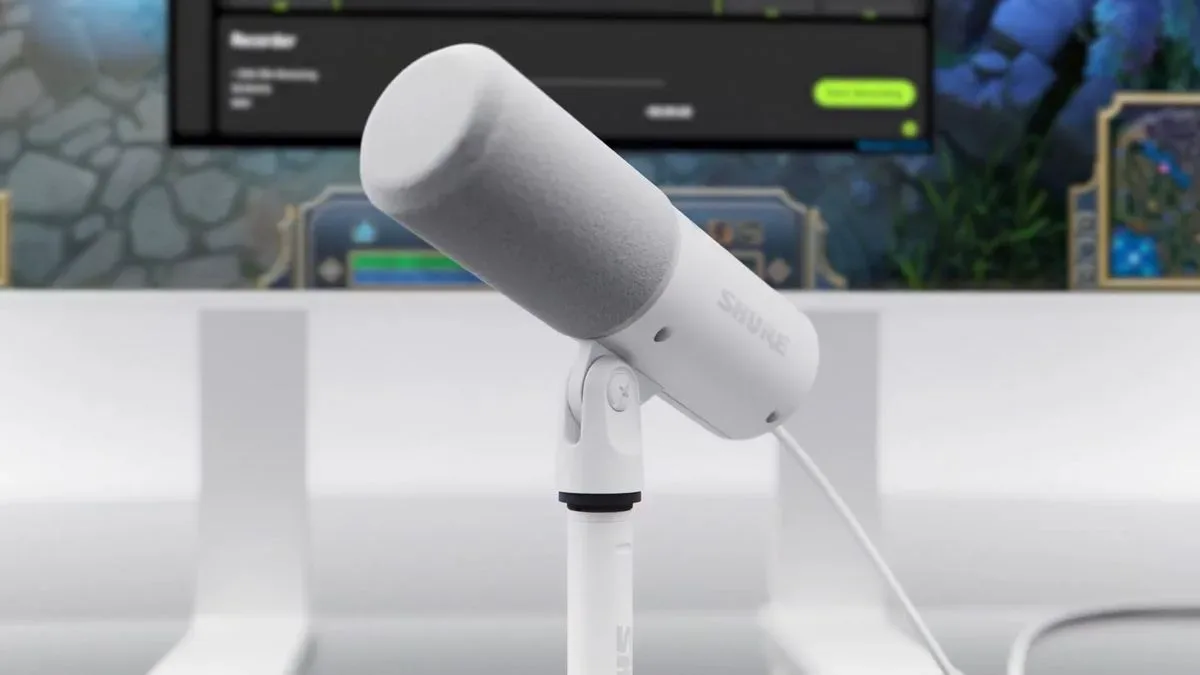
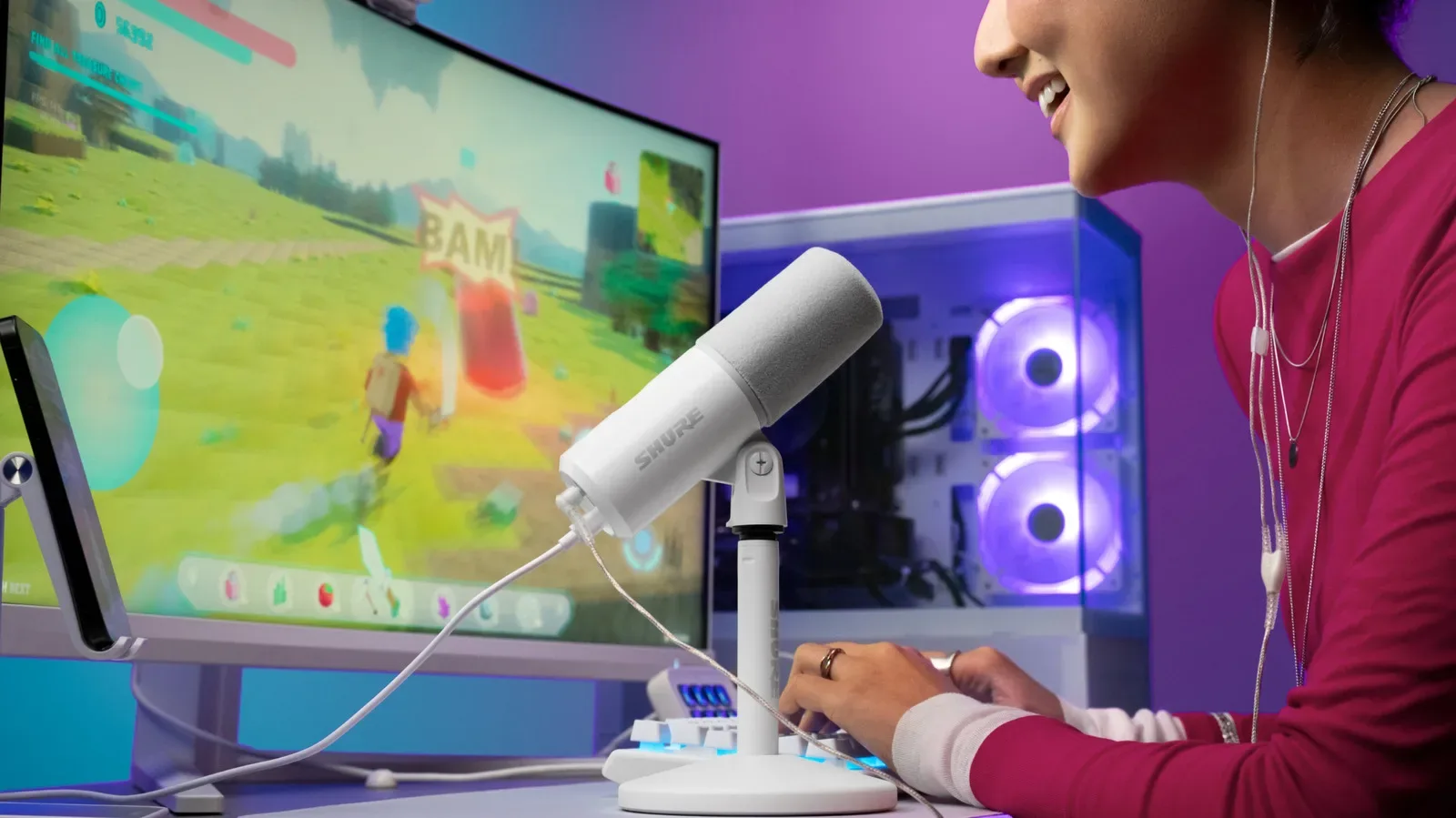
The second-generation MV6 adds adjustable Auto Level, a more flexible real-time Denoiser, 5-band EQ and smart audio presets. It also arrives in a notably more coordinated white finish, with a white microphone body, stand and cable, plus a grey flocked-foam pop filter. For a product intended to live visibly on a desk and in a camera frame, that visual change is more consequential than it may initially sound.
USB microphones are often bought precisely because they avoid the additional equipment and setup associated with more elaborate audio chains. The MV6 Gen 2’s update appears aimed at maintaining that accessibility while giving creators more ways to shape their sound before they consider adding a separate streaming mixer.
A familiar price with a more ambitious feature set
The original Shure MV6 launched in 2024 and occupied the entry-level end of the company’s USB microphone range. Shure’s Gen 2 model remains at $169 and £159, rather than using the refresh as an occasion for a price increase. That creates a fairly clear proposition for buyers: the new version is positioned as a feature refinement, not a move into a different price tier.
Availability through Amazon was not yet visible at the time of the information provided. The Gen 2 may begin replacing the original MV6 in retail channels, which could also make remaining first-generation stock worth watching for people who care more about basic USB operation than the incoming software controls.
That is not a claim that the original has suddenly become inadequate. Rather, the two models may suit different priorities. A discounted original could be appealing to someone who wants a simple desk microphone and is content with its existing denoising and pop-stopping tools. The Gen 2 is the more logical choice for someone who expects to make regular adjustments to level, tonal balance or room-noise processing without investing in additional hardware.
Why Auto Level matters when a game gets loud
Auto Level is a mode designed to manage changes in input volume. In practical language, it is intended to help keep a speaker’s output more consistent when they move between quiet conversation and louder reactions. That distinction is relevant to gaming and livestreaming, where a player can move from explaining a strategy calmly to suddenly yelling at a missed shot, a jump scare or a teammate’s wildly optimistic plan.
The MV6 Gen 2’s Auto Level mode is adjustable, and the improved implementation is intended to address feedback that the first MV6 did not respond quickly enough to shouting and abrupt changes in volume. The word adjustable is important here. Automatic processing is rarely a one-size-fits-all decision: a person recording measured commentary may want a different response than someone whose streams regularly include explosive moments.
Related coverage includes Shure MV6 Gen 2 Brings White Design and Smarter Controls to USB Gaming Audio.
It is also worth separating level management from perfect audio repair. Auto Level can help handle variation in voice volume, but it cannot turn every recording environment into a treated studio. Microphone placement, how far a speaker sits from the mic, and the sounds already present in a room still affect what is captured. The value of an adjustable automatic mode is that it offers a simpler route to more even delivery without requiring a separate mixer to take on that work.
Real-time denoising puts a control knob on the room
The other substantial change is a real-time Denoiser with greater on-the-fly flexibility. Denoising is audio processing intended to reduce unwanted background sound. In a gaming setup, that can mean the persistent whirr of PC fans or the general ambience of a room that has little acoustic treatment.
“Real-time” means the processing is designed to operate while the audio is being used, rather than being reserved for a later editing step. That is especially useful for live broadcasts and voice chats, where there is no opportunity to clean up a recording afterward before an audience or teammates hear it.
More control does not necessarily mean users should push it as far as possible. The practical benefit is choice: someone in a quiet room may need less noise reduction, while a louder setup may call for more. Overusing any cleanup tool can be a poor substitute for a sensible recording environment, but an adjustable Denoiser gives users a way to respond to the conditions they actually have instead of treating every desk setup as identical.
For creators working with a fan-heavy PC or an untreated gaming corner, the MV6 Gen 2’s expanded denoiser controls could be among its most directly useful upgrades. It acknowledges that many USB microphone buyers are not recording in dedicated spaces, and may not want a complicated external audio workflow merely to make a room less distracting.
5-band EQ and presets: what they add
The MV6 Gen 2 also includes a 5-band EQ and smart audio presets. EQ, short for equalization, is a way of adjusting different regions of an audio signal’s frequency range. A five-band equalizer divides that tonal shaping into five controllable areas, allowing a user to alter the overall character of their voice more specifically than with a single broad “tone” setting.
That capability can be useful when a creator wants to customize how their voice comes across in a stream, recording or call. It does not imply that one setting will be universally best; voices, rooms and personal preferences differ. Its significance is access. The microphone is giving its users tools usually associated with a more involved audio setup, while retaining the core appeal of USB connectivity.
Smart presets complement that approach by offering starting points for audio character and tonality. For newcomers, presets can reduce the pressure of immediately understanding every EQ choice. For users who do want to experiment, the 5-band EQ provides a more direct way to tailor settings. Together, those features make the MV6 Gen 2 less dependent on separate hardware for fundamental tonal control.
That matters particularly for buyers who are not connecting their microphone to a dedicated streaming mixer such as the RodeCaster Duo. A mixer can provide additional processing and controls, but it is an extra component, an extra cost and another part of the setup to learn. Shure’s revisions suggest an attempt to bring a portion of that adjustment flexibility into a more self-contained USB microphone.
The white version is more than a paint swap
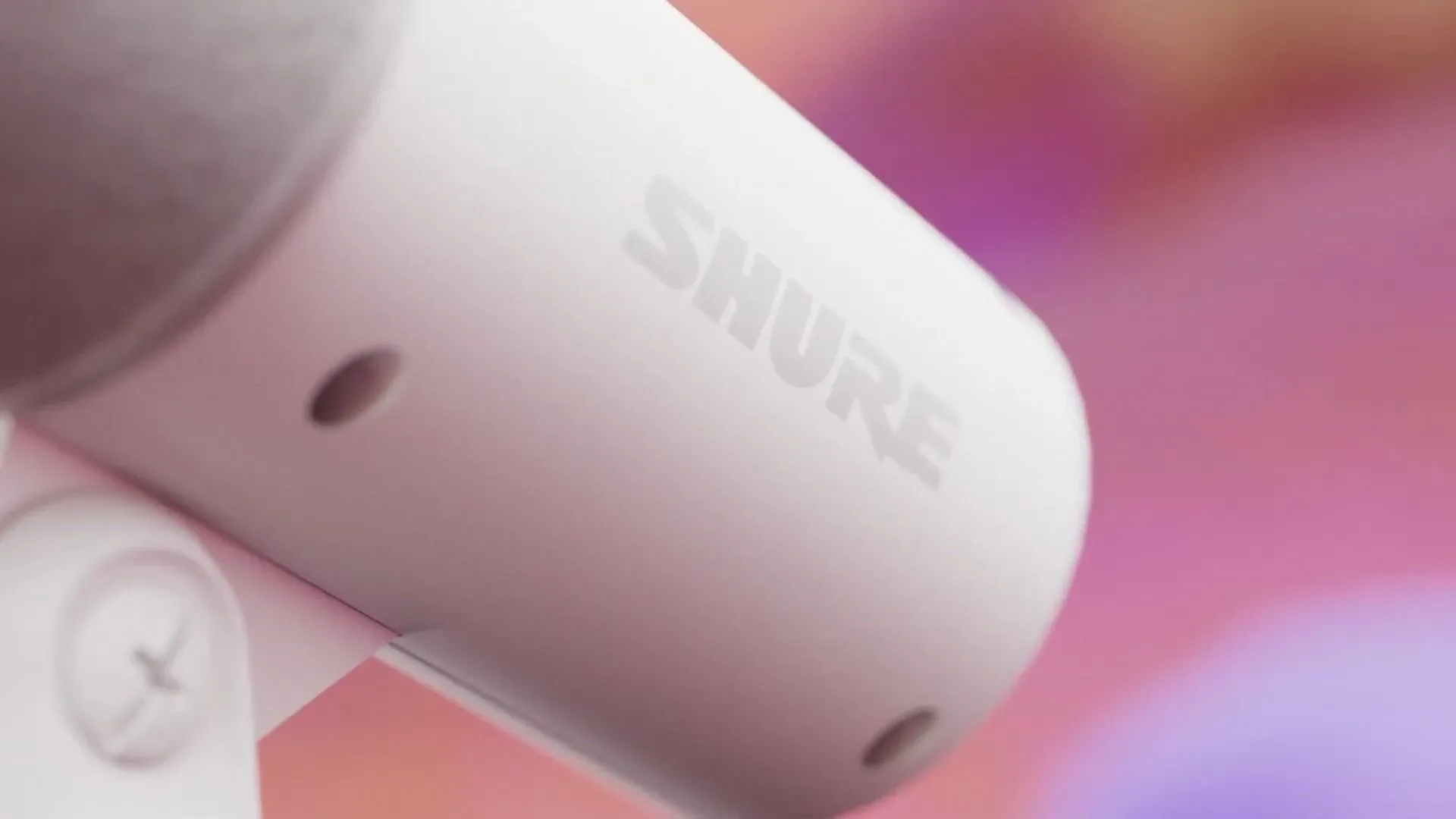
The Gen 2’s white colorway is the most immediately visible difference. Shure has offered a white MV7+, but its black wind guard or pop filter creates a deliberately two-tone look. The MV6 Gen 2 takes a different route: its white body, white stand and matching white cable are paired with a grey flocked-foam pop filter.
That grey filter may be a pragmatic choice as well as an aesthetic one. A bright white foam component placed close to a person’s mouth could show dirt over time. Grey keeps the microphone visually compatible with a white gaming setup without demanding an all-white pop filter that could become the most visibly worn part of the product.
For streaming, desktop hardware often appears on camera as part of a channel’s presentation. A coordinated microphone, cable and stand can make a difference to users who have built a white PC or desk setup and do not want a single black accessory dominating the frame. It also gives buyers an alternative to the black visual language commonly associated with Shure’s classic microphone styling.
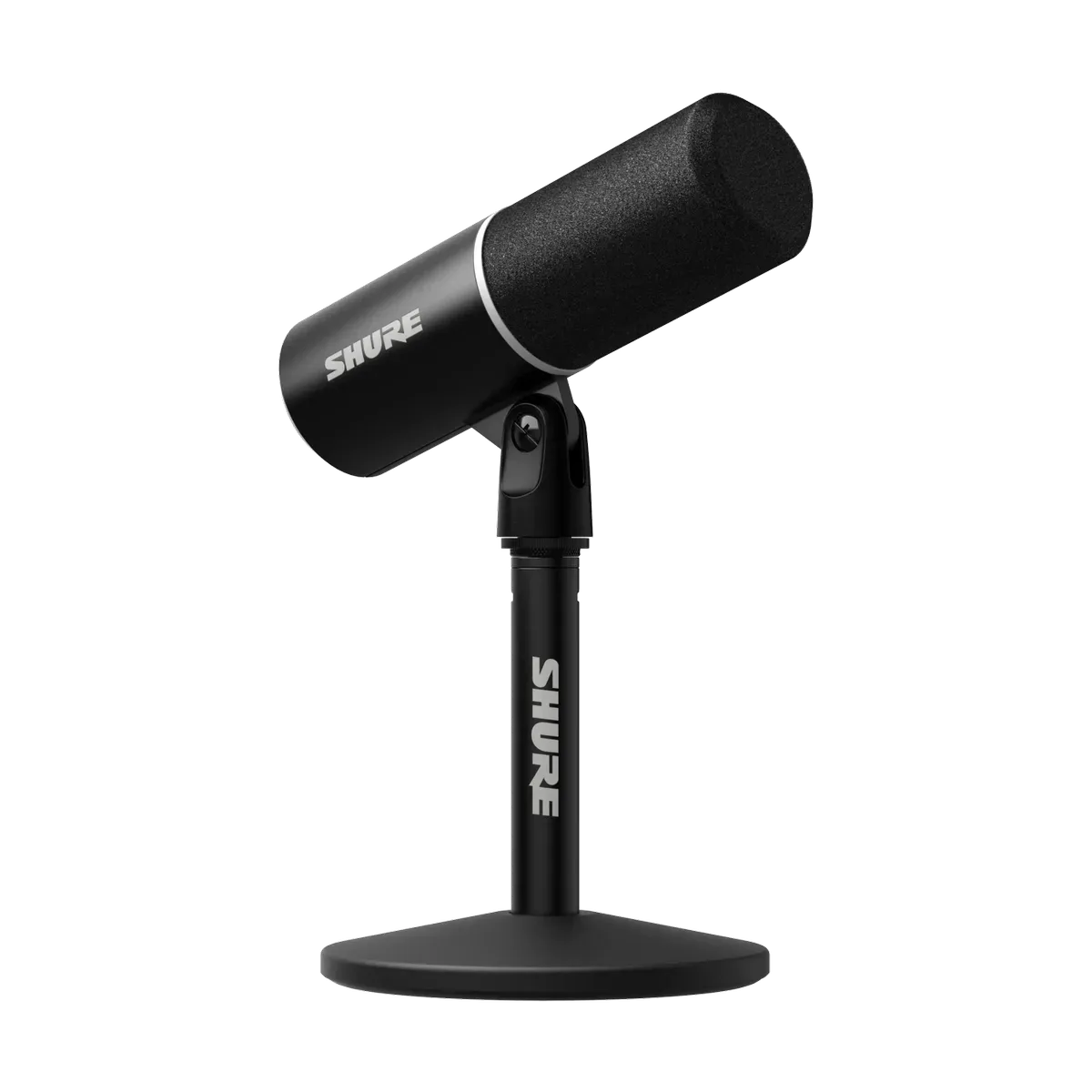
The company’s black aesthetic has long been recognizable; its classic design lineage dates back to 1973. The MV6 Gen 2 does not abandon the idea of a broadcast-style desk microphone, but it does show more willingness to adapt that look for white gaming rooms.
Who should pay attention
The MV6 Gen 2 is not presented as a complete reinvention of Shure’s USB mic. It is a measured update centered on software processing, live adjustment and visual integration. That makes it most relevant to people who want to connect a microphone directly, minimize gear complexity and retain meaningful control over their sound.
- New streamers may value presets, adjustable Auto Level and real-time denoising because they reduce the need to assemble a separate audio chain at the outset.
- Gamers with noisy PCs or minimally treated rooms may find the adjustable Denoiser particularly relevant, provided they use it as a control rather than expecting it to erase every environmental issue.
- Creators with white setups have a more cohesive option thanks to the white body, cable and stand, along with the less dirt-prone-looking grey filter.
- Budget-conscious buyers can compare the Gen 2’s added controls with any discounts that emerge on the original MV6 as retail inventory shifts.
People building a broader creator desk may also be weighing video tools alongside audio hardware. For that part of the setup, our look at compact gimbal camera alternatives covers a different, but adjacent, piece of the production puzzle.
What the refresh says about USB creator gear
The MV6 Gen 2 reflects a useful direction for entry-level creator equipment: simple connections do not have to mean bare-bones control. USB remains the route to quick setup, while software-based features can offer users ways to manage volume, background noise and tone that would otherwise require more gear.
Its unchanged $169/£159 price makes the update easier to evaluate. Shure is not asking buyers to move to a higher bracket for Auto Level adjustments, real-time denoiser flexibility, 5-band EQ, presets and the coordinated white option. The remaining decision is less about price inflation and more about whether those particular upgrades fit a buyer’s room, workflow and desk aesthetic.
For users who want a low-friction microphone that can handle the unpredictable volume swings of games and streams with more control than its predecessor, the MV6 Gen 2’s changes are targeted at real everyday problems. And for anyone who has spent time matching a white keyboard, mouse, PC and desk accessories, the matching cable may be the unexpectedly satisfying detail.