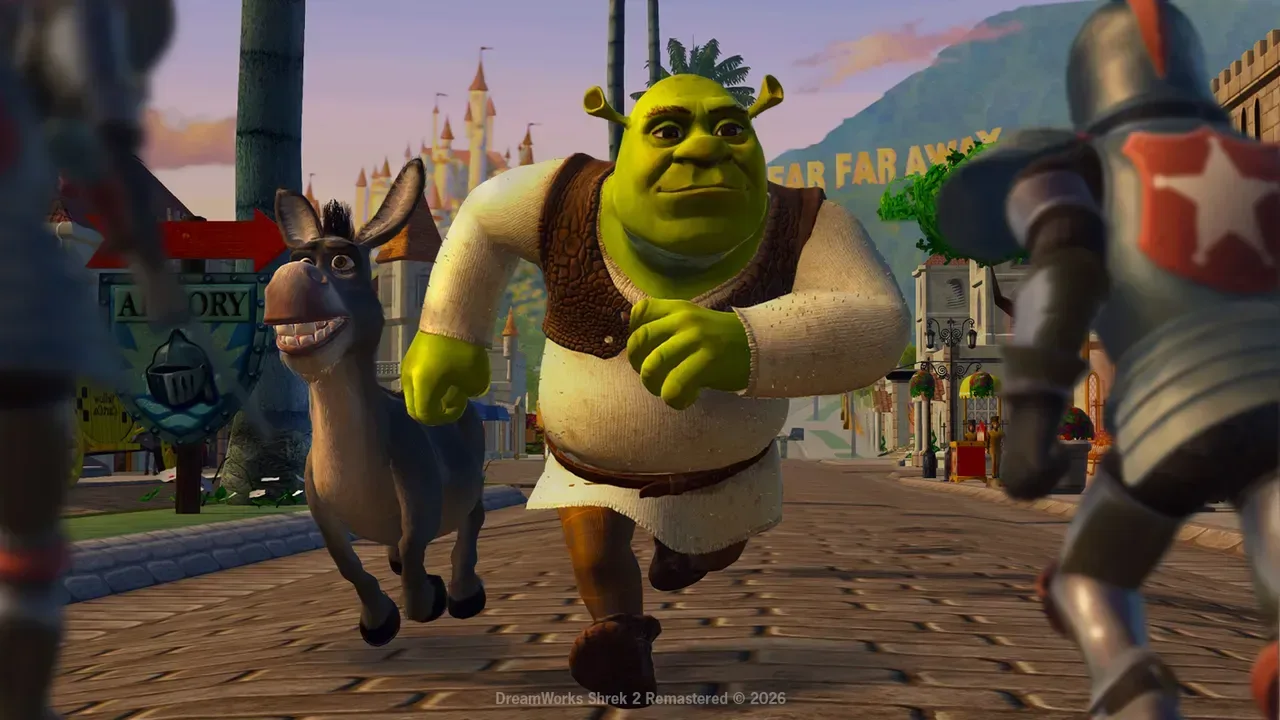
Shrek 2 Remastered is prompting a familiar PC-gaming question in an extremely unfamiliar setting: how demanding can a return trip to Far Far Away really be?
The remaster, based on the game first released in 2004, is scheduled to launch on November 10. Its feature pitch includes improved textures, an enhanced interface and 4K-resolution support. Yet it is the graphics-card line on its Steam listing—not its fairy-tale cast or its GTA 6-spoofing reveal trailer—that has attracted the most attention.
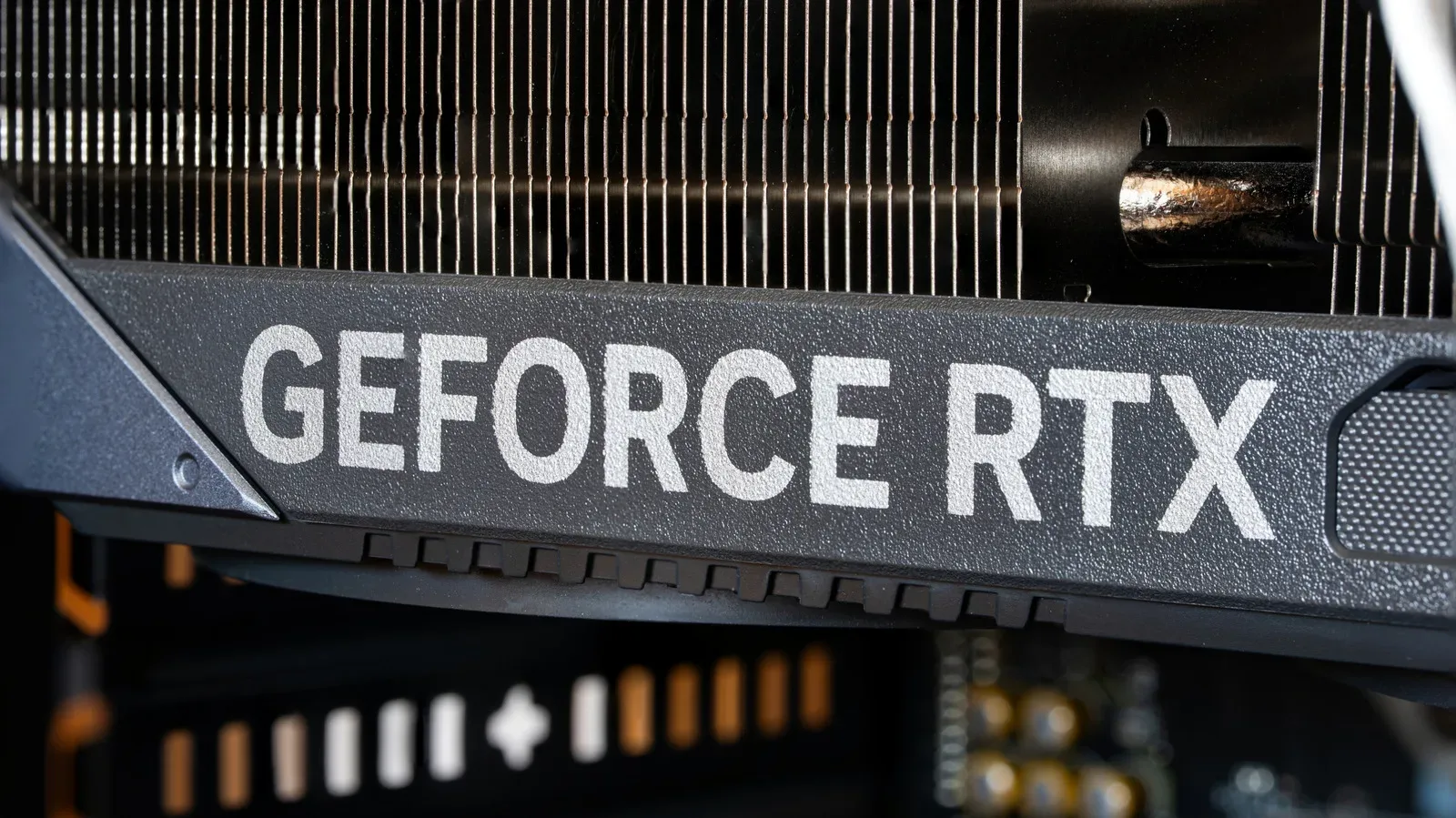
The listed minimum GPU requirement is an NVIDIA GeForce RTX 3060 Ti or RTX 4060, or an equivalent card. For the recommended experience, the listing names an RTX 4070 or RTX 5070. It also points to a 12GB-to-16GB VRAM requirement. For a remaster of a title associated with the GameCube era, those numbers have led to more than a few raised eyebrows—and a healthy crop of ogre jokes.
The numbers that sparked the reaction
System requirements are not merely a list of parts. They are the developer’s stated baseline for installing and launching a PC game, plus a separate target for the experience it considers preferable. The important catch is that the supplied details do not identify the resolution, frame-rate target, visual preset, processor requirement or other conditions behind either tier.
That missing context matters. A recommendation could be intended for high settings, 4K output, a particular frame-rate goal, or a mixture of those factors. Without those details, it would be a mistake to treat the RTX 4070 or RTX 5070 recommendation as proof that every setting and every display target requires that level of hardware. It is, however, fair to say that the named minimum and recommended GPUs are unusually robust on their face for a remaster of this particular vintage.
That is exactly why the announcement has become a social-media punchline. One reaction hoped the swamp visuals would justify the horsepower. Another player noted that their PC can run Red Dead Redemption 2 at its highest settings but would, based on the listed requirements, fall short for this remake. A different post dryly accepted the premise that Shrek’s green skin must be extraordinarily detailed. The comparison that keeps surfacing is GTA 6: the remaster’s reveal itself parodied Rockstar’s upcoming game, but commenters did not expect a similarly modern-looking demand for graphics hardware.
What VRAM means here
VRAM, short for video random-access memory, is the dedicated memory attached to a graphics card. Games use it for data the GPU needs rapid access to, including texture data, render targets and other visual resources. It is distinct from a computer’s ordinary system RAM.
Higher-resolution texture assets and higher-resolution rendering can increase VRAM demand. That does not tell us, by itself, which individual asset or feature is responsible for the 12GB-to-16GB figure listed for Shrek 2 Remastered. The available information supports the game’s plans for better textures and 4K resolution, but it does not provide a technical breakdown of the game’s renderer, texture packages, effects, settings or performance targets.
Related coverage includes Shrek 2 Remastered PC Specs Raise Eyebrows Ahead of November Launch.
In practical terms, prospective players should read the VRAM figure as a compatibility consideration, not a promise of a single performance result. The amount of VRAM on a card is only one part of a PC configuration, and the requirements currently reported should not be used to assume unlisted CPU, storage, operating-system or display expectations. The most useful next step for someone considering the game is to compare their GPU and its VRAM with the store listing, then wait for fuller settings and performance information if their system sits near either threshold.
Minimum versus recommended is a meaningful distinction
“Minimum” usually indicates the lowest class of hardware expected to run the game under the developer’s stated assumptions; “recommended” is generally a stronger target. Those labels are not universal quality guarantees. A game can launch at minimum specifications without delivering the resolution, fidelity or smoothness a particular player wants. Conversely, a machine below a recommendation might still be acceptable for someone willing to use lower settings—although whether that is possible or effective here cannot be determined from the details available.
The present reaction is therefore less about a completed performance verdict and more about expectations. Players see a 2004 game being updated with sharper assets, a refreshed UI and 4K support, then see modern RTX cards attached to both requirement tiers. The contrast is inherently funny, but it also creates a straightforward question Aspyr will need the finished game to answer: what does the remaster do visually and technically that makes those specifications appropriate?
A remaster can be more than an old game at a higher resolution
“Remaster” is a broad label. It can describe a modest update to presentation and interface, or a considerably more involved rebuilding effort. In this case, the confirmed upgrades are better textures, an improved UI and 4K support. Those are material changes, but they do not establish exactly how the game has been rebuilt under the hood or how each change affects hardware demand.
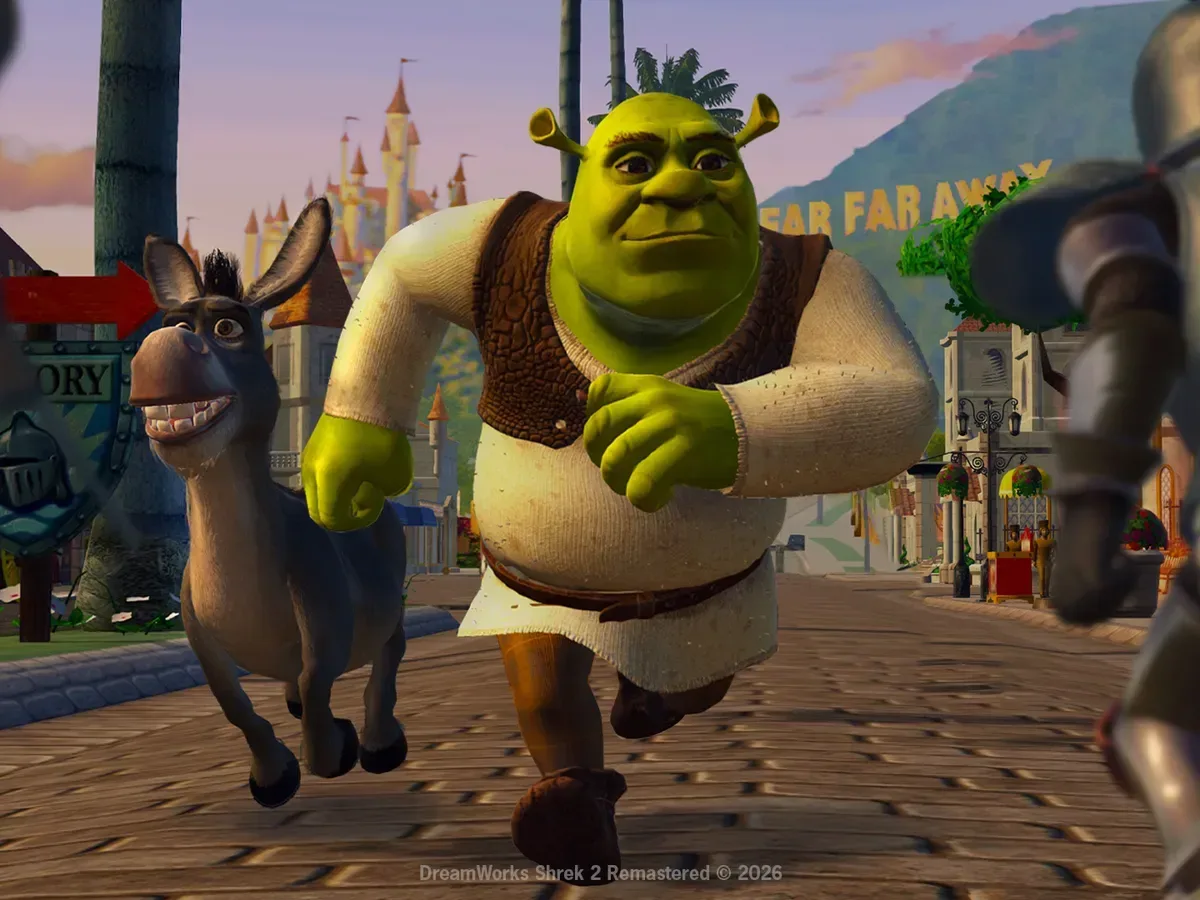
That distinction is worth protecting while the screenshots and requirements are being dissected. Screenshots may show a visual direction, but they cannot establish consistent performance, explain memory behavior, or reveal every setting that will be available at launch. Likewise, the name of a GPU alone cannot explain whether a game is demanding because of high-resolution assets, its rendering approach, its target output, optimization decisions, or several of those factors at once.
The best-supported interpretation for now is simple: the remaster is positioned as a substantially enhanced PC presentation, and its published hardware targets are striking enough to invite skepticism. Stronger conclusions need technical detail that has not been provided.
The AI speculation does not have a disclosed basis
Some online discussion has also attached the phrase “vibe coded” to the remaster. There is no AI disclosure on its Steam page indicating that AI was used in the game’s creation or marketing. Steam asks developers to disclose AI use in those areas. Absence of a disclosure is not evidence for a particular development method; it means the current listing does not provide the disclosure being claimed in those posts.
That is an important line to draw. A surprisingly high requirement list may lead to speculation about production tools or optimization, but neither idea is established by the supplied information. Players can reasonably ask for a clearer explanation of performance goals and settings. They cannot reasonably turn a lack of technical detail into confirmation of an undisclosed process.
Aspyr’s role raises the stakes for the PC version
Shrek 2 Remastered is being developed by Aspyr, a studio known for port and remaster work. Its cited projects include Lord of the Rings: War in the North — Legacy Edition, Deus Ex: Remastered and Tomb Raider 1-3 Remastered. The studio is also associated with the poorly received Star Wars: Battlefront Classic Collection.
That background makes the attention on a store-page spec sheet more understandable. Remasters are often judged on two connected fronts: whether the classic game remains recognizable and whether the modern version runs appropriately on its target platforms. For this release, the stated hardware bar has made the latter issue part of the conversation before launch.
It also means players should avoid reducing the entire project to a joke about an RTX-powered ogre. The listed cards matter, especially to people deciding whether their PC is eligible, but requirements do not convey controller support, UI quality, the handling of the original game’s design, or the final stability and performance of the release. Those answers will be clearer only once the game arrives or Aspyr provides further specifics.
What to watch before November 10
- Complete PC specifications: CPU, memory, storage and operating-system requirements would make the compatibility picture much clearer.
- Performance targets: Resolution, graphics preset and frame-rate expectations behind the minimum and recommended configurations are the key missing context.
- Settings details: Players will want to know how much flexibility the PC version offers when balancing resolution, visuals and performance.
- VRAM explanation: The 12GB-to-16GB range is among the most notable published figures and would benefit from clarification.
Until then, the remaster has achieved something few would have predicted from a return to Shrek’s 2004 game: it has made GPU tier lists a part of the fairy-tale discourse. Anyone weighing an upgrade should keep the distinction between a listing and a finished-game result in mind. For broader PC hardware context, see our coverage of the Anker Nano 13-in-1 dock, though a dock will not make an underpowered graphics card ready for this particular trip to the swamp.