Sega says it intends to temporarily remove Total War: Shogun 2 – Complete Edition from sale after the updated PC release was met with a fierce wave of negative player feedback. The company also says it plans to restore the prior version of the game to storefronts, reversing a decision that had left the new Complete Edition as the only version available for purchase.
The move follows the October 13 launch of the advertised updated, enhanced and complete edition. Players have reported a broad set of problems: graphical issues, both fresh and longstanding bugs, an unpopular user interface, and problems surrounding artwork that appears to have been enlarged using AI upscaling. At the time covered here, the Steam listing remained online but had only a 17% positive rating from nearly 2,000 reviews.
That response is especially consequential because Shogun 2 is a longstanding PC strategy game with an audience that has clear expectations for how it should look, work and be preserved. A rerelease does not only compete with contemporary games; it is also measured against the earlier version players already know. In this case, that comparison became unavoidable when the older, lower-priced edition was removed at the same time and replaced by a $40 product.
Sega acknowledges the release did not meet its standards
In its public statement, Sega said the Complete Edition had fallen short of player expectations and of the company’s own standards. It said it had seen feedback, comments and reviews, and agreed that the current experience is not where it needs to be.
“We’ve seen your feedback, comments, and reviews. We agree that the current experience is not where it needs to be.”
The publisher says it is working with platform holders to take the game down temporarily while it investigates. Importantly for people who already paid for the new edition, Sega says existing owners will retain access while that process happens. This is a removal from sale, not a statement that purchasers will lose the game from their libraries.
Sega also says it is working with its development partner to identify the causes of the problems, make improvements and bring the game up to the quality standard players expect from the Total War series. The statement does not provide a timetable for delisting, patches, a possible return to sale, or the restoration of the original edition. It also does not set out which specific complaints will be addressed first.
Why restoring the original version matters
The most practical part of Sega’s response is its stated plan to reinstate the previous version for purchase. Before this reversal, buyers who wanted Shogun 2 in its established form no longer had that option on the store. They instead faced a higher-priced replacement whose reception had rapidly deteriorated.
Related coverage includes Sega Pulling Total War: Shogun 2 Complete Edition From Sale After Troubled Relaunch.
For a rerelease, replacing an older build raises the stakes well beyond the usual launch-day frustrations. Players are not merely deciding whether a new game is worth trying. They are deciding whether a revision is a reliable substitute for software they could previously buy and play in a known state. When the replacement has presentation, usability and stability complaints, withdrawing the old option can turn a disappointing upgrade into a preservation and consumer-choice issue.
Returning the earlier version does not itself repair the Complete Edition. It does, however, give prospective buyers a choice while Sega investigates the new build. It also creates a clearer dividing line: players who want the familiar release can seek that version, while anyone interested in the enhanced edition can wait for more detail on fixes and its eventual status.
The wording matters here. Sega has said it plans to bring back sales of the previous version, but it has not detailed precisely when that restoration will occur or how the storefront presentation will distinguish the editions. Until the change is live, prospective buyers should treat it as an announced plan rather than an already-completed restoration.
The complaints are not limited to one bad texture
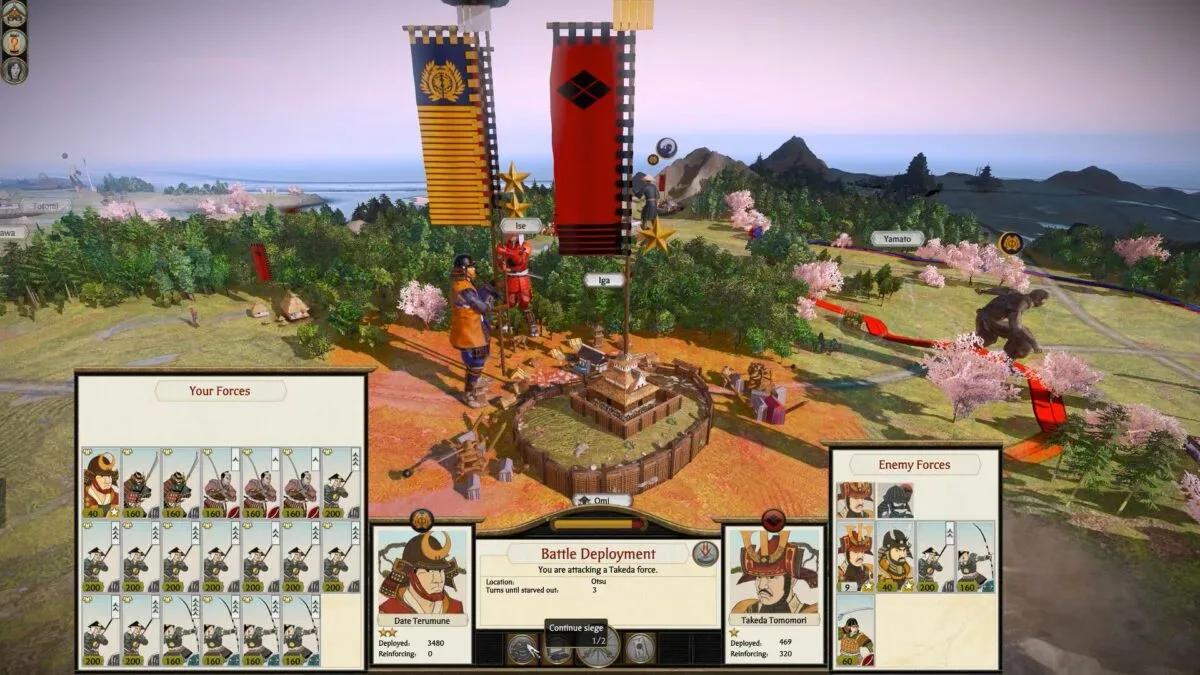
The negative response described around the relaunch covers several separate areas. Graphical problems can include visual presentation that looks wrong or inconsistent. Bugs refer to errors in the software’s behavior, whether newly introduced or carried over from before. User-interface, or UI, criticism concerns the menus, screens and controls through which players read information and issue commands.
These categories can compound one another in a strategy game. A visual issue may be distracting; a poorly received UI can make basic information harder to interpret; software bugs can undermine confidence in a campaign or battle. None of those concerns needs to be identical for players to reach the same conclusion that a revised edition has not earned its place as the default version.
That is why a simple patch promise would not fully answer the situation. The Complete Edition’s challenge is not just to remove isolated defects. It needs to demonstrate that the overall package—its art, interface, reliability and value proposition—justifies being presented as the updated and definitive way to buy Shogun 2.
AI upscaling has become a central transparency question
One particularly contentious issue is the apparent use of AI upscaling on some in-game artwork. AI upscaling is a process intended to make a low-resolution image appear larger or sharper by generating additional visual detail. It is not the same thing as manually recreating or restoring every element of an image. Depending on the material and review process, the generated additions can look mismatched, distorted or simply unlike the original art direction.
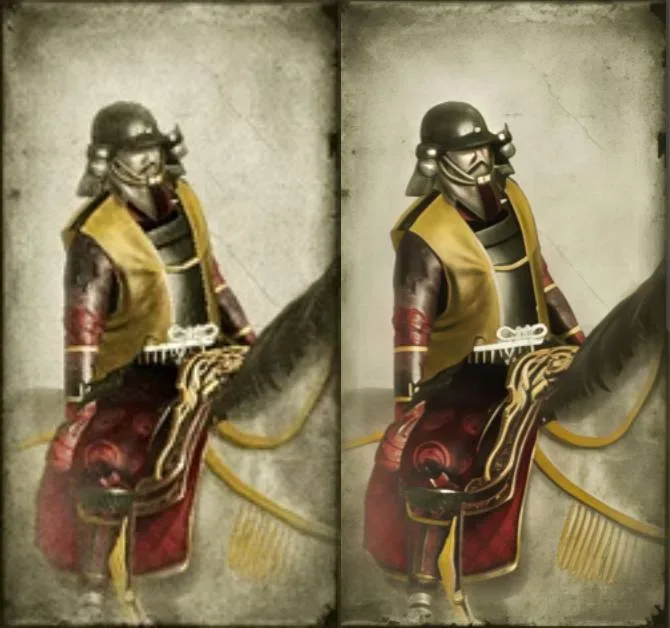
Criticism of the Shogun 2 release has focused on the quality and apparent inconsistency of those results. Some images were said to have been enlarged in ways players found absurd, while other encyclopedia artwork remained at its original tiny size. That mix creates a presentation problem even before the separate question of whether generated enhancement is appropriate for the game’s historical art assets.
Sega’s statement acknowledges the release’s broader shortcomings but does not specifically address AI use. It also does not explain why the Steam product page had not been updated with an AI declaration at the time in question. That omission is likely to remain part of the conversation because the concern is not only aesthetic. Players want to know what changed in a newly sold edition, how those changes were made, and whether the store page gives them enough information to make an informed purchase.
It is useful to separate this dispute from other debates about AI tools. The immediate issue here is narrowly practical: the release has been criticized for art quality, inconsistent treatment of assets and a lack of clear disclosure. Broader technology messaging elsewhere does not resolve whether an individual game listing should accurately describe how its assets were handled. For another perspective on the wider public debate around AI positioning, see this discussion of how Apple has framed Apple Intelligence.
What current owners and prospective buyers should take from the announcement
For existing owners, Sega’s clearest commitment is continued access during the temporary sales removal. That does not guarantee a particular fix schedule or establish the final state of the Complete Edition, but it means purchasers are not being told that the product will disappear from their libraries while the investigation is underway.
For people who have not bought it, the sensible reading is more cautious. The publisher has conceded that the current experience is below standard and is pursuing a delisting while it investigates. With the older version slated to return, there is little reason to assume that the current Complete Edition listing represents the settled, intended state of Shogun 2 on PC.
- If you own the Complete Edition: Sega says you will keep access while the issues are investigated.
- If you were waiting to buy Shogun 2: the previous version is planned to return, though no return date has been provided.
- If AI disclosure is important to your purchasing decision: Sega’s statement did not directly address the reported AI upscaling or the missing store-page declaration.
- If you are expecting an immediate repair: no detailed patch plan, schedule or list of confirmed fixes has been announced.
A delisting is an admission of a serious release problem, not a full solution
Temporarily pulling a game from sale is a more significant response than simply acknowledging complaints in a social post. It prevents additional customers from buying into a version Sega now concedes is not acceptable. Restoring the older edition should also reduce the pressure on players to purchase the troubled replacement merely to access Shogun 2 through official storefronts.
But the response leaves substantial work ahead. Sega will need to determine the technical causes behind the reported graphical and bug-related issues, decide what changes are required for the UI, and clarify the handling of the disputed artwork. It will also need to explain what makes a future version ready to return to sale. The company’s public wording promises investigation and improvements, but players have not yet been given the detailed accountability that would answer those questions.
For now, the key development is straightforward: Sega has recognized that the new Total War: Shogun 2 – Complete Edition did not meet expectations, intends to remove it from sale temporarily, and says the pre-existing edition will be sold again. For a game relaunched as the complete modern option, that is an unusually stark reset—and an indication that the path back will require more than a cosmetic touch-up.