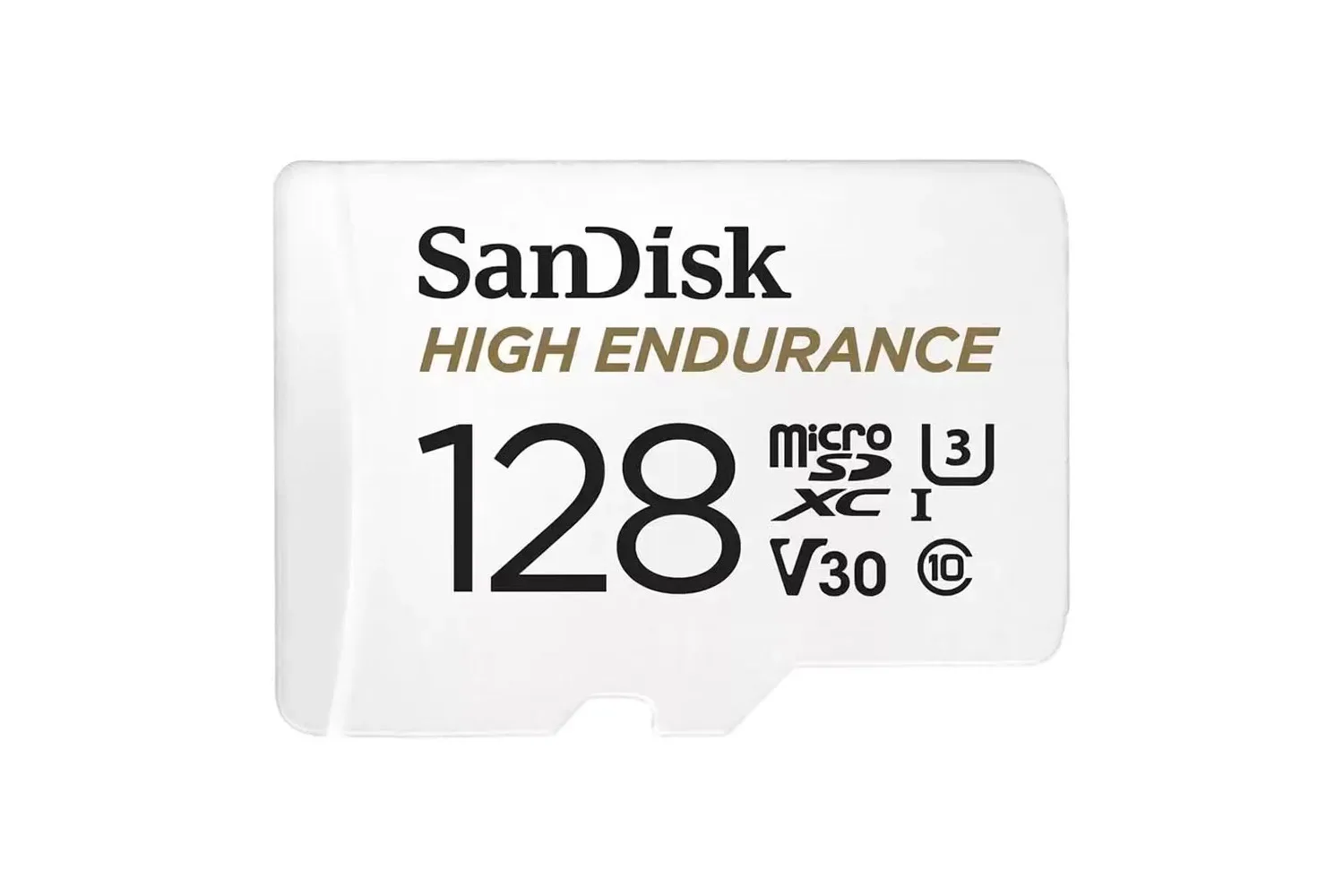
MicroSD cards occupy an unusually broad stretch of the gadget world. One minute they are quietly holding screenshots and smaller games on a handheld; the next, they are being asked to record hours of video inside a dash cam or security camera. Those are very different workloads, and a SanDisk High Endurance 128GB microSDXC card listing is leaning firmly toward the latter. It is listed at $37, reduced from $61, which works out to a reported 39% discount.
The listing is for the 128GB model and includes an adapter. Its key distinction is not simply capacity, but the High Endurance designation: this is storage positioned for long-term use in demanding recording devices rather than solely for occasional file transfers or game installs. That makes the discount potentially more interesting for someone who specifically needs a card intended for continuous or repeat video capture.
Price listings and stock can change without much ceremony, so the $37 figure should be treated as a snapshot rather than a permanent new baseline. Still, compared with the stated $61 regular price, it represents a notable reduction on a type of microSD card that can carry a premium because of its durability focus.
What “High Endurance” is meant to address
The word endurance gets thrown around in accessory marketing often enough that it can sound like a promise of invincibility. It is better understood here as a statement about intended use. A standard microSD card may be perfectly practical for moving photos, adding space to a portable device, or expanding a small library. But cameras that constantly create clips and overwrite old footage impose a repeated-write workload. A card built with that scenario in mind is the more sensible category to consider.
That is why dash cams and security cameras are the natural homes for this particular SanDisk model. A dash cam may record routine drives for long periods and preserve footage when an incident occurs. A security camera can write clip after clip as activity is detected, or maintain local footage alongside cloud-based storage. In each case, the card is doing background work that becomes very important only when somebody needs to retrieve a recording.
The 128GB capacity is also more meaningful in that context than it might sound to someone comparing it with the massive install sizes of modern PC games. Video storage is finite, and the total amount of footage retained depends on the camera, its resolution, recording settings, clip length, and overwrite behavior. But 128GB is a substantial local reserve for a recording device, particularly where cloud storage is already part of the setup and the card serves as a backup or complementary local option.
Durability claims matter most when the device is not pampered
The card is described as resistant to temperature changes, water, shock, humidity, and magnets. Those are useful properties for the environments in which compact cameras and vehicle equipment may operate. A dash cam can spend long stretches inside a car exposed to changing weather and cabin temperatures. A security camera may be installed in a location that is less protected than a desk drawer. The broader point is not that a microSD card makes the rest of the hardware indestructible—it plainly does not—but that the storage itself is designed to tolerate more than a gentle indoor routine.
That distinction is worth keeping in mind. A resilient card does not repair a failing camera, prevent power interruptions, or guarantee that every recording setup is configured correctly. It is one component in a system. Yet it is a component that can be subjected to lots of repetitive activity, which is exactly why choosing the right type can matter more than grabbing the cheapest capacity number on a shelf.
A high-endurance microSD card is less about making a gadget adventurous and more about giving a frequently recording device storage intended for repeated use.
For buyers whose priority is the absolute lowest cost per gigabyte, an ordinary card may still look more attractive. For a camera that will record regularly, however, the calculation is different. The question is not only how much data can fit, but whether the product is aimed at the job the device performs.
128GB is not a universal answer
There is no single “correct” microSD capacity, and 128GB should not be treated as one. A person archiving larger amounts of video locally may want to investigate capacities above it, assuming the device supports them. Someone using a camera primarily with cloud storage may find 128GB a more balanced fit. Compatibility remains fundamental: a buyer should check the storage limits and card requirements of the camera, dash cam, handheld, or other device before purchasing.
It is also useful to separate device storage needs. Gaming hardware can consume storage quickly because full games and updates are large, while a camera’s needs are shaped by video settings and retention policies. A 128GB card can therefore seem modest in a Steam Deck conversation while remaining a meaningful amount of local space in a recording-device conversation.
For PC and handheld owners, the card can still have secondary appeal as removable storage. The listing notes that it can be used in other equipment, including a Steam Deck. That flexibility is convenient, though it may be more durability-focused than necessary if the only plan is to store games in a handheld. Anyone expanding a handheld library should weigh capacity, device compatibility, and the card’s intended purpose against their own priorities. Readers building out a Windows gaming setup may also find our guide on updating GPU drivers in Windows 11 useful for another less glamorous but important piece of PC upkeep.
Who this discounted card best suits
The $37 listing is easiest to justify for people who already know they need a high-endurance card. That includes owners of compatible dash cams, indoor or outdoor security cameras, and other devices that may repeatedly write video to local storage. It is especially relevant when the goal is not merely adding capacity, but replacing or purchasing a card with a durability-oriented design.
- Dash-cam owners who want local room for recorded clips and a card intended for regular writing.
- Security-camera users who use local storage as a backup, supplement, or part of a compatible recording setup.
- Owners of devices in variable conditions who value the stated resistance to temperature, water, shock, humidity, and magnets.
- Handheld users who can use microSD storage and value the card’s durability angle, while recognizing that a larger conventional card may suit a game-heavy library better.
Conversely, it may not be the most targeted buy for a person who only needs a card for occasional photos, music, or a small collection of files. The main appeal here is the blend of 128GB capacity and the High Endurance positioning. Paying attention to that distinction prevents a deal from becoming an automatic purchase just because the percentage off looks substantial.
Reading the deal beyond the percentage
A 39% reduction is attention-grabbing, but the practical comparison is simple: the stated price falls from $61 to $37, a $24 difference. At $37, the card is being presented at a considerably lower entry point than its cited full price. The value depends on whether its resistance claims and recording-oriented design match the equipment it will serve.
It is also sensible to verify the precise version before ordering. MicroSD product families can have similar names while differing in capacity, included accessories, intended workload, and other specifications. In this case, the relevant details are the SanDisk High Endurance name, 128GB capacity, microSDXC format, and the included adapter described in the listing. Confirming those points against a device’s manual is more useful than relying on a product thumbnail alone.
For buyers who need durable local storage for a compatible camera or dash cam, the reported $37 price is a meaningful opportunity to consider. It does not make 128GB the right choice for every setup, nor does it remove the need to check compatibility and current pricing. But it does put a specialized, endurance-focused card well below the stated $61 price, which is exactly the sort of drop that makes a normally niche accessory worth a closer look.
Shop the products
Check current price, model and availability at the retailer.