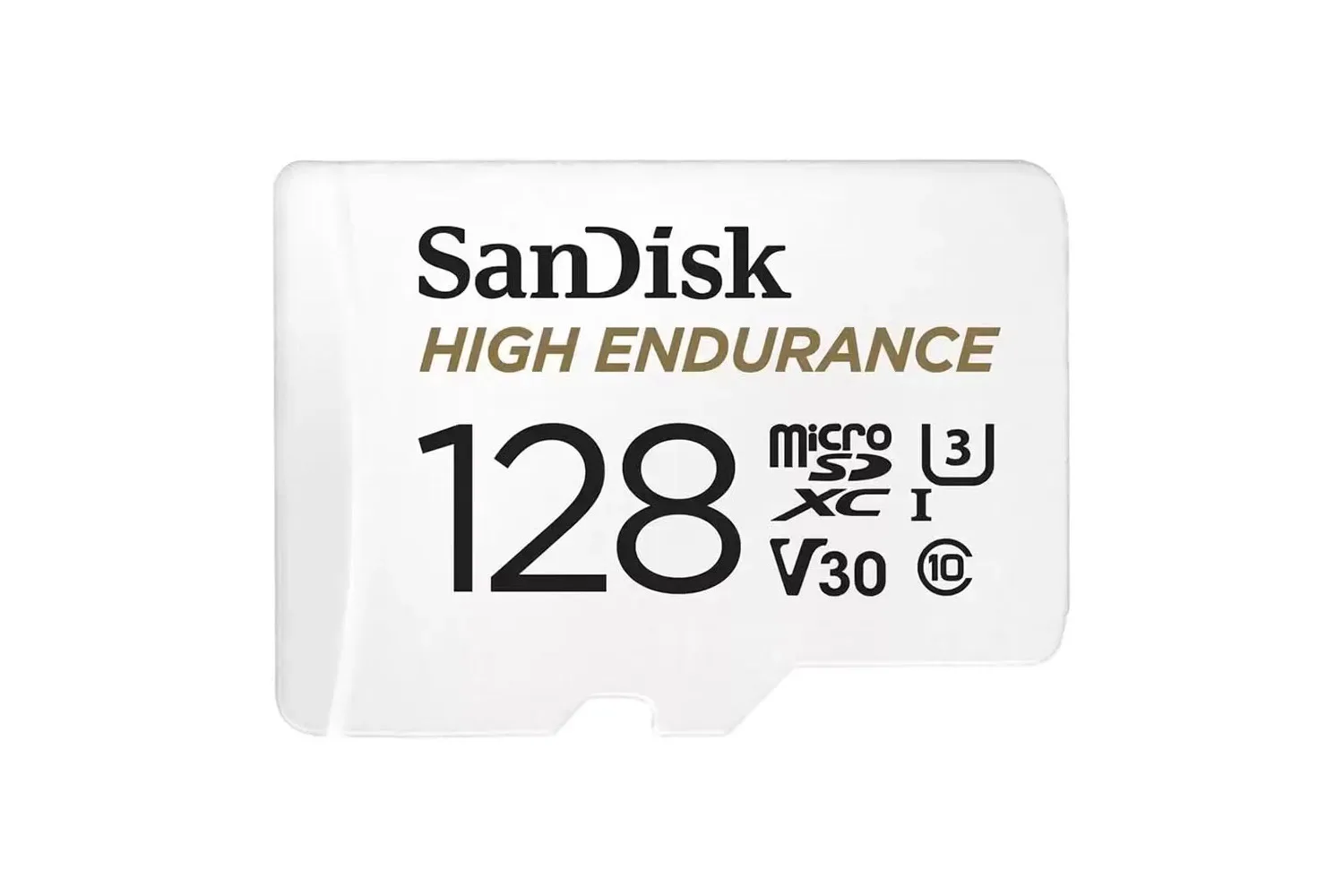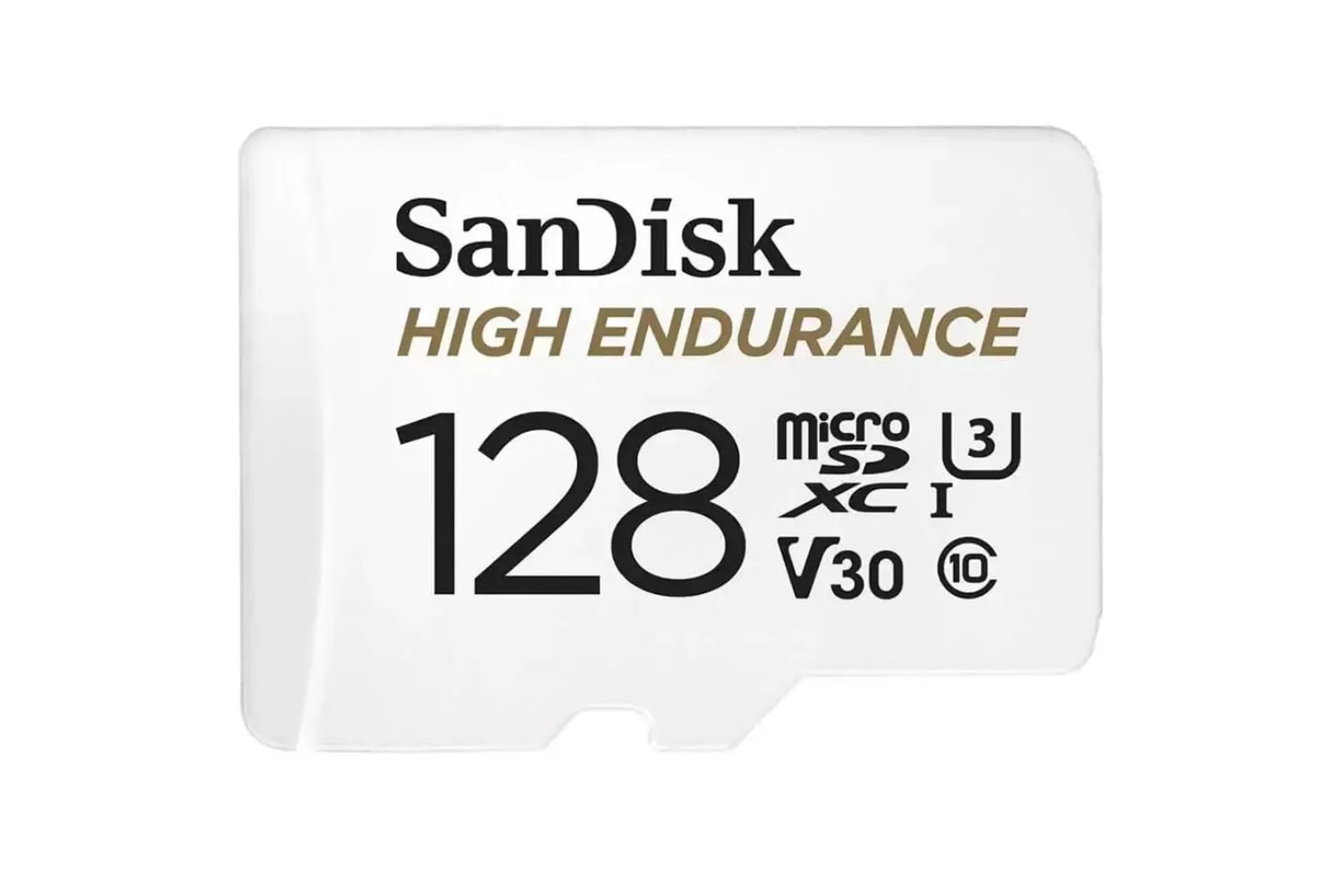
A 128GB SanDisk High Endurance video microSDXC card, supplied with an SD adapter, is currently listed for $37. The stated regular price is $61, making the listed reduction roughly 39%. As with any retailer promotion, the price and availability can change, so it is sensible to confirm both before committing.
For gaming audiences, a microSD card is often discussed as a straightforward way to expand storage on compatible hardware. But the important qualifier is compatible: device support, accepted capacities and the type of data that can be stored are all determined by the device itself. This particular card’s most notable stated purpose is sustained video recording rather than simply holding a large library of files.
What is being offered
The listing concerns a 128GB microSDXC card from SanDisk’s High Endurance range, plus an adapter that lets the smaller card fit devices with a full-size SD-card slot. “microSDXC” refers to the compact Secure Digital card format and its higher-capacity family; it is physically smaller than a standard SD card. The adapter does not add storage or change the card’s capacity. It simply allows the microSD card to be used in a standard SD-sized slot where compatibility permits.
At 128GB, the card provides an additional pool of storage for compatible devices. That can include gaming consoles, digital cameras, dash cams and home-security equipment. In practical terms, the card can be used for files, media and documents where a device supports external storage, while the exact process for choosing the storage location varies. Some systems offer a storage setting; others require files to be moved manually.
The included adapter makes the package more flexible for owners whose devices use different physical card sizes. It should not, however, be treated as a universal compatibility solution. A full-size slot may accept the adapter physically, but the device still needs to support the card format and capacity. Checking the hardware manual or the manufacturer’s compatibility guidance is the low-drama step before opening the packaging.
Why “High Endurance” matters more for cameras than game storage
Storage cards are not all aimed at precisely the same job. A card intended for occasional transfers or a handheld library has a different workload from one inside a dash cam or security camera that repeatedly writes video for long periods. The “High Endurance” branding here indicates that SanDisk positions this card for that continuous-recording use case.
The supplied specification says the card can record up to 10,000 hours of Full HD video in appropriate dash-cam or home-security-camera use. That headline figure is a durability-oriented claim rather than a promise that one 128GB card will retain more than a year of uninterrupted footage at once. Cameras commonly manage recording according to their own settings, and some overwrite older clips after the available capacity is full. Recording time, quality and retention behavior remain device-dependent.
That distinction is useful. Capacity is the amount of data a card can hold at a given moment. Endurance concerns how well a card is designed to cope with repeated writing over its working life. For a camera constantly generating footage, repeated writes are central to the task. For a console owner primarily downloading, deleting and re-downloading games, the buying decision may instead hinge on the hardware’s supported format and storage-management rules.
In other words, the card may be attractive to someone who needs removable storage in a compatible gaming device, but its stated long-term recording focus is especially relevant to a dash cam or security camera. Shoppers deciding between multiple cards should match the workload to the product rather than assuming every 128GB card is equivalent because the capacity number is the same.
Durability claims, with sensible expectations
SanDisk says the card is temperature-proof, water-proof, shock-proof, humidity-proof and magnet-proof. Those claims make the card sound appropriately rugged for devices that may live in a vehicle, outdoors or in other less-than-gentle surroundings. They are also not a reason to treat stored data as invulnerable.
A durable storage medium can reduce exposure to particular environmental hazards, but it cannot eliminate every way that data can be lost. Device faults, accidental deletion, file corruption, loss or theft of the card, and compatibility issues can all matter. If footage or files are important, a backup routine remains the practical safeguard. The endurance rating should be understood as part of a broader reliability plan, not a substitute for having another copy of valuable material.
It is also worth avoiding overly broad assumptions from the supplied environmental claims. “Water-proof,” for example, describes a manufacturer durability claim for the card; it does not necessarily mean every device using it is protected from water, nor does it establish that footage will always be recoverable after an accident. The same common-sense caution applies to heat: a resistant card does not make an overheating camera, console or other device harmless to use.
A compatibility checklist before buying
There is enough information here to identify the card as a potentially useful expansion option, but not enough to guarantee it is right for every device. A quick check can prevent the classic tiny-card, big-regret scenario:
- Confirm the slot type: Find out whether the device takes microSD directly or a full-size SD card. The included adapter helps with the latter, but does not change the underlying card format.
- Check supported formats and capacities: A device may place limits on supported cards. The product is a 128GB microSDXC card, so confirm that the device supports that specification and capacity.
- Understand the intended job: For a dash cam or security camera, the stated high-endurance design and up-to-10,000-hour Full HD recording claim are the relevant selling points. For a console or camera, determine how that hardware handles external storage.
- Learn the storage workflow: Some devices let users select an external card through their settings, while others rely on manual file transfers. Knowing which applies helps avoid assuming the card will automatically absorb all new data.
- Plan for important data: Treat the card as storage, not an only-copy archive. Move or back up material that would be difficult to replace.
Who the $37 listing is best suited to
The strongest match is a buyer with a compatible camera setup that records frequently and needs a 128GB card built around long-term video recording. The package also has a clear convenience advantage for someone who uses both microSD and standard SD devices, as the adapter is included rather than needing to be sourced separately.
It can also make sense for users seeking extra capacity on supported gaming hardware, digital cameras or other devices. Still, 128GB should be viewed as a capacity figure, not an automatic answer to every storage squeeze. Software libraries, recording settings and device restrictions vary widely. Prospective buyers should first establish whether their device accepts a card like this and what it permits them to store there.
The price is the immediate hook: $37 versus the stated $61 normal price. That is a meaningful reduction for someone already in the market for this endurance-oriented form of removable storage. It is less compelling when the purchase is based only on the percentage discount, particularly if the card’s video-recording emphasis and 128GB capacity do not line up with the intended device.
For more gadget-deal context, Joking Joystick has also covered the Beats Pill’s $100 listing and its IP67 protection. The products serve entirely different needs, but both underscore the same basic shopping rule: read the specifications that matter for the way you will actually use the hardware.
The practical takeaway
This SanDisk card combines 128GB of storage, a standard SD adapter and manufacturer-stated resistance to temperature, water, shock, humidity and magnets. Its defining feature is the High Endurance positioning for ongoing Full HD recording, with SanDisk stating up to 10,000 hours for dash-cam and home-security use.
At the currently listed $37 price, it is a deal worth considering for compatible devices, especially recording-focused cameras. The final decision should come after a compatibility check and a realistic assessment of the workload. A small card can be a very useful upgrade; it just should not be asked to do a job the host device—or a single copy of important data—cannot safely support.
Shop the products
Check current price, model and availability at the retailer.