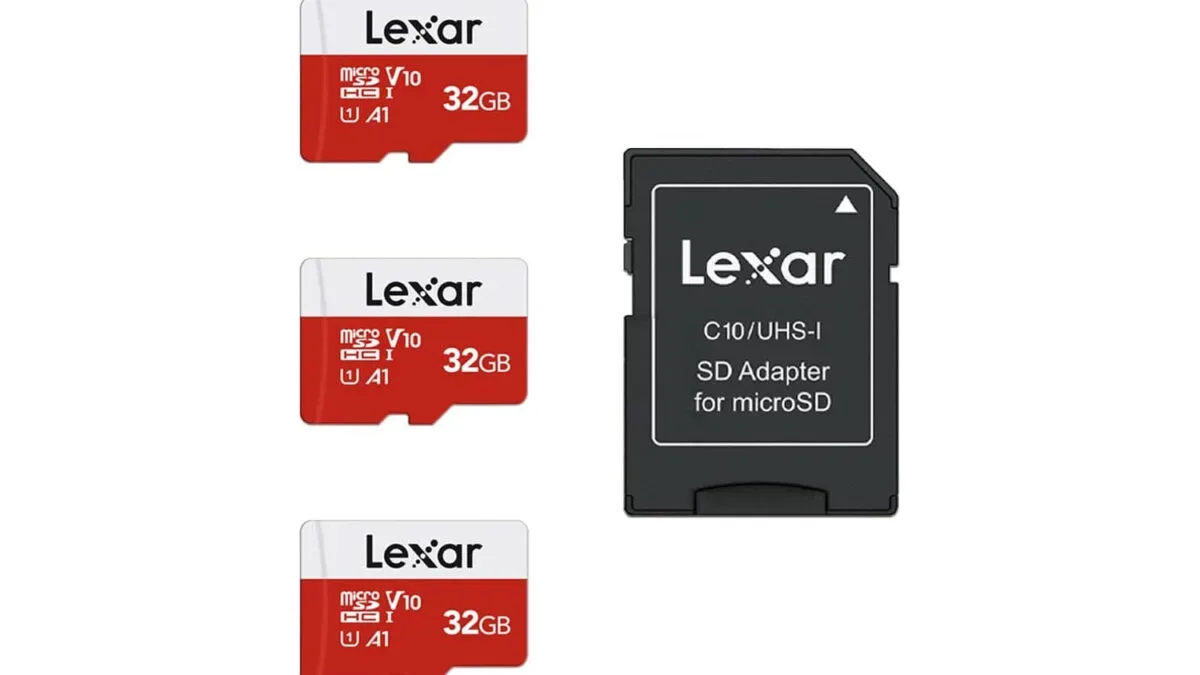
Small removable storage is not escaping the broader squeeze affecting memory products. A three-pack of Lexar E-Series 64GB microSD cards, bundled with a full-size SD card adapter, is currently listed at $45 for a limited time. That is $5 below the stated $50 listing price.
The value proposition is straightforward: the package provides three separate 64GB cards rather than one larger card, plus an adapter for devices with a standard SD slot. The listing cites transfer speeds of up to 100MB/s, support for media capture and playback, and durability claims covering temperature, shock, and magnets. Lexar also includes a 10-year limited warranty for the microSD cards and a one-year limited warranty for the adapter.
For anyone balancing camera footage, dash-cam clips, security video, drone media, or files moving between different devices, the main appeal is less about a flashy new format and more about having multiple cards ready for separate jobs. In a period where storage pricing has risen, even a modest discount on a multi-card pack may matter.
What is included in the $45 Lexar bundle?
The package contains three 64GB Lexar E-Series microSD cards and one SD card adapter. At the current $45 price, that works out to $15 per card before assigning any value to the adapter. The prior stated price was $50, while the bundle was reportedly available for as little as $20 last year. Pricing had climbed by January, as storage products rose more broadly.
That price history is important context rather than a guarantee of where the bundle will go next. The available information describes the $45 figure as limited-time pricing, so prospective buyers should treat it as a current listing rather than a permanent new baseline.
Each card has 64GB of capacity. Capacity is the amount of data a card can hold; it is distinct from transfer speed, which concerns how quickly data can move to or from the card. Three cards also offer a practical form of separation: one can be dedicated to a camera, another to an in-car recorder, and another kept as a spare or used for transfers. That division does not replace backups, but it can make everyday media management less tangled.
Understanding the 100MB/s claim
Lexar rates these cards for transfers of up to 100MB/s, with MB/s meaning megabytes per second. The word “up to” matters. It describes a maximum stated rate, not a promise that every file, device, adapter, or usage scenario will reach that number.
Real-world results can depend on the hardware reading the card, the device writing to it, the type and size of files involved, and whether the full-size SD adapter is being used. A laptop’s card reader and a camera can each impose their own limits. Likewise, copying a large video can behave differently from moving a folder containing many small files.
There is another useful distinction for shoppers comparing cards: transfer speed is not identical to sustained recording performance. The supplied details say the cards can record Full HD 1080p and, where the camera supports it, 4K and 3D media. They do not provide additional speed-class or sustained-write specifications. That means the safest reading is to match the card to the recording requirements stated by the device maker, particularly before relying on it for higher-resolution capture.
Where the included SD adapter helps
A microSD card is physically smaller than a standard SD card. The included adapter allows one microSD card to fit into a full-size SD card slot, such as one found on some laptops or DSLR cameras. It does not add storage capacity and it does not turn a device into a faster device; it simply changes the card’s physical form factor so it can be used in compatible SD slots.
That can be especially convenient in a workflow that begins in a compact device and ends on a computer. A card can be removed from a device that uses microSD, inserted into the adapter, and then read through a standard SD slot. The adapter also means the three-card bundle is not restricted only to devices that have a microSD slot.
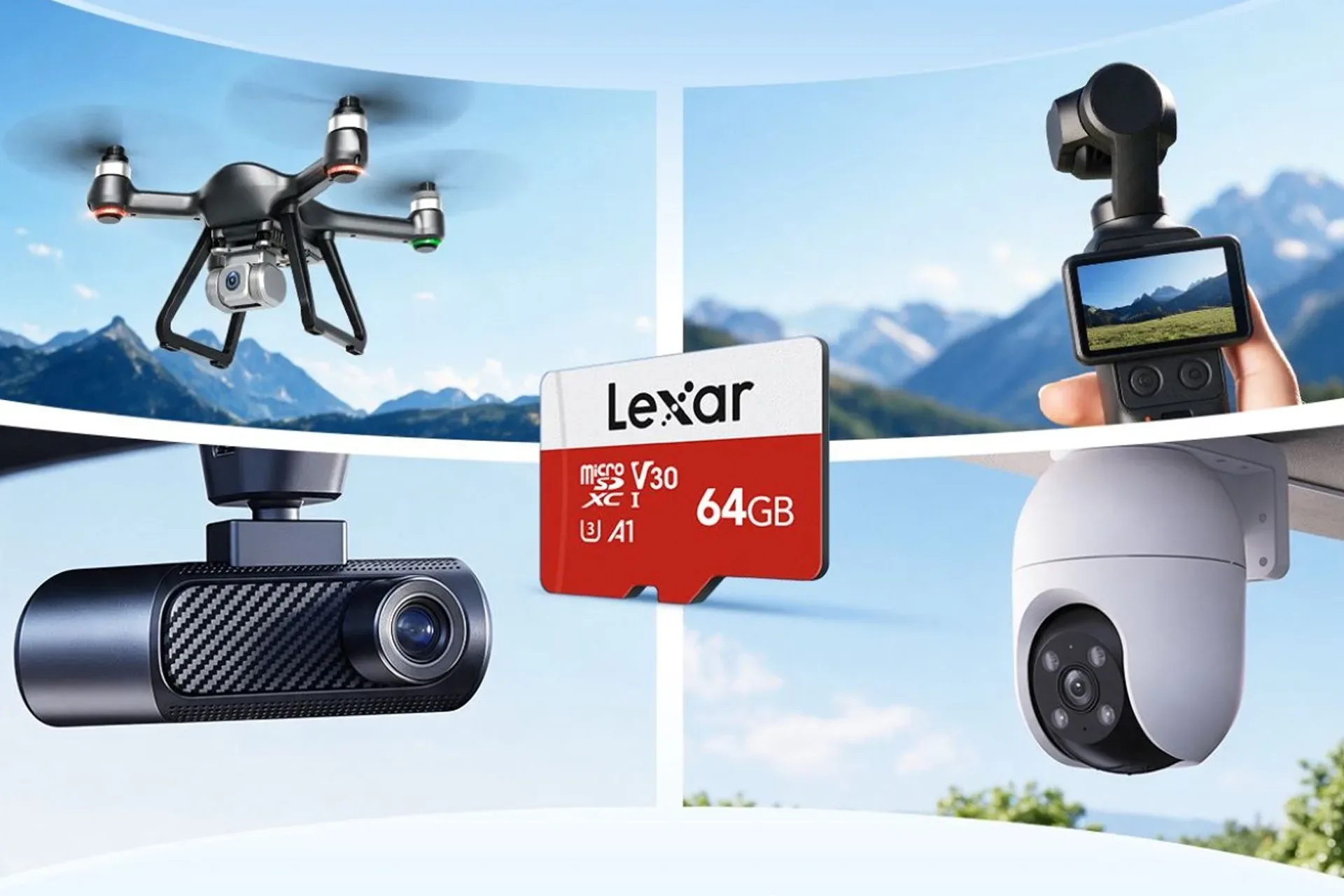
The listing identifies a wide collection of potential uses, including DSLRs, drones, vlog-style cameras, dash cams, and indoor or outdoor security cameras. Compatibility still starts with the individual device. Buyers should check that their hardware accepts microSD or standard SD through the adapter, and that its supported capacity and recording requirements align with a 64GB card.
Why three cards can be more useful than one
A single high-capacity card centralizes everything, which can be convenient. A three-card pack instead prioritizes flexibility. Keeping footage, photos, and routine recordings on different physical cards can simplify organization and reduce the need to constantly erase one card for a different device.
- Dedicated use: Leave a card in a dash cam or security camera while reserving others for cameras or file transfers.
- Rotation: Swap cards when one is full rather than stopping to move or delete files immediately.
- Separation: Keep unrelated projects or kinds of media apart from the outset.
- Compatibility: Use the supplied adapter when a device has a full-size SD slot instead of microSD.
There is a caveat: splitting data across several cards requires deliberate labeling and a backup routine. A smaller card is also easier to misplace. For material that matters, the sensible approach is to copy it elsewhere after capture rather than treating any removable card as its only home.
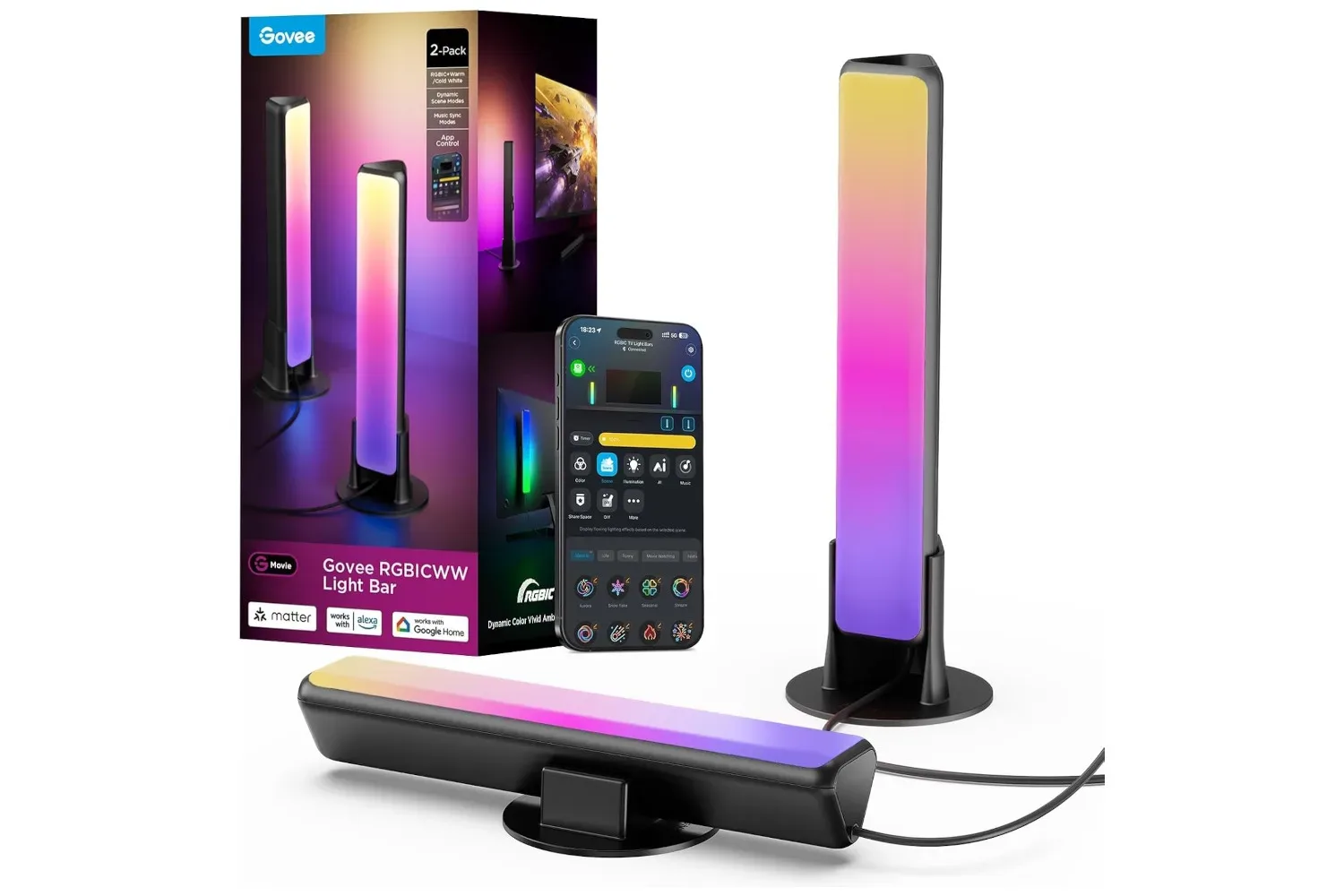
That same basic storage discipline can benefit a broader desk or entertainment setup. Removable media, cables, card readers, and devices all add up quickly; lighting is another practical part of the equation for a play space, as with these screen-matched TV light bars for gaming setups.
Durability and warranty details
Lexar describes the microSD cards as temperature-proof, shock-proof, and magnet-proof. These are useful protections for a product likely to be moved between devices, stored in a bag, or used in cameras that go outside. They should not be interpreted as a substitute for careful handling or duplicate copies of valuable files.
The stated warranty coverage is comparatively easy to parse: the cards carry a 10-year limited warranty, while the included adapter has a one-year limited warranty. “Limited” means the coverage is subject to its terms and conditions, so warranty length alone should not be mistaken for a blanket promise covering every type of loss, damage, or data issue.
Who this deal best suits
This bundle makes the most sense for people who need several modest-capacity cards across supported devices, rather than a single card for one storage-heavy workload. The included adapter makes it more versatile for users who alternate between microSD-equipped equipment and standard SD slots.
The $45 price is a $5 reduction from the stated $50 listing, not a return to the much lower price reported last year. Still, the three-card format, 64GB capacity per card, stated 100MB/s maximum transfer speed, and adapter make the package a practical option for handling everyday media across compatible cameras, recorders, and computers—especially while removable storage is costing more than it once did.
Shop the products
Check current price, model and availability at the retailer.