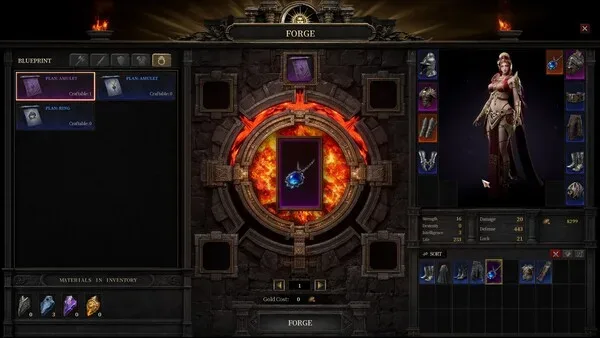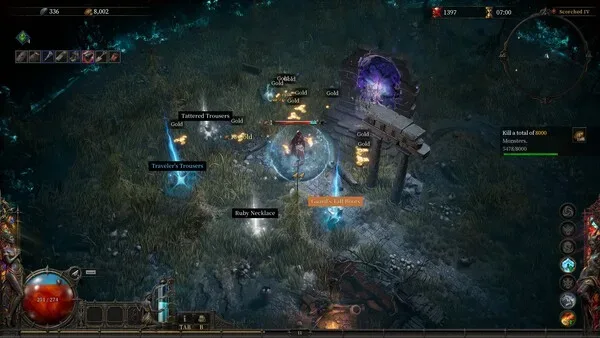
SuperLimber Studio has started its first playtest for SACRATA, a 3D isometric dark-fantasy “loot-survivor” built around goddess characters battling overwhelming enemy hordes. The early access opportunity is currently framed for press and creators, with no embargo attached, and arrives as the game has passed 60,000 Steam wishlists.
That is a meaningful early signal of interest, but it is important to separate that signal from a launch promise. A Steam wishlist is a player’s expression of interest in a game; it is not a purchase, a release date, or a guarantee that the player will ultimately download it. Still, a six-figure-adjacent wishlist count before public coverage has begun gives the project a notable base of attention as its development-facing playtest begins.
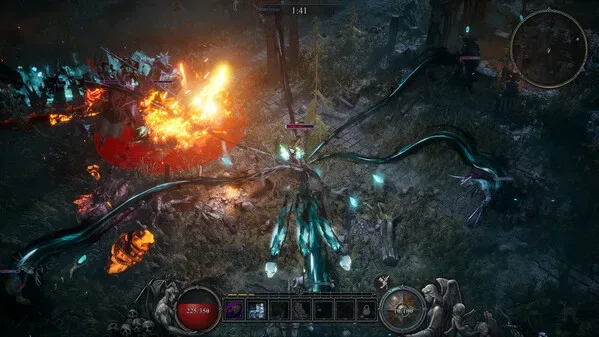
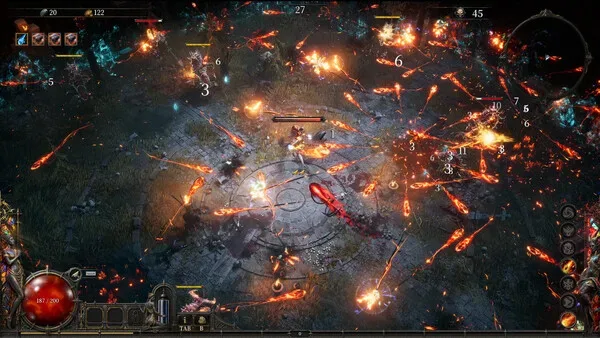
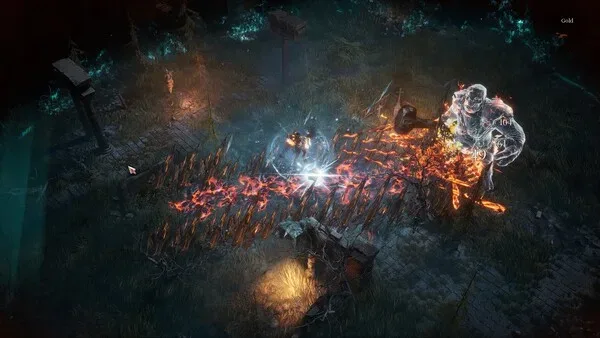
SACRATA is being positioned around an immediately readable proposition: an angled, overhead-like camera view; a dark fantasy setting; powerful goddess protagonists; rapid combat; loot; bosses; and dense packs of enemies to clear. The studio specifically highlights high-spectacle boss encounters and large-scale horde-clearing sequences, elements that could make the game particularly legible in short clips as well as longer first-look streams.
What “isometric 3D loot-survivor” tells players—and what it does not
The label provides useful broad guidance, even though it does not yet establish the complete structure of SACRATA’s progression, modes, release plans, or combat systems.
Isometric generally describes a camera perspective that looks down at the world from a raised angle rather than placing the player directly behind a character’s shoulders. In practical terms, that viewpoint can give players room to read threats arriving from multiple directions, while also keeping a large number of enemies on screen. SACRATA is described as 3D, so the characters and environments are presented as three-dimensional spaces rather than flat 2D playfields.
Loot-survivor is a compact genre description rather than a detailed feature list. “Loot” points toward rewards or equipment as part of the game’s appeal; “survivor” signals pressure from persistent or escalating enemy waves. The available information does not specify how loot is earned, whether items are permanent or run-based, how character improvement works, or whether play is divided into discrete runs. Those distinctions matter greatly, but they have not been confirmed here.
For now, the strongest supported takeaway is that SACRATA wants players to feel powerful in a crowded battlefield without requiring a long ramp-up before the action becomes enjoyable. The studio characterizes the loop as fast and easy to pick up, which suggests accessibility is part of the intended pitch. It does not, however, establish the game’s difficulty curve, depth, or long-term balance. Those are exactly the kinds of questions early playtests are suited to explore.
A first playtest is a development checkpoint, not a finished-game verdict
The word playtest deserves emphasis. A playtest is an opportunity to put a work-in-progress in front of players and observers. It can reveal whether the central combat loop is clear, whether enemy density remains readable, whether boss encounters stand apart from standard horde encounters, and whether rewards make the next battle feel worth pursuing.
None of that guarantees every part of the game is settled. The supplied details do not identify a release window, price, platform list beyond the presence of a Steam page, multiplayer support, controller support, playable roster size, or the exact contents of this test. They also do not describe specific weapons, powers, enemy types, maps, crafting systems, character upgrades, or loot rarities. Those absences are not negatives; they are simply areas where the project has not yet provided firm public detail.
For an enemy-heavy action game, early testing can be particularly consequential because spectacle and clarity have to coexist. A screen full of opponents can create the satisfying sensation of turning the tide against impossible odds. But the player still needs to recognize their own character, incoming attacks, available space, and the difference between ordinary foes and major threats. A compelling horde-clearing moment is not solely about how many enemies appear. It is also about whether the player can understand why they survived it.
Boss encounters create a related design challenge. A boss must register as an event amid a game whose usual rhythm is already built on visual intensity. The studio’s emphasis on spectacular bosses suggests these fights are intended to be a prominent part of SACRATA’s identity, rather than a minor interruption between waves. How those encounters ask players to change tactics remains unknown, but their role in the presentation is clear.
The goddess premise gives SACRATA a recognizable visual hook
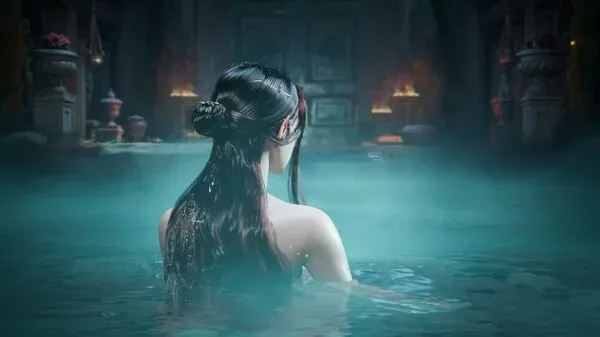
SuperLimber Studio is foregrounding its goddess characters as part of the game’s visual identity. In a crowded field of fantasy action games, a distinctive playable cast can matter well before a prospective player knows every system. Character silhouettes, costume design, animation, and the visual language of attacks all contribute to whether a game is identifiable at a glance.
That is especially relevant for creator coverage. A thumbnail, a short combat clip, or a brief stream segment has limited time to communicate what viewers are looking at. SACRATA’s pitch connects its character designs, enormous enemy encounters, and boss spectacle directly to that reality. This is not proof that the game will succeed on those platforms, but it explains why the studio is targeting press and creators early in the process.
The format also creates a useful tension for the developers to solve. Strong visual identity can pull viewers in, while readable combat and satisfying progression are what sustain attention once the initial image has done its job. The first playtest is therefore an early test of more than raw presentation. It is a test of whether SACRATA’s moment-to-moment action delivers on the promise made by its dark fantasy framing.
Why the wishlist figure matters, with the right caveats
More than 60,000 wishlists indicates that SACRATA has already found an audience interested enough to save it for later on Steam. For a project entering its first playtest, that gives the game a potentially receptive pool for future updates and eventual release messaging. It also means early footage and impressions may meet an audience that already knows the name, rather than needing to introduce the project from zero.
Yet wishlist totals should not be treated as a quality score. They cannot tell players how polished the current build is, whether the final game will meet its audience’s expectations, or how many of those interested users will convert into players. Nor do they settle questions of longevity. They are best understood as an attention metric: SACRATA has generated substantial preliminary curiosity.
That curiosity is now entering a more consequential phase. With the first playtest underway and no embargo listed, the discussion can begin to move beyond a broad genre description and toward what the game actually communicates in motion. For a compact overview of the playtest and the wishlist milestone, readers can also see this report on SACRATA’s first playtest.
What to watch for as SACRATA develops
The current announcement supports anticipation, but not final judgments. The most useful future information would clarify the parts of SACRATA that define its staying power after the first screen-filling battle.
- Combat readability: Can players reliably follow their position, threats, and attacks when enemy counts rise?
- Reward structure: What does loot change, and how meaningfully does it affect a player’s choices?
- Boss design: Do bosses demand different decisions from ordinary horde encounters?
- Character distinction: Beyond their visual designs, how differently do the goddess characters play?
- Progression: What carries forward, what resets, and what motivates another session?
- Technical performance: Does the game maintain clarity and responsiveness during its largest fights?
Those questions are broader than SACRATA alone; they are central to any action game promising both vast hordes and loot-driven momentum. Players who enjoy combat-focused role-playing games may also find it useful to compare how older games established distinct combat and character-building priorities, as explored in this ranking of PlayStation 2 RPGs by combat, character building and world design. SACRATA’s own specific systems remain to be detailed.
For the moment, the confirmed picture is focused but promising: SACRATA is a 3D isometric dark fantasy game about goddesses cutting through hordes, supported by loot-oriented survival-game language, visually forceful boss encounters, and a fast-entry combat premise. Its first playtest gives the project a chance to turn that pitch into a more concrete conversation—and gives SuperLimber Studio an early opportunity to keep refining the game as future builds and updates are prepared.