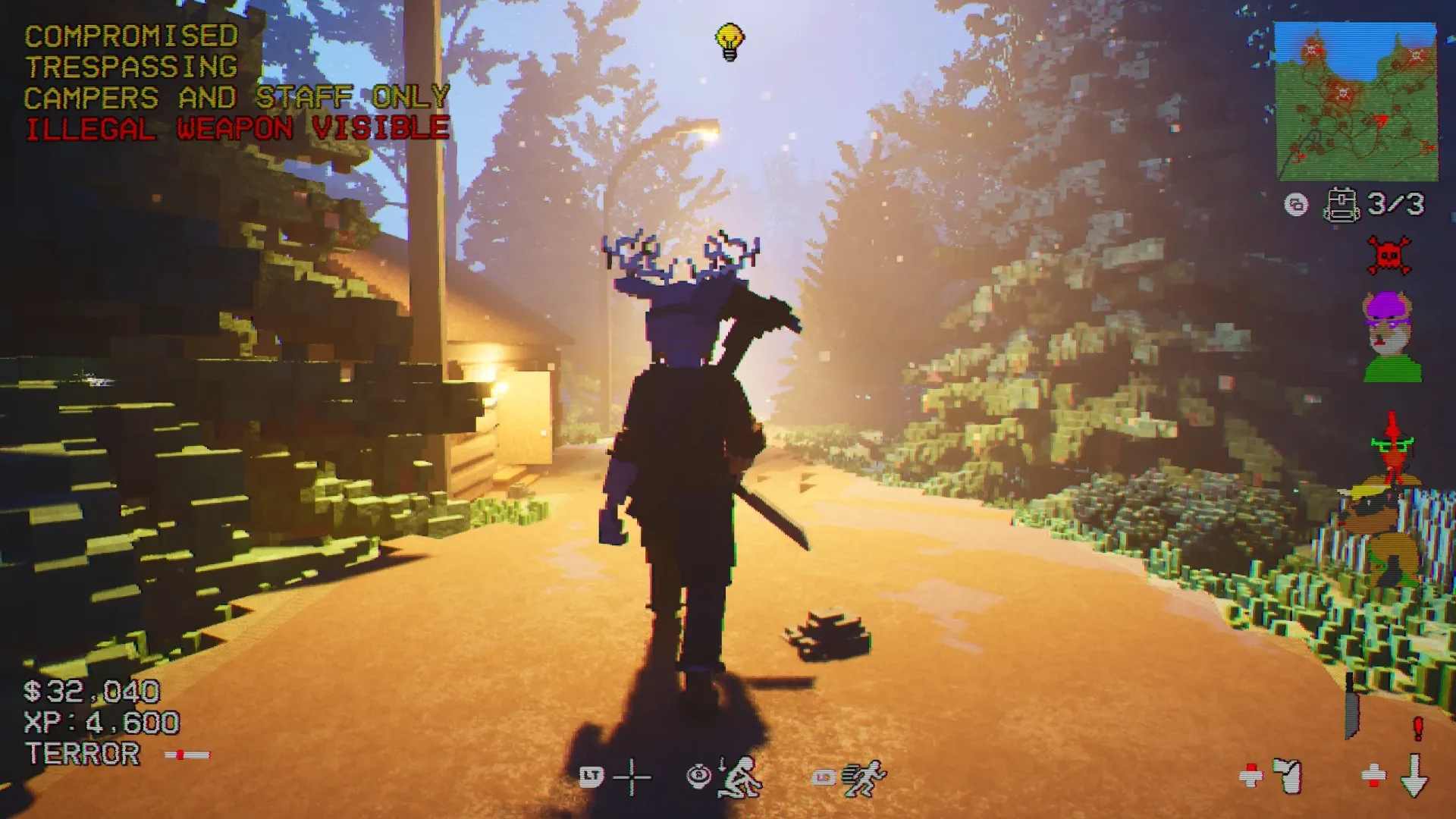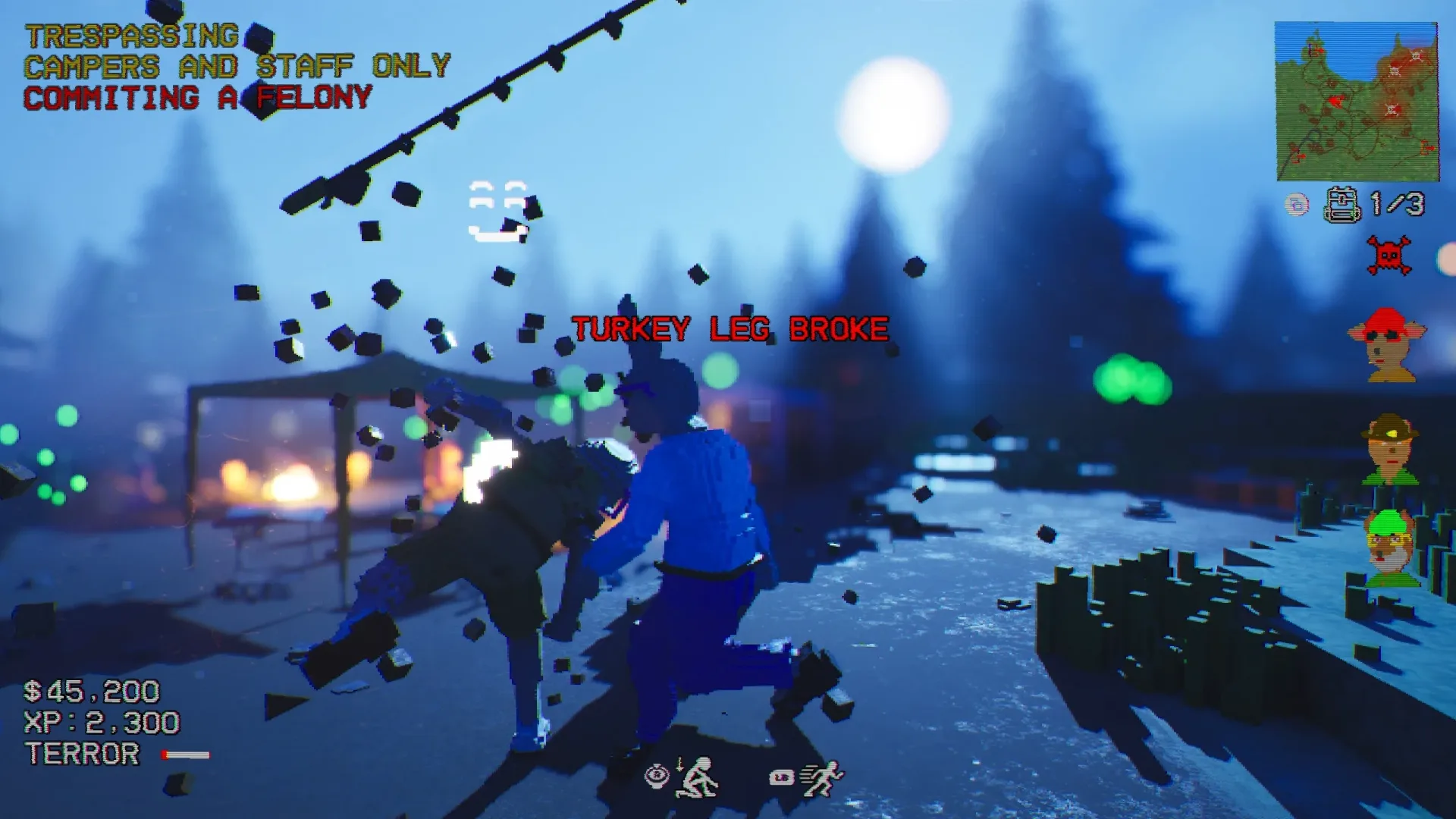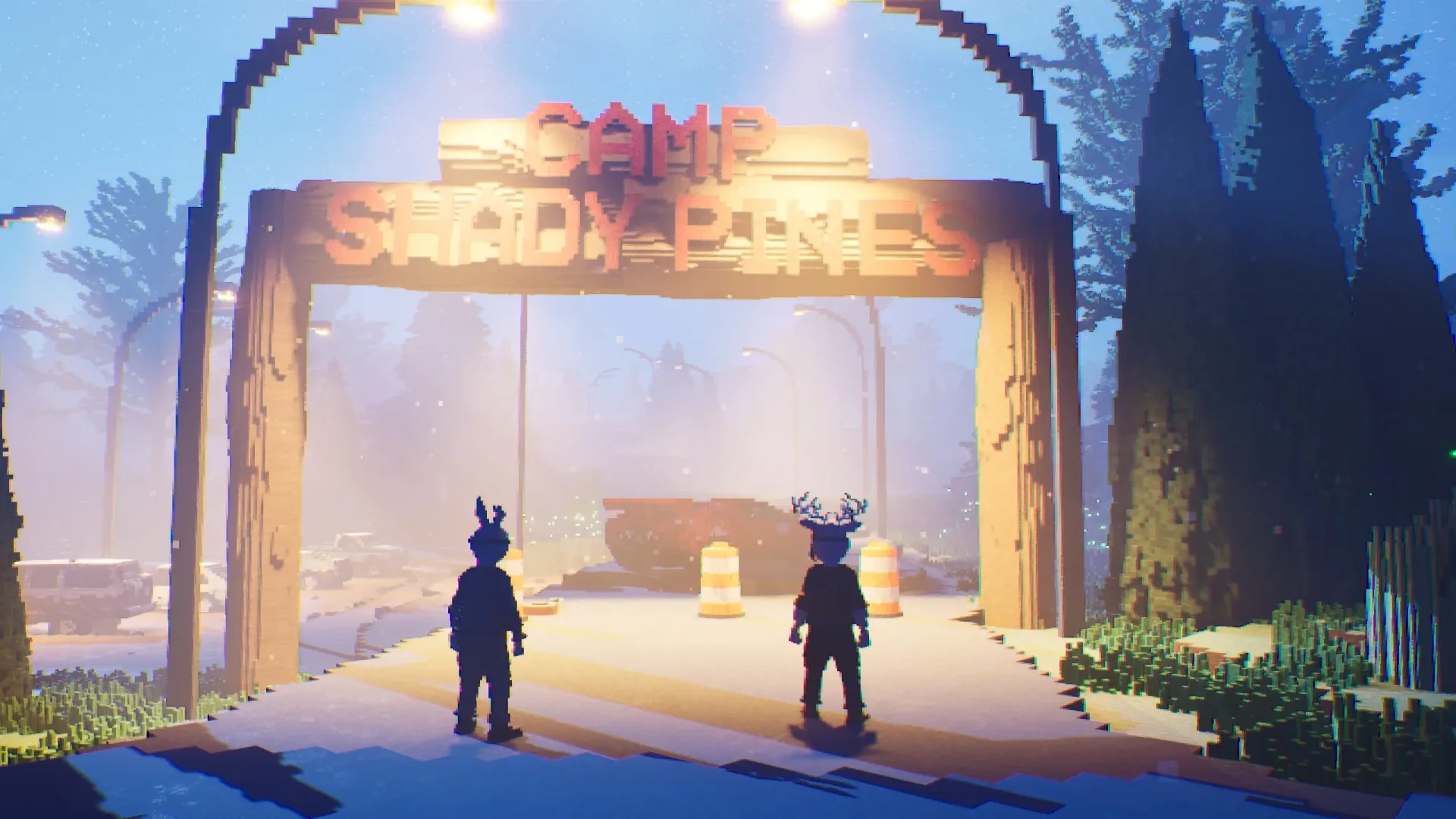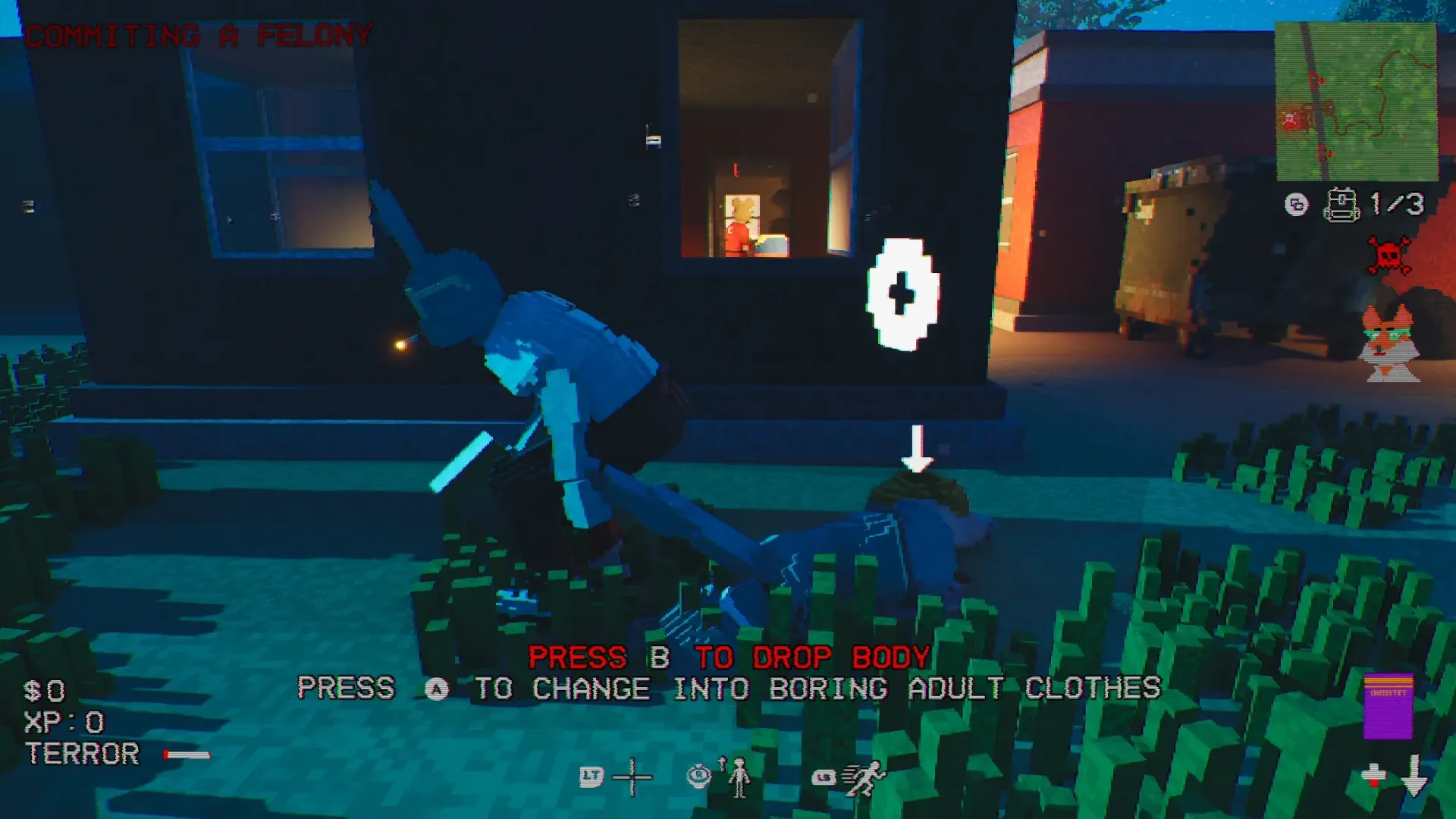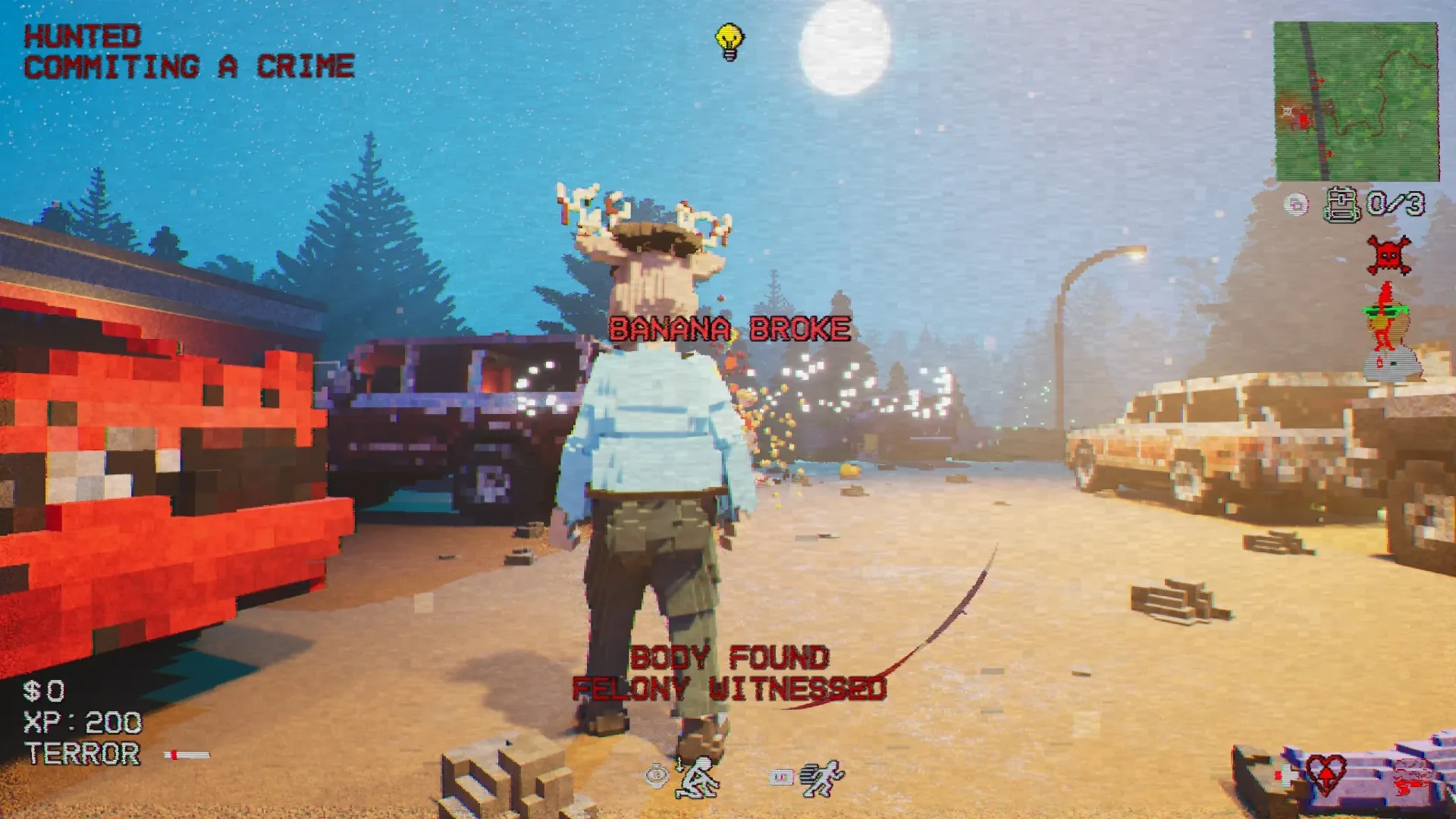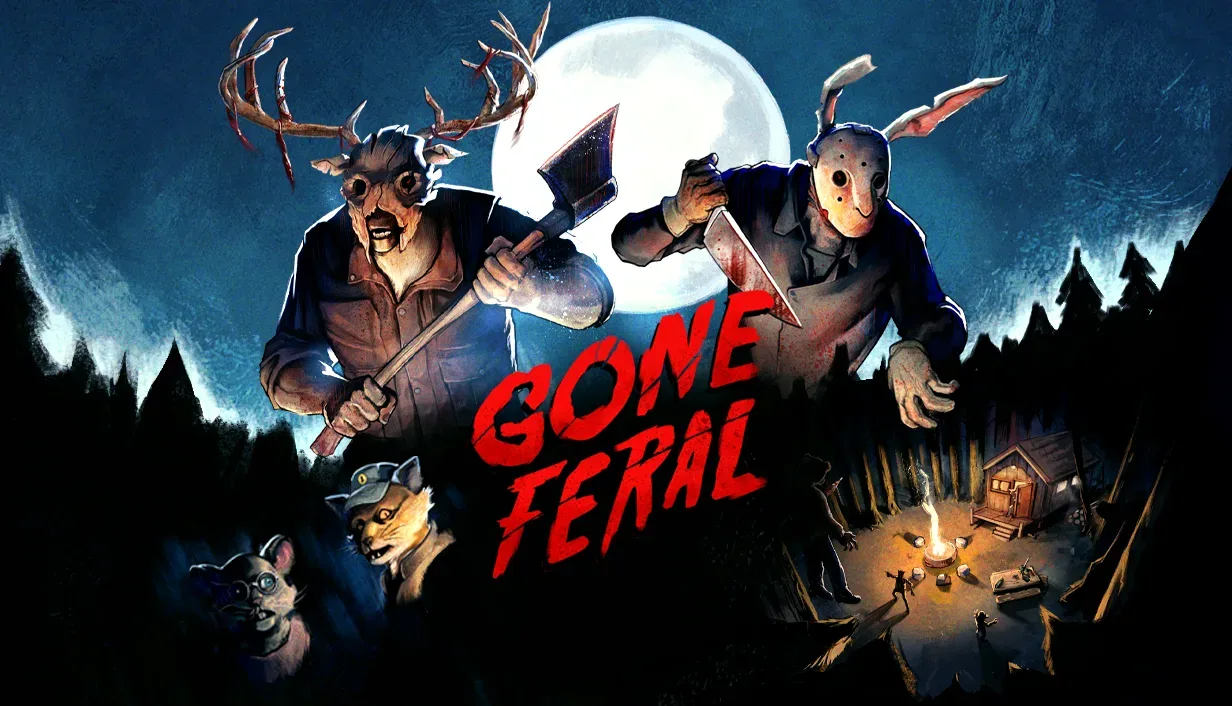
Gone Feral, a new analog-horror slasher from developer Nate Purkeypile, has opened a public playtest on Steam. The test is scheduled to remain available until October 31, giving PC players an early opportunity to see how the game’s unusual premise works: instead of fleeing the masked menace, they take the role of an ’80s-style horror villain.
The game was revealed during the PC Gaming Show and is built around stalking targets, setting up encounters and dispatching victims with ordinary objects. Its stated feature set includes solo play and online play with friends, along with stealth and disguise systems intended to help players get close to their targets before revealing their deadly intentions.
That combination places Gone Feral in a different role from the familiar horror-game survivor fantasy. The central question is not simply whether a player can outlast a monster. It is whether they can effectively be the monster—using timing, concealment and the environment to turn a pursuit into a successful slasher-movie scene.
What the Gone Feral playtest establishes
The public Steam test confirms that Gone Feral is inviting community participation before its full release, which does not yet have a launch date. It should not be treated as a final representation of the complete game. A playtest is a limited pre-release build: developers commonly use one to gather feedback, identify technical problems and assess how players understand the game’s systems. The available information does not specify the playtest’s exact content, maps, modes or duration beyond its October 31 end date.
What is clear is the project’s intended identity. Gone Feral describes itself through the language of analog slasher horror and ’80s villainy. “Analog” in this context refers to a horror aesthetic associated with older recorded media and retro presentation, rather than a claim about the game’s controls or distribution. It signals a stylized horror mood rooted in the look and texture of an earlier era of genre filmmaking and home video.
Players can also view the official Gone Feral trailer for the game’s announced tone and setup. As ever with trailers, though, it is worth separating the revealed creative direction from features that can only be fully judged once the game is closer to release.
Stealth, disguises and the importance of the approach
Gone Feral’s announced stealth component is especially important because it changes the expected rhythm of a slasher game. Stealth is broadly the practice of avoiding detection or controlling when detection occurs. In a game where the player is the aggressor, that can mean more than crouching behind cover. It can make patience, positioning and choosing the moment to strike part of the fantasy.
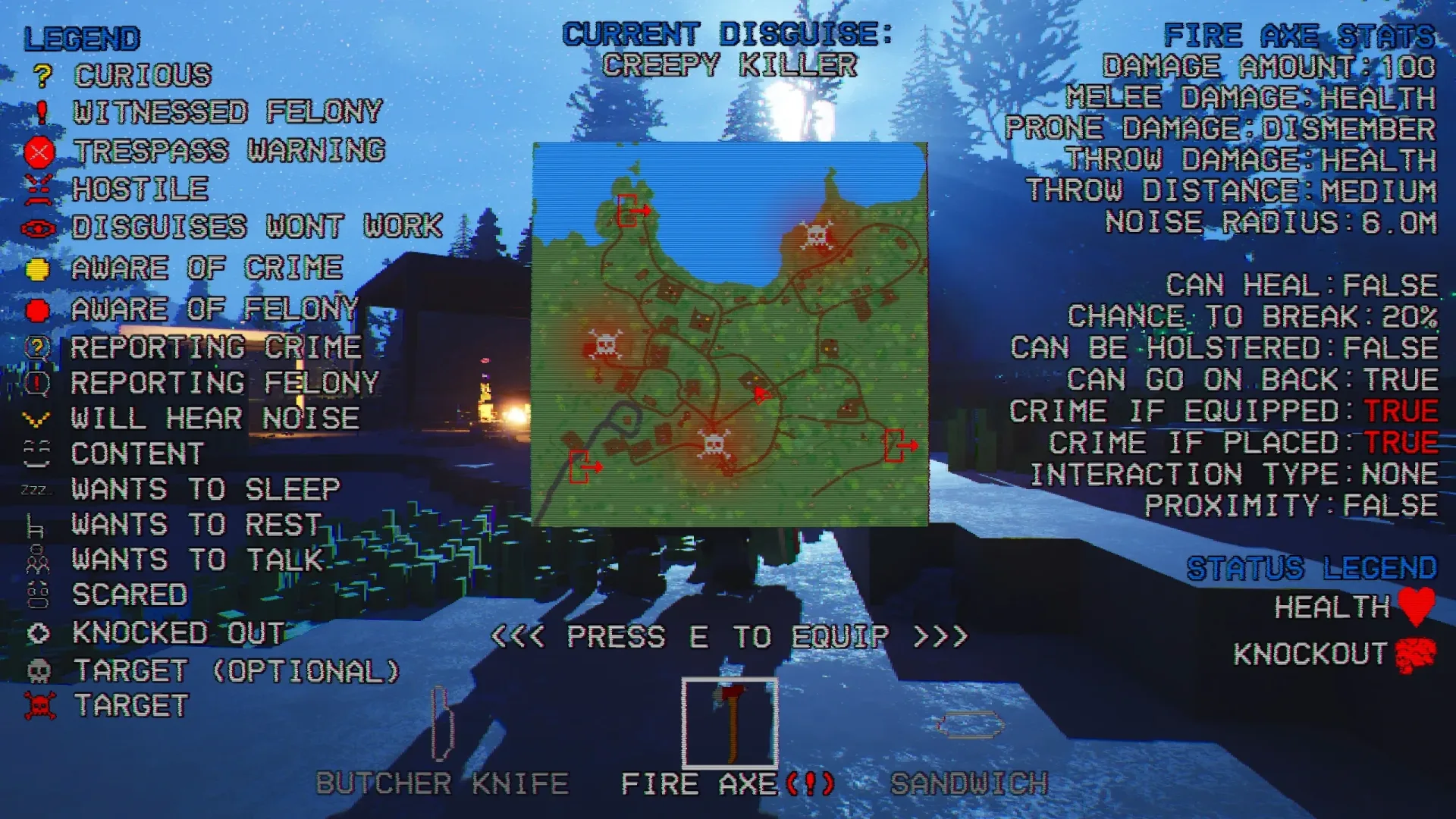
Disguises add another potential layer to that setup. A disguise system generally lets a player pass as harmless, obscure their identity or access spaces that would otherwise be difficult to enter. Gone Feral has confirmed disguises as part of its feature list, but it has not detailed their rules. It is therefore unknown how targets respond to a disguise, whether it is tied to particular locations, or how easily a player’s cover can be compromised.
Those unanswered details matter. In a stealth game, the difference between a disguise that simply delays suspicion and one that meaningfully changes how players navigate an area can reshape the entire experience. A robust disguise system encourages observation: who belongs in a location, who can see the player, and when is an apparently routine action likely to look suspicious? A simpler system can still support the theme, but may lean more heavily on the moment of revelation than on long-term infiltration.
Gone Feral’s public description only promises the presence of stealth and disguises, not their depth. That is exactly the kind of practical information a public test may help communicate over time, without requiring players to assume systems that have not been formally described.
Everyday objects are positioned as the weapons
The other major idea is improvised violence. Gone Feral says players will be able to kill creatively with everyday objects. This suggests that the environment, rather than a fixed arsenal alone, is meant to be part of the game’s toolset.
“Creative” can mean different things in game design, so restraint is useful here. The announcement does not identify particular weapons, explain a crafting system, or confirm physics interactions. Still, putting ordinary objects at the center of the pitch points toward an experience where noticing what is nearby could be as important as arriving with a preferred loadout.
That approach naturally supports the game’s slasher framing. Everyday spaces and recognizable objects can make an encounter feel more personal and less abstract than a conventional combat arena. The player’s task becomes choosing an opportunity and using what the setting offers, rather than merely winning a direct fight. Whether Gone Feral’s final version offers a broad set of interaction options or a more curated set of set pieces remains to be seen.
Solo stalking and the complications of online co-op
Gone Feral is planned to support playing alone or online with friends, and co-op is listed as a feature for the full game. That is an intriguing match for a premise usually associated with a single, ominous pursuer. In solo play, a stalking structure can give a player full control over pacing: wait, watch, choose a route, then act.
Online co-op introduces a different dynamic. Multiple players can potentially coordinate distractions, cover routes, divide responsibilities or simply create chaotic plans that collapse at the worst possible moment. The announcement does not explain how co-op is structured, how many people can play together, or whether every player has identical abilities. Those are important implementation questions, but none have been answered publicly here.
Even so, the confirmed online angle means Gone Feral is not being pitched solely as a solitary horror experience. It is attempting to make the villain side of the equation social. That creates an interesting tonal challenge: horror often relies on isolation, while co-op invites communication and comedy. A game can use that friction effectively if tense preparation gives way to frantic execution, but the public feature list alone cannot say how Gone Feral balances those moods.
Synthwave is part of the announced atmosphere
The full game will also include a dark synthwave soundtrack by the composer behind Axis Unseen. Synthwave is an electronic style strongly associated with retro-futurist sounds and ’80s-inspired media, so it fits the game’s declared slasher identity. Music is not merely decorative in a stealth-focused horror game: it can establish whether a player feels hidden, exposed, in control or suddenly under pressure.
No track list or audio-system details have been announced, so there is no basis to assume adaptive music, particular instruments or how the soundtrack responds to gameplay. The confirmed involvement nevertheless gives the game a coherent audio direction alongside its visual and thematic inspirations.
That emphasis on mood also connects Gone Feral to the appeal of horror that treats texture and atmosphere as major parts of the experience. For a broader genre conversation about the value audiences place on practical, tactile horror presentation, see this look at the continuing debate around practical effects in The Thing.
What is not announced yet
There is currently no confirmed full-release date for Gone Feral. Review codes are expected closer to launch, while requests for them are already open through PressEngine. That means prospective players should distinguish between the public test that is available now and the eventual release version, whose timing and final scope have not been set out.
There are also no supplied details on pricing, additional platforms, campaign length, progression, specific co-op rules, accessibility options, or the exact boundaries of the October playtest. None of those absences should be read as confirmation that a feature will or will not appear; they are simply not part of the information currently available.
For now, the strongest take-away is straightforward. Gone Feral is a PC horror project with a deliberately inverted slasher premise, emphasizing stalking, deception, environmental kills and online play. The Steam playtest provides the immediate way to engage with that concept before a final launch date is announced.