When the calendar is dominated by a massive open-world release, it is easy to treat every other game as a side quest. That misses the point of the current indie spread: these eight games are not trying to occupy the same space. They offer smaller, stranger, more focused loops—digging for fossils, surviving as a rolling castle, tailoring a dress stitch by stitch, or attempting to keep a group project alive while Sonic characters are physically tied together.
They also make a strong case for choosing a game based on the kind of attention you have available rather than the size of its map. Want a project built around gradual accumulation? There is one. Want difficult, underexplained exploration? There is one. Want a social game engineered to turn cooperation into affectionate shouting? Unfortunately, there is very much one of those too.
For players taking a breather between larger crime-game sessions, our GTA 6 auto-save guide may help protect that other progress. For everything else, here is what makes this set of eight independent games distinct—and who each one seems best suited to.
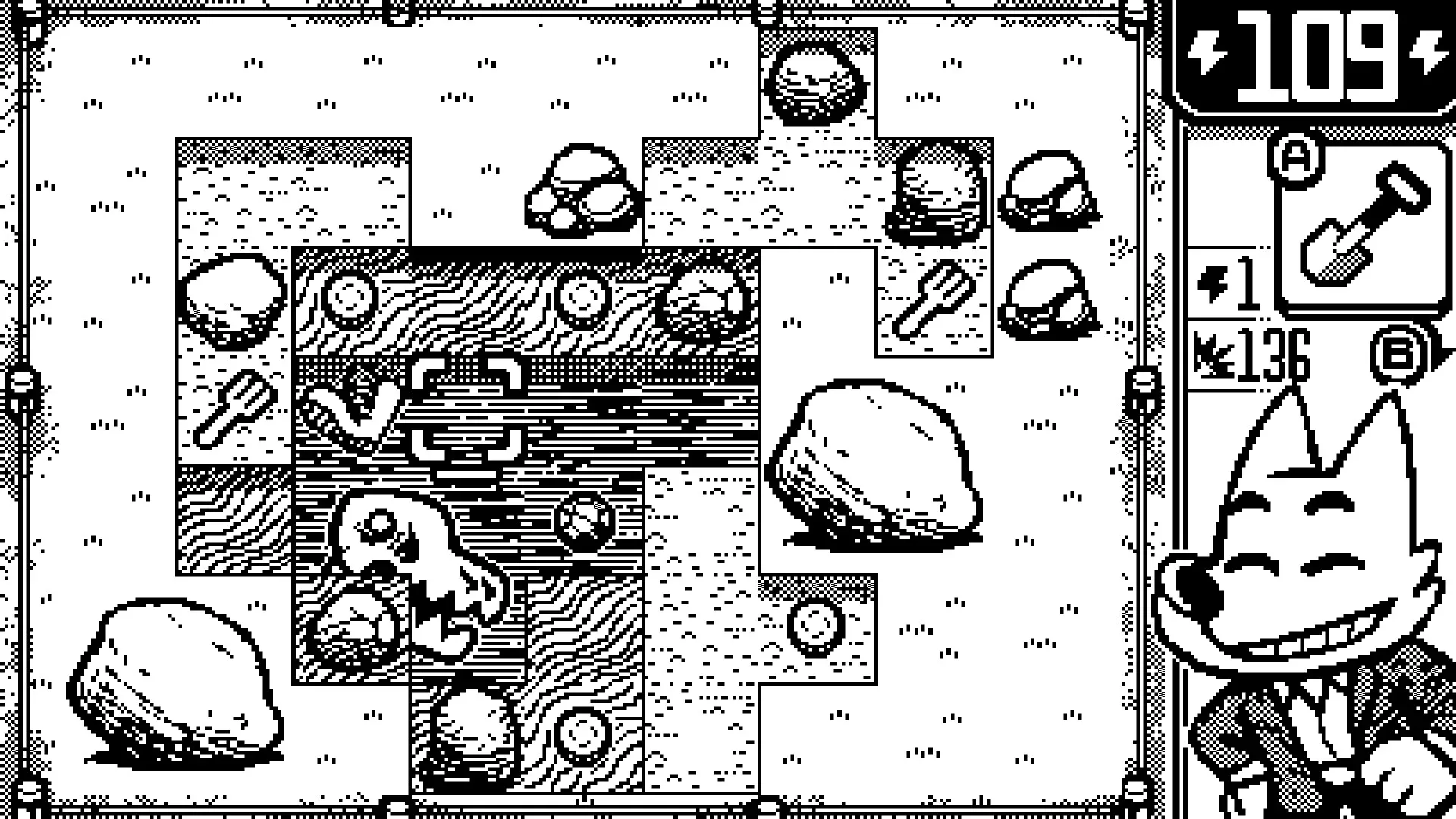
Dig Dig Dino turns paleontology into a satisfying upgrade loop
Dig Dig Dino began on Playdate and has now arrived on Steam. It comes from the developers behind the western action game Arco, but its premise is deliberately more compact and cuddly: the player is a paleontology intern excavating dinosaur bones.
The fundamental constraint is stamina. A day only allows so much digging, so each decision about where and how to dig carries weight. Digging through dirt and sedimentary rock can turn up bones and treasure. Treasure becomes money, and money improves stamina, upgrades existing equipment, and opens up new tools. One particularly charming tool is a dog that can sniff out bones.
That is a classic progression loop: perform an activity, gain resources, spend them to become more effective at the activity, then push further into its possibilities. The formula sounds simple because it is. Its appeal rests on a very specific sort of curiosity—the hope that one more excavation will supply the missing part of a skeleton. Different dig sites ask for different tools and produce different treasures, giving the upgrade choices practical consequences rather than making them a mere checklist.
The fossils themselves are not presented as conventional museum-ready discoveries. Their oddness appears to be part of the game’s personality, while the suggestion of a bigger mystery beneath the excavation gives the routine a narrative pull. Pick this one if you enjoy a low-pressure task that still supplies tangible goals, or if the phrase “just one more dig” sounds less like a warning and more like an itinerary.
Sonic Pico Park makes coordination the real boss fight
Sonic Pico Park is a cooperative puzzle-platformer from TECOPARK, the team behind the original Pico Park. Sonic, Shadow, and other characters from the Sonic series bring recognizable flair, but the key attraction is not solo speedrunning. It is group problem-solving for up to eight players.
Related coverage includes 8 Indie Games to Try When You Want Something Beyond the Biggest Blockbusters.
The game’s challenges are built to provoke confusion before they reward synchronization. Players can be linked together and must coordinate movement through obstacles such as a loop-de-loop. That turns a familiar platforming image into a communication test. It is not enough for one participant to understand the answer; everyone must execute their piece at roughly the right time.
That distinction explains why cooperative puzzle games can create both the loudest failures and the best victories. A co-op puzzler is not simply a puzzle game with several controllers attached. The puzzle incorporates other people’s timing, decisions, mistakes, and recovery. A player who moves too soon may undo the careful plan. A player who notices an overlooked route may save the attempt. Sonic Pico Park appears to embrace that friction rather than sand it away.
This is consequently not an obvious choice for someone seeking a calm solitary evening. It is a better fit for a group that can tolerate a little chaos and still regroup. The social contract is simple: communicate, commit to the plan, laugh when the plan immediately becomes rubble, and try again.
Queen’s Domain is for players who want to get lost on purpose
Queen’s Domain is a first-person RPG styled after classic PlayStation-era games. It sends its protagonist to a mysterious island full of magic and monsters in search of their father. Its outlook is intentionally demanding: the player begins weak, enemies strike hard and can ambush them, and the game offers limited direction on how to advance.
Its retro influence is more than surface-level visual nostalgia. Combat and exploration are described as deliberately clunky in the old-school sense, while movement and menus are said to be smoother than those of the older games that inspired it. That creates an interesting balance. The design can preserve the vulnerability and uncertainty of older first-person role-playing adventures without necessarily preserving every interface inconvenience attached to them.
The operative word here is experimentation. Rather than treating uncertainty as a temporary tutorial state, Queen’s Domain makes discovery part of the intended experience. Players are expected to test possibilities and gradually learn how its island works. The reward is the moment a previously opaque problem clicks into focus.
This approach will not suit everyone. People looking for explicit quest markers and a steadily explained build system should know that ambiguity is central to the pitch. But players drawn to the atmosphere of Dark Souls, Elden Ring, King’s Field, or an Elder Scrolls-style fantasy setting may find the mix appealing. There is also talk of a substantial mid-game twist, though it is best treated as an unverified expectation rather than a promise to plan around.
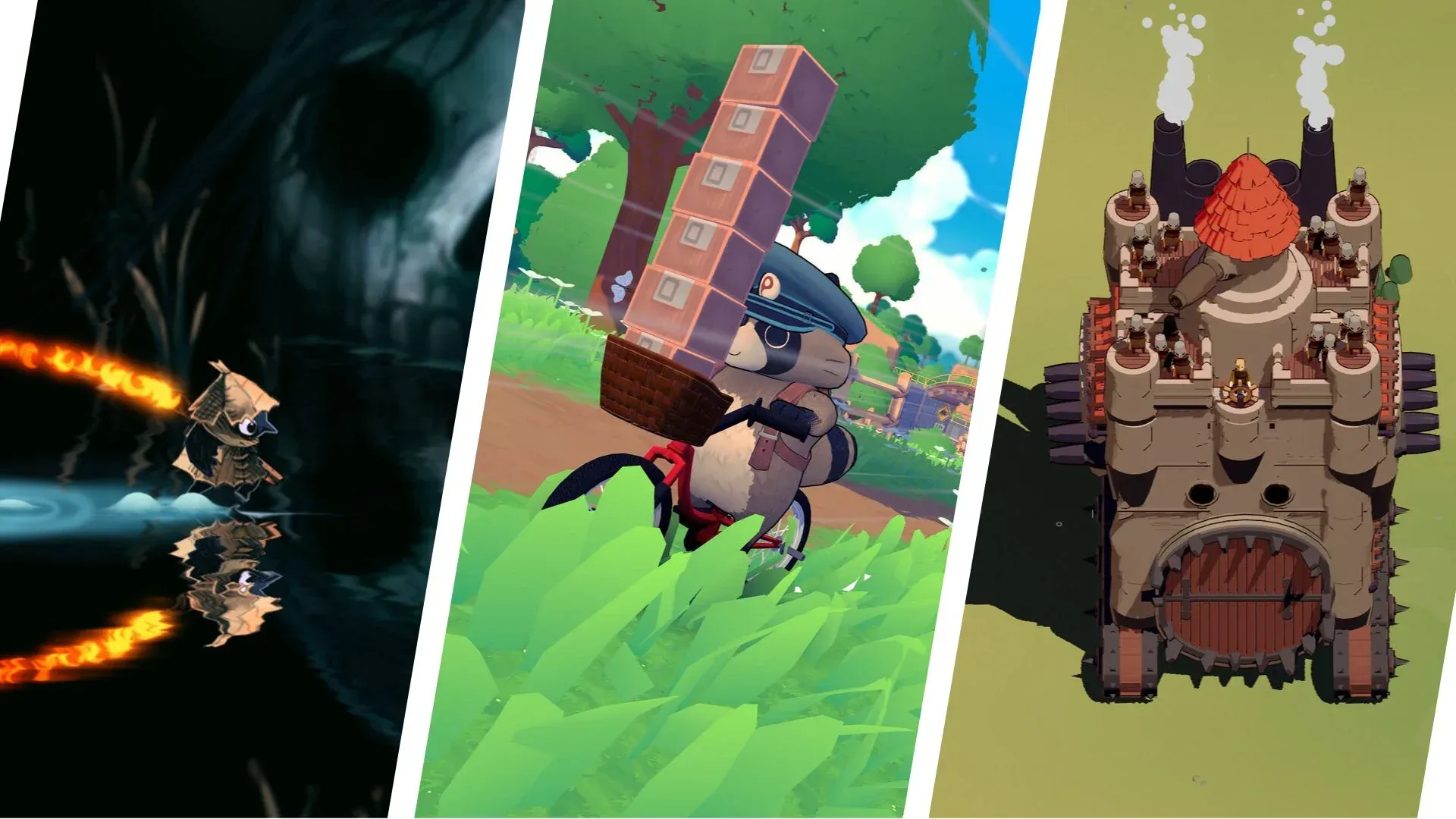
Tanuki: Pon’s Summer gives BMX delivery a cozy purpose
Tanuki: Pon’s Summer mixes several ideas that do not normally share a parking space: BMX trick play, package delivery, an open-world village and forest, and slice-of-life interactions. Its tanuki protagonist travels around that setting, delivering parcels to locals and learning more about them along the way.
The Tony Hawk comparison points to its trick-focused movement, but the game’s purpose is gentler than pure score chasing. Delivery establishes a reason to visit people and places; tricks make traversing between them expressive. The result is a game structure where moving around is not merely downtime between objectives. Riding is a major part of the activity.
Interactions can also lead to mini-games, including sumo wrestling, tending bar, and chopping down trees. That variety matters because it gives the village texture. In a slice-of-life sim, ordinary routines and relationships are often the content rather than a break from the “real” game. Tanuki: Pon’s Summer seems to pair that everyday quality with the gleeful motion of a BMX game.
Choose this if you want a world to poke around in without the tone of high-stakes conquest. The appeal is in delivery routes, tricks, small errands, and the sense that a map can be inviting simply because it has people and activities worth revisiting.
Wanderburg makes the castle the vehicle
Wanderburg is perhaps the clearest premise on this list: you control a medieval fortress on wheels as it veers across the countryside. Armies clash, territories are conquered, and the castle itself is the moving center of the action.
Mechanically, it is described as a bullet-heaven action roguelike. Bullet heaven is the playful inverse of “bullet hell”: instead of narrowly threading a fragile character through dense projectile patterns, the player commonly builds into overwhelming offensive output while huge numbers of enemies flood the screen. The appeal is escalation—seeing a modest early run grow into a ridiculous survival machine.
The roguelike portion means it is structured around repeatable runs rather than one uninterrupted campaign. Each attempt invites the player to make the best of the tools and upgrades that emerge, then begin again after defeat. Wanderburg’s castle-on-wheels spin gives that familiar run-based format a distinctive silhouette, and its territorial warfare adds an Age of Empires-like flavor to the auto-shooter foundation.
It is currently in Early Access on Steam. That label is important rather than incidental: Early Access means the game is still being developed while players can access it. It should not be read as a guarantee of any particular future feature, schedule, or final scope. What is clear is the current fantasy—steer a fortress through hostile medieval chaos and see how formidable a rolling stronghold can become.
CRACK turns number-go-up design into a group disaster comedy
CRACK begins in a mysterious laboratory with a giant egg at its center. Players break pieces from the egg, trade the fragments for money, and spend that money on upgrades and better tools capable of breaking off more valuable pieces. This is an incremental game structure: steady actions create resources that improve the rate or scale of future resource creation.
Then the egg objects. It is alive, and continued chipping makes it angrier. Its outbursts introduce danger and mayhem into what might otherwise be a placid economic climb. The premise transforms optimization into a social comedy: the party wants the egg’s rewards, but extracting them makes the shared workspace increasingly volatile.
CRACK is also co-op, which changes the stakes of its chaotic moments. A solo player can blame a plan on their own poor judgment. In a group, every unstable decision becomes a committee achievement. The game additionally frames its lab mystery with clear echoes of Portal, giving the central egg more intrigue than a simple resource node.
For groups that enjoy systems-driven silliness, that combination is promising. The game still offers the familiar satisfaction of better tools and rising returns, but it refuses to let the numbers increase without consequences. The egg is not just a deposit of materials. It is a problem with feelings, and those feelings are getting worse.
Well Dweller favors breezy metroidvania exploration
Well Dweller is Kyle Thompson’s fourth metroidvania. The player controls a bird wielding a matchstick with a range of whimsical uses, supporting both traversal and combat.
A metroidvania usually organizes exploration around abilities and access. A route that is blocked early may open later after the player gains the appropriate movement option or tool, encouraging return visits and a growing mental map of the world. Well Dweller follows that broad tradition, but its appeal is framed as a lighter, shorter, less punishing alternative to the most demanding entries in the genre.
Its look and broad formula invite comparisons with Hollow Knight, but the more useful expectation is one of scale and mood. The combat may not be especially deep, yet that can be an advantage for players who want satisfying movement and exploration without committing to a long, highly exacting campaign. “Breezier” does not mean empty; it means the game’s priorities lean toward approachable action and whimsical traversal.
This is the choice for someone who misses the pleasure of mapping interconnected spaces but does not necessarily want every encounter to be an endurance test. A matchstick may be a humble starting point, but in a good metroidvania, one unusual tool can reshape how an entire world is navigated.
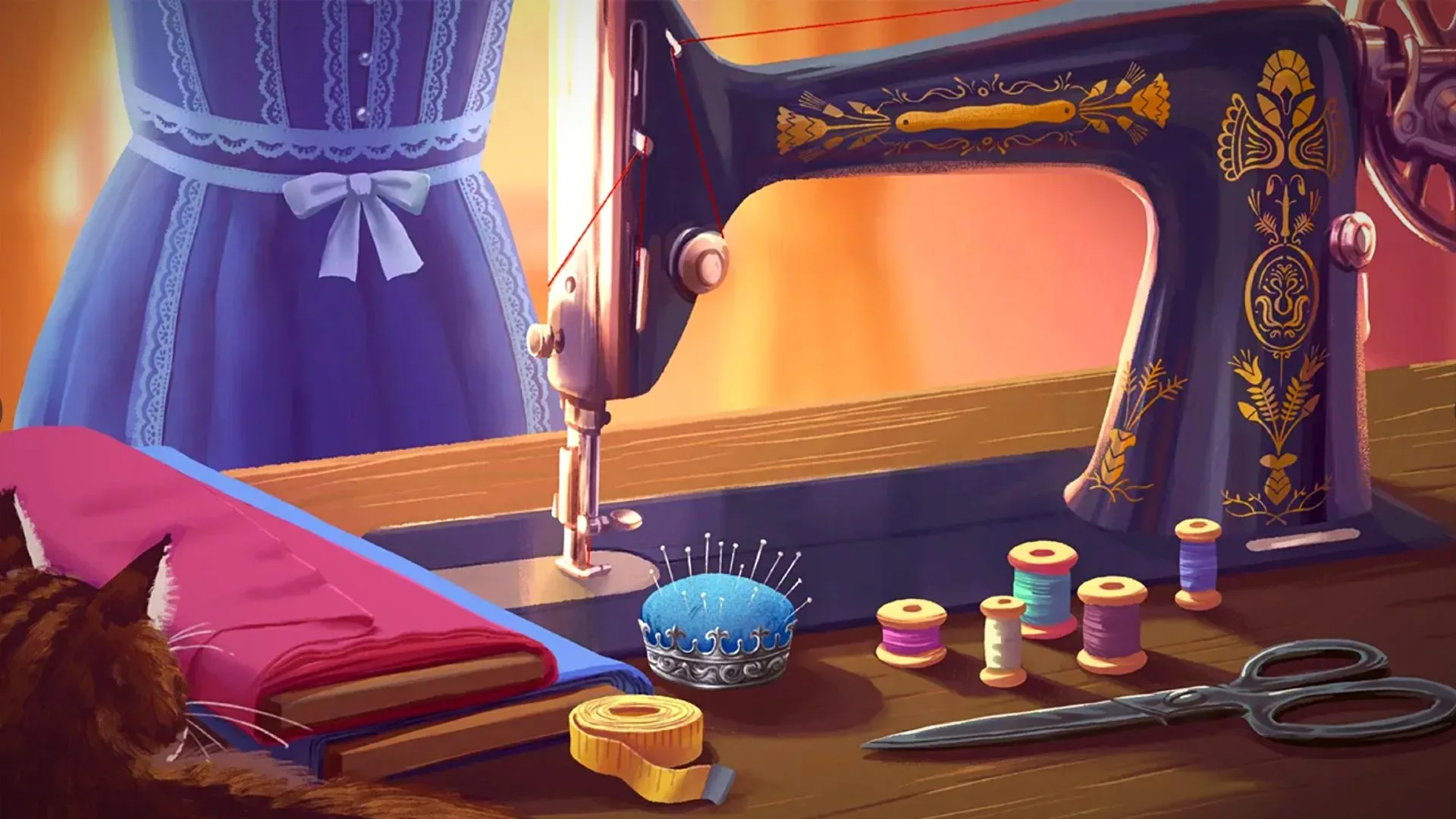
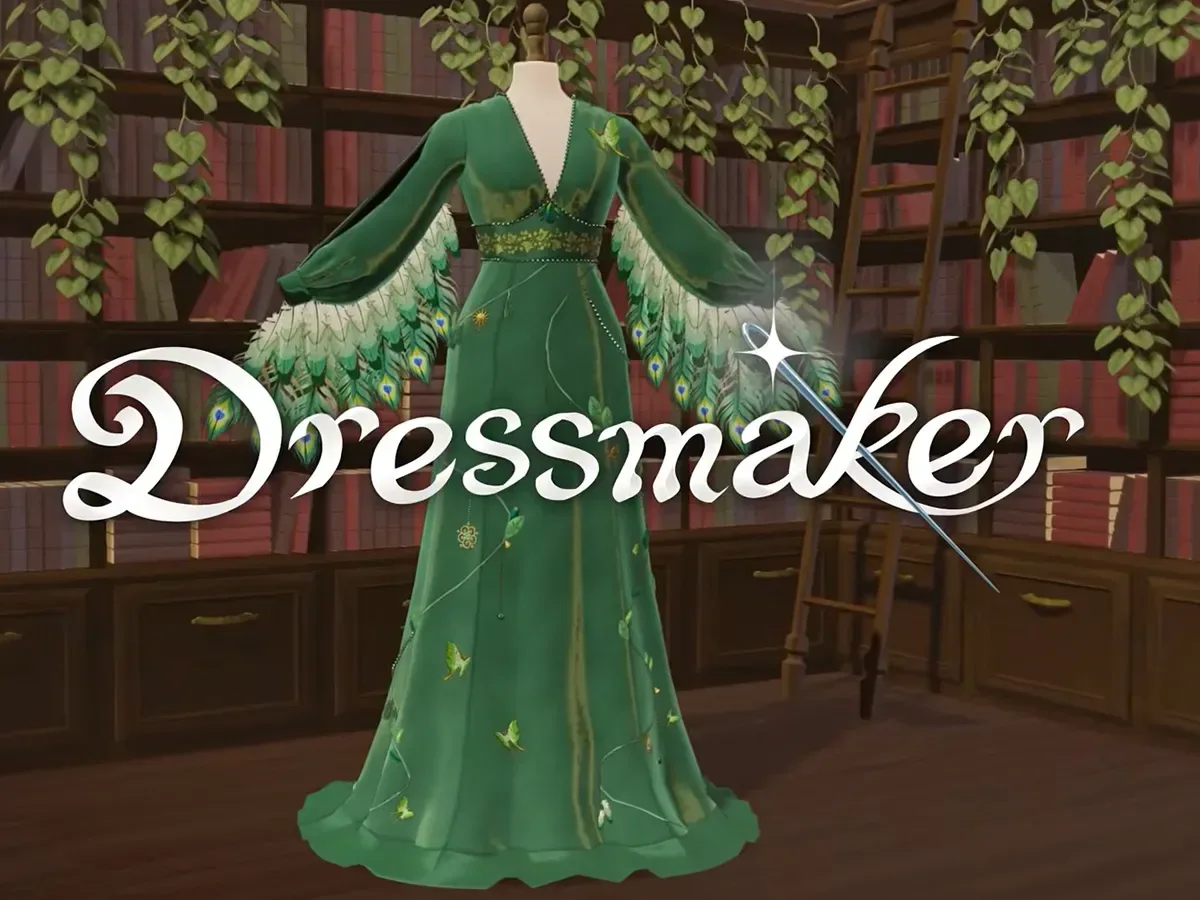
Dressmaker treats clothing as craft, not a menu selection
Dressmaker is exactly what its name suggests, but with a level of process that separates it from a simple dress-up game. Players choose fabric and adornments, cut pieces to patterns along the bias, stitch the pieces together, and add details such as lace trim. Garments can be made to a customer’s requirements or to the player’s own taste.
The phrase cut on the bias refers to cutting fabric diagonally across its grain rather than parallel or perpendicular to it. In real dressmaking, that choice affects how fabric drapes and stretches. Its inclusion signals that Dressmaker is interested in the construction of clothing, not only the final color palette. The game asks players to engage with the individual steps that turn material into a finished garment.
That detail is its major differentiator. A conventional customization screen may ask players to select a preset silhouette and alter colors. Dressmaker foregrounds the making: fabric, pattern pieces, assembly, decoration, and an expanding set of options unlocked through play. The result can support careful design or joyful nonsense. Both outcomes are valid when the game gives people enough tools to make a dress that genuinely feels like theirs.
For creative players, the practical implication is straightforward: Dressmaker looks built for experimentation rather than a single correct solution. For curious newcomers, it offers a craft-focused alternative to games where creation is mostly about arranging ready-made parts. There is room for precision, but also room to throw some cloth together and see what happens.
A shortlist organized by mood, not hype
These games share very little beyond their independent scale and willingness to commit to a clear central idea. Dig Dig Dino makes repetition meaningful through excavation and upgrades. Sonic Pico Park makes coordination entertainingly fragile. Queen’s Domain values mystery and self-directed discovery. Tanuki: Pon’s Summer turns travel into a cozy activity. Wanderburg asks what happens when the auto-shooter is a moving castle. CRACK makes an angry egg the price of prosperity. Well Dweller offers a more relaxed route through metroidvania ideas. Dressmaker takes the tactile steps of garment construction seriously.
The best pick depends on whether you want methodical solo progress, an unexplained island, a social catastrophe, a relaxed village ride, or an excuse to make an extremely elaborate dress. In a year full of games competing for hundreds of hours, a sharply focused game that knows exactly what it wants to be can be a welcome change of pace.