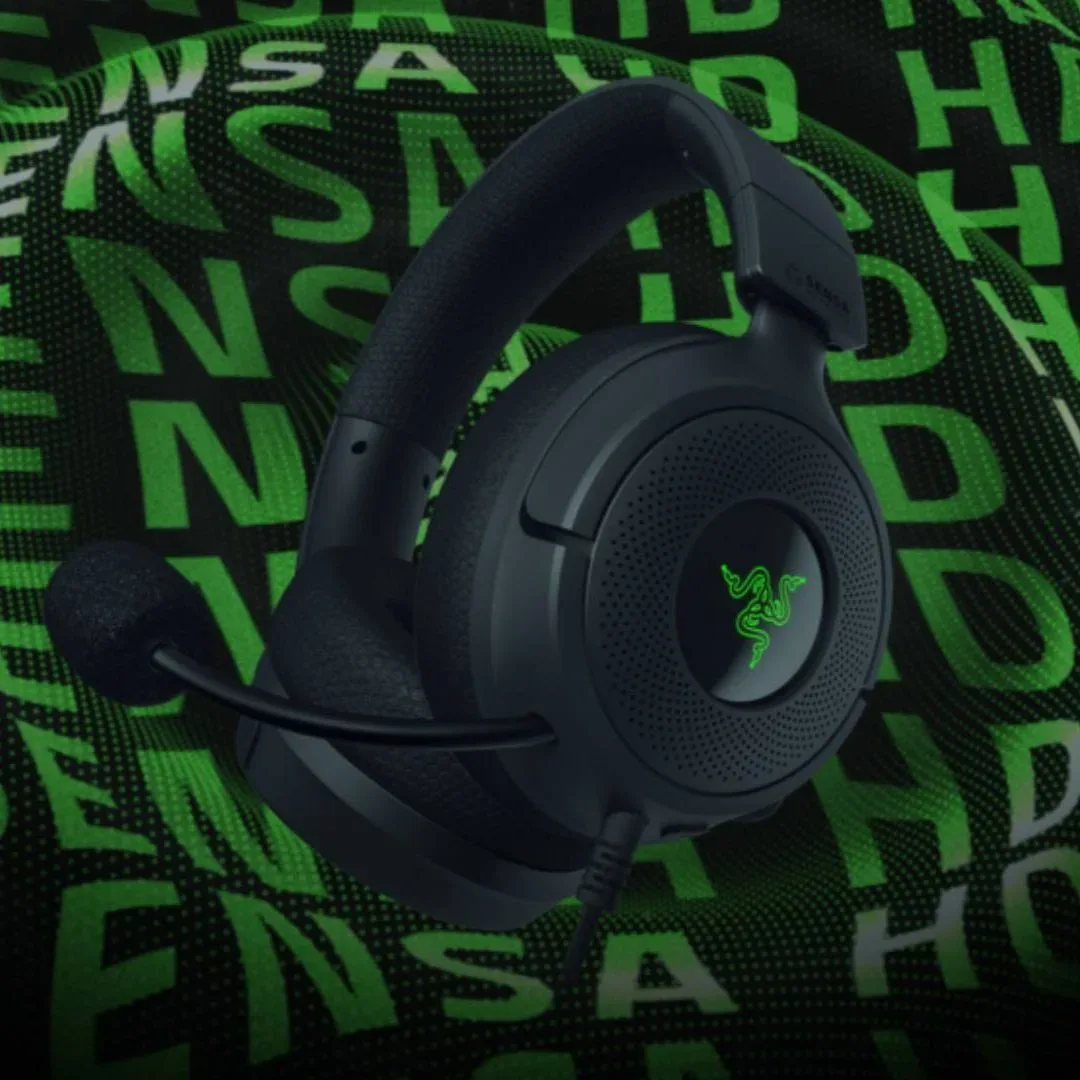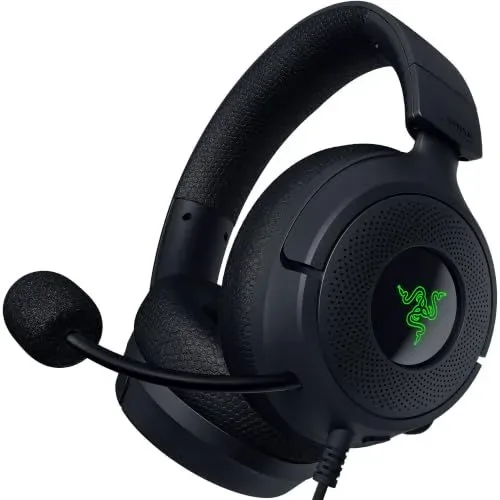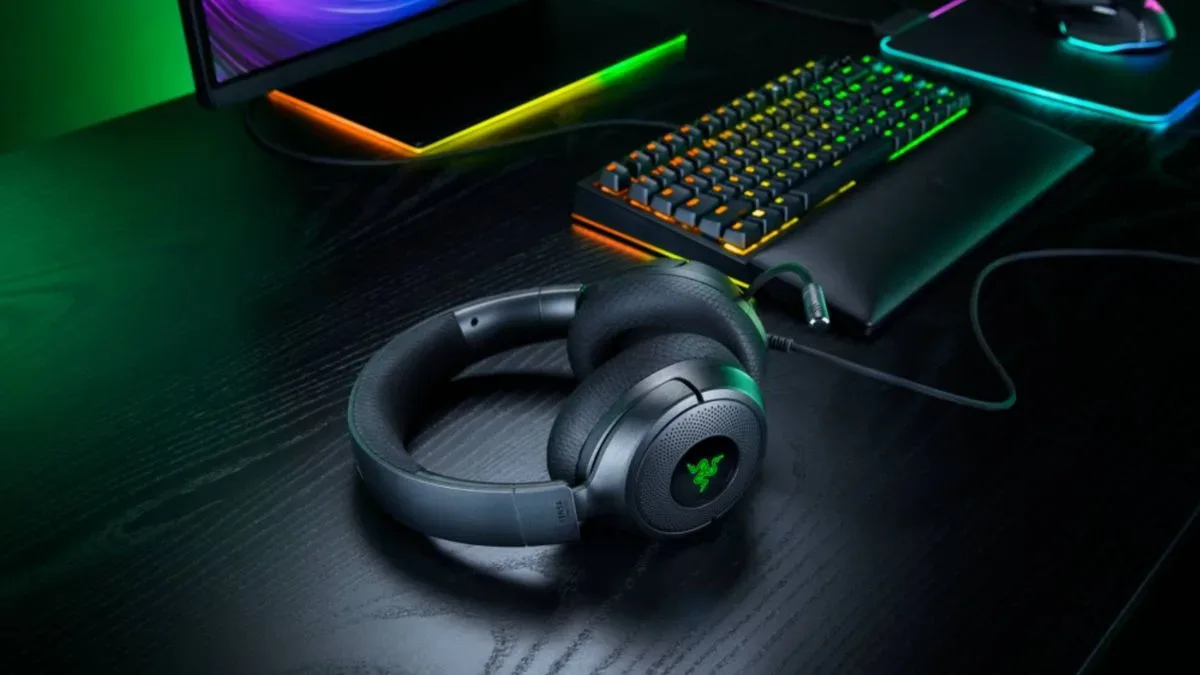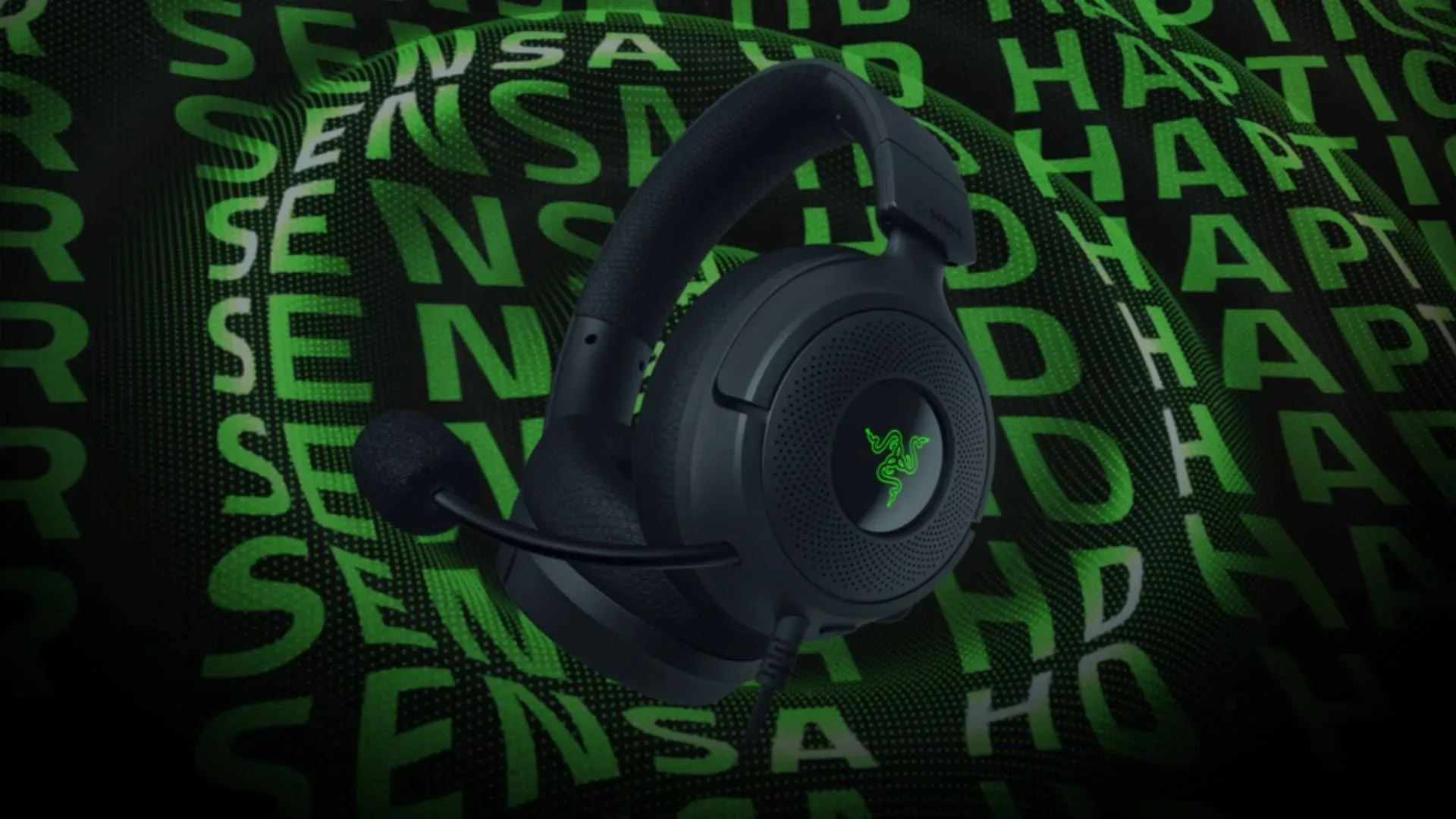
Razer is bringing its Sensa HD Haptics technology to the Kraken V4 X in a wired PC headset that carries a $119.99 / £99.99 price point. The Kraken V4 X Sensa HD Haptics is positioned as a less costly entry into the company’s vibration-enabled hardware range, which already includes the Wolverine V3 Pro controller and Freyja gaming chair.
The headline feature is not simply louder bass or ordinary controller rumble. Sensa HD Haptics is designed to turn game audio and game events into physical feedback through the headset. In plain terms, the headset can vibrate at differing intensities while a player is wearing it, adding a tactile layer to what is otherwise heard through its speakers.
That makes the Kraken V4 X an unusual proposition in the wired-headset category. Gaming headsets routinely compete on driver size, microphone pickup, surround processing, weight and wireless battery life. A haptic system asks a different question: whether a game’s action should be felt around the player’s head as well as heard. For people intrigued by that idea but unwilling to move into the considerably higher pricing associated with some haptic rivals and premium wireless models, the new Kraken is the important part of the announcement.
Two routes to headset haptics
Razer describes two approaches to the feedback on the Kraken V4 X Sensa HD Haptics: Dynamic Haptics and Audio-to-Haptics, also abbreviated as A2H. The distinction matters because one relies on effects intentionally connected to specific gameplay moments, while the other derives sensation from the audio already being played.
Dynamic Haptics refers to developer-designed effects mapped to game events. Razer identifies movement, weapons and abilities among the types of actions that can be assigned feedback. The potential benefit of authored effects is specificity: an event can receive a vibration pattern chosen for that event, rather than relying solely on the general sound profile of a scene.
Audio-to-Haptics takes a broader route. It creates additional sensations alongside the authored effects by translating existing audio into haptic feedback. This should be understood as an audio-responsive layer, not proof that every sound in every game has received a bespoke vibration design. Its practical appeal is that it can add physical feedback where purpose-built effects are limited or absent.
Both modes pursue the same basic goal: make explosions, impacts, movement and other high-energy moments more physical without requiring a separate peripheral in the player’s hands. The closest familiar comparison for many players is the haptic feedback in Sony’s DualSense controller, which uses vibration to complement on-screen and audio action. Here, however, the physical response is located in the headset rather than the controller.
That placement may be particularly interesting for PC players who use a keyboard and mouse, or for anyone who wants additional sensation without relying on controller feedback. At the same time, haptics are inherently personal. Some players may enjoy an added sense of impact; others may prefer a conventional headset experience with no extra vibration competing with game audio. The central advantage of the Kraken V4 X is that it brings that choice closer to mainstream wired-headset money rather than treating it as an exclusively premium feature.
Related coverage includes Razer Kraken V4 X Sensa HD Brings Haptic Gaming Audio to a Lower-Cost Wired PC Headset.
Price puts the feature in context
The $119.99 / £99.99 figure is the key competitive detail. Haptic audio has appeared in more expensive gaming headsets, including the Skullcandy Crusher PLYR 720, which is priced at $269.99 / £249.99 and uses the company’s multi-sensory Crusher bass technology. The Kraken V4 X’s pricing creates a substantial gap between a headset that offers a vibration-focused feature set and one that costs well into the upper end of the headset market.
That does not make the two products equivalent. The available information describes different haptic implementations, and pricing alone cannot establish differences in sound, comfort, tuning, build quality or feature behavior. It does, though, indicate a notable change in accessibility: the haptic proposition is appearing in a wired model at less than half the listed cost of the Crusher PLYR 720.
For buyers, the wired design is part of that equation. It avoids the battery-life question that accompanies wireless hardware and keeps the product focused on PC use. Conversely, anyone specifically seeking a cable-free haptic headset remains in the premium tier within Razer’s own lineup.
The rest of the headset is familiar Kraken territory
Away from Sensa HD Haptics, the Kraken V4 X Sensa HD Haptics uses Razer’s 40mm TriForce drivers, advanced 7.1 surround sound and a HyperClear Cardioid microphone. A cardioid microphone has a pickup pattern intended to emphasize sound from the speaker’s direction and reduce some sound arriving from elsewhere. In practical gaming terms, that is aimed at keeping voice chat focused on the user rather than gathering as much surrounding noise as a less directional mic might.
The 7.1 surround feature refers to multi-channel positional audio processing. It is intended to give audio elements a sense of placement around the listener when using a two-earcup headset. It should not be confused with installing seven physical speakers and a subwoofer around a room; on a headset, the effect is processed through the two drivers.
There are also RGB-lit logos on both earcups. They can be synchronized with other Razer Chroma-compatible accessories, so the headset can visually match a wider Razer setup while its haptics respond to gameplay. Lighting is clearly secondary to the vibration system here, but it preserves the familiar customizable-RGB angle expected from the line.
Where the Kraken V4 Pro fits
Razer’s other haptic headset option, the Kraken V4 Pro, illustrates how much the V4 X’s wired format affects its market position. The Kraken V4 Pro also includes Sensa HD Haptics, but it is wireless and has a stated battery life of up to 50 hours. Its MSRP is $399.99 / £399.99.
That higher-priced model adds THX Spatial Audio, a HyperClear Super Wideband microphone and an OLED control hub. Spatial audio is a general term for processing intended to make sounds appear to occupy positions in three-dimensional space. The quoted feature list makes clear that the Pro is not merely the V4 X without a cable; it occupies a separate, more feature-heavy price bracket.
The V4 X therefore looks less like a replacement for the Pro than a narrower alternative: wired PC connectivity, familiar core headset specifications and Sensa HD Haptics at a much lower entry price. For a player interested chiefly in trying haptic audio, that distinction may be more valuable than a longer specification sheet.
Availability and what PC players should weigh up
The Kraken V4 X Sensa HD Haptics is available in the UK through Razer’s online store, with a £99.99 listing also noted at Amazon. The supplied pricing also lists the headset at $119.99 in the US.
Before treating haptics as an automatic upgrade, prospective buyers should separate its appeal from more conventional headset priorities. The supplied details establish 40mm drivers, surround processing and a directional microphone, but they do not answer every preference-based question about fit, long-session comfort, cable length, sound balance or how often a particular player will want vibration active. Haptics may be the decisive draw for someone chasing a more physical presentation, while a player concerned mostly with competitive communication may value microphone behavior and comfort above all else.
It is also worth distinguishing developer-authored feedback from Audio-to-Haptics. Dynamic Haptics has the more tailored promise because effects can be associated with particular in-game actions. Audio-to-Haptics can broaden the experience through the existing soundtrack and effects, but it is not the same thing as a game being designed from the outset around unique vibration cues. That difference helps set realistic expectations for the technology.
For the PC audience, the release arrives amid a busy flow of platform-specific announcements, including the Road Truckers: New Beginning Steam playtest. The Kraken V4 X is a hardware release rather than a game launch, but its focus is similarly direct: offer PC players one more way to shape how games feel, not just how they look and sound.
Razer’s practical bet is that vibration feedback no longer needs to be reserved for a flagship wireless headset or an expensive specialty product. At $119.99 / £99.99, the Kraken V4 X Sensa HD Haptics makes that bet with a cable, RGB logos and a name that leaves no doubt about the feature it wants players to notice.
Shop the products
Check current price, model and availability at the retailer.