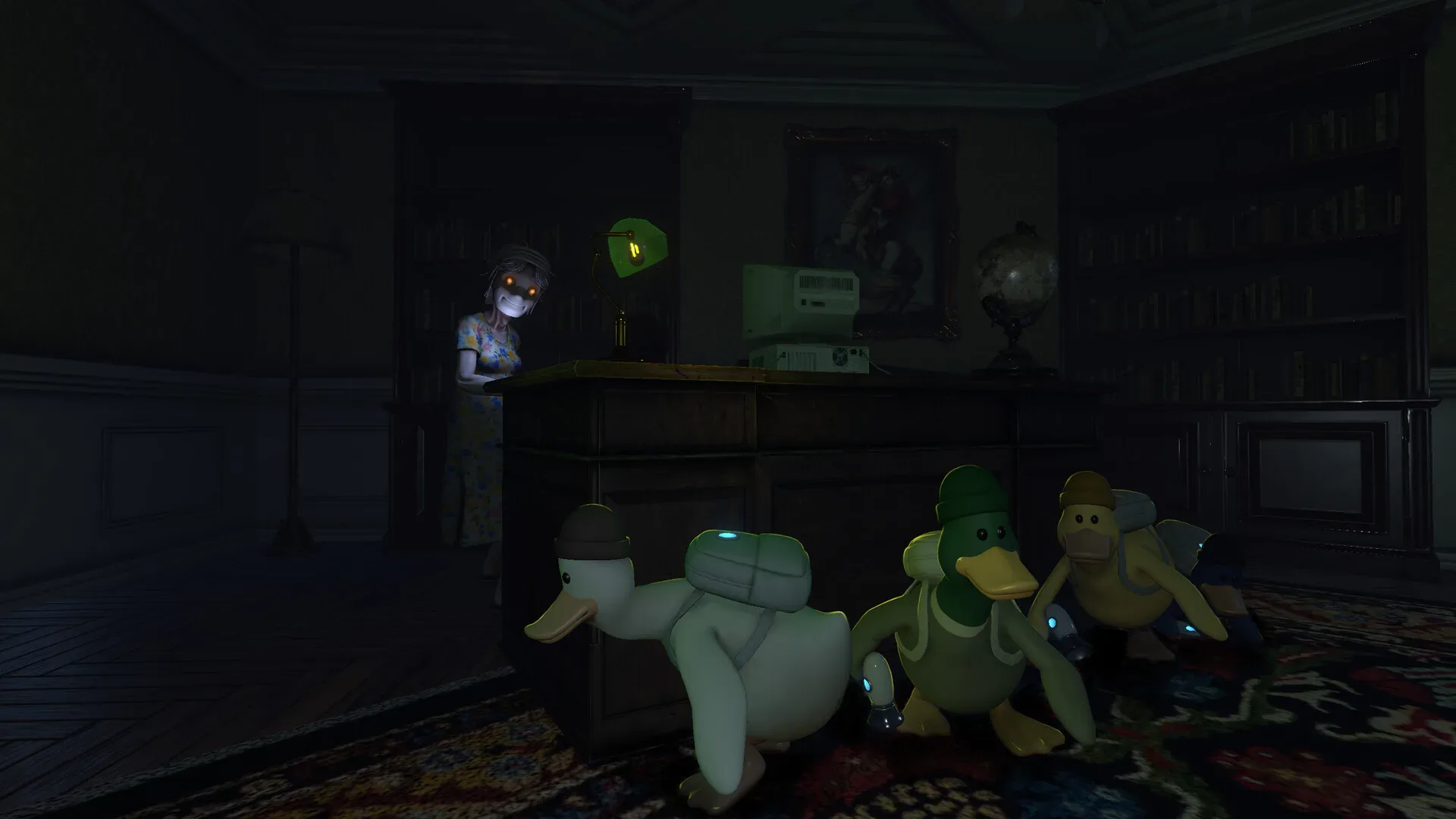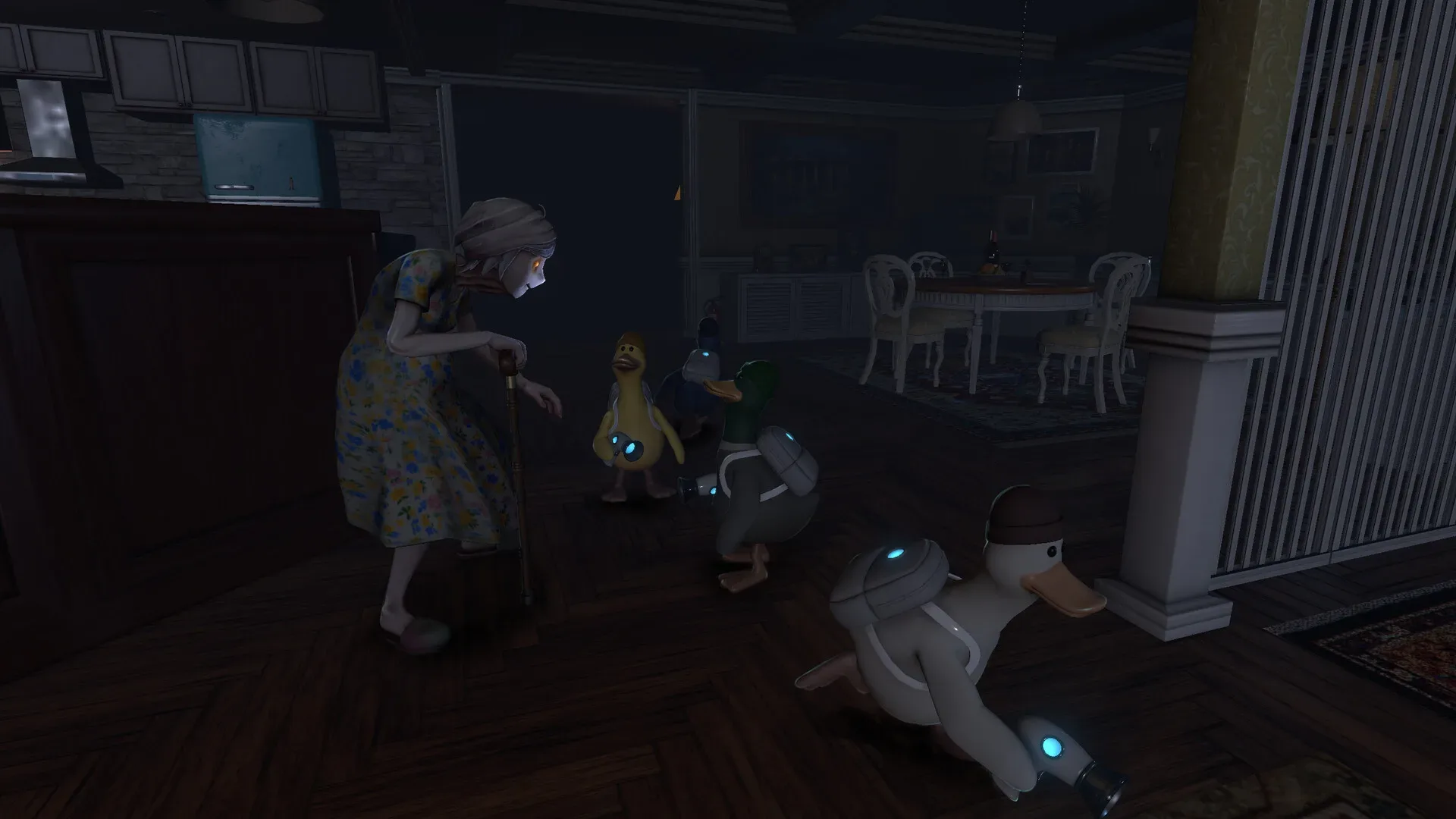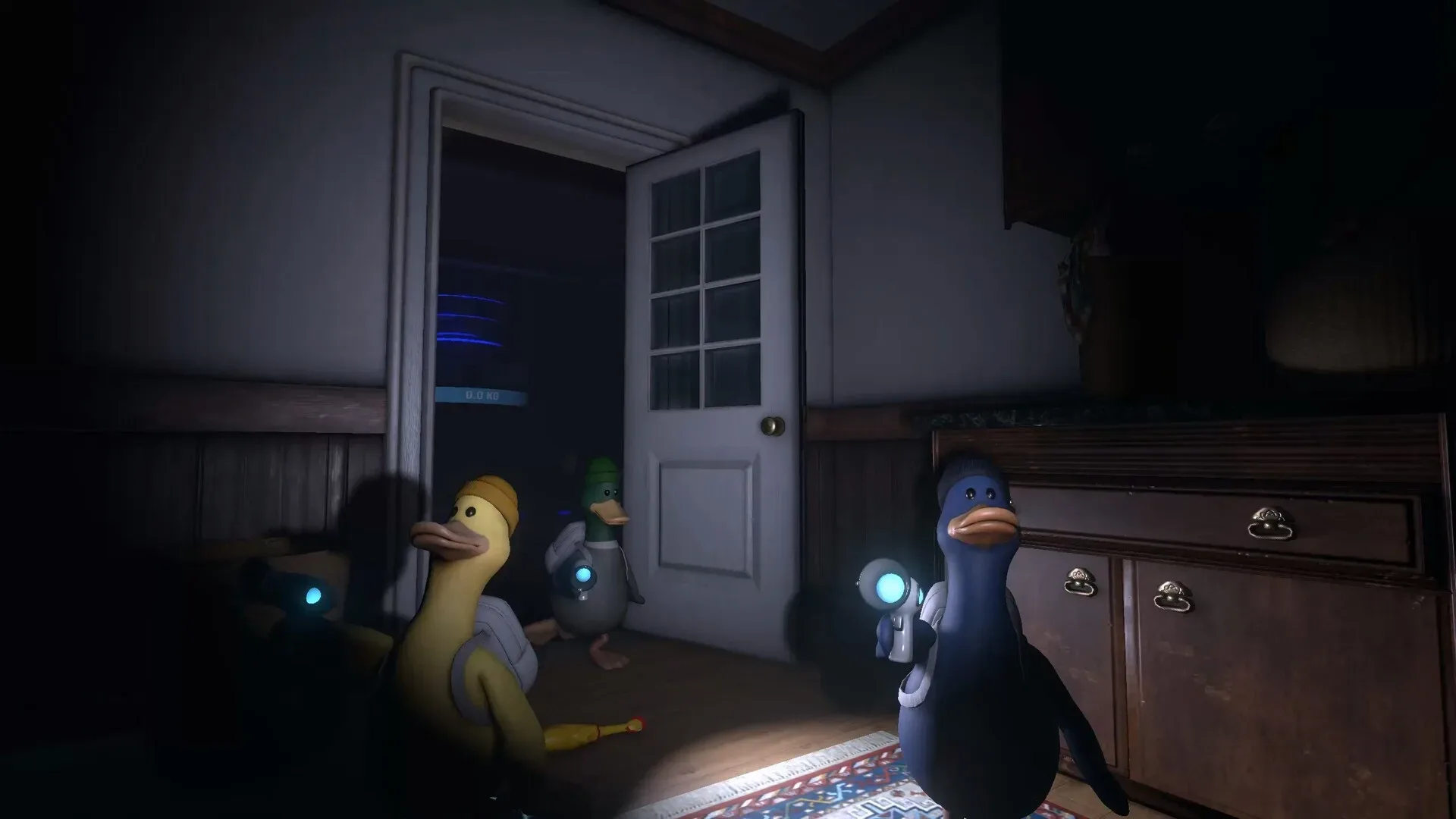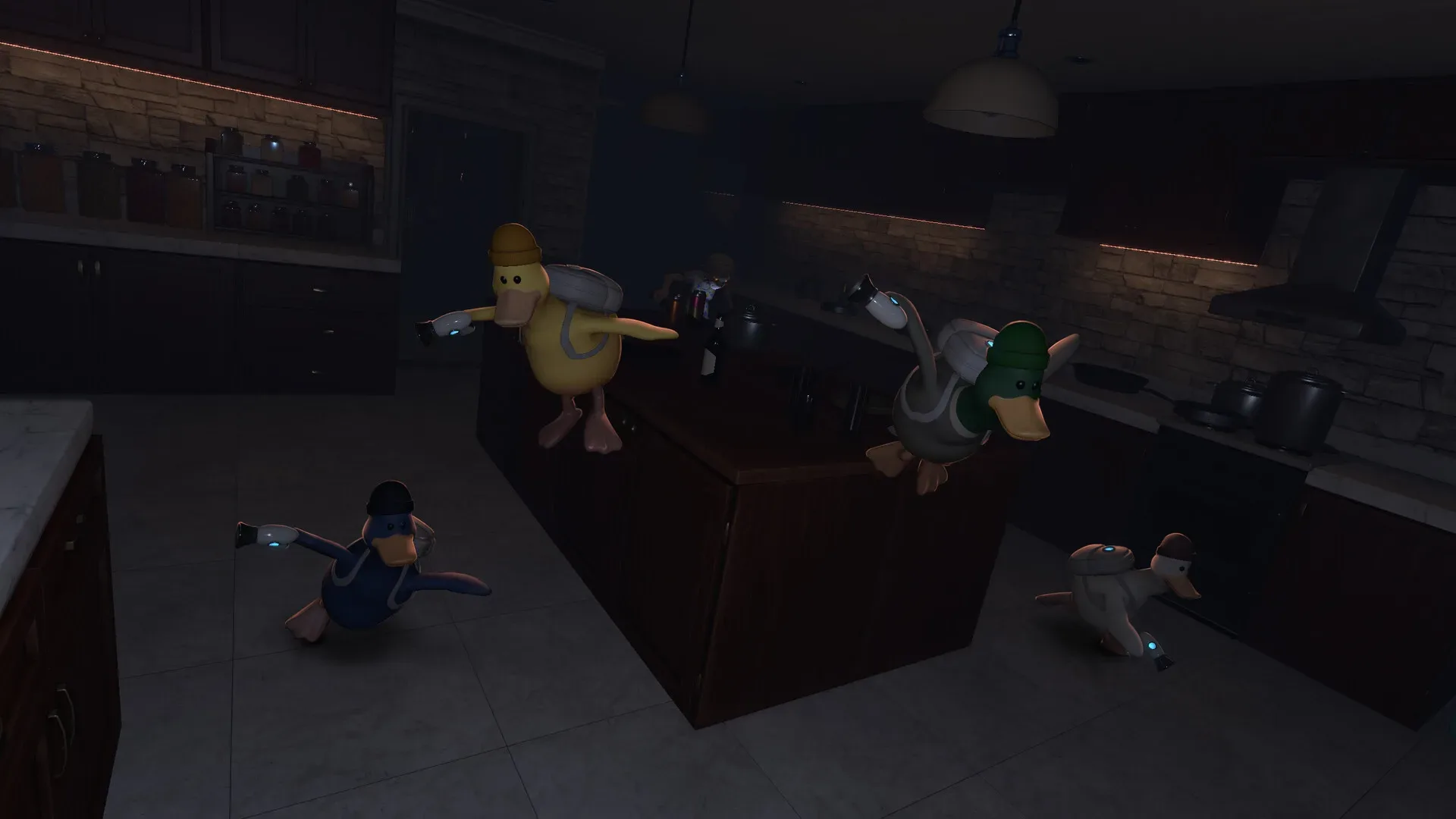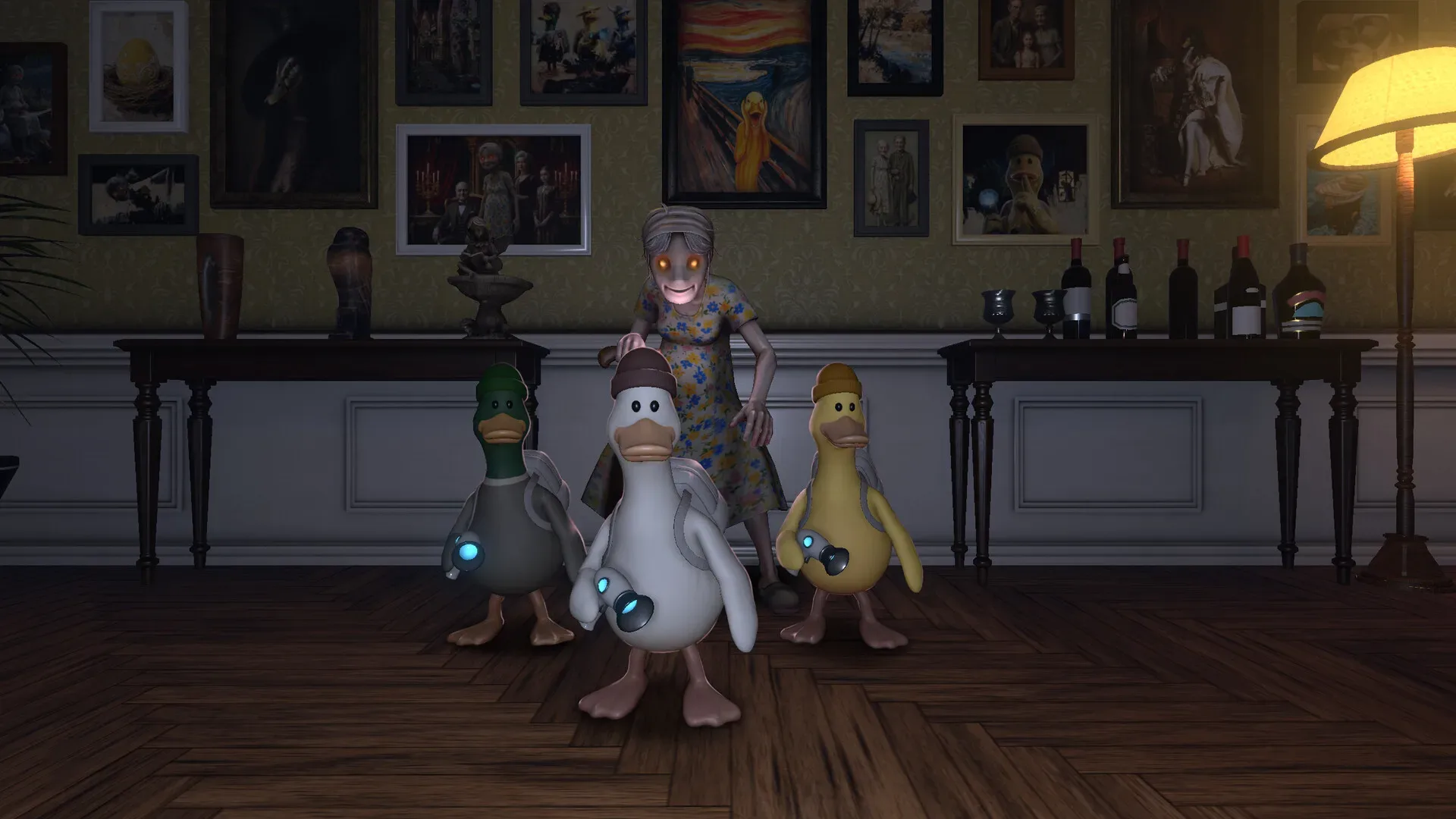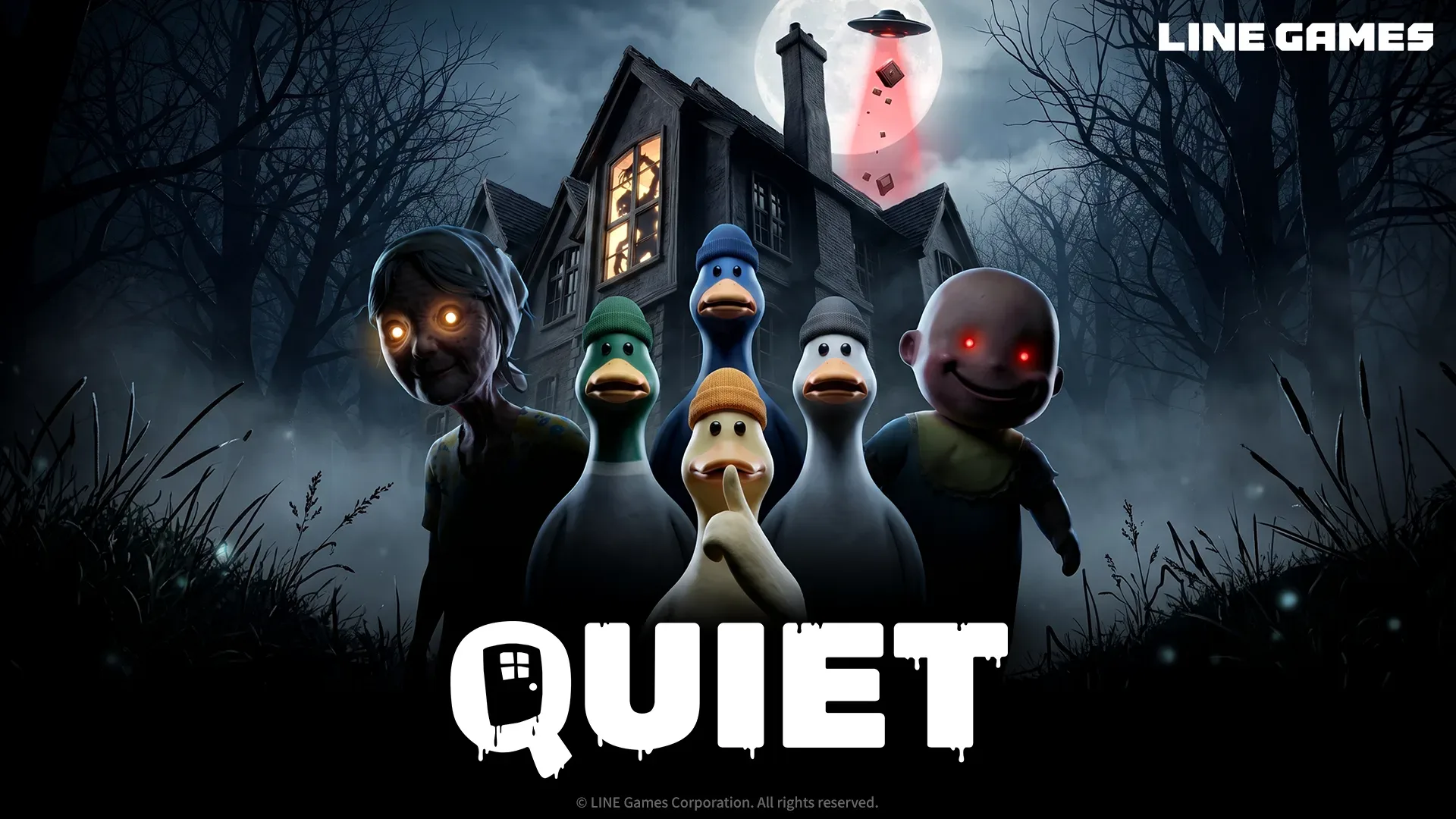
QUIET, the 1–4 player online co-op horror comedy about alien ducks trying not to make a racket, will receive its first demo on October 22. The demo is scheduled to launch simultaneously on Steam and the Epic Games Store.
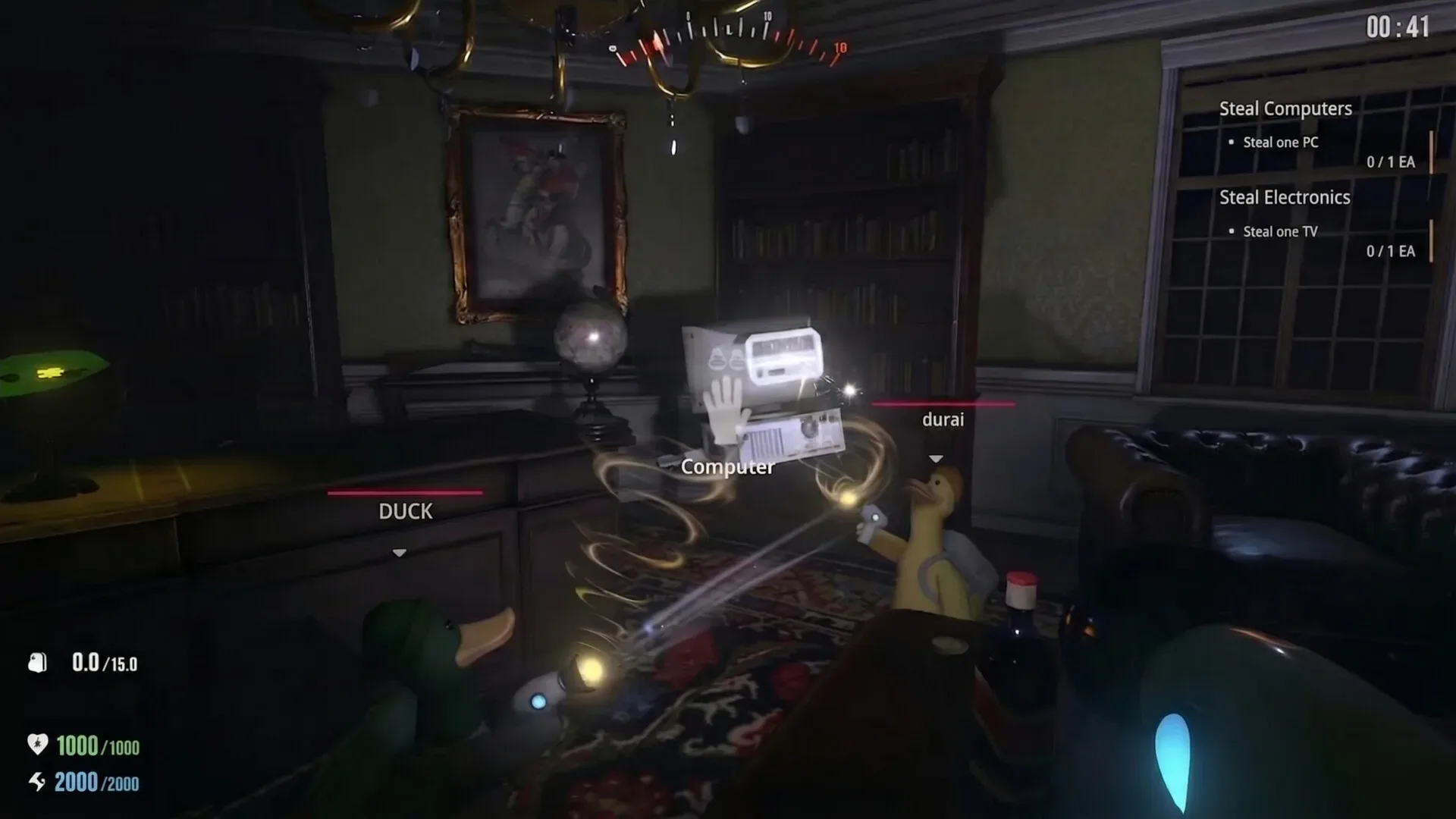
The premise has an admirably silly surface: a team of stranded extraterrestrial ducks needs to search a nearby house for the parts required to repair its spaceship and escape Earth. The complication is the homeowner. This is not simply an enemy players can outrun or fight; the homeowner can hear the noises the team creates.
That makes QUIET’s title a direct statement of the assignment. Movement can alert the homeowner. Dropped objects can alert the homeowner. Most notably, real-world sound captured through a microphone can alert the homeowner, and a microphone is required to play. The demo will therefore ask players to manage not only actions inside the house but also the sound around their PC setup.
A co-op horror game built around real noise
In conventional online co-op, voice chat is usually a tool for coordination. Players call out objectives, warn teammates about threats and occasionally celebrate a plan that somehow worked. QUIET turns the microphone into part of the risk model instead. A loud room, an ill-timed reaction, or the practical noises of a group trying to organize itself may become meaningful because they can draw the homeowner’s attention.
That distinction is important. The supplied gameplay outline identifies three separate sound sources: movement, dropped objects and microphone-captured real-world sound. In other words, silence is not only a matter of muting a conversation. Teams will apparently need to consider how they navigate and what they do with items, while also paying attention to their actual surroundings.
“Online co-op” means multiple players work together over the internet toward a shared objective. QUIET supports one to four players, so its central escape task can be approached alone or with a full group. The available details do not specify how difficulty, objectives or enemy behavior change between solo and four-player sessions. What is clear is that the house search and spaceship repair are the core goals in either arrangement.
The microphone requirement is the most practical detail prospective demo players should note. It means the game is designed around audio input rather than treating it as an optional immersion feature. Players planning a session should ensure a microphone is connected and functioning before they begin. Since the homeowner reacts to sound picked up from the microphone, the environment around the player could matter as much as the team’s willingness to keep chatter down.
What the October 22 demo adds
The demo includes a new four-player Duck Out Arcade Stage, a spaceship-themed waiting room and special Halloween content. Duck Out is specifically described as a four-player arcade stage, making it a separate highlighted component alongside the main alien-duck escape setup. The provided information does not describe its rules, objectives or whether it is available outside a four-person party, so players should avoid assuming more than its four-player arcade designation.
Related coverage includes QUIET Demo Brings Alien Duck Co-Op Horror to Steam and Epic Games Store October 22.
The waiting room has a spaceship theme and was inspired by player feedback. Waiting rooms are the spaces players use before a session begins, commonly for gathering a party or preparing to enter a match. Here, giving that space a spaceship identity ties the pre-game area back to the stranded crew’s fiction rather than presenting it as a purely functional menu.
Halloween content is also part of the demo. No further details have been provided on what that content includes, whether it changes the house, costumes, gameplay, or something else. Its inclusion nevertheless fits the demo’s timing, with QUIET also due to participate in Screamfest from October 26 through November 2.
QUIET will additionally appear as part of The MIX Fall Showcase. Together, the showcase placement and Screamfest participation put the demo in a seasonal stretch when horror games and limited-time spooky material tend to get extra attention. The game’s mixture of tense sound management, a threatening homeowner and inherently comic alien ducks gives it a horror-comedy identity rather than positioning it as straight survival horror.
Large playtest response led into the demo
The public demo follows an initial playtest that drew 271,132 participants from 148 countries. More than 350,000 players registered for that test, meaning not everyone who signed up ultimately took part. Those are distinct figures: registrations measure interest before access, while participants represent the players who actually joined the playtest.
The development team says it used feedback from that period to address major bugs, optimize the build for improved stability and add requested features before the demo. “Optimization” generally refers to technical work intended to make software run more efficiently or reliably. “Stability” concerns how consistently it functions, including the avoidance of crashes, severe errors or disruptive performance issues. The announcement does not enumerate individual fixes or set out performance targets, but it does establish that the demo incorporates work prompted by the test.
For a game whose hook depends on reacting to multiple kinds of sound, technical reliability has particular practical importance. Players need to be able to tell whether the homeowner is responding to their movement, an object they dropped or a sound caught by the microphone. That is an analysis of the premise rather than a promise about the demo’s final behavior, but it explains why feedback-led bug fixes and build optimization are relevant ahead of a wider hands-on release.
The first test’s scale also gives the team feedback from a broad set of players and locations. It does not, on its own, establish how the demo will perform for any individual system, nor does it reveal the game’s release plans beyond this demo. Still, the step from a playtest to a publicly available demo is a meaningful one: it expands access while adding the Duck Out stage, the themed waiting room and Halloween material.
What to expect from the house escape
The stated loop is compact: enter the nearby house, locate spaceship parts, repair the craft and get out without attracting the homeowner. The tension comes from completing an objective that presumably requires activity while the game penalizes noise. Teams will have to balance speed against care, and communication against the risks associated with a live microphone.
There is room for comedy in that conflict. Alien ducks conducting a stealthy scavenger operation are an unusual premise, while the prospect of ordinary real-life noises becoming a problem can make a frightened or excited co-op group part of the spectacle. At the same time, the sound system is not merely a joke, because the homeowner is explicitly able to hear it.
Players seeking another recent example of PC demo news can also see Ghost Justice’s Steam Next Fest demo plans. QUIET differs sharply in focus: its defining interaction is cooperative noise discipline and microphone use, not a tactics operation.
Demo checklist for prospective duck crews
- Date: October 22.
- Platforms: Steam and the Epic Games Store, launching at the same time.
- Player count: One to four players online.
- Required equipment: A microphone.
- Core objective: Search a house for spaceship parts, repair the ship and escape Earth.
- Primary threat: A homeowner alerted by movement, dropped objects and real-world sounds captured through the microphone.
- Demo additions: The four-player Duck Out Arcade Stage, a spaceship-themed waiting room and special Halloween content.
- Event appearances: The MIX Fall Showcase and Screamfest, running October 26–November 2.
QUIET’s October 22 demo is consequently less about whether a group can simply find the right parts and more about whether it can behave quietly enough to do so. For players used to treating a microphone as an always-on social tool, the game’s premise presents a neat reversal: the person talking may not be the only one listening.