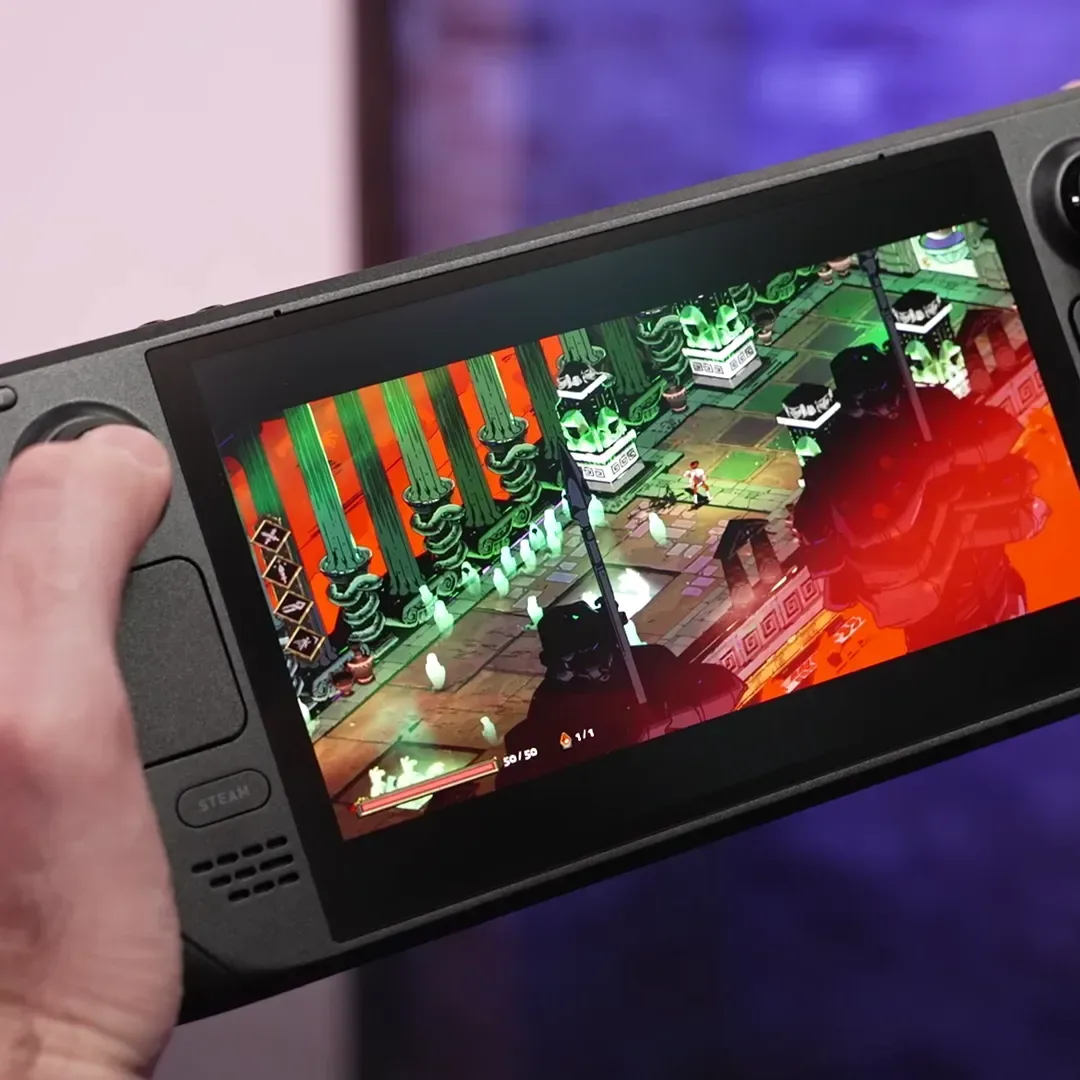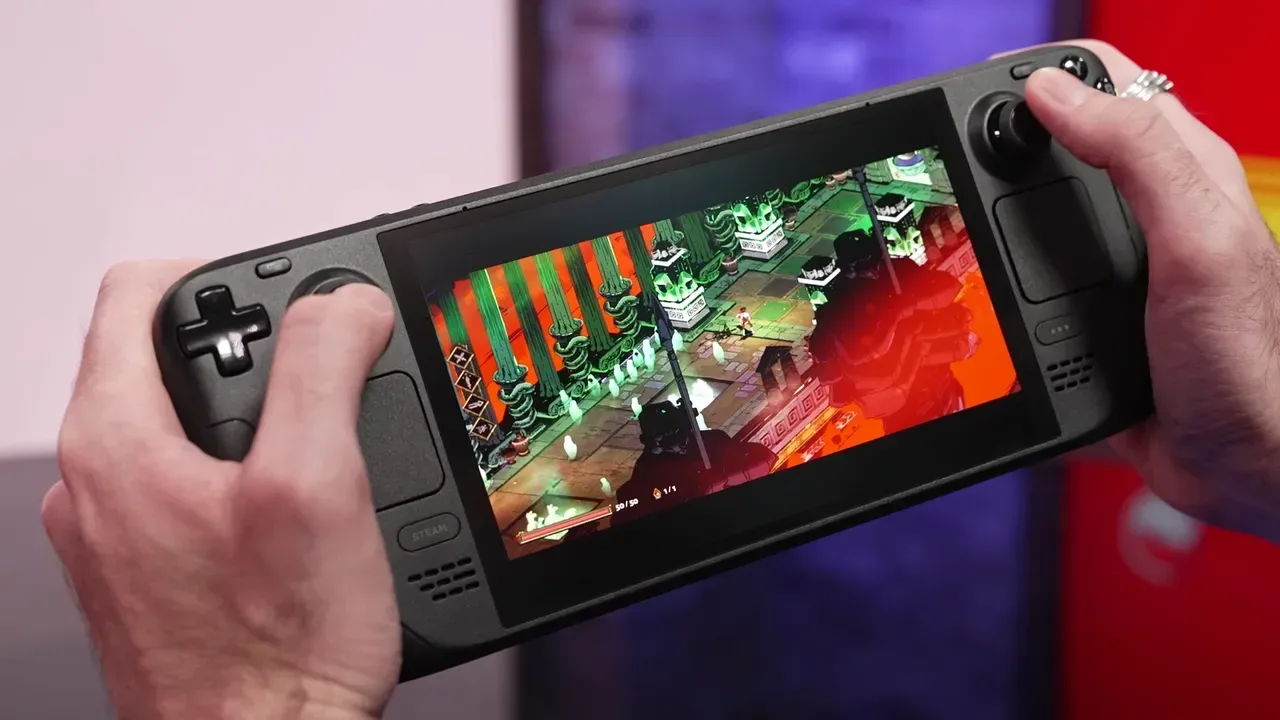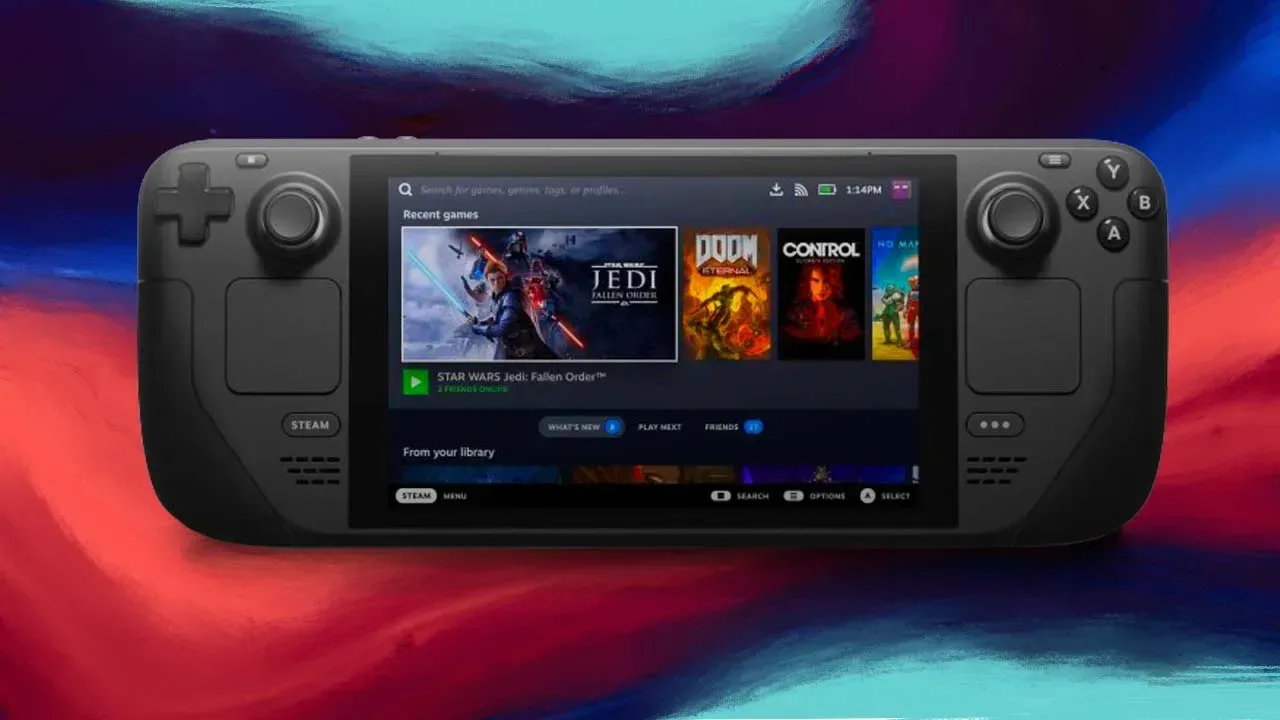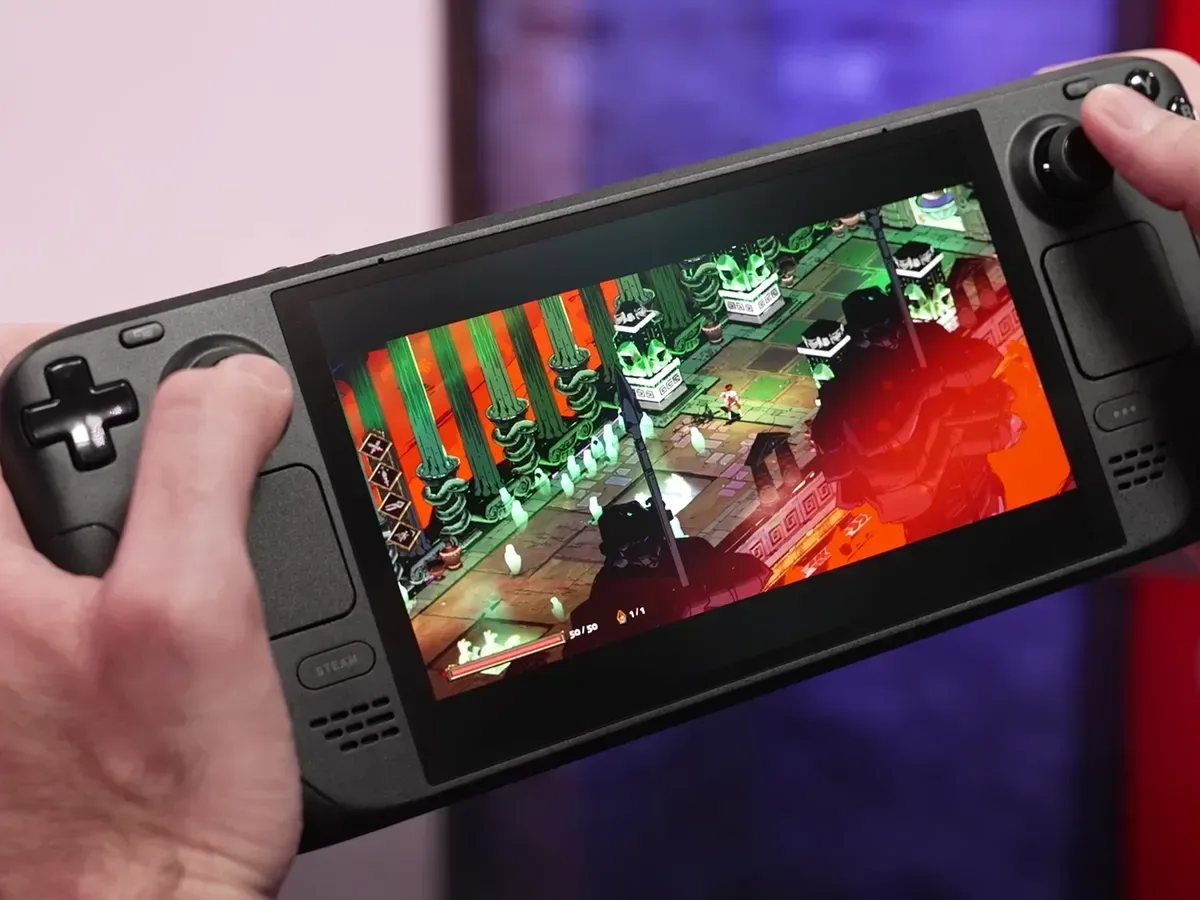
A newly spotted benchmark entry for an AMD APU codenamed Gainsborough has revived the eternal handheld-PC pastime: staring at half-complete silicon data and asking whether Valve is about to deal a Steam Deck 2 from the top of the deck.
The short, sensible answer is maybe, but nothing here confirms a product. The listing appears to show an engineering sample with a six-core, 12-thread CPU and 24GB of LPDDR5 memory. Those details make it an interesting piece of hardware in their own right. They do not, however, establish that the processor is destined for Valve’s next handheld, reveal its graphics hardware, or tell players what games would run better on a retail machine.
That distinction matters. Hardware leaks can provide early clues about work happening behind the scenes, but an early benchmark is more of a blurry minimap marker than a finished quest objective. It may point in a useful direction while still leaving major questions unanswered.
What the Gainsborough listing actually shows
The reported benchmark identifies an AMD APU called Gainsborough, carrying six CPU cores and 12 threads alongside 24GB of LPDDR5 memory. An APU, or accelerated processing unit, is a chip that combines central processing duties and graphics processing on the same package. That arrangement is central to compact gaming systems because it helps fit the computing hardware into a smaller, power-conscious device.
The CPU information is the clearest part of the listing. Six cores and 12 threads means the chip has six physical CPU cores, with two threads per core available to the operating system. The reported core count is 50% higher than that of the original Steam Deck’s APU. In broad terms, more CPU resources can help with game simulation, asset streaming, background tasks and the general demands of modern PC games—but the core count alone cannot predict real-world game performance.
Clock speeds, power limits, cooling behavior, the final operating system configuration and the chip’s graphics section all affect the result. Handhelds must also balance speed against battery life and heat. A processor that performs exceptionally at a higher power draw may behave very differently when tuned for a portable system.
The reported 24GB of LPDDR5 is also notable. LPDDR5 is low-power DDR5 memory, a type designed with power efficiency in mind. In an APU-based handheld, system memory is especially important because CPU and graphics components share it. Still, the presence of 24GB in an engineering sample is not a retail specification. It could be representative of a possible final configuration, a test setup, or simply part of development work that does not translate directly into a consumer device.
The GPU remains the big blank space
For a prospective gaming handheld, the most important missing detail is the GPU. The benchmark does not disclose the graphics architecture, and it does not provide the specifications needed to understand the machine’s likely gaming capability.
Related coverage includes Possible Steam Deck 2 AMD Chip Appears in Benchmark, Raising New Questions About Valve's Next Handheld.
That absence substantially limits what can be inferred. GPU architecture, compute resources, memory bandwidth, driver maturity and power tuning are all critical to rendering games. Without them, it is impossible to make a grounded call on frame rates, image quality settings, display targets, or whether a hypothetical Steam Deck successor would represent the kind of substantial generational leap Valve has indicated it wants.
There is a tempting but unreliable shortcut in leak coverage: see a higher CPU core count, attach a familiar product name, and declare a performance revolution. The Gainsborough data does not justify that shortcut. It supports a narrower conclusion: AMD appears to have an engineering sample under this codename, and the disclosed CPU and memory configuration looks materially different from the original Steam Deck’s reported CPU setup.
A FurMark result is not a Steam Deck 2 verdict
The early graphics number attached to Gainsborough is also easy to misread. The report cites a FurMark score of 3,508 points, against 3,323 points for the original Steam Deck. FurMark is a graphics stress-test benchmark. It can be useful for observing a GPU under a demanding synthetic workload, but it is not the same as testing a library of games.
More importantly, the two reported scores were not produced at the same resolution. Gainsborough was tested at 768p, while the original Steam Deck comparison used 800p. Rendering fewer pixels can improve a benchmark result, so the figures are not a clean, like-for-like measure of generational graphics progress.
There is another major caveat: this is reportedly an engineering sample. Engineering samples are pre-release chips used during development and validation. Their performance can be affected by unfinished firmware, early drivers and test conditions that do not resemble a finalized retail handheld. A result from such hardware may change greatly before a product launch—or may never correspond to a launched product at all.
In other words, 3,508 versus 3,323 is not evidence that a Steam Deck 2 would offer only a small graphics uplift. It is also not evidence of a huge leap waiting just off-screen. It is an isolated result from hardware whose graphics identity and product destination have not been confirmed.
Why the codename has people making a Final Fantasy connection
Gainsborough is attracting attention partly because of its name. The original Steam Deck’s APU was codenamed Aerith, while the Steam Deck OLED used a chip called Sephiroth. Those are conspicuous Final Fantasy-related names, and Gainsborough has an obvious association with Aerith Gainsborough.
That pattern makes the name intriguing, rather than definitive. Semiconductor codenames can reflect internal themes without confirming a particular final device. In this case, the context is strengthened by a separate report earlier in the month describing import documents for a chip using the same GBR abbreviation seen with the AMD engineering sample. Even so, a matching abbreviation and a fitting naming convention are clues, not a product reveal.
Valve could use the chip in a future handheld, AMD could be developing it for another partner, or it could be part of work that changes direction before retail hardware is finalized. Until a company formally identifies Gainsborough’s purpose, every Steam Deck 2 connection should carry an asterisk the size of a handheld cooling vent.
What a “true next-generation” Steam Deck would need to prove
Valve has previously said it is waiting for a chip that can enable a “true next-generation” experience before moving forward with a Steam Deck sequel. That framing is useful because it sets a higher bar than a routine component refresh.
A meaningful successor would not be defined solely by one CPU specification or one synthetic benchmark. For players, the practical test would be whether the system can deliver better experiences in newer and more demanding PC games while retaining the portability, efficiency and ease of use that made the Steam Deck compelling. That could include stronger performance, more stable frame rates, fewer visual compromises, improved battery behavior, or some combination of all four—but those are questions for final hardware, not this listing.
It is also worth separating the original Steam Deck from the Steam Deck OLED. The OLED model brought a distinct display-focused revision and used the Sephiroth-named chip, but the existence of that revision does not establish what a full next-generation device would look like. The apparent Gainsborough sample may be connected to that next step, yet the evidence available does not settle the matter.
Price may matter as much as raw performance
Whenever Valve’s next handheld arrives, it would enter a different market from the one the original Steam Deck joined in 2022. More powerful handheld gaming PCs now give prospective buyers more choices, which raises the pressure on any new Steam Deck to make a convincing case through capability, price and overall value.
Memory supply conditions are one potential complication. Valve has said the ongoing RAM crisis has not changed its plans for a sequel, but component pressures could still be relevant to a finished device’s price. The reported 24GB LPDDR5 configuration, if it ever became representative of a shipping product, would be one of several elements affecting manufacturing cost. That is not enough information to forecast a price, and no retail price has been confirmed.
Recent hardware pricing has also shown how quickly audience expectations can collide with expensive new devices. Valve’s Steam Machine and Steam Frame launches have faced pushback over their prices, while the Steam Deck itself has become harder to recommend against newer and stronger handheld PCs after price increases. A Steam Deck 2 would therefore need to compete in a market where “it runs my PC games in my hands” is no longer the whole pitch.
For now, potential buyers should treat the Gainsborough benchmark as a reason to watch, not a reason to postpone a purchase or plan an upgrade. There is no confirmed product name, launch date, price, GPU specification, display specification or battery claim attached to it. The benchmark does suggest that AMD development work under a particularly on-theme codename is visible in public—but the rest of the party has not joined yet.
PC handheld news is moving quickly across both hardware and software. For another recent PC development, see the changes around Helldivers 2’s move to Easy Anti-Cheat.