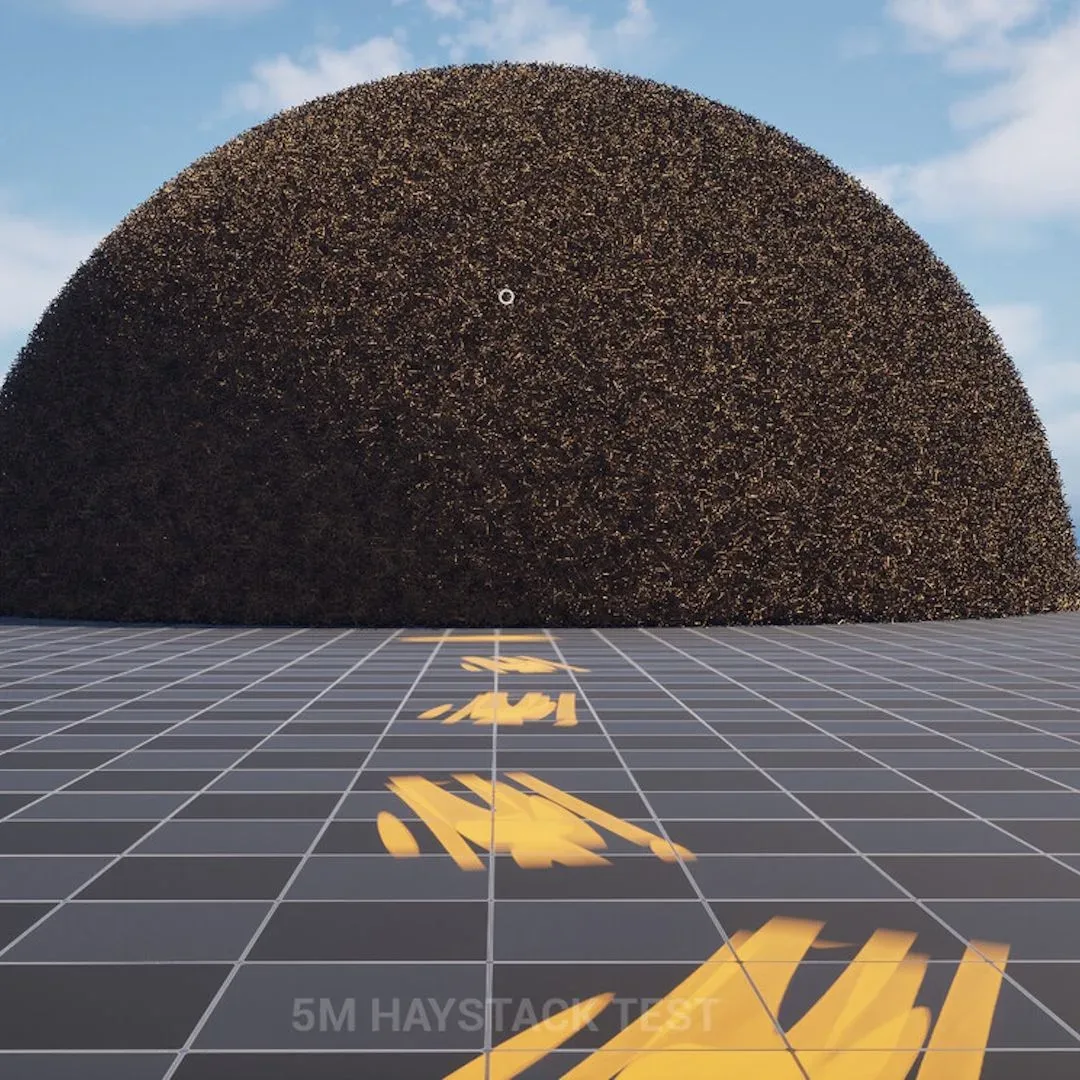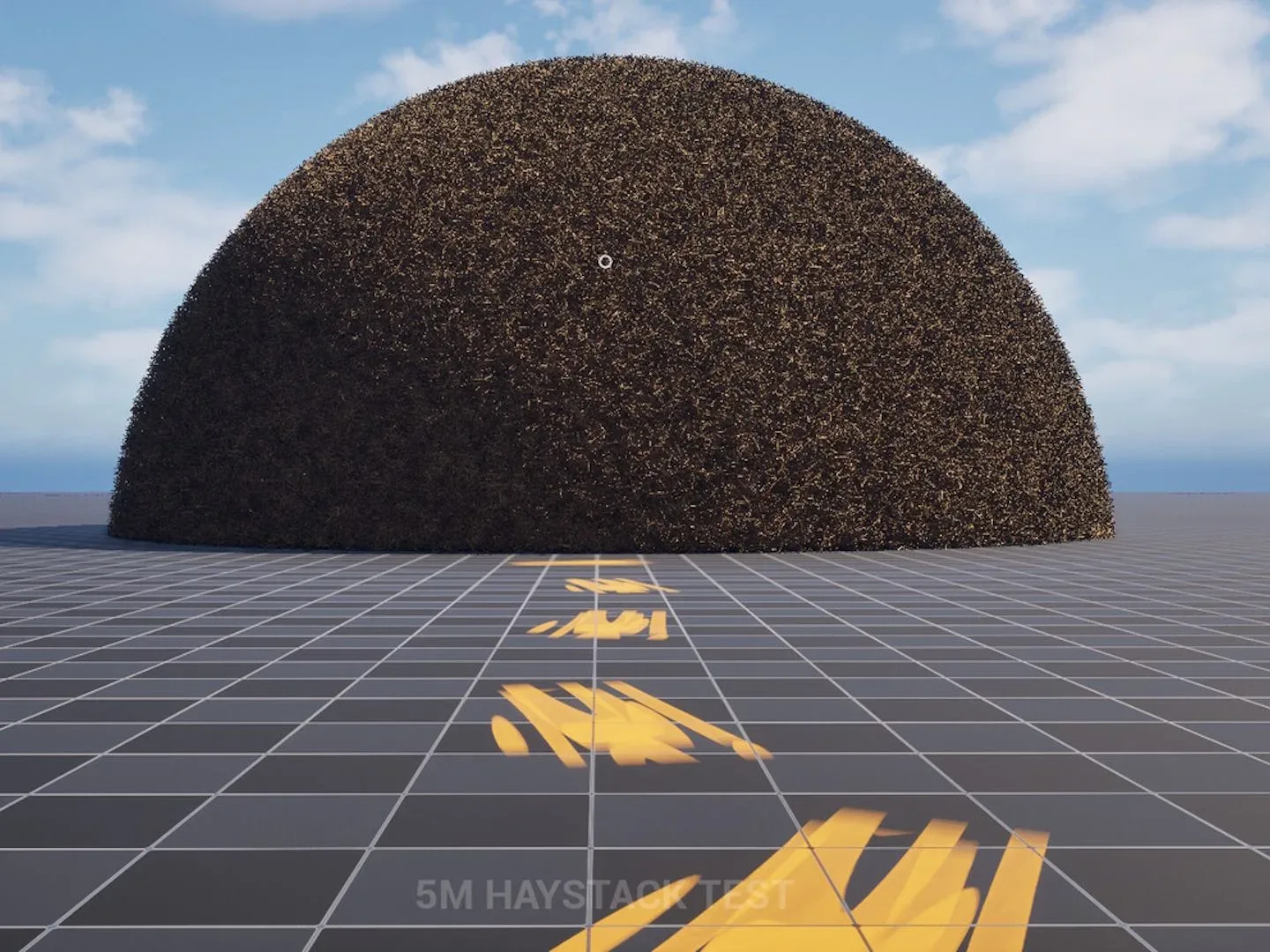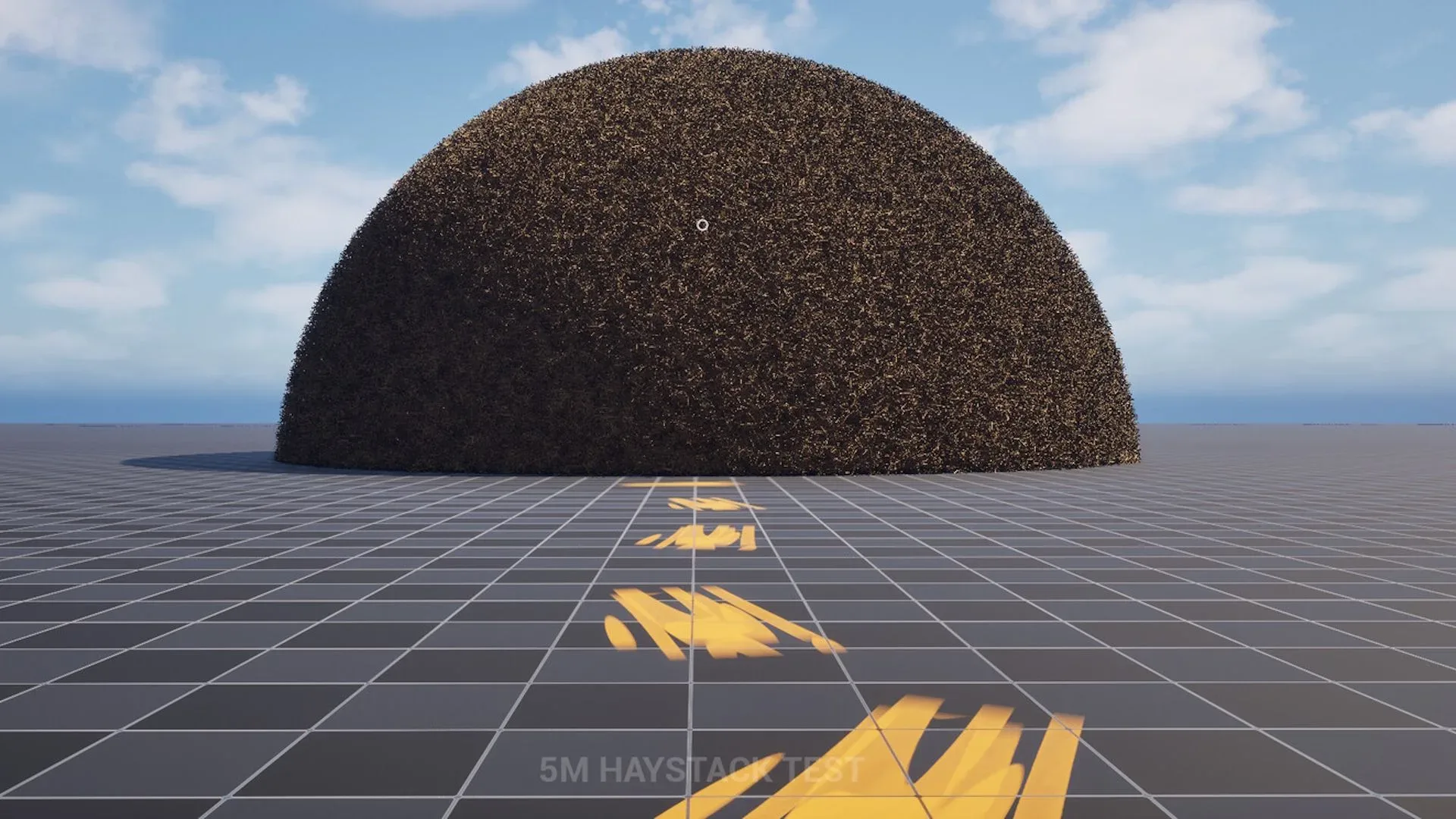
There is a wonderfully backwards twist at the center of Needle In A Haystack Simulator: a game built around locating one tiny object in an absurd ocean of straw may soon require players to locate the real game among a thicket of near-identical Steam listings.
Studio Bitdot’s planned PC release has attracted attention for embracing an intentionally simple premise. The objective is exactly what the name advertises: find a needle buried amid roughly five million pieces of hay. It is a joke with a playable interface, an endurance challenge with a search bar, and the kind of idea that is easy to understand in less time than it takes to spell “haystack.”
But that clarity has also created an obvious discoverability problem. Before the game’s intended launch window in the final quarter of 2026, at least eight other Steam listings with closely related names and the same broad premise had appeared. Studio Bitdot’s response was suitably direct: its store artwork now carries an “Original” label.
The marker is small, but the reason for it is not. On a digital storefront where players often discover projects through a keyword search, a title this literal can become difficult to distinguish when similarly titled games arrive in quick succession.
A search challenge outside the game itself
The original project’s basic setup does not leave much room for ambiguity. A needle has gone missing in an immense pile of hay, and the player is tasked with finding it. The game also includes treasure to uncover during the hunt; that treasure can be sold for tools intended to make the search more manageable. Yet the central attraction remains the huge-scale rummage through hay rather than an elaborate narrative, combat system, or genre mash-up.
That bluntness is likely part of the appeal. Plenty of games ask players to conquer a kingdom, save a galaxy, or master a complicated crafting tree. Needle In A Haystack Simulator asks a less heroic question: how long are you willing to inspect hay before the bit stops being funny and starts becoming a personal grudge against agriculture?
The complication is that Steam has accumulated listings such as Needle In A Haystack, another listing with that exact title, Needle in a Haytask, Needle in a Haystack, A Needle In a Haystack, and Needle in a Million Haystacks. Differences in capitalization, articles, spelling, and scale may technically separate some names, but they do little to help a player who only remembers that viral-looking game about finding a needle in an unreasonable amount of hay.
Not every similar title necessarily represents the same kind of project, and some listings may use different visual approaches. The reported overlap, however, is unusually stark: the names and core activity all orbit the same familiar phrase. For consumers, the risk is less about making a fine semantic distinction and more about clicking the wrong page while trying to find the version that first caught their attention.
Related coverage includes Needle In A Haystack Simulator Adds "Original" Label as Steam Lookalikes Multiply Before Launch.
Why the “Original” tag matters
Calling a game “original” is not a legal verdict and does not transform an old saying into proprietary territory. The phrase “needle in a haystack” predates video games by a rather comfortable margin. No one needs to pretend that Studio Bitdot invented the metaphor, the physical objects involved, or the general notion of a search game.
In this case, the label functions as a practical signpost. It tells shoppers that this is the Studio Bitdot project that gained online traction before its late-2026 release window. With multiple lookalike names already visible, that may be the clearest message the developer can put on a piece of storefront art without turning the image into a legal filing with hay textures.
It is also a reminder that store-page presentation is part of game development now. For small teams, the logo, capsule image, title, screenshots, and short description can determine whether an interested visitor finds the right product at all. The work is not merely making a game recognizable once somebody reaches its page. It is helping people reach that page when similar names are competing for the same search terms.
The problem becomes particularly sharp for games whose pitch is immediately reproducible. An elaborate game with a distinctive setting, characters, and mechanics may still face imitation, but its identity has more handles for an audience to grab. A deliberately minimalist joke game has fewer of them. Its elegant elevator pitch can be repeated by almost anyone, and the title itself practically contains the design document.
Simple premises can still be distinctive projects
There is a temptation to treat a minimalist concept as though it involves no design work beyond the first laugh. That is not necessarily true. A search space made of around five million hay pieces has to be communicated clearly enough for players to understand what they are doing, while remaining visually and mechanically interesting enough to sustain the gag. Tools earned by selling found treasure suggest that the search is not entirely static either; there is at least a progression loop meant to change how the task feels over time.
Whether that structure turns the premise from a one-minute punchline into a game players want to revisit is a question for release. No performance claims, review verdicts, or hands-on impressions can fairly be made before then. Still, the existence of the tool system helps explain why Studio Bitdot’s project is more specific than merely a title: it pairs the enormous hay search with collectible treasure and purchasable assistance.
That distinction matters when search results get crowded. Players following a game after seeing it shared online may be looking for the particular version with Studio Bitdot attached, the approximately five-million-piece haystack, and the treasure-for-tools loop. A generic recollection of “the hay needle game” is no longer enough to guarantee they arrive at the intended listing.
Steam discovery is part of the joke—and the concern
Digital storefronts make it possible for tiny, strange ideas to reach audiences far beyond a local friend group or a game-jam page. That openness is one reason a project like this can find momentum in the first place. It also means storefront search can become a crowded space with similar keywords, broad tags, and listings designed to catch adjacent interest.
For shoppers, the sensible response is basic but worthwhile: examine the developer name, compare the store art, read the description, and use the features that identify the specific game being discussed. This is not just advice for haystack simulators. It applies to any game with a very generic title, a recognizable trend-driven hook, or numerous imitators using near-matching language.
Those browsing on a PC may also want a reliable setup for the games they do find; our guide on whether a USB-C port can send video to a monitor covers a separate, but similarly practical, piece of PC gaming homework.
In Studio Bitdot’s case, the “Original” badge is an unusually blunt answer to an unusually literal identity crisis. It does not make the title less searchable, nor does it erase the other listings. What it does do is acknowledge the situation in a form shoppers can see at a glance. The game’s main task may be locating one needle among millions of hay pieces. Its storefront task is increasingly similar: helping prospective players spot one intended listing among a rapidly growing pile of almost-the-same thing.
What to watch ahead of the late-2026 window
Needle In A Haystack Simulator is still described as targeting the last quarter of 2026, so key details remain unresolved. There is no confirmed release date in the available information, and no basis to state a price, final feature list, reception, or precise availability beyond Steam’s role as the storefront where the competing listings have appeared.
For now, the clearest identifiers are Studio Bitdot, the game’s title, the search through roughly five million hay pieces, the treasure that can fund useful tools, and the “Original” label placed on its Steam artwork. That is a lot of detail for a game about one lost needle—and apparently just enough detail to ensure players can find the correct haystack first.