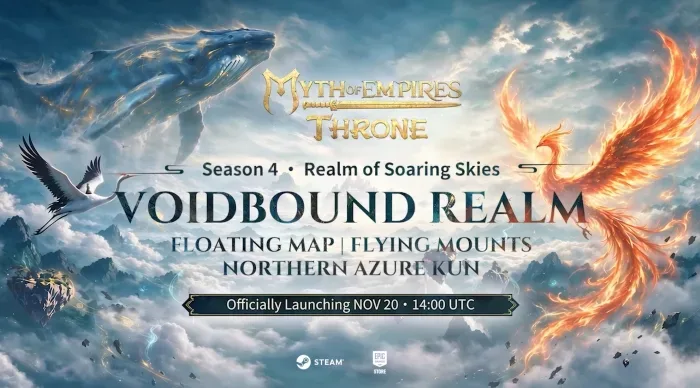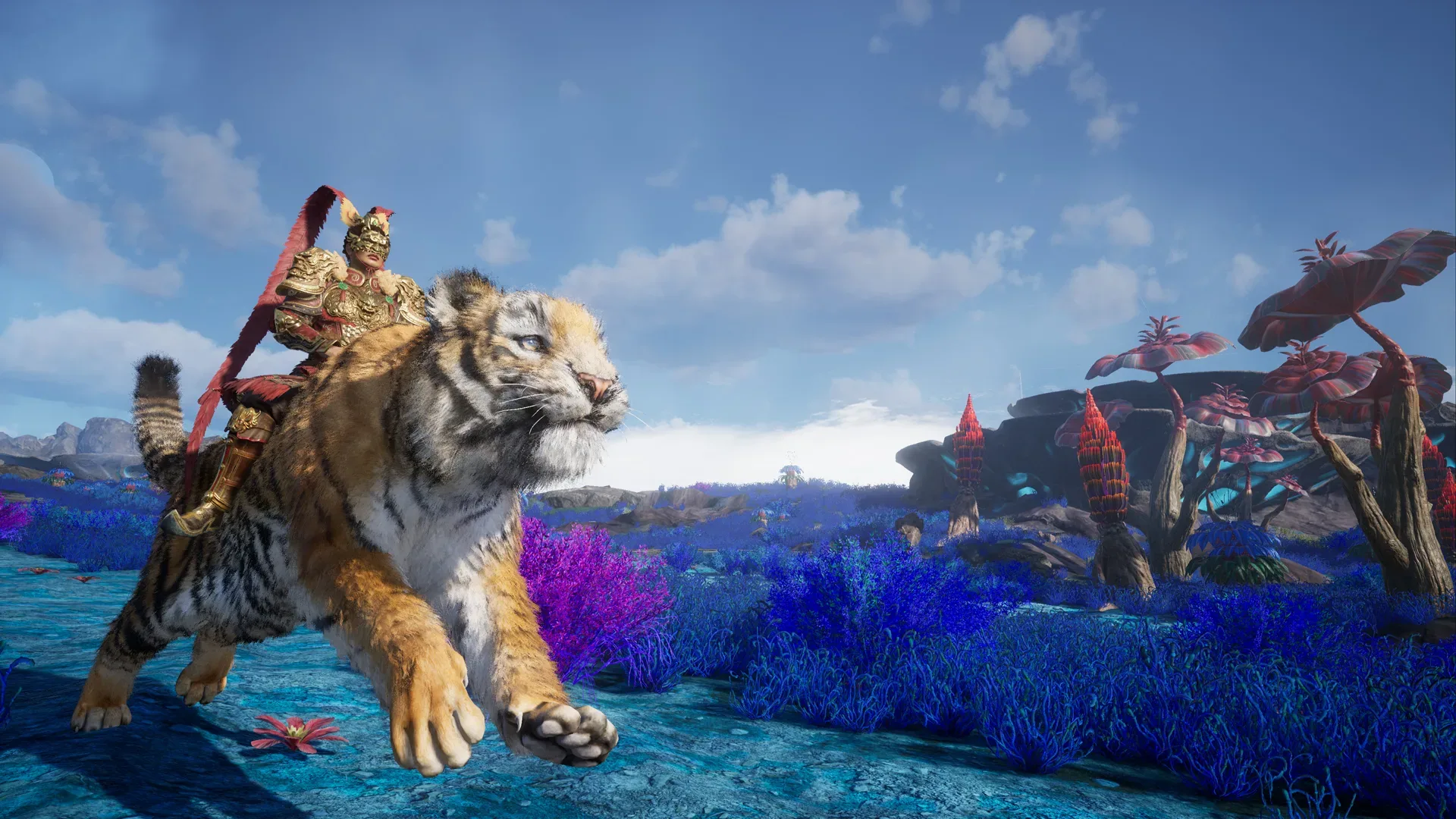

Myth of Empires: Throne has begun Season 4, a free update built around Voidbound Realm, a new floating-island map that shifts much of the season’s activity above the ground. The update is available on Steam, does not add a charge to the game’s free-to-play offering, and is scheduled to run until February 20, 2027.
The headline addition is not simply flight as a faster way to move between familiar points. Voidbound Realm introduces a new loop in which aerial exploration, resource refinement and guild competition are directly linked. Players use flying mounts to gather Spiritual Qi, convert it through a designated structure, and ultimately add to their guild’s seasonal standing. Alongside that system are an enormous mobile aerial platform, PvE Sect encounters, a volatile currency objective that can be stolen after a player’s death, and individual leaderboards.
One accessibility detail is especially notable: Voidbound Realm has no level requirement for entry. Players can visit the map right away rather than waiting to clear a stated character-level threshold. That does not mean every activity on the map is immediately mastered or that all of the season’s rewards are unlocked from the start; it means the new area itself is open to new and established players alike.
Voidbound Realm makes Spiritual Qi the centre of Season 4
Season 4’s core resource is Spiritual Qi. In practical terms, this is the material players collect while using flying mounts in Voidbound Realm. The process continues at a Boundary Marker, where Spiritual Qi can be refined into Earth Spirit Stones. Depositing those stones produces Spiritual Power Points, which count toward a guild’s seasonal ranking.
That chain matters because it gives flying a collective purpose. A player is not just seeking altitude or a new route across the map: their harvesting activity feeds into a shared scoreboard. Guilds therefore have reason to consider where members are gathering, how regularly they are returning to Boundary Markers, and how much risk they are taking while moving resources through the seasonal system.
A Boundary Marker is consequently more than a crafting stop. It is the named place where important seasonal resources are converted or exchanged. It is used for the Qi-to-stone process and also appears in the Military Pay system, making it a key point in the season’s economy. Players entering Voidbound Realm early may find it useful to understand this resource flow before treating the map as an ordinary exploration zone:
- Use a flying mount to absorb Spiritual Qi.
- Bring the Qi to a Boundary Marker.
- Refine it into Earth Spirit Stones.
- Deposit the stones to generate Spiritual Power Points for the guild ranking.
The terminology is worth separating. Spiritual Qi is the raw aerially collected resource; Earth Spirit Stones are the refined result; Spiritual Power Points are the ranking contribution generated by depositing those stones. Keeping the three stages straight should make the system easier to coordinate within a guild.
Mystic Crane and Wildfire Phoenix bring different development paths
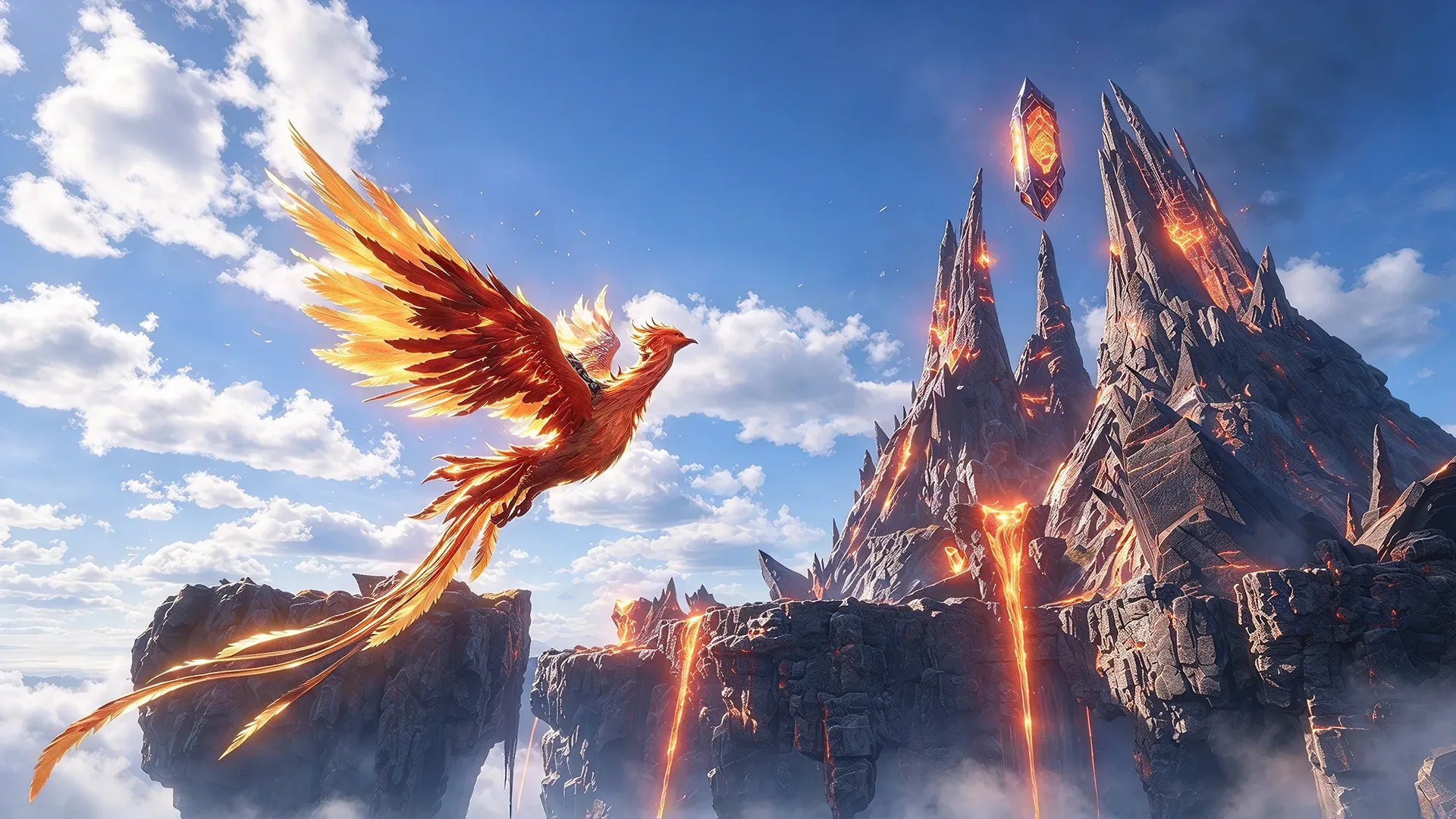
Two new flying mounts arrive with the season: the Mystic Crane and Wildfire Phoenix. Both can be tamed and developed, and their progression affects three functional traits: Spiritual Qi absorption range, speed and carrying capacity. The mounts also have different visual designs and combat abilities.
The stated progression properties suggest a useful division between immediate mobility and longer-term collection efficiency. Absorption range describes how far a mount can reach to take in Spiritual Qi. Capacity describes how much it can carry. Speed affects movement across the floating-island environment. Exactly how a player prioritises those qualities will depend on the job they are trying to perform, but the system clearly makes mount growth part of the seasonal resource loop rather than a cosmetic side activity.
For guild-oriented play, those stats could influence how roles form organically. A player focused on scouting or rapid map movement may value speed, while someone concentrating on sustained collection may care more about Qi range and capacity. The game identifies distinct combat abilities as another difference between the Crane and Phoenix, so the choice is not framed solely around hauling resources.
There is an important limitation to keep in mind: the available details establish that the mounts have distinct appearance and combat abilities, but do not specify their individual moves, statistics or which one is best in a given situation. A sensible approach is to avoid assuming one is a universal upgrade over the other and instead assess their functions as they develop.
The Northern Azure Kun is an airborne construction platform
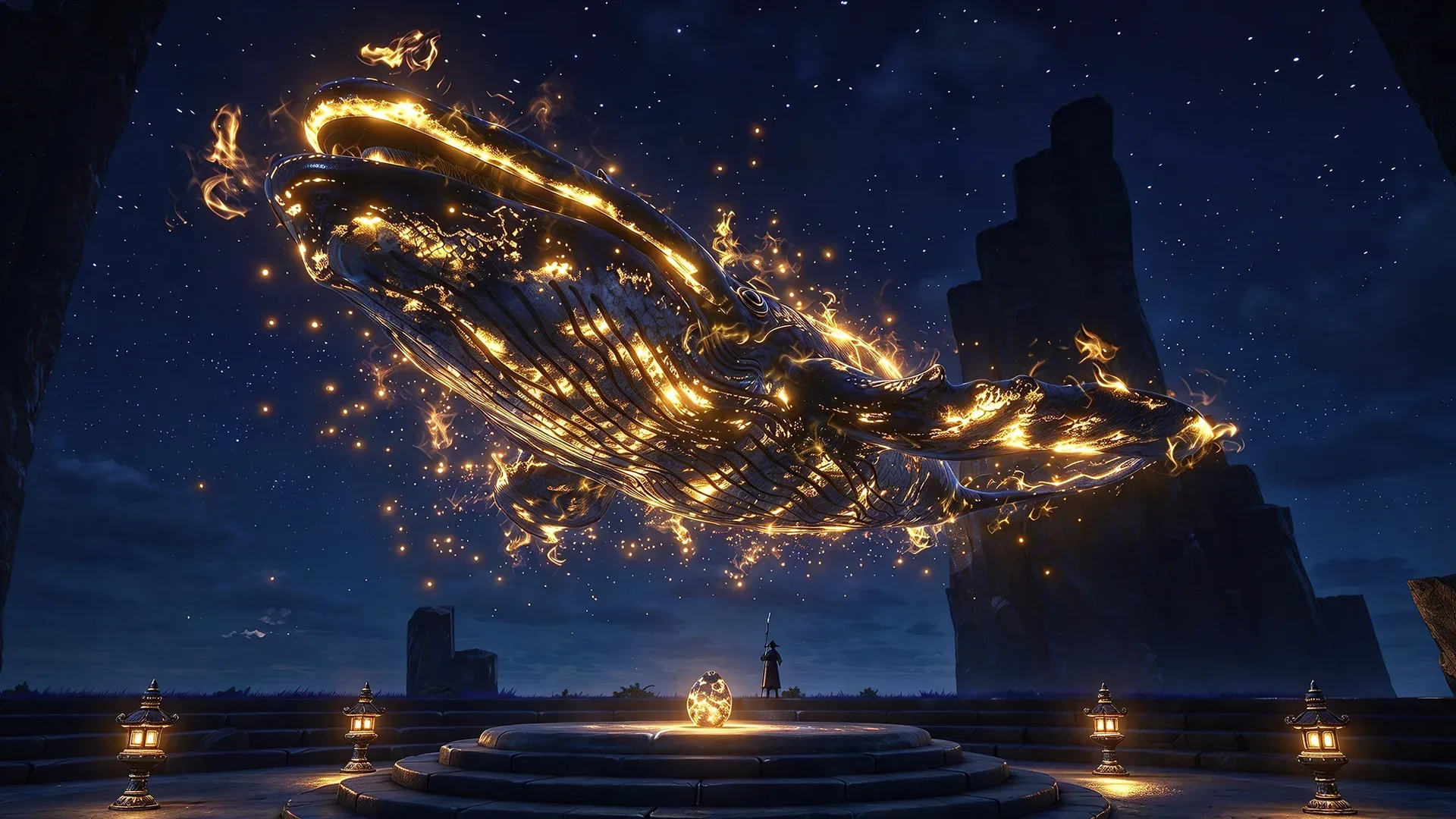
For players looking beyond an individual mount, Season 4 adds the Northern Azure Kun, described as a huge airborne mobile platform. Players can hatch a Kun, add a Kun Spirit Platform, and construct buildings on that platform. The result combines transport, building and combat in the sky.
That distinction is significant. The Crane and Phoenix are tamed flying mounts tied to personal movement and resource absorption; the Northern Azure Kun is a much larger constructible platform intended for broader operations. Building on it makes the Kun an option for groups that want their movement and structures intertwined, rather than treating a base and a travel method as entirely separate concerns.
The supplied Season 4 details do not list building types, defensive rules, capacity restrictions or the full range of possible aerial combat interactions. Still, the feature’s stated design is clear: the season is adding infrastructure to the aerial layer, not merely giving players a way to fly above an otherwise ground-bound experience.
Sect challenges add a guaranteed chest milestone
Season 4 also includes PvE, or player-versus-environment, content through Sect challenges. These encounters put players against Sect disciples, elders and a Sect Master boss. The structure gives the activity a visible hierarchy of enemy types, from standard opposition through to the named boss encounter.
Its reward system includes a firm milestone: every 100 Sect enemies defeated guarantees an Ancient Jade Chest. Each chest awards one Ancient Secret Scroll selected at random from a pool of 26.
The word “guaranteed” applies to the chest after the 100-enemy threshold, not to a chosen scroll. The scroll itself is random from the 26 available options. That makes the Sect system a dependable source of a reward opportunity while retaining uncertainty over the exact result. Players pursuing a particular Ancient Secret Scroll should factor that random selection into their expectations rather than treating the enemy count as a direct route to one specific item.
Military Pay creates a cross-map risk-and-reward target
The season’s other major competitive system is Military Pay. Players earn it by defeating enemies and can exchange it for Copper Coins at a Boundary Marker. The catch is straightforward: dying while carrying Military Pay leaves some of it behind for other players to claim.
That makes Military Pay a risk-and-reward mechanic. The longer a player remains active with unexchanged Pay, the more value may be at stake; reaching a Boundary Marker converts it into Copper Coins, but until then a defeat can create an opportunity for another player. The system is available across maps, so it is not restricted to the aerial Voidbound Realm loop.
There are four accompanying Individual Leaderboards:
- Military Pay Raiding
- Mysterious beast hunter kills
- Ferocious beast kills
- Beast Lord Taming
Weekly and full-season rankings provide rewards. The overall seasonal prizes include tradable Celestial Dragon Tablets. “Tradable” is a meaningful detail: the Tablets can change hands within the game’s systems, rather than being described only as fixed personal rewards. The available information does not establish the exact reward distribution, leaderboard thresholds or the particular requirements for placing on each board.
More progression systems, warriors and launch activities
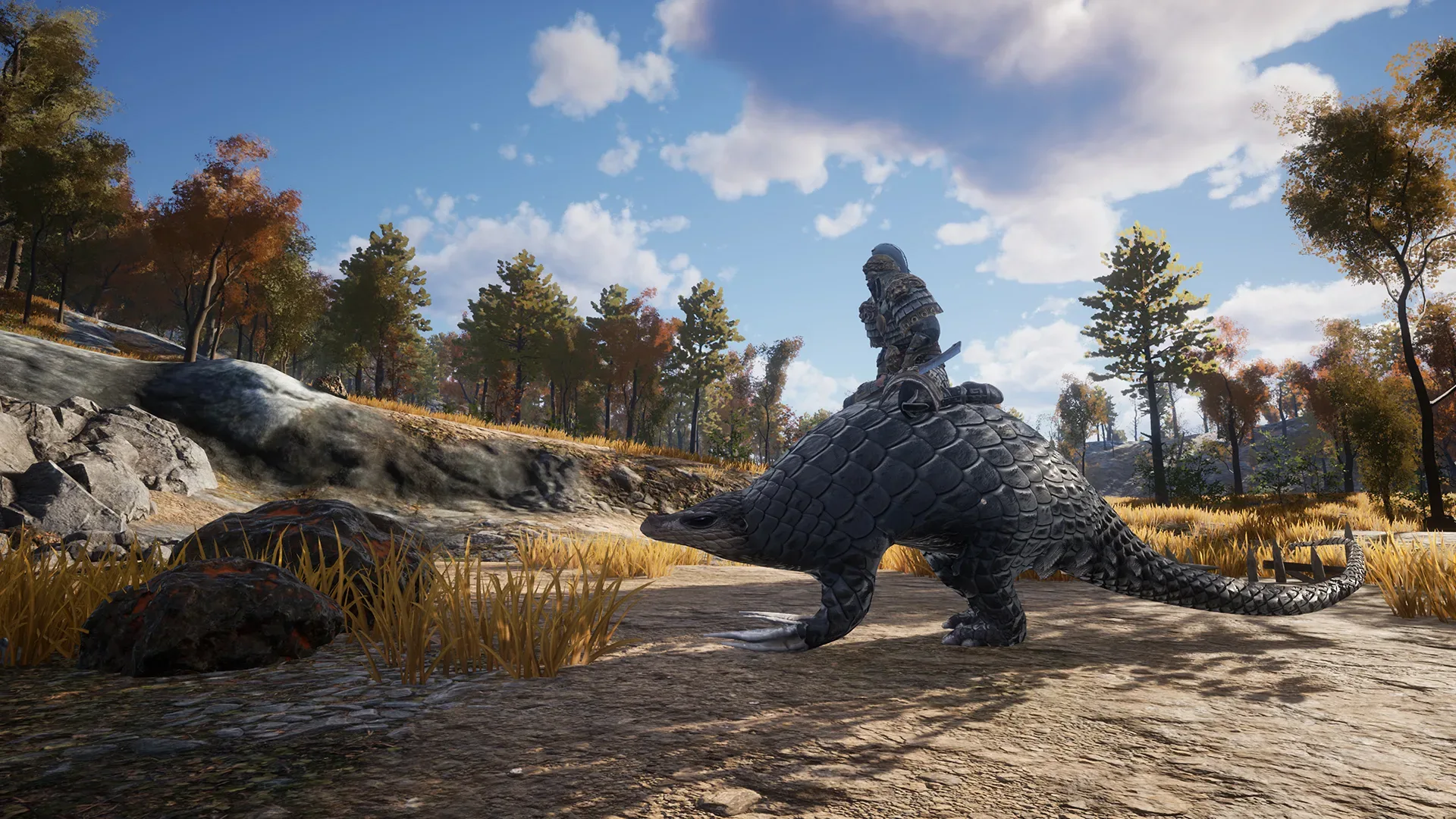
Beyond Voidbound Realm’s big systems, Season 4 adds a Title System, Legendary Warriors Sun Ce and Taishi Ci, plus a Pangolin creature that can gather minerals. These additions broaden the update across player status, character-related options and resource gathering.
A separate in-game mail reward gives players a Heavenly Secret Scroll. It can be used at level 60 to unlock all achievements at once. The condition is explicit: receiving the item through in-game mail is not the same as immediately activating it, as use requires reaching level 60.
Launch activities include progression bonuses and a 14-day login reward programme. Together with the no-level entry condition for Voidbound Realm, these incentives give returning players and newcomers several ways to begin engaging with the season, whether they are more interested in the map, its PvE challenges, guild contribution or the leaderboard race.
Season 4 is available now on Steam. Players watching the wider PC release calendar can also see how another Steam-bound adventure is taking shape in The Journey Home’s announced Steam launch plans.
For Myth of Empires: Throne specifically, the defining question of Season 4 is likely to be how effectively guilds turn airborne collection into coordinated ranking progress. The mounts make the gathering route possible, the Boundary Marker turns collected material into scoring output, and the Kun expands aerial play into construction and combat. With PvE scroll rewards, stealable Military Pay and multiple leaderboard tracks running alongside that foundation, Voidbound Realm is structured as a season with several overlapping paths rather than a single map to visit once.