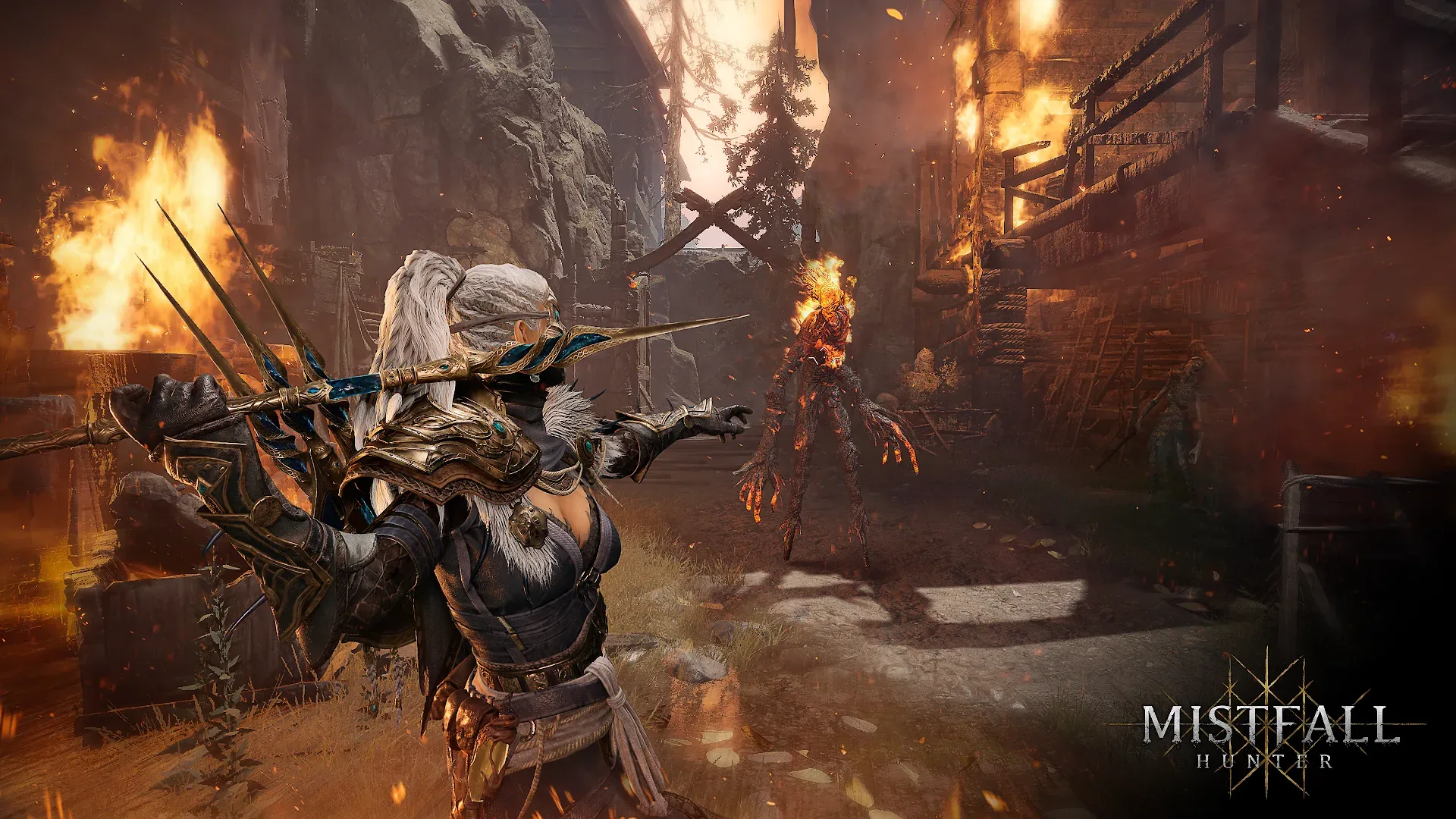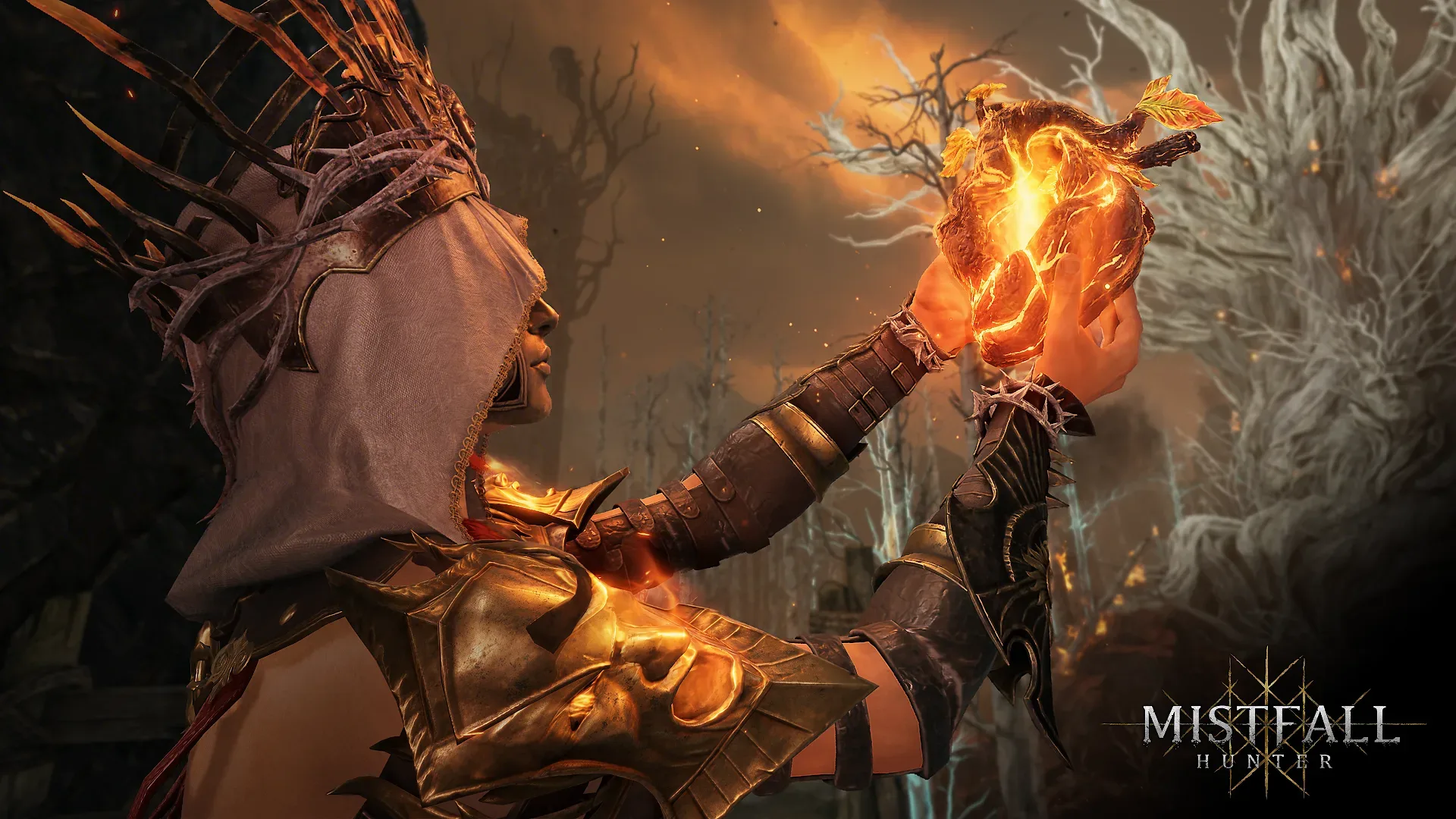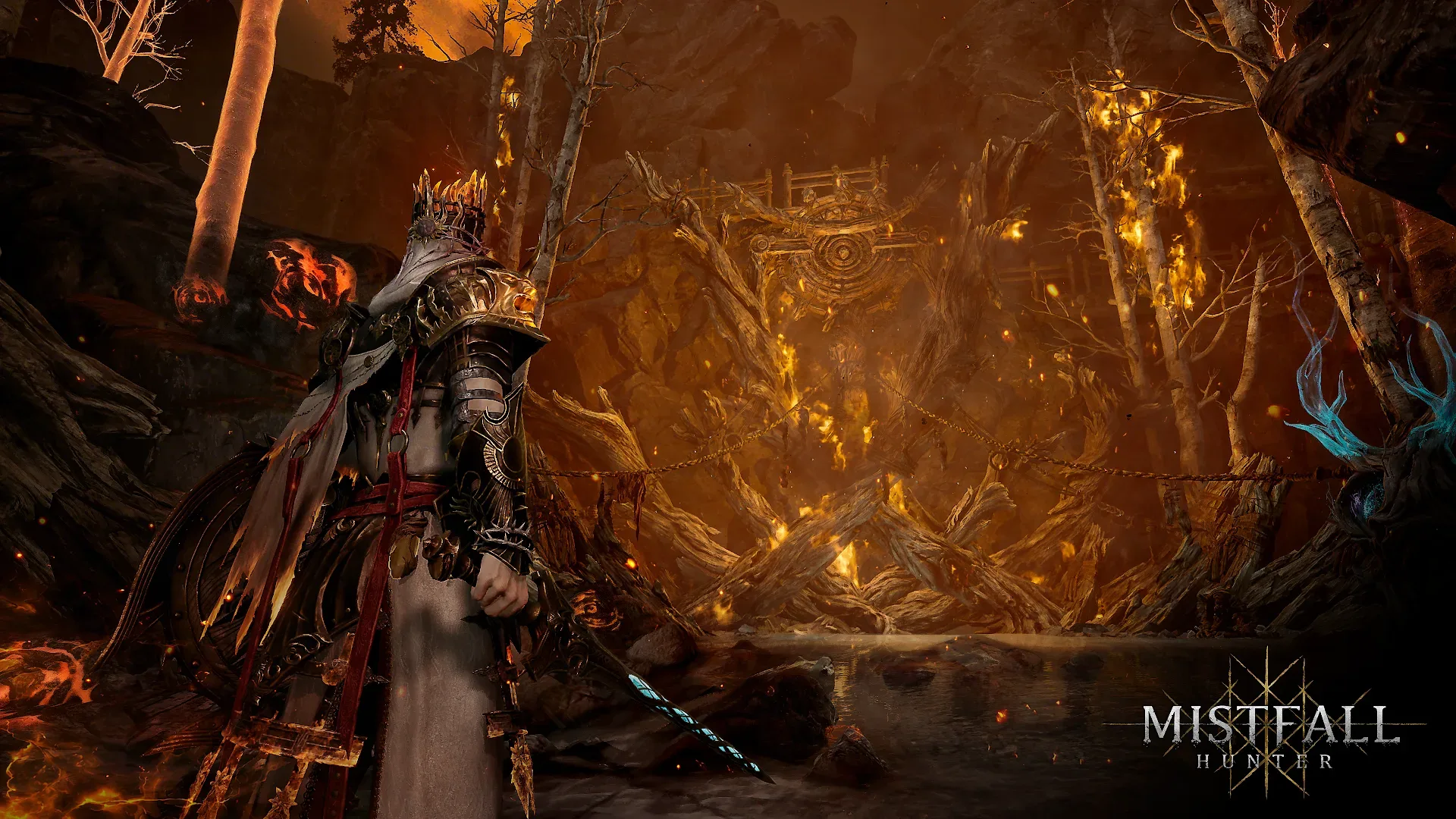
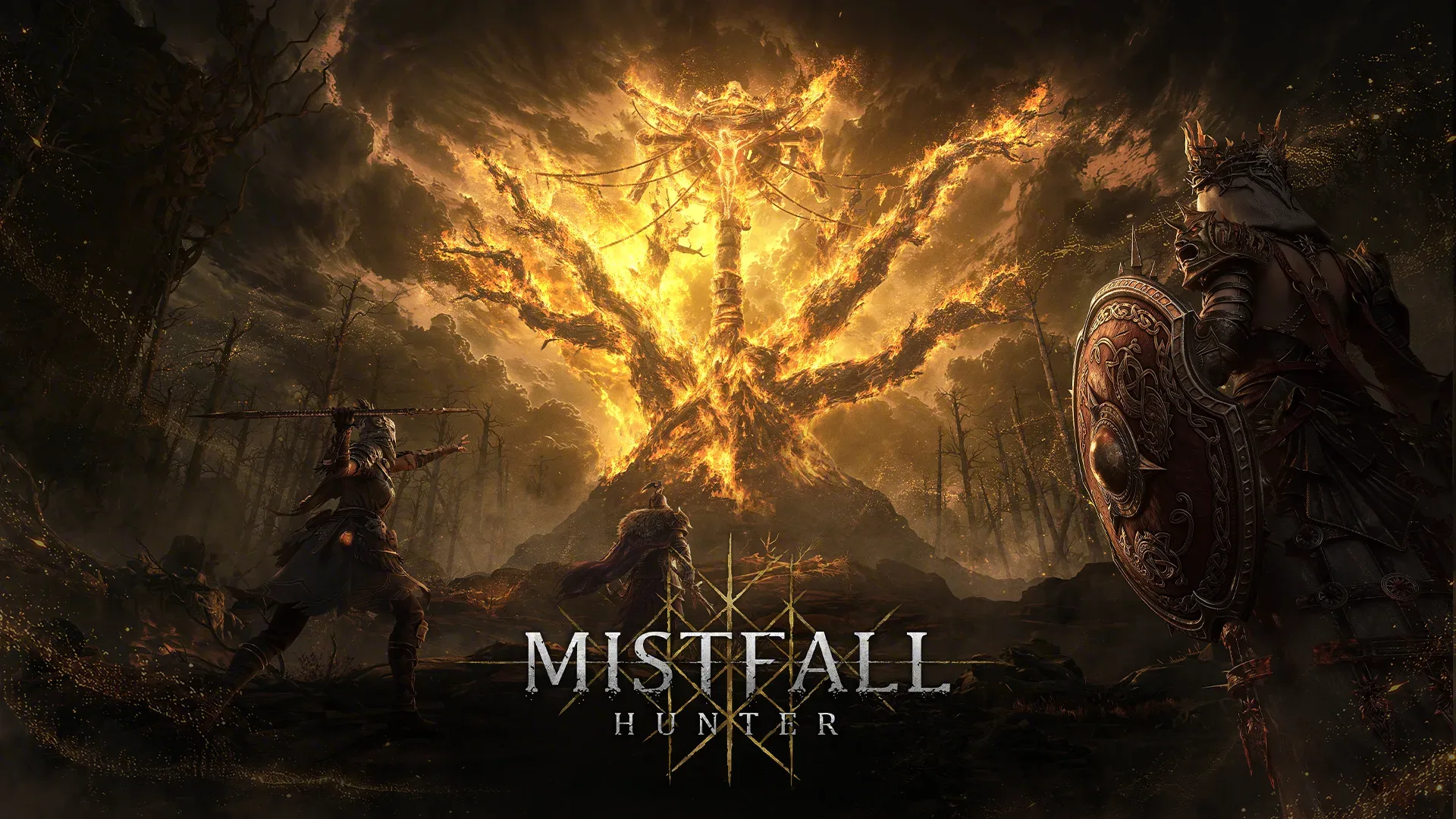
Mistfall Hunter is free to play on Steam for a limited window running from November 19 at 4 AM PST until November 23 at 10 AM PST. The trial arrives alongside Season 2, a substantial update that places fire at the center of the dark-fantasy PvPvE extraction ARPG’s newest threats, materials, boss activity and combat options.
For players unfamiliar with the pitch, Mistfall Hunter casts players as Gyldhunters venturing into the Gyldenmist alone or in teams of up to three. The objective is not simply to defeat enemies: hunters gather Gyldenblod and other loot, then need to escape with it. Rival players, hostile forces and the mist itself stand between a productive run and safely securing its rewards.
That structure makes the free weekend a useful opportunity to learn the game’s stakes before committing to longer-term progression. Extraction games make every decision carry extra weight. Finding valuable items matters, but surviving the route out matters more. Choosing when to fight, when to evade and when to leave with what is already in hand can be as important as combat skill.
Season 2 turns the map into a fire hazard
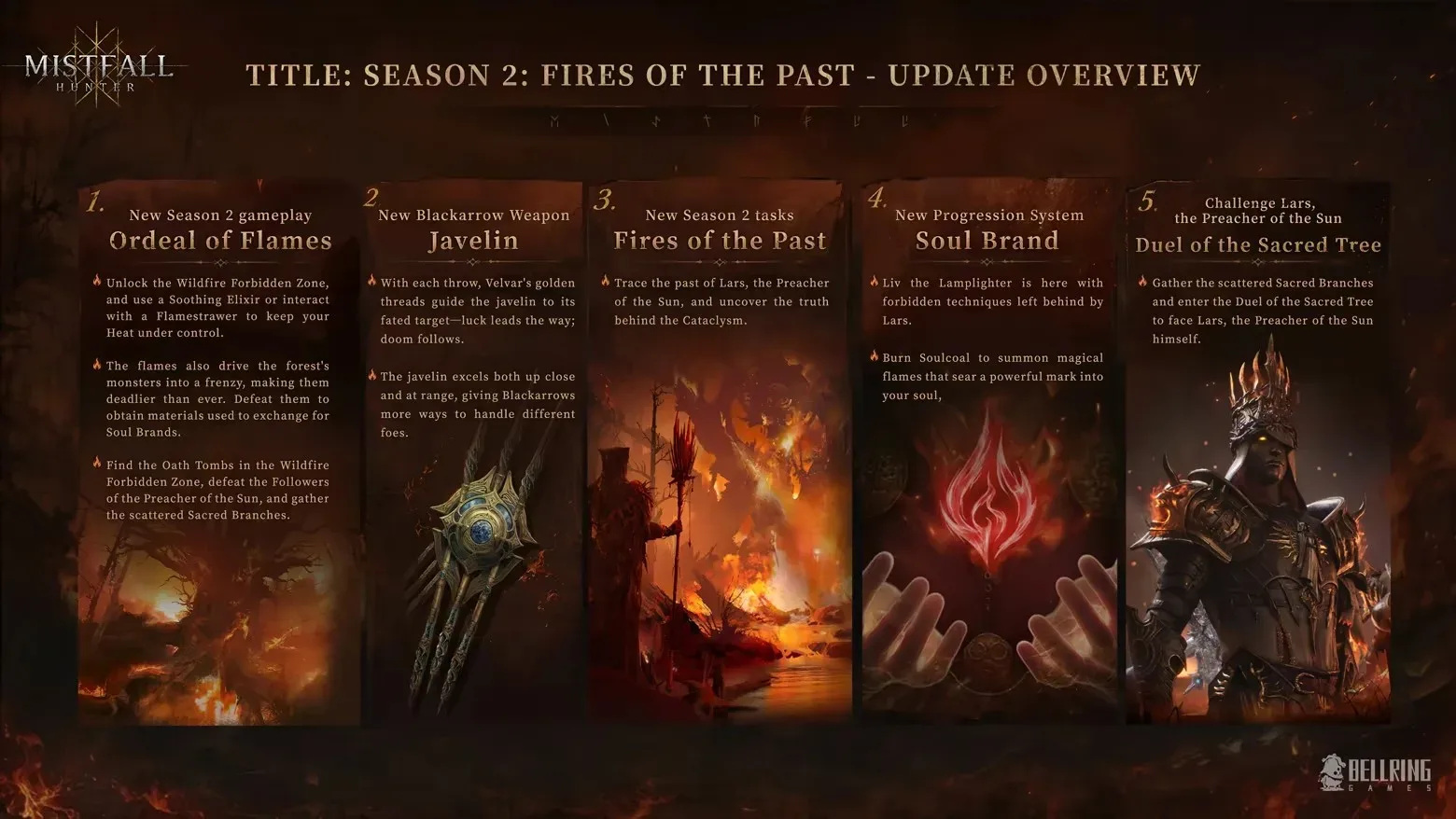
Season 2’s biggest environmental addition is Ordeal of Flames, a spreading-wildfire threat that increases danger across the map. Wildfires are not merely scenic background conditions. Remaining in flames for too long causes Gyldhunters to build up Infernal Flame and eventually enter a Burning state.
The practical implication is straightforward: fire changes positioning. A hazardous area can limit routes, pressure players into less desirable ground or complicate an escape after a fight. In a PvPvE game—meaning players face both other players and computer-controlled enemies—the terrain can become another participant in an encounter. Hunters must account for rivals and enemies while also avoiding a condition that escalates from exposure to an active Burning state.
Season 2 also introduces a new fire-aligned enemy and a crafting material called Soulcoal. The supplied details do not specify Soulcoal recipes or every use for the material, but its inclusion ties the season’s wildfire theme to the game’s crafting loop. That is important because extraction play typically asks players to judge whether another useful item is worth the risk of carrying it farther into a dangerous run.
The Preacher of the Sun offers a structured boss route
A new boss, the Preacher of the Sun, arrives with an explicit sequence of objectives rather than a simple destination. Players first need to defeat the Preacher of the Sun Follower in the Wildfire Forbidden Zone. That encounter grants the Sacred Branch. Hunters can then take the Sacred Branch to the Oath Altar to challenge the Preacher of the Sun.
- Enter the Wildfire Forbidden Zone.
- Defeat the Preacher of the Sun Follower.
- Claim the Sacred Branch.
- Travel to the Oath Altar.
- Use that path to challenge the Preacher of the Sun.
This is a progression outline, not a boss strategy: no attack patterns, recommended builds or reward details have been provided. Still, the sequence establishes that accessing the new battle requires action in a fire-themed high-risk space before the final confrontation. Players looking for the encounter should therefore treat the Follower, the Sacred Branch and the Oath Altar as linked parts of one activity.
The update also adds a main questline focused on the Preacher of the Sun’s past. That gives the boss a narrative role as well as a mechanical one, though the available information does not reveal the quest’s story details. Players who prefer direction beyond repeated extraction runs may find that main questline a notable part of the season.
The Blackarrow gains a Javelin school
Combat also expands for the Blackarrow weapon through the addition of its second weapon school, the Javelin. The new school is designed to let Gyldhunters move between close-range strikes and longer-range attacks. That flexibility is especially relevant in extraction games, where engagements can change quickly from a tight ambush to a pursuit across open ground.
Its Divine Infusion feature gives the Javelin a self-aiming throw. In simple terms, a self-aiming attack assists with targeting rather than relying entirely on a manually aimed projectile. The information available does not define its limits, damage, range, cooldown or targeting behavior, so players should not assume more than the stated aiming assistance. But as a concept, it gives the Blackarrow an option for applying pressure at range while retaining its close-quarters capacity.
The broader game already allows players to swap weapons in battle. The Javelin addition therefore complements a combat identity built around adaptation. A hunter may need a different response when navigating wildfire conditions, confronting AI threats or meeting another squad on the way to extraction.
Progression, cosmetics and a push against friction
Season 2 adds several new systems that serve different player motivations. Soul Brand is the seasonal progression system. Seasonal progression generally means advancement connected to the current season rather than just a single permanent track, although no reward structure or reset details are specified here.
The Shrine of Honor is an appearance system, placing it on the cosmetic side of the update. That distinction matters alongside the game’s stated position that it has no purchasable stat boosts that are pay-to-win. An appearance system concerns how a character looks; a stat boost would affect performance. The game’s stated policy is that players cannot buy the latter type of advantage.
New valuable loot is also available to find, extract and cash in. “Extract” is the key word in that cycle. Loot does not simply become useful the moment it is discovered; players need to get out successfully. That creates the central extraction-game tension between greed and caution. A run can become more rewarding by staying longer, but doing so may expose a player to more danger.
Beyond new content, Season 2 includes changes intended to smooth out longer-term play:
- Expanded server infrastructure.
- Class balance adjustments.
- More high-value loot drops.
- Removal of forging fees.
- Streamlined seasonal quests.
- Easier camp upgrades.
- New inventory-management features.
These changes are described as player-driven improvements and collectively target grind. “Grind” refers to repeated activity required for progression, materials or upgrades. Removing forging fees should reduce one stated cost attached to forging, while easier camp upgrades and simplified seasonal quests may lower progression friction. Better inventory management can matter disproportionately in an extraction game, where players must organize, protect and decide what to carry amid limited time and danger.
Increased high-value loot drops could make successful runs more lucrative, but it does not remove the core risk: those valuables still need to be brought out. Similarly, class balance adjustments signal tuning across character options, but the available details do not identify which classes changed or how their capabilities were altered.
What the free weekend is positioned to show
The November 19–23 Steam period coincides with a season built around both escalation and accessibility. Wildfires, a Burning-state mechanic and a gated boss route raise the immediate stakes. At the same time, lower friction around forging, camp upgrades, seasonal quests and inventory management is intended to make continuing play less cumbersome.
For a new player, the clearest early lesson is the game’s basic loop: enter the Gyldenmist, collect what can be carried, manage encounters with both players and AI-controlled threats, and get out before the run collapses. Solo players and three-player squads are both supported, so the choice of company is part of the experience rather than a fixed requirement.
For returning players, Season 2’s value is in the combination of fresh objectives and system changes: the Preacher of the Sun questline and challenge path, the wildfire-driven Ordeal of Flames, Soulcoal, the Blackarrow’s Javelin school, and the new Soul Brand and Shrine of Honor systems. The update’s quality-of-life direction may be just as consequential as its headline features for anyone regularly working through extraction runs.
The limited free period is one entry in a busy stretch of PC game updates; for another recent example of a game expanding its multiplayer offering, see the Assetto Corsa Rally 0.7 update.