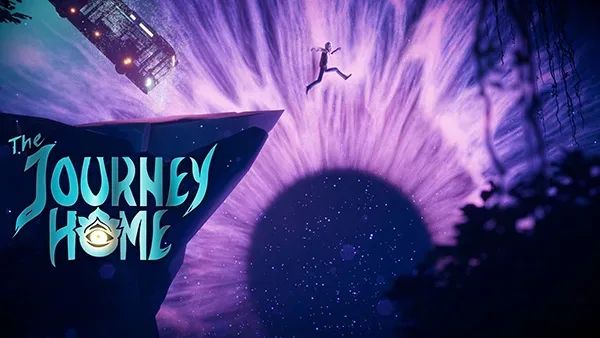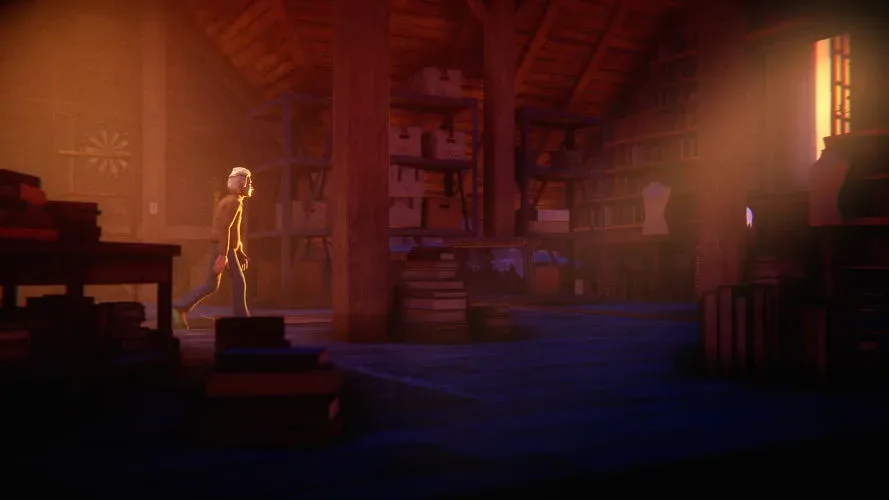
The Journey Home, an atmospheric side-scrolling adventure from Joey’s Entertainment, is scheduled to launch on Steam on December 3, 2026. The game follows Walter through different stages of his life, framing its personal story inside a surreal world of enormous creatures, strange vehicles and shifting perspectives.
Joey developed the project with his wife, Sophie-Leigh Robbins, who is identified as a USA TODAY bestselling author. Their stated ambition is not simply to build a succession of puzzles, but to leave room for contemplation: the pair hope the game encourages players to consider why they are here and what they are doing with their lives.
That is a sizeable aim for a game estimated to run for roughly three hours. The announced design suggests The Journey Home will pursue it through atmosphere and interaction rather than lengthy exposition. It has no cutscenes or loading screens, uses a custom camera system, and keeps its interface deliberately minimal.
A journey through Walter’s life, not just a linear route
The central premise has players move between distinct periods of Walter’s life. That structure matters because it gives the adventure a potentially personal, memory-like shape. Instead of presenting one uninterrupted fictional setting, the game is built around changes in life stage, with its environments and encounters supporting an inward-looking narrative.
The available details do not spell out how those stages are ordered, what Walter experiences in each one, or whether player decisions alter the plot. It is therefore best to view the life-spanning format as narrative context rather than assume branching paths or multiple endings. What is clear is that Walter’s journey is designed to be more than a literal trip through a set of levels.
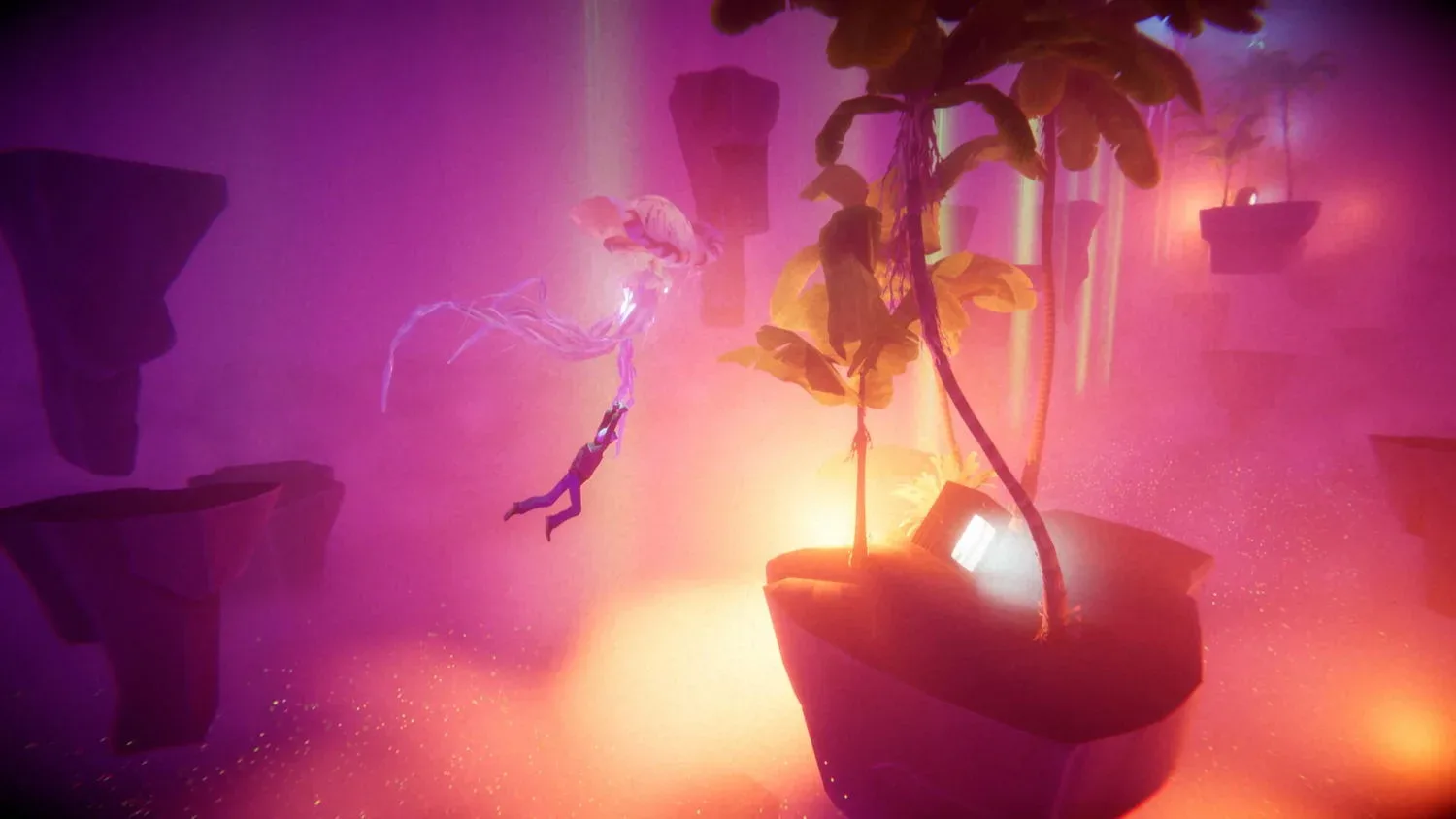
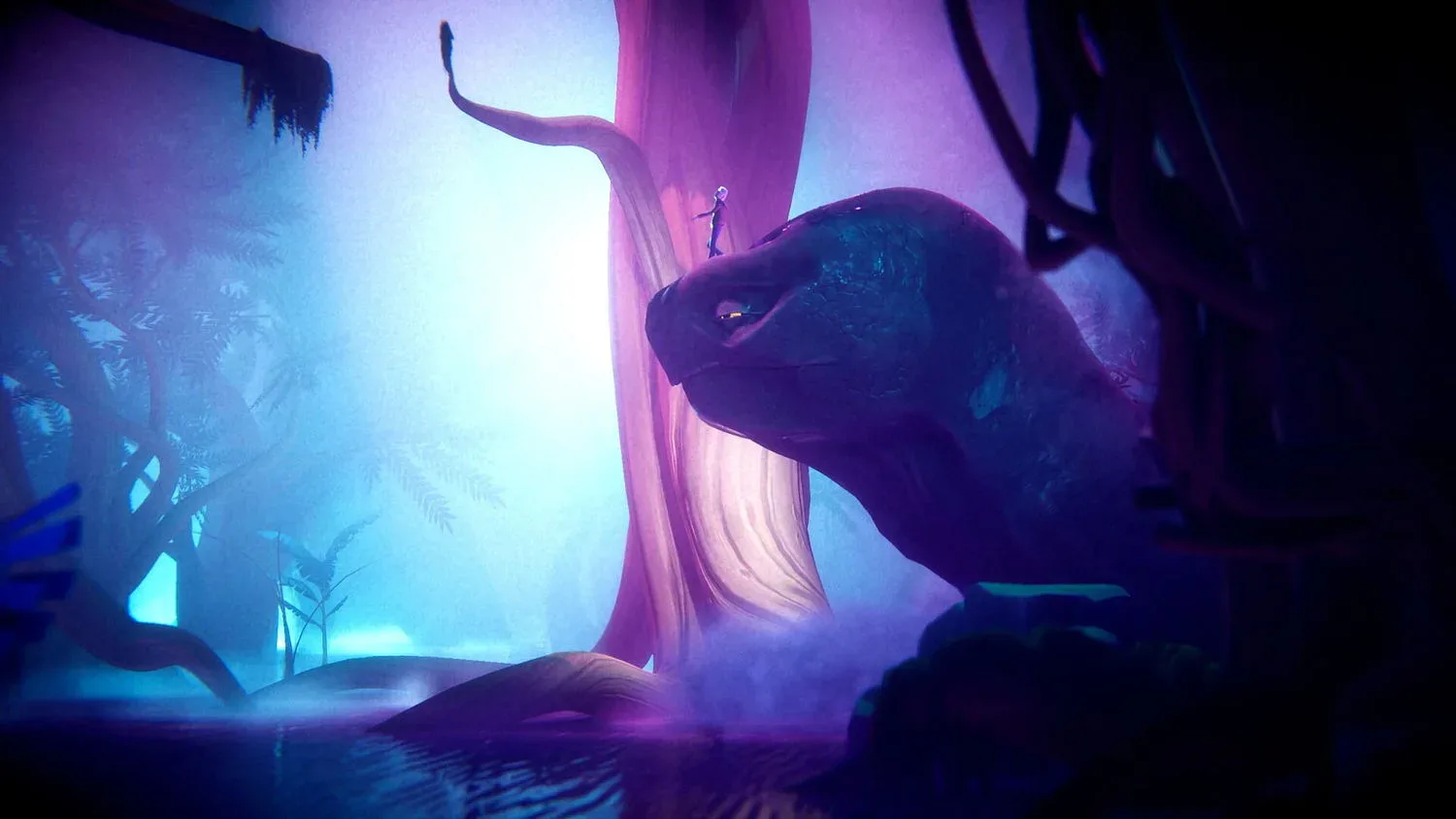
The game’s worlds lean hard into the unreal. Giant creatures, flying cars and unexpected meetings populate landscapes that are described as surreal, while the puzzles are intended to feel dreamlike. Dreamlike puzzles generally describe challenges whose logic is tied to imagery, mood or an unusual interaction rather than strictly realistic tools and spaces. In The Journey Home, that approach appears aligned with its emotional premise: the world can communicate through symbolism and surprise as much as through conventional dialogue or objectives.
The pulse mechanic is the key interaction tool
Walter interacts with the world through a pulse mechanic. A mechanic is a repeatable action or system that defines how players engage with a game; in this case, the pulse is positioned as a core way to affect and investigate the environment. The announcement does not detail its exact inputs, range, cooldowns or puzzle rules, so those specifics remain unknown.
Still, identifying the pulse as the means of interacting with the world provides a useful clue about the game’s design. Rather than promising a large inventory of tools or a combat-heavy moveset, The Journey Home appears to focus attention on one expressive interaction that can connect the protagonist to the places around him. How that connection works in individual puzzles will be an important unanswered question ahead of release.
Related coverage includes The Journey Home Sets December 3, 2026 Steam Release.
Players will also take control of several very different beings and machines: giant fireflies, jellyfish, a bird and a flying car styled after the 1950s. These are not merely background details. Changing control from Walter to animals, insects or a vehicle can alter scale, movement and the way a player reads a space. A bird might naturally foreground flight, while jellyfish and fireflies evoke very different senses of motion and surroundings. The announcement does not confirm the specific abilities associated with each playable form, but the variety signals that the adventure’s perspective is meant to change alongside its locations.
Immersion-focused presentation, with important limits
The Journey Home’s presentation is built around continuity. The creators say the game contains no cutscenes and no loading screens, alongside a custom camera and minimal UI. UI, short for user interface, covers the on-screen elements that communicate information to the player: prompts, maps, health indicators, menus and similar overlays. A minimal UI means fewer persistent visual reminders that the player is operating within a game system.
Likewise, avoiding cutscenes means storytelling is not intended to repeatedly hand control away for pre-rendered or separately staged scenes. That does not mean the game will lack scripted events or narrative direction; it means its stated approach is to keep the player within the playable experience. No loading screens further supports the idea of a flowing journey between spaces.
These choices can be particularly effective in a compact adventure. With an estimated three-hour duration, interruptions can feel proportionally more noticeable than they might in a much longer game. The stated format could help The Journey Home sustain its atmosphere from one strange scene to the next, though the impact will depend on how the puzzles, camera and transitions work together in the finished release.
There is also a practical distinction worth keeping in mind: “minimal UI” does not necessarily mean no assistance, no accessibility options or no navigation guidance. The announcement only establishes the overall visual intent, not the full set of player settings or support features.
A short adventure with a deliberately quiet goal
The announced playtime of about three hours helps set expectations. The Journey Home is being positioned as a concise, self-contained experience rather than an open-ended game built around a long checklist of activities. That may appeal to players looking for a focused narrative evening, especially one more interested in tone, imagery and reflection than extensive systems.
Its creators have explicitly described a desire to create silence and space for contemplation. That language helps explain the pairing of a personal story with sparse interface design and unusual visual elements. The game’s giant creatures and flying vehicles may be spectacular, but the stated purpose is introspective rather than simply fantastical.
The project was shown at Gamescom in 2025, where it drew attention for its themes and affecting atmosphere. It was also supported by the Flanders Audiovisual Fund, commonly abbreviated as VAF. The available information does not provide further details about the nature or amount of that support, but it establishes that the production received backing from the fund.
What Steam players should know now
- Release date: December 3, 2026.
- Platform announced: Steam.
- Format: Atmospheric side-scrolling adventure.
- Estimated length: About three hours.
- Protagonist: Walter, seen across different stages of his life.
- Core interaction: A pulse mechanic used to engage with the world.
- Playable forms: Giant fireflies, jellyfish, a bird and a 1950s-style flying car.
- Presentation: No cutscenes, no loading screens, a custom camera and minimal UI.
A new trailer released with the date announcement includes previously unseen gameplay, providing the clearest official look so far at how its environments and shifting playable forms fit together. It is also the most useful reference point for anyone trying to gauge whether the game’s surreal visual language matches their taste.
For PC players, the Steam-only announcement gives the platform but not yet the technical information needed for a purchase decision. System requirements, Steam Deck status, controller support, language support, price and any other platform plans have not been provided here. Players considering a new PC setup can compare the differing priorities of compact systems in this look at mini PCs for PC gamers, but no hardware recommendation can responsibly be made for The Journey Home until its requirements are published.
For now, The Journey Home stands out less through a long feature checklist than through a cohesive set of intentions: tell a personal story, make the act of moving through its world feel uninterrupted, and let strange images and puzzle interactions make room for reflection. Steam players will be able to see whether that journey lands when it arrives on December 3, 2026.